
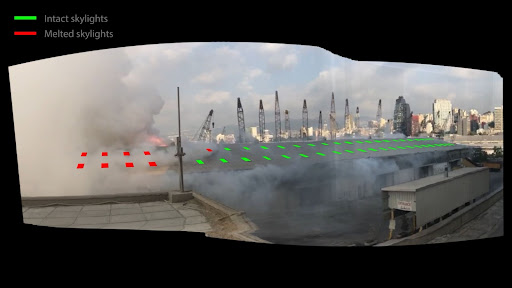
Video | Not the welders
On August 4, 2020, Beirut port authorities sent a welding team consisting of three Syrian welders to warehouse 12 “to plug a hole in the southern wall that was leaving the highly volatile — but also highly valuable — chemical compound exposed.”
The workers were not aware of the volatile contents stored inside the warehouse: huge amounts of highly explosive ammonium nitrate that had been unloaded years before from the MV Rhosus, a ship whose fateful docking in Beirut was tied to a decades-old chemical-trading network hidden behind shell firms.
The workers concluded their work at around 5 pm. Forty-five minutes later, cameras began to train on the port, as smoke rose to the sky above warehouse 12 and fireworks crackled to alert residents of the eastern part of the city that something was wrong. At 6:07, as a result of a raging fire that had drawn the fire brigade, the bags of ammonium nitrate detonated, sending a massive shockwave through residential Beirut.
Over 200 people were killed and over 6,500 wounded in one of the largest non-nuclear explosions in history. The blast left large swathes of the city destroyed and countless people homeless.
Shortly after the blast, Lebanese and international authorities quickly came to the same conclusion: the fire that had led to the explosion was the consequence of shoddy welding work. The welding theory was further amplified via media reports on welding causing various other fires throughout Beirut in the aftermath of the blast. Official efforts to establish accountability that would hold high-level officials responsible for their own part in the deadly explosion, meanwhile, were consistently waylaid.
In an effort to continue the previous work into this deadly explosion, where Mada Masr invited Forensic Architecture to work together to map the progression of the fire, the epicenter of the blast and the layout of the contents stored inside, Mada Masr obtained copies of the Federal Bureau of Investigation and Lebanese Internal Security reports outlining their respective accounts of what happened on August 4.
By cross referencing the accounts laid out in these documents with open-source materials and fire dynamics simulations in a new video work, the forensic lab at Febrayer — the regional network of independent media institutions of which Mada Masr is a part — and Forensic Architecture closely analyzed the key moments leading up to the blast and, in so doing, have raised significant doubts about the culpability of the welders.
You can watch the video work, below, and on Forensic Architecture’s website, here.

تقارير ذات صلة
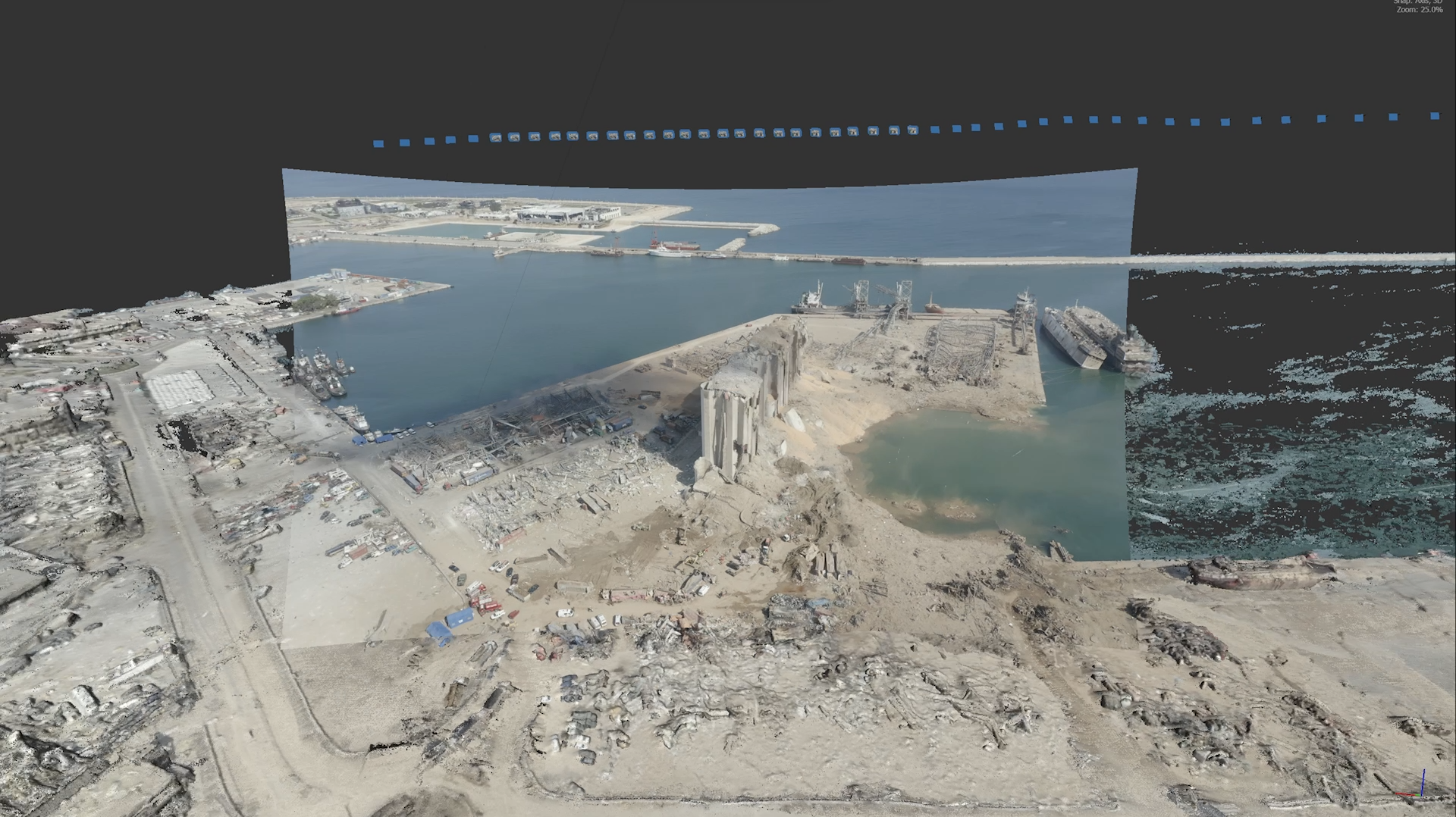
Video | Destruction of destruction: The Beirut Port silos
Febrayer partnered with Forensic Architecture to create a unified narrative of the silo's collapse
Hezbollah vote secures General Joseph Aoun’s election as new Lebanese president, underscoring party’s concessions to new regional reality
When the Lebanese military began to send the first of its soldiers to the south of the country on November 28, hours after a ceasefire was suddenly announced, it marked…
Poetry in the face of history: Letter to an Israeli soldier
Under what conditions could a confrontation between poetry and history yield to the defeat of history? And what is it in poetry that could defeat history? Is it the simple…
Your support is the only way to ensure independent, progressive journalism survives.
You have a right to access accurate information, be stimulated by innovative and nuanced reporting, and be moved by compelling storytelling. Subscribe now to become part of the growing community of members who help us maintain our editorial independence.
Join us