
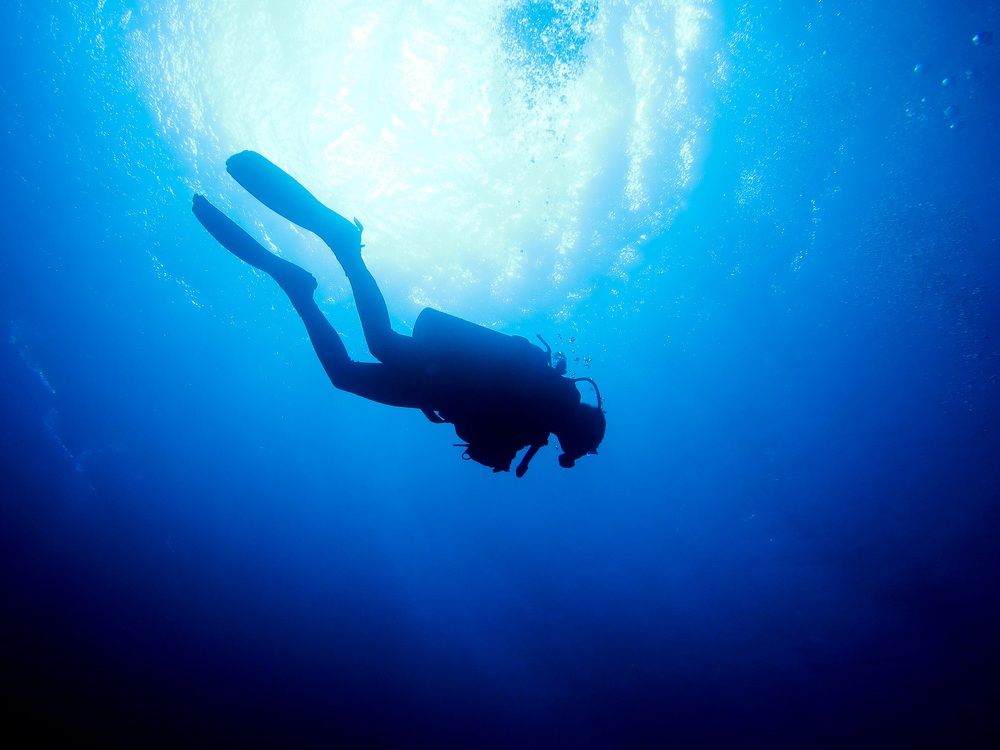
Egyptian to break the world record in scuba diving
On September 18 in Dahab, an Egyptian is set to break the world record in open circuit scuba diving, by plunging to a depth of 350 meters.
Ahmed Gabr dreamed of diving as a boy. When he was seven years old, he saw a scuba diver for the first time in Sharm el-Sheikh. “I said to myself, this is what I want to do.”
As soon as he graduated from the Military Academy, Gabr began his career in diving. Now, he is a Technical Diving International (TDI) instructor with 20 years of diving experience.
In 2010, Gabr began training to break the world record in scuba diving, “I just asked myself, how can I make this dream happen, how can I fulfil it? How deep can a human being go?”
In 2005, the previous world record of 318.25 meters was also set in Dahab by Nuno Gomes, a South African.
Dahab is a small diving town on the Gulf of Aqaba on the eastern coast of Egypt’s Sinai peninsula. Lying over the Dead Sea Rift and bordering four countries (Egypt, Israel, Jordan and Saudi Arabia), the Gulf of Aqaba is about 24 kilometers at its widest point and 1,850 meters deep, boasting some of the best dive sites in the world.
Gabr’s dive site will be a couple of kilometers off the coast of Dahab in international waters that are about 600 meters deep. The world record dive will last 15 hours, and Gabr will use around 30 gas tanks. The dive has been assessed and accepted by the Guinness Book of World Records, who will have a representative there on the big day to adjudicate.
This world record dive will break the frontiers of our knowledge of how the human body can survive at such depths, breathing from an open circuit system.
“I am trying to break the record as an experiment … someone has to up the stakes. If you keep doing the same things, you will end up with the same people, that is why I am trying to break this record. It’s an exploration for the human body,” Gabr says.
The majority of the 15 hour dive will be what is called “decompression time.” Gabr will descend in a matter of minutes, retrieve the 350-meter tag, and spend the rest of his dive coming up. The reason it takes so long is to allow for the massive amounts of nitrogen that have penetrated Gabr’s body to escape slowly as he ascends.
But Gabr will not be alone. When he reaches around 120 meters he will be in the care of his support team of 20 divers, as well as additional dry land support personnel.
An international team of highly experienced and trained technical divers will carry extra tanks for Gabr and assist him every meter of the way. The dive plan and backup plans have been memorized by each of them, as they have been training for nine months with Gabr at H2O Divers in Dahab and preparing for any glitches or problems that could arise.
Divers will be placed at regular intervals both for Gabr’s quick descent, and his long ascent to the surface. The deepest support diver will be situated at around 120 meters.
“Basically, after about 120 meters, all bets are off … If a support diver were deeper than that, you would need another support team for him,” Jaimie Browne, a retired US Army helicopter pilot, and Gabr’s dive planner and deep support diver says.
“We told him, just get to us, and we’ll take care of the rest.”
When Gabr and the support divers reach 30 meters they will have a handy “decompression” ladder to quite literally “hang out on.” The ladder is for the divers to hold on to during the long decompression stops, and they can clip extra equipment and tanks onto it.
Diving on open circuit means that the gas in the tanks is subject to pressure changes, and at a depth of 350 meters, Gabr will be breathing extremely dense, compressed gas. He will finish his 20-litre tanks in just a few breaths, and his body will have to deal with the density of the gas and the various conditions that can be caused by this.
There are a number of serious medical conditions that Gabr is at risk of, including Nitrogen Narcosis, High Pressure Nervous Syndrome (HPNS), Isobaric Counter Diffusion (ICD), and Oxygen Toxicity.
Each of these risks have been studied and mitigated in the dive plan as much as possible. Gabr will be breathing what is called Trimix, a blend of oxygen, nitrogen and helium, which is used in technical diving beyond the recreational limit of 30 meters.
The nitrogen in the gas blends will cause narcosis at depth, which alters the consciousness and impairs judgment in a similar way to alcohol intoxication. This condition is not fatal, but can lead to fatal mistakes. Gabr must be able to keep his wits about him in order to switch gasses as he descends and to be able to problem-solve should anything go wrong. At this depth, one mistake could cost him his life.
This dive is going to push well beyond the known limits of what the human mind and body can handle. “We are looking at it from more of an explorative standpoint, pushing the body in how we use gasses,” Browne says. Gabr “is one of the most physically and mentally fit people I know, and he knows when to turn around ... there are a lot of forces working against his body, and more against his mind ... he has to know when to come back up,” he adds.
Gabr is highly trained and has been preparing for this dive for four years. He graduated from the US Army Combat Diving Course in Key West. “This is a no joke course, and is one of the toughest we have,” Browne says.
“The course has kind of prepared him for his entire career. It weeds out the weak, it weeds out the people who don’t want to be there, it weeds out the people who don’t have it.”
And Ahmed Gabr has it.
“I think he can do it, there is probably only a handful of people on this planet that can do this dive, and he is one of them,” the support diver adds.
Though Gabr is aiming to break the world record, he is not doing it as a competition. Both he and his team see this dive as an exploration.
“We have seen more of the surface of the moon than our own ocean,” Browne says.
There have only been 12 successful verified dives below the depth of 240 meters, and this is the same number of humans that have walked on the moon.
Gabr says, “People don’t know Arabs and Egyptians very well. The idea is that we are a third world country, but we can do a lot, and we can do more than that. This is just the start.”
To become a part of this dream, visit Ahmed Gabr's site or Dive World Record and follow @worldrecord350 on Twitter.
تقارير ذات صلة
Welcome to Sharm el-Sheikh: President’s City, City of Peace, City of COP27
Beneath the mask the city’s donned for COP27 are the marks of years of uncalculated redevelopment
The stories behind Egypt’s Olympic champions
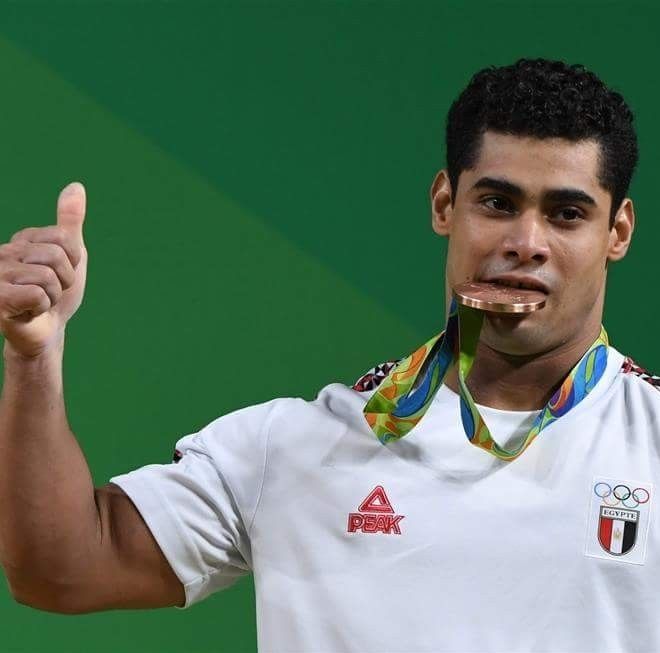
Egyptian weightlifters Sara Samir and Mohamed Ehab won Egypt’s first two bronze medals at the Rio 2016 Olympics, but the years of struggle without state support that preceded their success…

Dominating the courts: Egypt’s first female number one squash champion
Mohamed al-Shorbagy, an Egyptian squash champion, posted a picture with Raneem al-Welily after she made history by becoming Egypt’s first-ever female world number one in squash last September. “How many…
Your support is the only way to ensure independent, progressive journalism survives.
You have a right to access accurate information, be stimulated by innovative and nuanced reporting, and be moved by compelling storytelling. Subscribe now to become part of the growing community of members who help us maintain our editorial independence.
Join us