
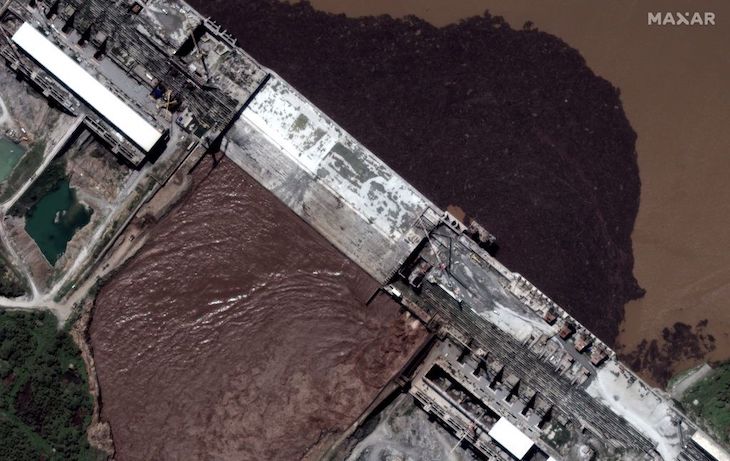
Dam deadlock: Where did Egypt go wrong in managing the GERD dispute for over a decade?
In 2008, the office of the foreign minister of Egypt received a cable from the Egyptian embassy in Addis Ababa warning that the Ethiopian government had begun holding serious talks with potential international partners to build a large dam on the Blue Nile to generate electricity for domestic consumption.
“The cable was not surprising, but it was worrying,” a senior diplomat who served in the office of the foreign minister at the time told Mada Masr on condition of anonymity. “We knew for a long time, as far back as the early 1980s, that Ethiopia had been planning to build a dam on the Blue Nile. This time, however, it was really disturbing because, according to the assessment of the embassy, it now looked serious.”
At the time, Egypt did not conceive that the dam would eventually become the largest hydropower project in Africa with a massive reservoir capacity of 74 billion cubic meters, according to the diplomat. “What they were talking about at the time was a much smaller dam, but we were still worried,” the senior diplomat said.
The Ethiopian dam would grow to become a linchpin political battle over water rights and how Nile Basin countries approached projects along the river.
Under the terms of a 1959 bilateral agreement signed by Egypt and Sudan — which was built on a 1929 agreement — Egypt was entitled to 55 billion cubic meters and Sudan 18.5 billion cubic meters of the Blue Nile. The deal also gave Egypt veto power over all proposed Nile projects. Neither historical agreement made any allowance for the water needs of other riparian states that were not party to the deal.
Egypt, which depends on the Nile for more than 90 percent of its renewable water resources — more than any other riparian state — was aware of efforts by Nile Basin countries to amend these historical quota agreements as early as the 1990s. At the time, President Hosni Mubarak responded by calling on the irrigation and foreign ministries and the intelligence services to put together a framework agreement for the Nile Basin states (a total of 10 countries before South Sudan gained independence from Sudan in 2011).
“We were aware that the Nile Basin countries, essentially the upstream countries, were talking to one another about how to undo the historic agreements that granted Egypt its annual share. We wanted to act promptly to make sure that no agreement to this effect was signed,” the diplomat said.
In 1999, Egypt along with the rest of the Nile Basin countries put their initials, in Tanzania, on the Nile Basin Initiative, a transitional institution for cooperative water sharing and management of the Nile until negotiations are finalized and a permanent institution created. While the text of the initiative did not adopt the direct and clear references that Egypt would have wished for on the historic rights of downstream countries, several articles did refer to principles of fair and equitable use of Nile water without inflicting grave harm to any riparian states.
According to two other concerned diplomatic sources and a former Irrigation Ministry source, as early as 1999, Ethiopia, and to a lesser extent Uganda, was taking the lead in contesting any reference to “current uses” or “historic rights” — two concepts Cairo needed in order to guarantee commitments from upstream countries for an annual 55 billion cubic meters to Egypt.
The long process over the Nile Basin Initiative and a cooperation framework came to a head in 2009, when Egypt’s Foreign Ministry got wind in a cable from the Egyptian embassy in Kampala that a number of upstream countries were unilaterally going ahead with the signing of a framework agreement. In May 2010, the newly negotiated Nile Basin Commission was signed by five countries: Ethiopia, Uganda, Kenya, Rwanda and Tanzania.
Mubarak held a meeting with top officials to plan Egypt’s response. Nearly all of them opposed any move by Egypt to negotiate an association to the new agreement, except for one: Fayza Abul Naga, Mubarak’s minister for international planning and a former foreign minister.
According to several diplomatic sources, Abul Naga had voiced concerns dating back to the early 2000s about Cairo being overconfident in its power to deter Ethiopia and other African countries from confronting Egypt on Nile water issues.
According to an informed government source, Abul Naga believed the best strategy to deal with the Nile Basin Commission would be to negotiate new language in the agreement that would allow Egypt to willingly “give” a small part of its “established share” to help with “agreed upon” water projects that could be of benefit to the least developed Nile Basin countries. If successful, the compromise could bring Egypt into the agreement while also granting it a degree of authority in deciding how upstream countries manage projects affecting the river.
However, intelligence chief Omar Suleiman, Mubarak’s closest confidante, categorically objected to the idea and argued that it would be a “huge scandal for the regime” to willingly undermine Egypt’s historic water rights by any amount. Abul Naga was firmly overruled and Mubarak opted to take a firm stance against the commission. Mubarak decided the best strategy was for his team to try to hobble the new agreement by working political and diplomatic channels to prevent other Nile Basin countries from signing the document to ensure it did not go into effect, which remains the case today.
“At the time, it was intensive diplomatic work,” said another former senior diplomat. “We did everything we could, explicit and illicit, to keep the other four countries from joining the commission. Then came the January revolution and everything we did was lost.”
Amid the tumult in Egypt following Mubarak’s ouster from power in February 2011 after 30 years in office, Ethiopia began construction of what it dubbed the Grand Ethiopian Renaissance Dam (GERD).
A decade later, the $4.8 billion dam is all but completed, the reservoir partially filled, with a partial second filling completed this summer. Years of repeated diplomatic efforts have ended in failure and a final, binding agreement on the construction and operation of the mega-dam between Ethiopia, Egypt and Sudan, which remains as distant a prospect as ever.
How did Egypt get here 10 years after construction on the dam began? Mada Masr spoke to several current and former government officials directly involved in the process or knowledgeable about events to gain insight into the past decade of dispute over the GERD.
They paint a complex yet insightful picture. While Ethiopia shoulders a significant portion of the blame for its intransigence in a number of important aspects, they say, Cairo’s mismanagement of the issue over the years also helped steer it toward a political and strategic cul de sac. The lack of a coherent strategy — with decision-making often oscillating between tactics of compromise and confrontation — combined with frequent internal disagreements and regional political miscalculations, all contributed to the crisis Egypt now finds itself in. The stakes of Egypt’s handling of the GERD extend beyond the immediate effects on Egypt’s water allocation to how the dispute is molding Cairo’s relations within the broader Nile Basin and the geopolitical implications for any future water projects on the world’s longest river.
------------------------
In 2011, after Mubarak’s ouster and amid uprisings across the region, Egypt’s interests in the Nile Basin were often neglected as internal issues came to the fore.
“The country was weakened and the Ethiopians took advantage of this weakness that followed the fall of Mubarak to start building their dam,” according to a former government source.
Ethiopia announced the beginning of the construction of the GERD in April 2011 — at that point not yet a mega-dam, according to the official statements. Regardless, the news was received with considerable unease at the office of the foreign minister.
According to a member of the office of the foreign minister at the time, a lengthy memo was sent from the foreign ministry to “concerned offices” within the government to explain the gravity of the situation and to press upon “those concerned” to act without delay to ensure the project was suspended pending negotiations with downstream countries, especially Egypt due to its fears over water scarcity.
However, there was no response to the memo with any instructions.
“It was a very difficult time to be honest. There were so many things happening. The world was following developments in Egypt, and we had endless meetings and endless visitors and the situation was very fluid with ongoing demonstrations and conflicts between different camps of the so-called revolution,” the foreign minister office member said.
By September 2011, the Egyptian government officially demanded that Ethiopia set up a joint committee to assess the possible impacts of the dam on downstream countries. However, government officials neglected to leverage their relations with international allies to try and bring Addis Ababa to the negotiating table.
“I have to admit that the issue was not always a top priority in talks for officials running the country. They did not bring it up as much as they could have with their international interlocutors who, at the time, could have put pressure on Ethiopia to suspend construction pending an agreement,” the foreign minister office member said, adding that the principal concern of Egyptian officials and the international community at the time was the stability of Egypt in the post-Mubarak era and the political transition process.
This point was echoed by several diplomats who served at Egyptian embassies in several influential capitals at the time, including Washington, Paris and Berlin, who also noted that Egypt was not calling on the international community to intervene to get Ethiopia to come to an agreement on the GERD.
“I don’t think there was ever a moment when the Ethiopians were serious about getting anything done. They did not care to answer the questions we raised on the safety of the construction or the ecological impacts of the dam, or any of the other significant questions,” said a long-serving member of the Egyptian negotiating team. “They were just buying time and taking advantage of the fact that Egypt was overwhelmed with its internal affairs.”
-----------------------
In June 2012, Mohamed Morsi was sworn into office as Egypt’s first democratically elected civilian president.
According to Foreign Ministry sources who served at the time, a few weeks after his inauguration, Morsi sent his national security advisor Essam al-Haddad to the Foreign Ministry for a briefing on the top foreign policy priorities for the country. The GERD, which was then becoming a reality on the ground, was put on the list of principal concerns.
“We told him at length — and he heard it too from the General Intelligence Service — that the dam was a threat to Egypt’s water rights and we proposed action to lobby support for Egypt’s right to water security and on the safety of the dam,” said one of the Foreign Ministry sources.
Yet like his predecessors, Morsi’s team largely prioritized the internal situation in Egypt over the dam, as the country navigated a highly contentious and fractured political transition. “I cannot say that [Haddad] did not pay attention to what we were saying but I can safely say that he did not seem to think the matter was that pressing,” the Foreign Ministry source said.
But the biggest blunder by Morsi’s government regarding the GERD was still to come.
In early June 2013, as Morsi was facing widespread opposition in Egypt, he acted on the advice of Haddad to hold a meeting with public figures across the political spectrum to solicit their views on the dam. The move came one week after tensions between Egypt and Ethiopia had escalated following Ethiopia’s move to divert part of the Blue Nile to allow for the dam’s ongoing construction.
According to one of Haddad’s aides at the time, the idea behind the meeting was to engage with critics and get them to share their views with the president himself rather than to continue publicly criticizing him in the press. However, unbeknownst to those attending, the meeting was being broadcast on live television. During the session, various figures made a host of unguarded statements, including proposing ways to sabotage the GERD, such as spreading rumors about impending Egyptian airstrikes on the dam, a clandestine attack by Egyptian special forces, and supporting Ethiopian rebels to exert pressure on Addis Ababa.
Morsi’s aide for political affairs, Pakinam al-Sharqawy, later apologized for failing to inform attendees, including the president, that the meeting was being broadcast live. "It was initially planned that the national meeting would be recorded and aired the following day as is usually the case, but due to the importance of the topic it was decided at the last minute to air the meeting live," she said in a Facebook post. "I forgot to inform attendees of the changes."
However, according to presidential palace sources at the time, Sharqawy herself was not aware that the meeting was being broadcast live until around halfway through the session. Sources said that Sharqawy received a note passed to her in the meeting room from a shocked leading General Intelligence Services official who informed her it was on air and requested an immediate end to the discussion.
In any case, the damage had already been done. In response to the broadcast, Ethiopia's government summoned the Egyptian ambassador to demand an explanation for the "hostile remarks" and a spokesman for Ethiopia's Foreign Ministry said that "Ethiopia is not intimidated by Egypt's psychological warfare and won't halt the dam's construction, even for seconds."
According to a diplomat who served at the Egyptian embassy in Addis Ababa at the time, the meeting “was a total disaster, in every sense of the word … Nothing could have justified to the Ethiopian authorities what they got to see on-air, and of course, it was impossible to tell them that the president was not aware that his meeting was being broadcast.”
The fallout went far beyond the immediate reaction of Ethiopian authorities to the incident. Addis Ababa used the blunder to promote “anti-Egyptian sentiment,” according to the diplomat, with Ethiopian authorities working to lobby all the Nile Basin countries, as well as many other African countries, against Egypt, he said.
A month later, Morsi was ousted from office and Egypt’s new government would pursue a different track to deal with the dam.
“We hoped for a new beginning,” the diplomat said. “We accepted that the dam was becoming a reality and that it was going to be a mega-dam and that it might influence our water share one way or another, but we were hoping for a deal to ensure the damage wasn’t huge.”
Yet over the ensuing eight years, the parties would ultimately fail to reach an agreement.
-----------------------
Following Morsi’s ouster, Egypt’s new Foreign Minister Nabil Fahmy embarked on a long-neglected strategy to try and convince the international community to pressure Ethiopia over the dam. According to Fahmy’s published memoirs, he held meetings around the world and made calls to various actors, particularly to states providing aid to Ethiopia, to plead for the suspension of any aid that could be used in the construction of the GERD pending an agreement between Addis Ababa and the downstream countries.
In parallel, Egypt had resumed talks with Ethiopia and Sudan with the aim of producing a report that would address the various parties’ concerns and demands — this time with European experts involved, per Egypt’s request.
A year later, Abdel Fattah al-Sisi took office as president of Egypt. According to several foreign ministry sources, Sisi believed the GERD issue required some sort of bold political initiative in order to cut through the various rounds of what had thus far proved to be largely fruitless negotiations.
“[Sisi] was of the opinion that the technical meetings would not go anywhere without some serious political will,” said one highly informed diplomat. “He decided that it would take a bold political move to address the issue and that since the dam was a reality, it was best to win the Ethiopians and Sudanese over with some kind of grand gesture.”
According to this diplomat, Sisi decided that signing a joint document with Ethiopia and Sudan on the management of the GERD was the only way out of a long dispute that was highly unlikely to be settled through technical talks.
This ultimately culminated in the signing of the Declaration of Principles by the three countries in 2015 that outlined ten principles concerning the GERD.
In Cairo, there had been significant disagreement among the president’s aides regarding both the very idea of the agreement and the actual text of the document, according to a number of former government officials. Some aides expressed reservations about conceding to a political gesture in advance for nothing specific in return. Others expressed support for the gesture but expressed concerns on the loose language in the text that could end up compromising Egypt’s water rights.
“Right from the very beginning this text was lopsided,” said one source who was involved in early consultation on the document. “I made it clear that we would be signing onto a text that would cause us serious harm and no gains. I argued the need for further consultation on the text but I was overruled.”
Sisi, then-Sudanese president Omar al-Bashir, and the prime minister of Ethiopia at the time, Hailemariam Desalegn, signed on to the Declaration of Principles in March 2015 at a ceremony in Khartoum to considerable fanfare. In Egypt, state-run and private media hailed it as an end to the dam dispute, while Ethiopia also celebrated that it finally had the signed consent of Egypt and Sudan for the construction of the GERD.
“Clearly it was not at all a perfect document, but the idea then was not about the text but about winning over the hearts and minds of the Ethiopian people as a first step towards more conclusive talks rather than the ones that had been going in circles since 2011,” said one well-informed government official.
However, the agreement was more of a constructively ambiguous political agreement than a watertight legal treaty and was therefore open to differing interpretations by the three countries. As such, the document would eventually grow to become one of the principal causes for negotiations to remain deadlocked for years afterward.
-------------------------------------
For four consecutive years after the signing of the set of principles, delegations from the three countries held regular meetings to discuss technical and legal issues regarding the construction and operation of the dam, yet suggestions made in repeated statements by the various parties that a final deal was around the corner failed to materialize.
During this period, a political earthquake hit Sudan as a mass uprising in Khartoum and other cities broke out in the streets to call for an end to Bashir’s 30-year rule. The miscalculated response from Cairo would ultimately affect its standing in the trilateral GERD negotiations.
“The assessment that was sent from the [Egyptian] embassy in Khartoum to the offices of the foreign minister and president in Cairo was that Bashir will crush and survive the demonstrations,” said a source from the Egyptian embassy in the Sudanese capital at the time. “It was a wrong assessment that prompted [Cairo] to almost openly side with Bashir in the hope of winning him over in the talks with Ethiopia.”
In April 2019, after months of massive demonstrations, Bashir was overthrown and arrested by the Sudanese military and security forces. Protesters celebrated but quickly took to the streets again to demand the military hand over power to civilians. Sudanese civilian political leaders entered into negotiations with the army leadership under the umbrella of the African Union on a transitional phase that would include a civilian body. Ethiopia was included in the process with Prime Minister Abiy Ahmed heavily involved in the talks. Egypt, on the other hand, was excluded due to its vocal support of Bashir while the uprising was underway.
The miscalculation by Cairo that Bashir would stay in power “put Egypt on the wrong side of the new political regime in Sudan,” the source from the embassy in Khartoum said. “In fact, the Egyptian embassy at the time came under attack from angry Sudanese demonstrators.”
Cairo would have to work hard to rebuild its relations with Sudan’s new rulers as the GERD became an increasingly pressing issue.
In September 2019, during his speech before the United Nations General Assembly, Sisi for the first time called publicly for international intervention to resolve the dam dispute. A few weeks later, the Egyptian president’s rhetoric grew more contentious and direct, with declarations about his commitment to protect Egypt’s water rights at all costs. Ethiopia responded angrily, and as the war of words escalated on both sides, observers began to openly speculate about the possibility of military conflict over the dam.
In October, Sisi and Abiy met during the Russia-Africa summit in Sochi and committed to resume talks with a push from the two leaders to help the negotiating teams reach an agreement. After declining an offer from Russia to mediate the talks, Egypt turned to its strongest ally: the United States.
“President Sisi had a lot of faith in the chemistry he had with President Donald Trump. He rightly thought that the US president was best placed to help get the parties to finalize a deal, especially that we had made a lot of concessions,” said another source who was involved in the talks for a long period.
Delegations from Ethiopia, Egypt and Sudan met three times in January and February 2020 in Washington DC alongside the US treasury secretary and the president of the World Bank, yet a number of key issues remained unresolved, including legally binding drought mitigation protocols and a dispute resolution mechanism. In the end, Egypt was the only country to put its initials to the agreement put forth. Ethiopia had pulled out of the talks at the last minute and declared that it would begin the first filling of the dam reservoir during the upcoming rainy season, while Sudan refused to sign any deal that Ethiopia had not agreed to. Sudan also declined to join Egypt in taking the matter to the UN Security Council or the Arab League.
“At the time, the Sudanese Prime Minister [Abdalla] Hamdok had a great deal of faith in Abiy. He was thinking that, as two African democratic leaders, they were on the same page,” said the second government source on the negotiating team. “Moreover, he was very skeptical about Egypt’s ties with the military in Khartoum and he was always thinking that Egypt was plotting to get the military to take over.”
During this period, Cairo embarked on a strategy to apply international pressure on Addis Ababa through diplomatic channels and by repeatedly calling on allies with large investments in Ethiopia to use their economic weight to force them to the negotiating table and commit to a binding agreement. Yet Egypt was rebuffed in its repeated requests to both Saudi Arabia and the United Arab Emirates to suspend investments in Ethiopia in order to secure Egypt a better negotiating position. The same was true for China.
“This was a very difficult time, really. We had no support at all from [our allies in] the Gulf that had big investments in Ethiopia. We asked them to use their economic weight to encourage Ethiopia to be more understanding, especially since we made concessions but they declined,” the second government source on the negotiating team said. He added that Egypt was also let down by its “European and Asian friends” who had large corporations working on the GERD. “They would just tell us it was not possible for them to intervene with private sector companies or to lose their good relationships with Ethiopia,” he said.
Meanwhile, as presidential elections in the US approached, it looked increasingly likely that Trump would lose, causing Sisi to lose a key ally with whom he had built a strong relationship while also making the tentative agreement Egypt had signed in Washington insignificant.
In June 2020, with the help of the US and France, Egypt managed to get the UN Security Council to convene a session to discuss the GERD dispute. While there was no expectation that the Security Council would move to adopt a resolution to get the three countries to sign to a legally binding agreement, Cairo nevertheless felt it was crucial to add some kind of diplomatic weight to the process prior to the first filling.
In mid-July 2020, with a final deal still elusive, Ethiopia celebrated the first filling of the reservoir, a little under 5 billion cubic meters. In response, Egypt decided not to recall its ambassador in Addis Ababa nor consider the Ethiopian ambassador in Egypt persona non grata, instead opting to simply condemn the filling as a unilateral move by Addis Ababa.
Egyptian government officials in service at the time say that this decision was subject to considerable disagreement within the state establishment. Some believed a mild reaction would send Ethiopia the wrong message about Cairo’s “weakness.” Meanwhile, those who supported the decision believed Ethiopia would have benefited from increased diplomatic tensions with Egypt by being able to go ahead with the dam construction and filling without having to bother with negotiations.
----------------------------
Around the time of the first filling, Egypt began actively courting Sudan to win leverage over Ethiopia in the dispute.
“We had to think of our next move and our focus was to win Sudan over on our side because we thought that if the two downstream countries were to be of the same position in the negotiations then Ethiopia would have to show some flexibility,” said the well-informed government source on the negotiating team. “I think that this one of the best decisions we made in the past 10 years — to coordinate more closely with Sudan and try to overcome the grievances of the civilian component for the support we had given to Bashir.”
Meanwhile, a long-simmering border dispute in the Fashaga area between Ethiopia and Sudan heightened as periodic clashes broke out between the two sides, helping to bring Cairo closer to Khartoum. According to informed Egyptian and Sundese sources, Egypt provided “substantial assistance” to Sudan in the Fashaga battle. This assistance included intelligence and other logistical support, the sources said.
Ethiopia also became mired in civil conflict in Tigray, sparking international condemnation over human rights abuses and a growing humanitarian crisis. Nevertheless, Abiy vowed to continue with the second filling of the dam in the 2021 rainy season.
Sisi again ramped up the rhetoric. “I am telling our brothers in Ethiopia, let’s not reach the point where you touch a drop of Egypt’s water, because all options are open,” he said in April 2021, though he later spoke in more conciliatory tones, as did Egyptian officials.
According to concerned Egyptian officials, Ethiopia is in no position to fill the reservoir by 13.5 billion cubic meters this year, as it was planning, due to delays in the dam’s construction due to overdue bills the Ethiopian government owes to the foreign companies.
“Abiy might not get to do the full 13.5 billion cubic meters, but he could get a lot more than the 4 billion cubic meters he got last year,” said a highly informed Egyptian source. “He needs to get the first two turbines to work in order to generate electricity, so he will do the maximum possible to get as much water in the reservoir.”
“The question now is what are we going to do after the second filling,” the highly informed Egyptian source said. “We cannot afford any miscalculations.”
According to informed government sources, Ethiopia is currently working hard to lobby other Nile Basin countries to endorse the Nile Basin Commission framework agreement. If this happens, they argue, there is a serious chance that Egypt will be faced with a broader crisis as Nile Basin countries could demand cuts to Egypt’s water share.
Yet the worry in Cairo today is more over the fate of the GERD negotiations than on the fate of the framework agreement. According to a high-level government official who spoke shortly after Ethiopia announced the end of the second filling, Egypt will give negotiations “a few more months, maybe until the end of this year or early next year,” adding that if Ethiopia “did not come around by then, tougher choices might have to come into play.”
“I hope we don’t get there, and I think that the earlier Abiy Ahmed realizes that Sisi cannot accept a defeat on the GERD, the better it is for everyone.”

تقارير ذات صلة
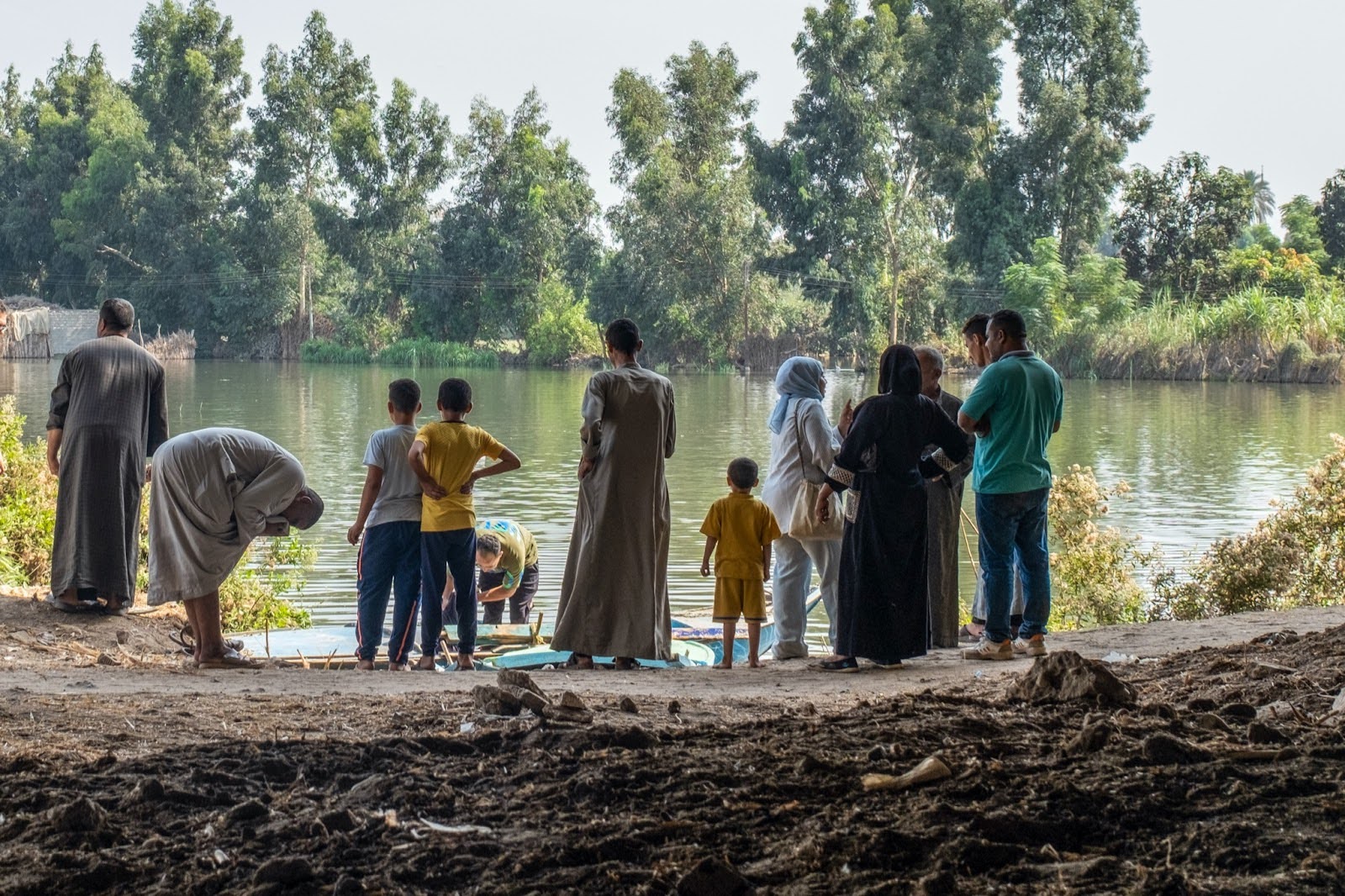
Monufiya and Beheira’s ‘flood days’
Over 1,000 feddans and 100 homes flooded this month. What happened and what’s next for residents?
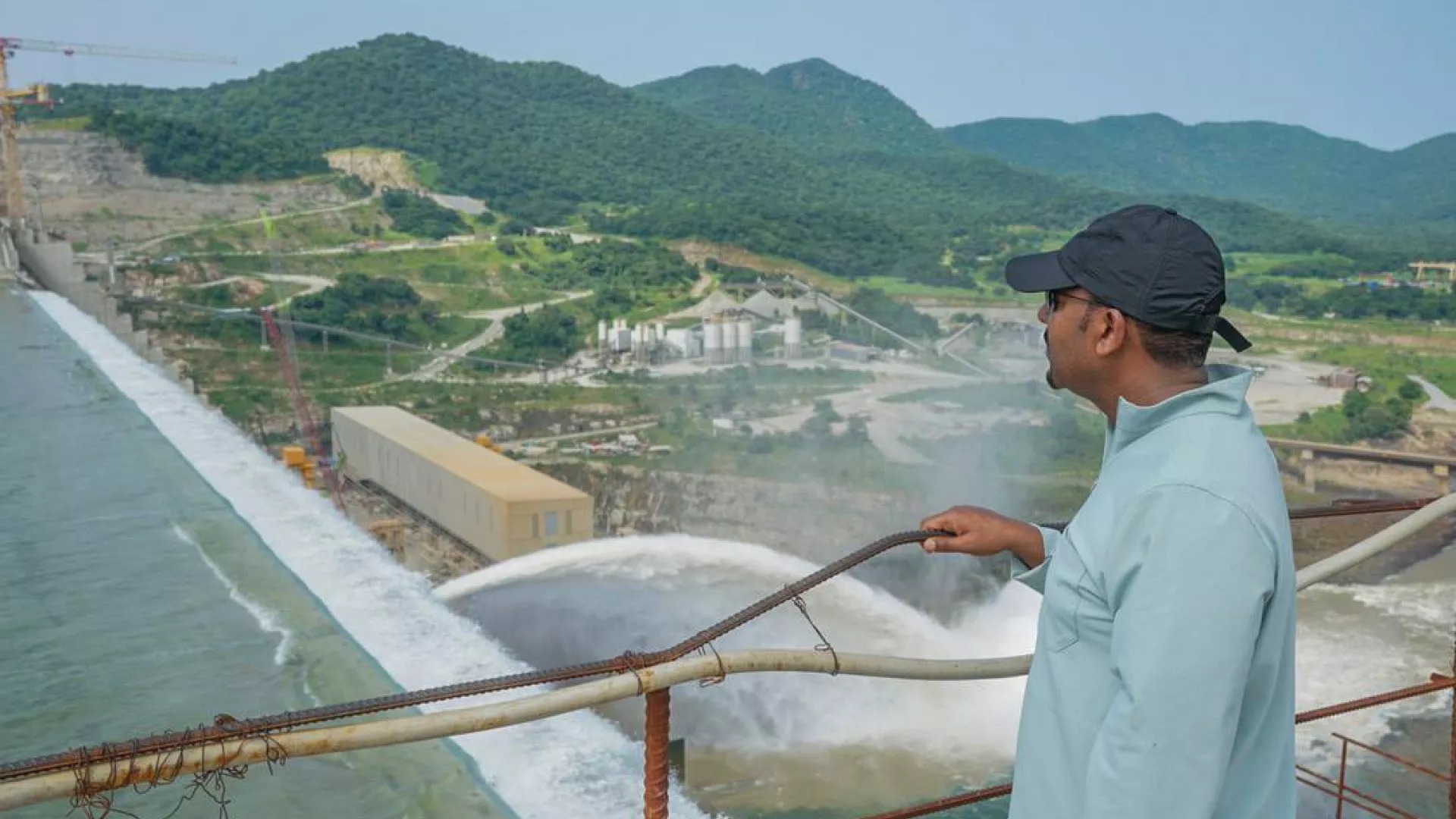
No deal and not much drama: 12 years of Grand Ethiopian Renaissance Dam negotiations come to end
Twelve long years of negotiations over the distribution of Nile waters between Egypt, Ethiopia and Sudan came to an end this week. The talks in Addis Ababa closed on Tuesday,…
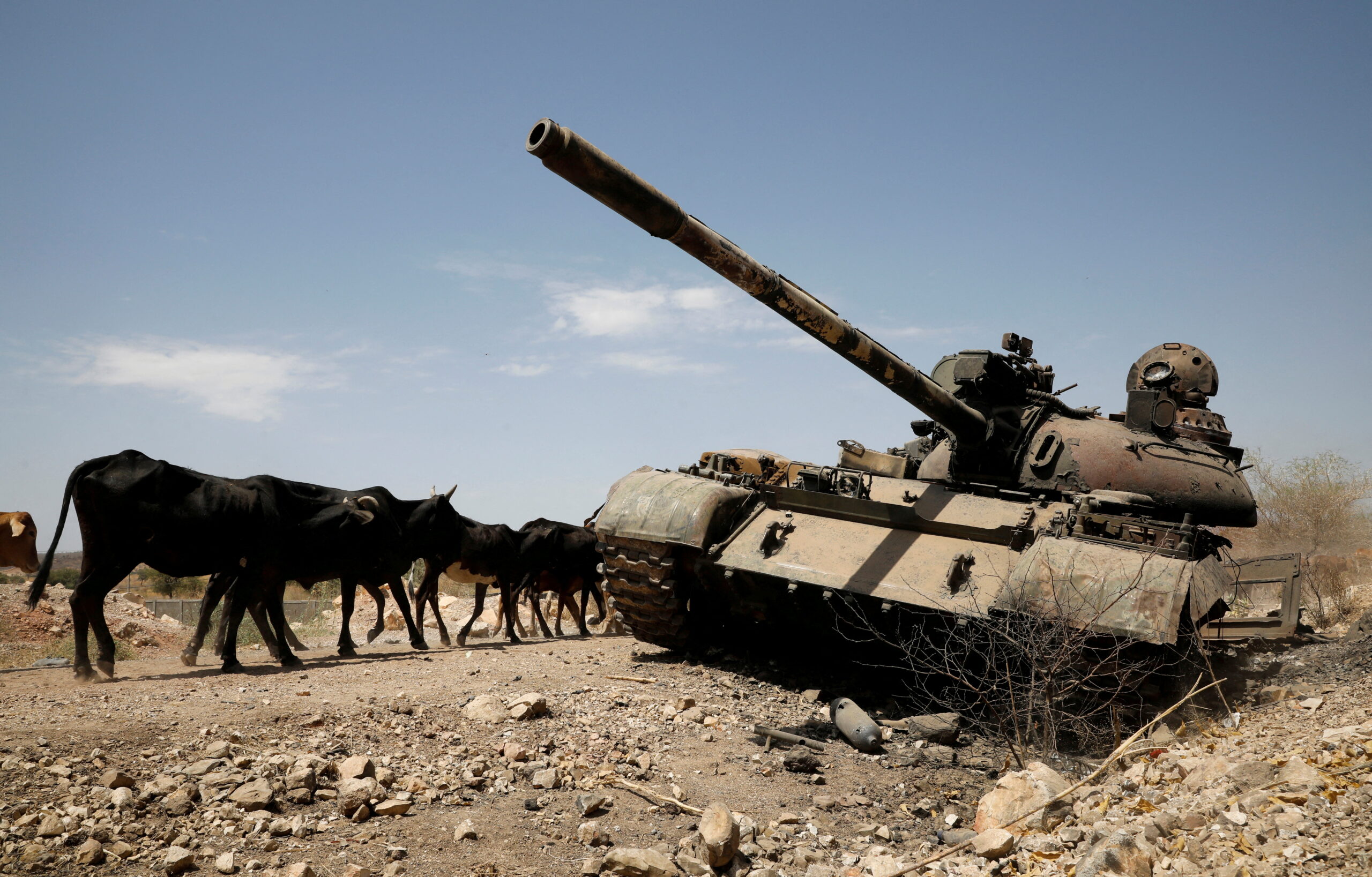
Ethiopian govt, Tigray rebels set for direct talks
The UAE has played a key role over the last month in facilitating the peace negotiations
Your support is the only way to ensure independent, progressive journalism survives.
You have a right to access accurate information, be stimulated by innovative and nuanced reporting, and be moved by compelling storytelling. Subscribe now to become part of the growing community of members who help us maintain our editorial independence.
Join us