
No deal and not much drama: 12 years of Grand Ethiopian Renaissance Dam negotiations come to end
Twelve long years of negotiations over the distribution of Nile waters between Egypt, Ethiopia and Sudan came to an end this week.
The talks in Addis Ababa closed on Tuesday, with the usual exchange of accusations. Egypt said Ethiopia wanted “absolute Ethiopian control of the Blue Nile,” calling the country immovable and unwilling to compromise with Cairo and Khartoum downstream. Ethiopia bit back, saying Egypt was employing a “colonial era mentality.”
With no trilateral agreement, the countries are left with no consensus over how they should cooperate over the Nile, access to which Egypt has described repeatedly as an “existential” issue for the country.
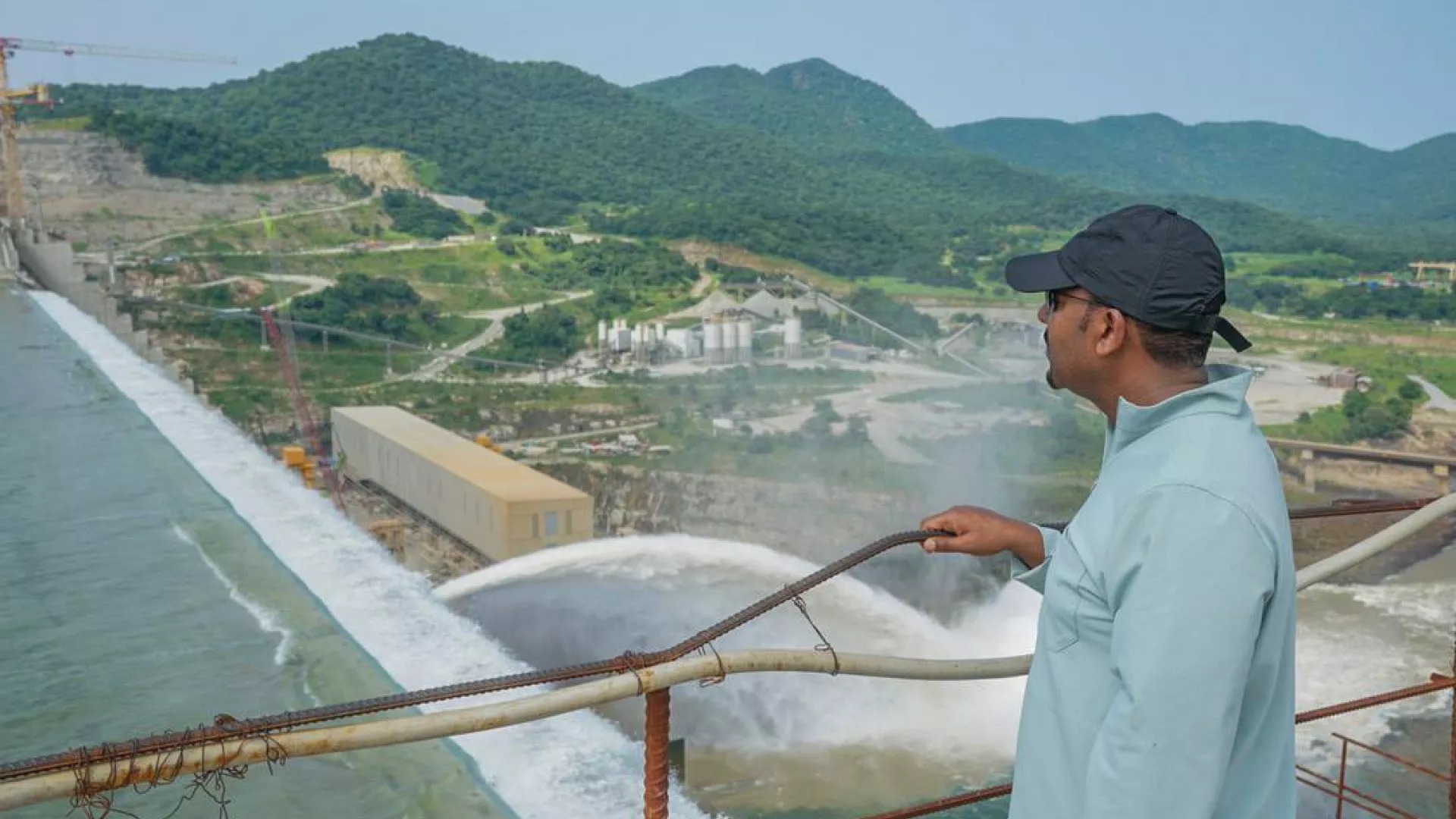
But the end of the negotiations this week comes as less of an escalation than as a slowing stagnation of the talks in the face of an immovable fact: Ethiopia has already built the dam, and there is very little to be done about it.
“Ethiopia has the water and the dam,” says a source from an international non-governmental organization familiar with the negotiations. “Egypt had no choice but to negotiate for the water. Ethiopia, on the other hand, has no reason to agree to give up what it sees as its right," the source tells Mada Masr.
We have seen a more conciliatory Egypt at points, at others a more confrontational one. We have seen a raft of different approaches to a deal from different international mediators.
Looking back over more than a decade of discussions, little appears to have changed since the talks began when Ethiopia unveiled the dam plans in 2011.
Egypt has tried to shift the negotiations to address its concerns about water distribution in the future, the source added. But with the dam already built, Ethiopia has no reason to make concessions.
A research paper prepared by members of the Egyptian negotiating team strikes a similar tone to the source. As much as Ethiopia wanted the dam to generate hydroelectric power for its own national development, the team says, the country has also put itself in a politically advantageous position.
Sudan and Egypt downstream of the Blue Nile are left with little bargaining power and limited options. Either they tacitly accept the control that the Grand Ethiopian Renaissance Dam grants Addis Ababa over the water, or they enter into an agreement that would ultimately legitimize Ethiopia's control and solidify its unrestricted right to use the river’s resources, the research team concludes.
The international NGO source said that part of the reason for the talks coming to an end is also that the "current situation is satisfactory for everyone." Abundant rainfall means Ethiopia can store water and allow the excess to reach Egypt and Sudan without any one of the countries experiencing a significant reduction to the annual volume of water they can access.
"While the situation remains reassuring for everyone, there is no justification for expediting negotiations or concessions,” the source said.
The real problem will arise if the situation changes.
However, even then, the source says, Egypt may have no choice but to accept “Ethiopian water management and rely on international pressure to compel Ethiopia into reaching a temporary agreement that guarantees Egypt some water for a year or two during droughts.”
Mada Masr reviewed the information available about the last twelve years and beyond of talks between Egypt, Ethiopia and Sudan regarding the management of Nile waters.
- It started in 1959. Overriding a British colonial agreement, Egypt and Sudan signed the Nile Waters Agreement, which granted the former 2,000 cubic meters of Nile water per person annually. Simultaneously, the agreement overrode the shares of all other Nile Basin countries. The quantity Egypt had access to would shrink — due to population growth and other factors — to 560 cubic meters per person per year in 2021, approaching the United Nations' absolute water scarcity threshold of around 500 cubic meters.
- The dispute surrounding GERD emerged in 2011, when Ethiopia unilaterally announced the mega project without notifying or consulting Egypt and Sudan, asserting its construction as a matter of Ethiopian sovereignty. Given Egypt’s reliance on the Nile for around half of its annual water supply, it was strongly opposed to Ethiopia’s initiative. Sudan also expressed solidarity with Egypt’s stance.
- Egypt’s government, led by the Supreme Council of the Armed Forces, was preoccupied with domestic developments following the ouster of deceased former President Hosni Mubarak. Concerns about the dam’s construction were left unanswered. The administration did not leverage relationships with international allies to try to bring Addis Ababa to the negotiating table — as they would later on.
- Under former President Mohamed Morsi, elected in 2012, domestic affairs likewise took precedence, and the question of the megadam was largely sidelined. Realizing its urgency, however, Morsi organized a meeting with several public figures to gauge their stance on the issue. The meeting was broadcast live, putatively "on accident,” revealing proposals for military intervention. This incident caused significant damage to official Egyptian-Ethiopian relations and gave Ethiopia a pretext to rally African opposition against Cairo
- In May 2013, according to research by members of the Egyptian negotiating team, an International Panel of Experts examined the specifications of GERD’s design and recommended that studies be conducted on the dam’s hydrological, environmental, economic, and social impacts. Technical experts from the three countries' Tripartite National Committee took part in talks to agree on how to move the panel of experts’ recommendations forward. It took years for them to appoint a foreign consultant to conduct the recommended studies. But the plan fell through, and no studies on the impacts of the GERD were presented
- When President Abdel Fattah al-Sisi assumed power in 2014, he embarked on a diplomatic move to sign a joint document with Ethiopia and Sudan on managing GERD.
- A Declaration of Principles was signed by the three countries in 2015. Some Egyptian officials opposed the idea of the agreement and viewed it as a political concession with no reciprocal benefits. "It is evident that the document was far from perfect, but the focus at that time was not on the text itself, but [on] winning the hearts and minds of the Ethiopian people as a first step toward more specific negotiations, instead of talks that had been taking place behind closed doors since 2011," according to a government official who previously spoke to Mada Masr.
- For the following four years, until 2019, delegations from the three countries held regular meetings to discuss technical and legal issues pertaining to the construction and operation of the dam.
- In 2018, Egypt, Sudan and Ethiopia established a new body called the National Independent Scientific Research Group (NISRG), consisting of five hydrology experts from the three countries. The NISRG aimed to reach a consensus on technical scenarios for the filling and operation of the dam. However, the group failed to achieve unanimity among the three countries
- In 2019, a mass uprising erupted in the streets of Sudan to topple the 30-year rule of Omar al-Bashir. Cairo sided with Bashir, who ultimately met his downfall, putting Egypt in a diplomatic predicament with the new administration in Sudan. Albeit with great difficulty, Egypt managed to overcome this obstacle, with a little help from its then-ally former US President Donald Trump.
- Negotiations over GERD reached a "dead end," a spokesperson for Egypt’s Irrigation Ministry said in 2019, indicating that talks had arrived at a state of "complete impasse."
- Egypt began to explore external options. Invoking Article 10 of the Declaration of Principles, Egypt called for the intervention of a fourth party capable of mediating between the three parties to reach a timely agreement, a year before the start of the dam's planned initial filling. Recognizing its influence and longstanding strategic partnerships with Egypt and Ethiopia, as well as its good relations with Sudan following the revolution, Egypt extended an invitation to the US to mediate. As Egypt foresaw, Ethiopia could not resist an American initiative to assist the three parties in reaching an agreement on GERD. At that time, the Ethiopian government, led by Prime Minister Abiy Ahmed since 2018, sought to present itself to the broader international community in a different light, setting itself apart from the former ruling party, the Tigray People's Liberation Front.
- On November 6, 2019, Ethiopia agreed to participate in a meeting convened by the US’ Treasury Secretary at the time. Held in Washington DC, the meeting also brought together Egypt, Sudan and representatives from the World Bank with the aim of discussing potential resolutions to the GERD issue.
- It was then that things got thorny. Egypt wanted to agree on specific rules to regulate the operation of the GERD under natural conditions and periods of drought, as well as to provide strong technical coordination mechanisms. Egypt proposed an agreement to integrate the Ethiopian GERD, the main Sudanese dams, and the High Dam in Aswan into a single integrated system that would collaborate regarding water management, ensuring power generation for Ethiopia and water flow for Sudan and Egypt. This was logical, according to an Egyptian researcher familiar with the case who spoke to Mada Masr on condition of anonymity. "If Africa [was] one country, it would have built the GERD in Ethiopia. The evaporation rate is lower there, so it would be better to store water there instead of bringing it to Egypt, where it would evaporate significantly in Lake Nasser under the scorching sun. So the problem is not in Ethiopia building the dam itself, but in managing the water during periods of limited rainfall. When drought occurs, should the water be allowed to pass to irrigate thirsty people, or should Ethiopia benefit from it first?" the researcher pointed out.
- However, Ethiopia opted for broader guidelines, refraining from specific operational rules or clear obligations that it must adhere to during drought periods.
- The countries also disagreed on the definition of drought. Ethiopia set a very narrow definition that would require it to release water to downstream countries only for extremely limited periods, according to the research paper written by members of Egypt’s negotiating team. Ethiopia also wanted to leave things open, so that if there was a drought, the three countries would negotiate only at that time to determine how to respond.
- For Egypt, this meant Ethiopia could get all the benefits of the agreement, including political and legal triumphs, by obtaining Egypt and Sudan's approval for the filling and operation of the GERD without assuming any obligations.
- By the third round of US-mediated talks, Ethiopian negotiators had hinted to US representatives that they were not interested in implementing any approach that would integrate the GERD into a multi-dam system to coordinate the operation of the dams in the three riparian countries. The Ethiopians justified their position by expressing their unwillingness to acknowledge the colonial 1959 Nile Waters Agreement.
- Over the course of the negotiations, the US put forth a new proposal based solely on two variables: the volume of inflow to the GERD reservoir and the volume of release from the dam. For Egypt, this implied that Ethiopia could construct additional dams upstream of the GERD without taking into account the interests or the extent of the impact on Egypt and Sudan. A lot was left hanging on the future. Without any mention of Ethiopia's water utilization north of the GERD, Ethiopia would essentially have discretion in future scenarios to manage the water.
- US negotiators pressured Egypt to agree to the new proposal, and Egyptian authorities ultimately acquiesced.
- However, the Ethiopian delegation announced that it could no longer accept the agreements that have been put forth and presented an entirely new text, calling for the reopening of negotiations based on its new proposal.
- In February 2020, Egypt rejected this move and Ethiopia withdrew from the talks at the last minute, announcing its intention to unilaterally commence the first filling of the dam.
- In June 2020, with the assistance of the United States and France, the UN Security Council held a session to discuss the dispute over GERD at Egypt’s request. It was not a fruitful intervention. The international body ultimately determined that to adjudicate the GERD issue would set an awkward precedent for similar disputes, such as those between Israel and Jordan or China and India.
- In mid-July 2020, Ethiopia celebrated the initial filling of GERD’s reservoir, which amounted to approximately 5 billion cubic meters. Egypt did not recall its ambassador to Addis Ababa, nor did it declare the Ethiopian ambassador to Egypt persona non grata. It verbally condemned the filling as a unilateral step by Addis Ababa. Current and former Egyptian government officials with knowledge of the developments at the time have stated that this decision caused significant controversy within state institutions. Some argued that a moderate response would send the wrong message to Ethiopia about Cairo's "weakness." Supporters of the decision, however, believed that Ethiopia would benefit if Egypt took a more hardline stance. If talks were cut off, Ethiopia could proceed with the dam construction and filling without the need for the hassle of negotiations.
- In October 2020, former US President Donald Trump warned Sudanese Prime Minister Abdalla Hamdok in a phone call that Egypt might "blow up" the GERD.
- The African Union intervened shortly after Ethiopia filled the dam. It managed to convince both parties to resume negotiations under its auspices. However, by that time, Egyptian-Ethiopian relations had weakened, prompting the two sides to adopt a somewhat improvised and lengthy formula that called for tripartite negotiations between Egypt, Ethiopia, and Sudan, sometimes with the presence of African Union officials. Similar to previous negotiations, these talks concluded without any results.
- In July 2021, Ethiopia proceeded with the second filling of the dam.
- In 2021 too, negotiations dubbed "last chance" talks by Egypt’s Foreign Ministry were hosted in Kinshasa, the capital of the Democratic Republic of Congo, which chaired the African Union at the time. Then-Egyptian Foreign Ministry spokesperson Ahmed Hafez proceeded to squarely place the blame on Ethiopia for the failure to reach an agreement on the resumption of negotiations. Ethiopia rejected Egyptian and Sudanese proposals, including the formation of an international quadripartite committee led by Congo to oversee negotiations.
- In August 2022 and July 2023, Ethiopia conducted the third and fourth fillings of the dam’s reservoir.
- A new round of negotiations began in July this year after years of near-stagnation. President Abdel Fattah al-Sisi and Ethiopian Prime Minister Abiy Ahmed stated their intention to reach an agreement within four months.
- And in December, the talks were pronounced to have ended in failure, as declared by the Egyptian Water Resources and Irrigation Ministry on Tuesday. The collapse of talks, the statement said, was brought about by Ethiopia's persistent refusal of technical and legal solutions that would safeguard the interests of all three countries. The ministry’s statement accused Ethiopia of exploiting the negotiations to "cement a fait accompli" and secure “absolute Ethiopian control of the Blue Nile,” in isolation from international law. The statement underscored Egypt's right to defend its water resources and national security “in the event of harm.” In response, the Ethiopian Foreign Ministry said that the Egyptian government's statement “violates the UN Charter and the Constitutive Act of the African Union.” The ministry rejected Egypt’s "misrepresentation" of Ethiopian positions in the talks, while accusing it of maintaining a “colonial-era mentality” throughout the four negotiation rounds.
تقارير ذات صلة
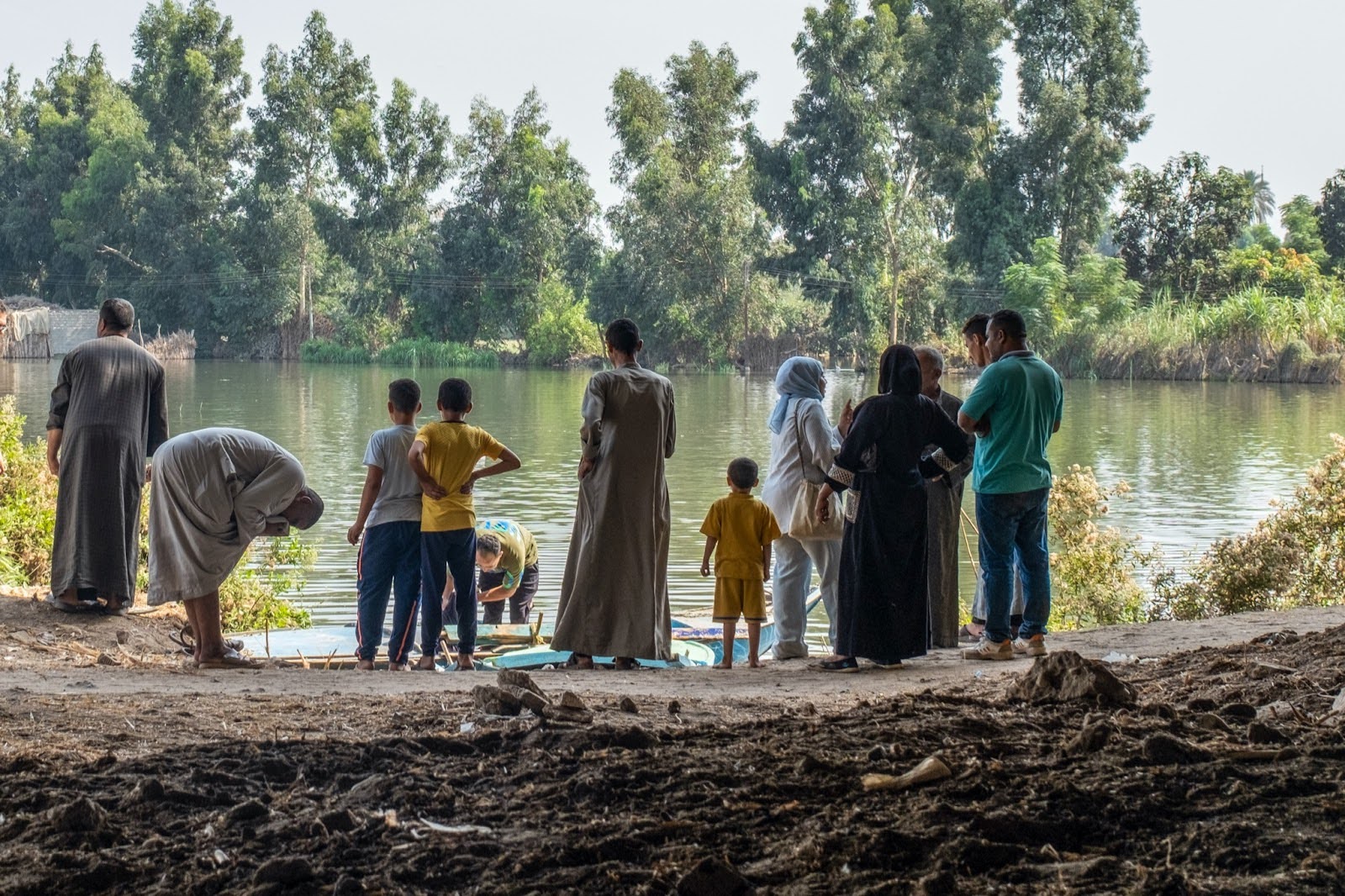
Monufiya and Beheira’s ‘flood days’
Over 1,000 feddans and 100 homes flooded this month. What happened and what’s next for residents?
Q&A: Unpacking the environmental and economic impacts of the GERD with engineer Mohammed Basheer
Nile Basin researcher Mohammed Basheer discusses the environmental and economic impacts of the dam.
How to make friends, by Jeffrey Epstein
power begets power, even if just by association
Your support is the only way to ensure independent, progressive journalism survives.
You have a right to access accurate information, be stimulated by innovative and nuanced reporting, and be moved by compelling storytelling. Subscribe now to become part of the growing community of members who help us maintain our editorial independence.
Join us