
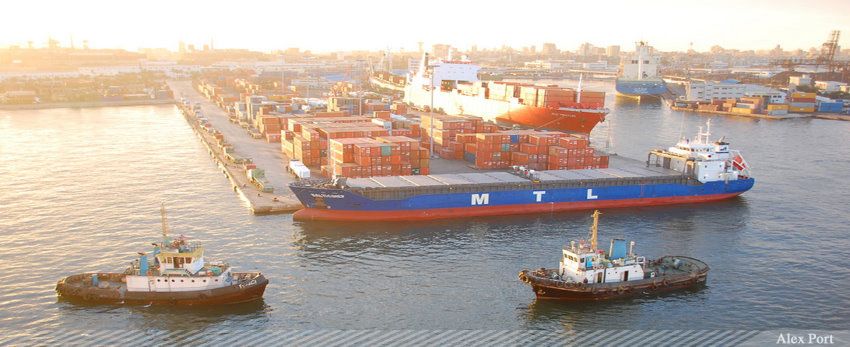
Central bank import regulations stifle access to key goods in trade-off for dollar solvency
Egyptian importers have been unable to obtain crop seeds for almost three months, putting many livelihoods and supply chains in danger as nearly 98 percent of the seeds used nationwide in agriculture are imported.
“Some importers have resorted to informal methods, using personal connections or bribery to facilitate some seeds getting in,” the director of an import company told Mada Masr on condition of anonymity. “Without that, we wouldn’t have had potatoes for next year.”
Crop seeds are just one of an array of commodities that industry figures told Mada Masr have been rendered all but inaccessible as the consequence of a new set of import regulations rolled out abruptly beginning in February by the Central Bank of Egypt; regulations that resulted in the disruption of supply chains that connect foreign markets to industrial plants, farmers’ fields and hospitals across the country.
Economists who spoke to Mada Masr viewed the sudden regulatory pressure on import operations as the collateral damage of policies deployed to rake in liquidity to compensate for foreign investors fleeing the Egyptian bond market to seek safer shores for investments amid increasing global inflation exacerbated by the Russian invasion of Ukraine. They said that the scarcity of commodities, like planting seeds, stemmed from a hastily deployed strategy, through which the state sought to bolster its depleted reserves of foreign currency.
Importers were, for the first time, required to deposit advance payment in foreign currency for their shipments within the national banking system, and to make foreign currency exchange transactions exclusively within the banks, instead of at exchange houses or on the informal market. The decisions concentrated all the money changing hands in the import trade within banks for the first time.
With many companies unable to supply so much cash up front, and with certain types of commodities blocked by another set of central bank instructions issued in March, the passage of crucial goods into Egyptian ports was partially paralyzed.
The first of the new regulations was deployed on February 13, when central bank governor Tarek Amer shook the market by introducing the documentary credit import system. Under the new rules, any importer wishing to bring goods into the country would first be obliged to obtain approval for the operation from a bank. If granted permission, they must then open a credit line, depositing in advance the full cost of the import transaction, plus interest, in the required foreign currency. The bank would then issue them a letter of credit, a document guaranteeing payment to the exporter’s bank upon receipt of the goods.
Several importers who spoke to Mada Masr said the decision sent shockwaves through the market. Importers were previously able to coordinate directly with exporters to pay just a small percentage of the full transaction in advance, before then receiving the goods and paying the remainder in installments later.
Small and medium-sized enterprises were exposed to the greatest impact, said Eastern Tobacco Company CEO Hany Aman, and a number of other traders and importers who spoke to Mada Masr. “The degree of impact varies,” Aman told Mada Masr, “big companies have greater capacity to survive those crises.” Eastern Tobacco, for example, had greater financial solvency and could mine its revenues for dollars to facilitate imports if needed. Eastern Tobacco Company also has large stocks of tobacco to fall back on, Aman said.
Immediately after the central bank announced the decision, representatives of Egypt’s major business associations sent a joint letter of protest to the central bank and the prime minister. The Federation of Egyptian Chamber of Commerce, the Federation of Egyptian Industries, and the Egyptian Businessmen’s Association called for the “immediate suspension” of the decision, citing 12 major concerns — including the fact that it exacerbated an already pressing supply chain crisis caused by the coronavirus pandemic, and threatened the industrial supply of intermediate goods used in production, which would push up local commodity prices.
“There is no going back,” was the central bank governor’s firm retort to importers’ complaints, as he urged them to “reconcile their situations and not to waste time on controversies that have no relation to the stability of Egypt’s foreign trade and its sound performance.” Regardless, the central bank decided a few days later to ease some of the restrictions, exempting the controls for imports of industrial production inputs, with importers pledging to open credit lines later.
Yet, the industrial sector continued to face disruption. Even when dealing with goods that are listed as production inputs, according to Tawhid Anwar, a member of the leather division at the Cairo Chamber of Commerce, would-be importers were sometimes told that the bank did not have central bank approval to open credit lines and grant letters of credit for this type of import operation. According to Ashraf Helal, head of the chamber’s Electrical Appliances Division, banks were often late to approve importers’ requests for credit lines.
At the end of March, the central bank directed banks not to approve credit lines for the import of 13 commodities, including cars, mobile phones, seeds, plants, fruits and clothing, unless the importer had obtained direct permission from the central bank to import the goods.
While several bank officials denied receiving such instructions, a number of banking and business sources told Mada Masr on condition of anonymity that the bans were implemented in practice.
Crop seeds were just one of the casualties of the decision. The director of an agricultural seed import company told Mada Masr that vague wording in the central bank’s March decision was at the root of the seed sector’s troubles. The central bank indicated “seeds,” meaning edible seeds like sunflower or chia, as one of the 13 barred commodities, said the company director. But in practice, banks prevented the import of any seeds, including those needed to plant staple crops. “What’s more, the banks were refusing to file any import requests, saying that the central bank prevented them,” the source added. The Egyptian Seed Industry Association wrote to the central bank in April, requesting that it clarify the matter to the banks under its supervision to facilitate their imports, but did not hear back.
Until now, the central bank has done nothing to clarify the misunderstanding.“Disaster threatens the agricultural sector over the coming year,” said the director.
Mohamed Rostom, the secretary general of the importers’ division at the Federation of Egypt Chambers of Commerce, said that some importers grew “tired of the banks” and took to the informal market in search of dollars. “They would go to the informal market to collect the dollars, deposit them in the bank and ask for letters of credit.”
But on April 21, the central bank shocked the market again, banning banks from accepting documentary credit requests if the importer submits foreign currency obtained from “unknown sources, or exchange offices.”
The decision was an attempt to stop importers from using informal markets for foreign currency.
The string of central bank decisions — both the import restrictions and the decision to devalue the pound against the dollar in March —“made the crisis worse,” as Rostom put it, for merchants, manufacturers and importers. The decisions “came in like relentless shocks,” he said.
Yet, at the macro level, the new regulations appeared to serve their purpose. The economic imperative for the decisions, said the head of the industry federation’s food industries division Ashraf al-Gazairly, was to avoid more dollars exiting the country, as dollar inflows were dented by two years of supply chain disruption due to the global pandemic, and further exacerbated still by the repercussions of Russia’s invasion of Ukraine.
“It was all necessary,” said Hisham Hamdy, a research analyst at Naeem Securities, who described the regulations as “first-aid” to a distressed foreign account, with the national balance of payments mired in a deficit for six consecutive months, totaling a cost of over $10 billion. A central bank official told the domestic press that the new documentary credit system had secured the deposit of funds worth a total of $11.6 billion in the banking system since its implementation in April.
Even the prime minister, acknowledging the “expense” to “some other sectors,” appeared to celebrate the new regulations for “serving the state well in some ways” during a May presser. The central bank deployed a few strict policies of import trade governance, said Prime Minister Mustafa Madbuly, to ensure the foreign cash liquidity essential for “serving the top strategic priority of the state: securing a safe exit for foreign investors.”
But down the line, said an importer who spoke to Mada Masr on condition of anonymity, the remedy deployed by the central bank could stymie Egypt’s foreign trade further. “Countries exporting to Egypt may resort to international regulatory organizations to complain against import restrictions, similar to cases already ongoing against Egypt at the World Trade Organization from the European Union and Russia.
Still more dangerous is the possibility that Egypt may find other countries with similar regulations decide to reciprocate, and end up banning Egyptian exports, according to the importer. This poses a threat to the most important sources of hard currency, if not the most important at all, at the present time.
*Ahmed Medhat contributed writing and research to this report.
تقارير ذات صلة

Govt’s launch of ‘Citizen Bonds’ challenges domestic banks, sources say
The Finance Ministry’s new “Citizen Bond” is being rolled out today, available for individuals exclusively through Egypt Post branches. The 18-month savings and investment instrument offers a fixed annual return…
Queuing for gold
Gold remains a trusted option for people looking to invest their savings despite a volatile market
A day afloat
Egypt will be getting another US$5 billion in loans from the International Monetary Fund as an increase to the 2022 $3 billion loan, IMF representative in Egypt Ivanna Vladkova Hollar…
Your support is the only way to ensure independent, progressive journalism survives.
You have a right to access accurate information, be stimulated by innovative and nuanced reporting, and be moved by compelling storytelling. Subscribe now to become part of the growing community of members who help us maintain our editorial independence.
Join us