
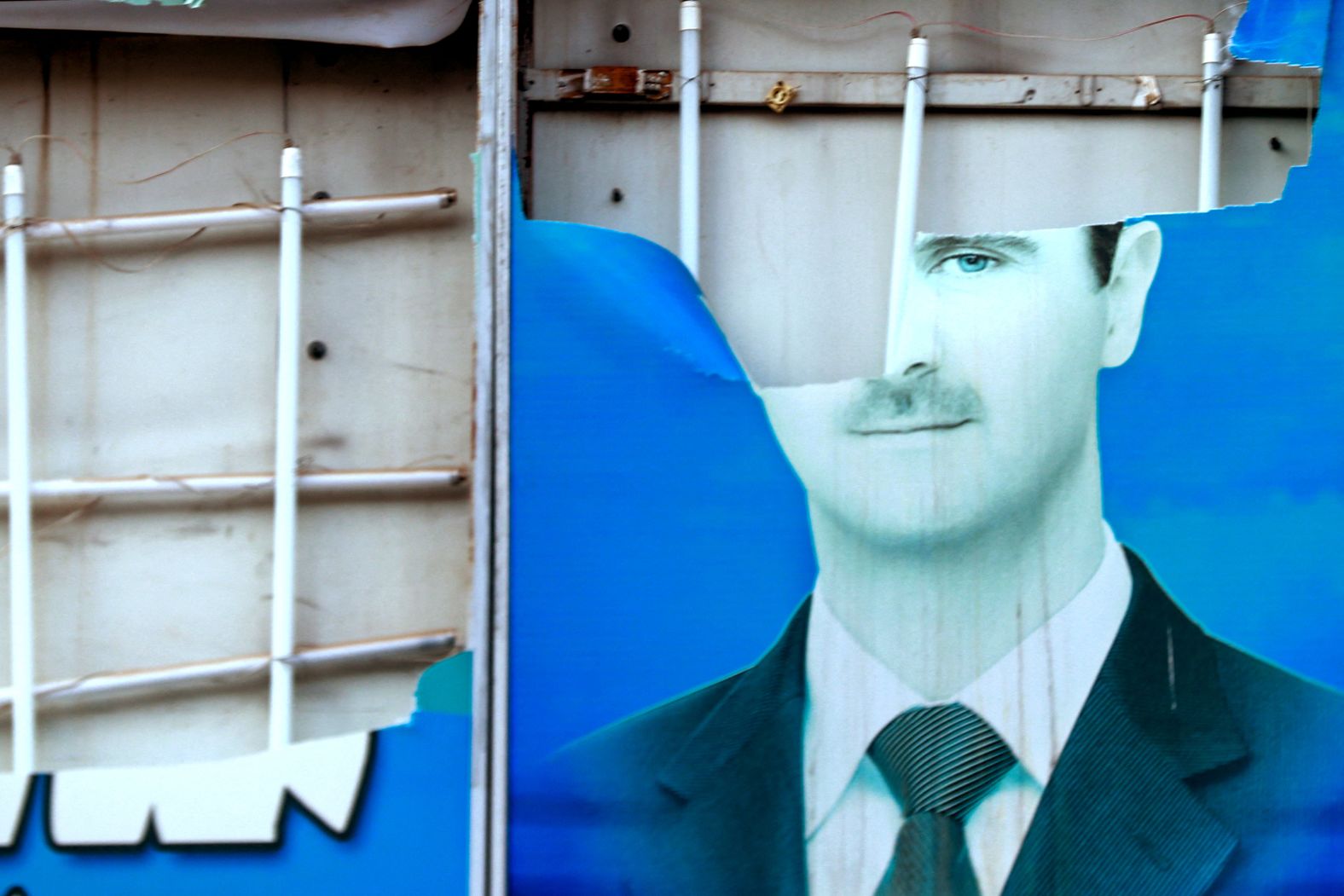
Assad no more: The 10 days that changed everything
What had been long unthinkable is now a reality. And it came to pass in just 10 days.
That reality is that, after more than five decades, the Assad family’s reign over Syria is over.
The whereabouts of Bashar al-Assad, the now-former president of Syria, remained unknown for the better part of the day. Reuters has reported that he might have boarded a plane in the middle of the night, but that the plane suddenly disappeared from radar, with sources saying it might have crashed and that Assad may now be dead. Russia said that Assad stepped down, is in Moscow with his family and that they are being granted asylum.
How has this come to pass so quickly, for a Syrian regime that had appeared to have triumphed over both a revolution and civil war, and which was in recent years hoping to pursue regional and international reintegration?
While the full details are not yet clear, shock and awe predominate, if not over what happened, then at the pace of the historical change. But one thing is abundantly clear: those who were long thought of as core allies to the Syrian regime all arrived at the same conclusion: it is time for Assad to go.
After the revolutionary fervor of 2011 gave way to an internationalized civil war, Syria saw a status quo set in around 2018. The country was divided into zones of influence, each under the military — and in some instances, administrative — control of different factions.
But that status quo has been turned upside down. While it may look like things suddenly changed in the last 10 days, the rapid advance of rebels from Syria’s northeast into the heart of Damascus on Sunday morning has been slowly developing over months. Beyond military plans or revolutionary slogans, what has played out over the last 10 days is the threading together of factors that saw the coalition that glued together Bashar al-Assad’s regime in the last decade fall apart. Mada Masr spoke to sources in Syria and across the region to understand how the impossible has happened.
***
The drama of the past ten days has been in the making for a few months now. Suddenly, armed factions that were previously at odds with each other managed to put aside their huge differences and unite over one goal: the downfall of Assad’s regime. They prepared and trained, waiting for the “right” moment. “Right” has not only internal iterations, but also regional and global ones.
This moment could be traced back to 14 months ago, when another unimaginable event hit the region. On October 7, 2023, Hamas surprised the world and attacked Israel. What ensued was a genocidal war on Gaza, of which the flames expanded to Lebanon, dragging major regional powers in, mainly Israel and Iran, creating a cascade effect, the latest of which we currently see in Syria, the ripples of which are likely to expand across an already fragile region.
In the first months of the war, Hezbollah maintained a stream of rockets over northern Israel to ease the pressure on Gaza and also on itself, following popular calls from across the region for the party to step in. Iran engaged in choreographed exchanges with Israel. Then, in September 2024, Israel decided it was time to escalate on the Lebanon front. It razed large swaths of the country’s south and east. Over a million people, mostly Shia, were displaced from the south. Beirut saw nightly bombings that turned the southern parts of the capital into rubble. Israel killed Hassan Nasrallah and his apparent successor Hashem Safieddine, along with nearly all of Hezbollah’s leading ranks.
For Lebanon and Hezbollah, the war has undoubtedly been disastrous, even as the party’s fighters were able to fend off the rapacious advance of the Israelis for now. What is to come for the future of Lebanon remains unclear in the wake of a barely-there ceasefire agreement, whose main provisions aim to weaken Lebanon’s major political and military power broker.
But the domino effect propelled by the confrontation between Israel and the “Axis of Resistance” did not end once the ceasefire was agreed to in Lebanon.
Well aware of Assad’s desire to avoid being embroiled in further conflict that would undo his hard work to climb out of the hole he had dug for himself, actors with non-resistance stripes began to court the Syrian regime.
According to a regional diplomat, Israel sent Assad a proposal after Donald Trump was elected US president whereby they would help the now former Syrian president by easing sanctions if he halted the delivery of Iranian supplies to Hezbollah in Lebanon aimed at rebuilding Hezbollah’s capabilities.
This was the latest of a series of similar offers. Reuters reported that the United Arab Emirates, which has built inroads with Damascus in the last year, also lent its hand in the lobbying efforts.
According to the regional diplomat, however, Assad did not fully comply with the offers “given his clear need for Iranian support.”
But it was a tightrope walk. The balancing game played by Assad was insufficient in a radical moment in which every party was expected to be clear on where they stand.
So, even if Assad was not willing to fully tamp down resistance supply routes that run through regime-controlled territory, some of his actions angered Iran, which harbored a growing suspicion that Syria was behind some of the key intelligence leaks that have plagued resistance operations in recent months.
According to a Syrian military general who spoke to Mada Masr on condition of anonymity, Tehran had confronted Assad earlier this year about its belief that he had been soft on a growing network of espionage networks run under his watch. Tehran, the source says, believed that these espionage networks had leaked critical security intelligence about Hezbollah’s operations, members, and weapons in Syria.
Assad conceded to Iran’s demands and began to crackdown on some of the figures marked for suspicion, the source adds.
When war broke out in Lebanon in late September, Iranian Foreign Minister Abbas Araghchi took a regional tour that included stops in Beirut, Damascus, Riyadh, and Cairo.
In Damascus, the Syrian military source says, the Iranian foreign minister issued Assad a stern rebuke over what Iran perceived as a failure to protect its interests. While Assad was conciliatory in the meeting, he later “backtracked,” the source says, shutting down Hezbollah offices in several locations, while a series of Israeli assassinations hit Iranian leaders in Syria.
As Israel bombed key weapons supply routes between Syria and Lebanon during the war and killed key Hezbollah officials operating between Lebanon and Syria, “Syria distanced itself from Iran,” a second military source confirms. “Syria closed several key Hezbollah-linked offices in Damascus, Tartus and Latakia, driven by fears of an Israeli strike on Syria.”
These actions “confirmed Tehran’s belief that Assad was playing a double game to secure his position,” the first military source says.
Once the ceasefire was secured in Lebanon, Iran turned its eyes toward its increasingly large Syria problem.
According to five sources — an Iranian diplomat in the region, the Syrian general, another Syrian military source, a Syrian political source and a Syrian diplomatic source who coordinates closely with Russian diplomacy in Syria — Iran decided that Assad is no longer a reliable ally. Replacing him with someone else from the regime would be of better help to its interests and, at the same time, make sure Syria is still a part of the axis.
According to the source close to Russia and the second military source, Iran was in talks in recent weeks with Alawite officers loyal to Tehran to remove Assad from power.
This was the beginning of the end for Assad but, ironically, in a radically different way.
***
In order to fully understand the present day unraveling of the Assad regime, it is necessary to look back at how the coalition of actors who have long glued it together came about.
The first part of this coalition entered the fray in early 2012, when Iranian and Hezbollah fighters were deployed to Syria. It was a deployment that evolved significantly in the following years.
Qasem Soleimani, the late head of Islamic Revolutionary Guard Corps, led Iran’s ruthless intervention in Syria. He was at the forefront of the siege on Baba Amr in Homs and orchestrated the retaking of Qusayr in May 2013 with significant help from Hezbollah.
Under Soleimani’s watch, the regime was able to retake large swaths of territory from rebels.
But by 2015, the regime had been dealt a string of defeats and Soleimani decided he needed to find a way to bolster his fighting forces. The answer? Russia.
Soleimani personally traveled to Moscow and explained to Russian military officials the deteriorating situation in Syria, where rebel advances toward the coast were posing a danger to the heartland of Assad's Alawite sect and where Russia maintains its only Mediterranean naval base in Tartus.
The plan was simple: with increased Iranian deployment on the ground backed by Russian warplanes, the regime could turn around its fast accelerating losses and Russia could secure its all important base in Tartus.
But even amid declarations of a new Iranian-Russian alliance in these early years, Russia’s engagement was limited.
“From the outset of its 2015 intervention, Russia limited its involvement to ruthless airstrikes against rebel areas, never fully taking charge of Syria. Instead, it relied on Hezbollah’s crucial ground forces, Iran’s Revolutionary Guard advisors and the UAE’s diplomatic cover to keep Assad in place,” says Jalel Harchaoui, an associate fellow at London’s Royal United Services Institute.
Nonetheless, the Russian weapons and aircraft cover made a difference. And Iran, Hezbollah and the regime began to turn the tide in the war. In late 2015, the regime had made steady gains in the south of Aleppo, taking numerous rebel strongholds. And in early 2016, backed by the widening coalition of actors, the Fourth Armored Division of the Syrian Army, led by Maher al-Assad, launched an offensive into the Aleppo countryside, ending the three-year siege of Nubl and Zahraa in northern Syria and cutting off key rebel supply routes from Turkey.

The assault on Aleppo played out against the backdrop of a series of attempted ceasefire negotiations, first between Russia and the US and later between Turkey — which had trained the rebel Free Syrian Army and was later linked to supporting the Al-Qaeda-affiliated Nusra Front — and Russia in Astana, Kazakhstan.
These ceasefire agreements effectively allowed for the consolidation of key gains by all sides through the creation of “de-escalation zones” nominally ruled by various parties, while still granting the regime loopholes to try to slowly claw back territory.
In the intervening years, fighting shifted to the northwest of Syria in the Idlib region. The year 2020 saw major developments, including the assassination of architect of the Assad coalition Qasem Soleimani and the signing of the Idlib ceasefire between Turkey and Russia.
But after 2020, war was no longer at the forefront of the Syrian question. The country’s thriving captagon trade was bringing in millions of dollars for the regime — even if it was the ire of other countries flooded by the illicit drug — which was suffering under heavy US sanctions that had effectively turned it into a pariah state. Assad was keen to secure his return to the fold of the regional and international political scene.
He set his sights, first, on readmittance to the Arab League. After years of diplomatic posturing, the earthquake that struck Syria and Turkey in early 2023 and the subsequent need for humanitarian assistance served as a conduit for a major breakthrough, with Saudi Arabia being the first to welcome Assad in from the cold.
The Saudi embrace was followed by the United Arab Emirates, which in January 2024 dispatched an ambassador to Damascus for the first time since the Syrian revolution broke out in 2011.
A Syrian parliamentary source tells Mada Masr that these moves clearly upset Iran, which felt let down by Assad’s wandering eyes. There were also rumors of whispers within the Assad regime as early as 2021 that the days of such a heavy Iranian presence had passed, that the war is over and a new era is opening up for Syria.
***
Meanwhile, Turkey has maintained a sizable presence in Syria, either directly funding or providing a broad patchwork of militias. Chief among these is the Syrian National Army, which includes local groups and units from the governorates of Damascus, Homs and Deraa. Some of these factions within the SNA are fully allied with Turkey, such as the Sultan Suleiman Shah Brigade, the Hamza Division and the Sultan Murad Brigade, while others, such as the Levant Front, Jaysh al-Islam and Ahrar al-Sham, have sought to balance their interests with Ankara’s.
Ankara also maintains ties with the Islamist group Hayat Tahrir al-Sham (HTS), an umbrella group formed in 2017 for a number of Islamist actors, including the now rebranded Nusra Front, which was affiliated with Al-Qaeda until 2016. HTS is led by Abu Mohammad al-Julani, the former Nusra Front leader. But this relationship is complicated.

The Turkish interests are clear. For internal political reasons, Turkey also wanted a solution to the millions of Syrian refugees it’s currently hosting. And Ankara can’t accept a Kurdish presence, especially an armed one backed by the US, along its border with Syria.
A Turkish political source notes to Mada Masr that Erdogan tried to contain the Kurdish presence in Aleppo’s neighborhoods and surrounding areas, such as the city of Afrin.
Writing on Turkish intervention in Syria in 2020, sociologist Sinem Adar argued that the signs of Turkey’s statebuilding efforts could already be seen around Aleppo.
“Turkey’s demographic, administrative and military practices in areas that fell under Turkish-SNA control during the Turkish military incursions in 2016, 2018 and 2019 resemble early phases of state formation. These areas are the northern Aleppo Governorate, the district of Afrin and the area east of the Euphrates River between Tal Abyad and Ras al-Ain,” she wrote. “Surprisingly, often overlooked in the discussion on the Turkish presence in northern Syria is that Ankara’s administrative and military practices in Syria are creating political and economic beneficiaries in Turkey, as well as enabling the ruling Justice and Development Party (AKP) to suppress Kurdish political representation and curtail civil and political rights domestically.”
But this was not enough. The situation needed a bigger political solution. This is why “Erdogan held discussions a year ago with both Russia and Syria about incorporating Aleppo into economic, social and urban revitalization efforts,” the Turkish source says. “The goal was to relocate hundreds of thousands of Syrian refugees into the area — an idea Erdogan places importance on in order to get rid of 3 million Syrian refugees by safely transferring them to Aleppo and Hama without subjecting them to harm by the Syrian regime.” When Aleppo is under Turkish control, the source adds, “the transfer would be much more secure.”
From its side, Russia had been working on renewed talks between Turkey and Syria in recent months to end years of severed diplomatic relations.
“Normalization of Turkish-Syrian relations is very important for sustainable stability in Syria and regional security in the Middle East,”Russian Foreign Minister Sergei Lavrov said to Turkish newspaper Hürriyet in early November.
“Russia is making a consistent effort to eliminate disputes between Ankara and Damascus,” he said, noting the issue was taken up with Turkish and Iranian counterparts during the Astana Process meeting in New York in September.
But as these talks played out, Turkey was preparing for a way to apply pressure and secure greater gains in diplomatic talks, a strategy that Russia was aware of in some form, according to the source working with Russian diplomats in Syria.
This is when the ongoing preparations by different armed factions, notably the HTS, came at hand.
According to a Syrian opposition source in Turkey, the attack that ultimately felled Assad was supposed to be carried out in mid-October during the Lebanon war, but Turkey restrained HTS as it waited. “Ankara did not give the green light until after the failure of attempts to normalize relations with Damascus and search for a political solution according to the Astana process sponsored by Turkey, Russia and Iran since 2017,” the source says.
In a last attempt to give Assad a chance to negotiate, Turkey applied pressure on the armed factions to hold off their planned offensive that was expected weeks ago. But Assad refused.
***
So when news of the Iranian plan to replace Assad made it to different parties, it was a moment of now-or-never. Turkey ultimately gave the green light to the armed factions to start their offensive. “Turkey eased the restrictions on Hayat Tahrir al-Sham,” the Syrian opposition source says.
So, on November 27, HTS, the SNA, and the US-backed Kurdish forces largely put their issues aside and launched coinciding military offensives against regime and Iran-held positions.
This is not to say they formed an alliance — Turkey under no circumstances could accept an armed Kurdish force. This became clear merely a few days into the offensive, when Turkey-backed factions also attacked US-backed Kurdish forces.
Yet, everyone was surprised by how quickly the Syrian government forces collapsed and the armed factions advanced.
For Iran, panic ensued. Tehran planned to replace Assad but not to see his entire regime collapse.
With the HTS-advance and Turkey’s schemes for greater control, Iran is now in the position to see its entrenchment plans quickly unraveling and has had to race to prevent itself from losing its footing entirely in Syria.

In the days leading up to Assad’s fall, an Iranian source in Beirut tells Mada Masr that Tehran has taken all necessary steps to increase the number of its military advisers in Syria and deploy additional troops after the rapid advancement of the offensive.
The families of three Hezbollah fighters say that the party sent around 1,000 fighters from Beirut, the Beqaa and the south of Lebanon into Syria around four days ago to try to stop the rebels’ advance.
Dozens of Hezbollah fighters have been sent to Homs to concentrate deployments there, the sources say, adding that the Iraqi Popular Mobilization Forces, part of the Iraqi army, was also present in Homs in a bid to bolster what they called an "incompetent" Syrian military.
But the pace of events was bigger than any last-minute attempts. A Lebanese general security source told Mada Masr today that Hezbollah withdrew its 2,000 fighters from Syria before Damascus fell, having them return to Lebanon via the Masnaa border.
The calculus for Russia was different, though. According to Russian International Affairs Council analyst Кirill Semenov, as far as Russia is concerned, “if Iran could not or did not want to save Assad and send its troops or Iraqi militias there, then Russia would certainly not do it alone.”
Despite its interests in Syria and investment in the regime of Assad, Russia has remained restrained, contenting itself to say, after the fall of Aleppo, that the Kremlin is in “favor of the Syrian authorities bringing order to the area and restoring constitutional order as soon as possible.”
A source close to the Turkish president’s inner circle tells Mada Masr that there is cooperation between Russia and Turkey to preserve their strategic interests inside Syria, but this cooperation contains conflicts of interests. The source adds that Turkey feels confident it will have the upper hand in its relations with Russia in discussing a future for Syria given Ankara’s proximity to the US.
Harchaoui agrees that while there is proximity between the two countries, this does not necessarily mean there are any promises that Russian interests will be maintained.
“Unlike other NATO members, Turkey has maintained very close daily contact with Moscow. However, frequent communication and coordination does not make Turkey a Russian ally or a protector of Russian interests. This time around, in Syria, Turkey saw an opportunity and it has seized it to advance its own national interests at Russia’s expense. Right now, although Turkey is not pushing Russia to abandon its most crucial bases in Syria, it remains uncertain whether Russia can hold onto them. If Russia gives in, Turkey won’t lose sleep over it,” says Harchaoui.
“No such decision was made” to abandon Russia’s interests, adds Semenov. “Russia simply could not fight instead of Assad. Russia's only assets in Syria are two military bases. No decision has been made on them yet.

Yet, up until two days ago, different regional players were hopeful of a political solution. A Turkish source in the Justice and Development party told Mada Masr that Turkey has pushed the Syrian government to negotiate with the opposition because it has nothing left but Damascus and the coast.
The foreign ministers of Iran, Russia and Turkey held an emergency meeting in Doha on December 7 to discuss the future of Syria.
Meanwhile, Israel and the US have been mostly observant.
In the end, the collapse of Assad’s regime is the biggest of a series of blows to Iran. Israel moved to occupy the demilitarized buffer zone along its borders with Syria and launched a series of airstrikes to make sure no chemical weapons or any other significant weapons fall into the hands of the armed factions.
“I think the collapse of the front near Aleppo was unexpected for everyone, for Russia and Turkey,” Semenov tells Mada Masr. “Naturally, as the rebels advanced, it became obvious that Assad's army was not going to protect his regime, which led to a complete collapse.”
This is how various parties peeled away from Assad in the past 10 days. His military unravelled and the armed factions swept through Syrian cities, liberating prisoners in scenes that captured the hearts and minds of millions in Syria and abroad. In the middle of the night, Assad disappeared. In just 10 days, what was long thought of as impossible finally happened. At last, Syria is free of the Assads.
تقارير ذات صلة
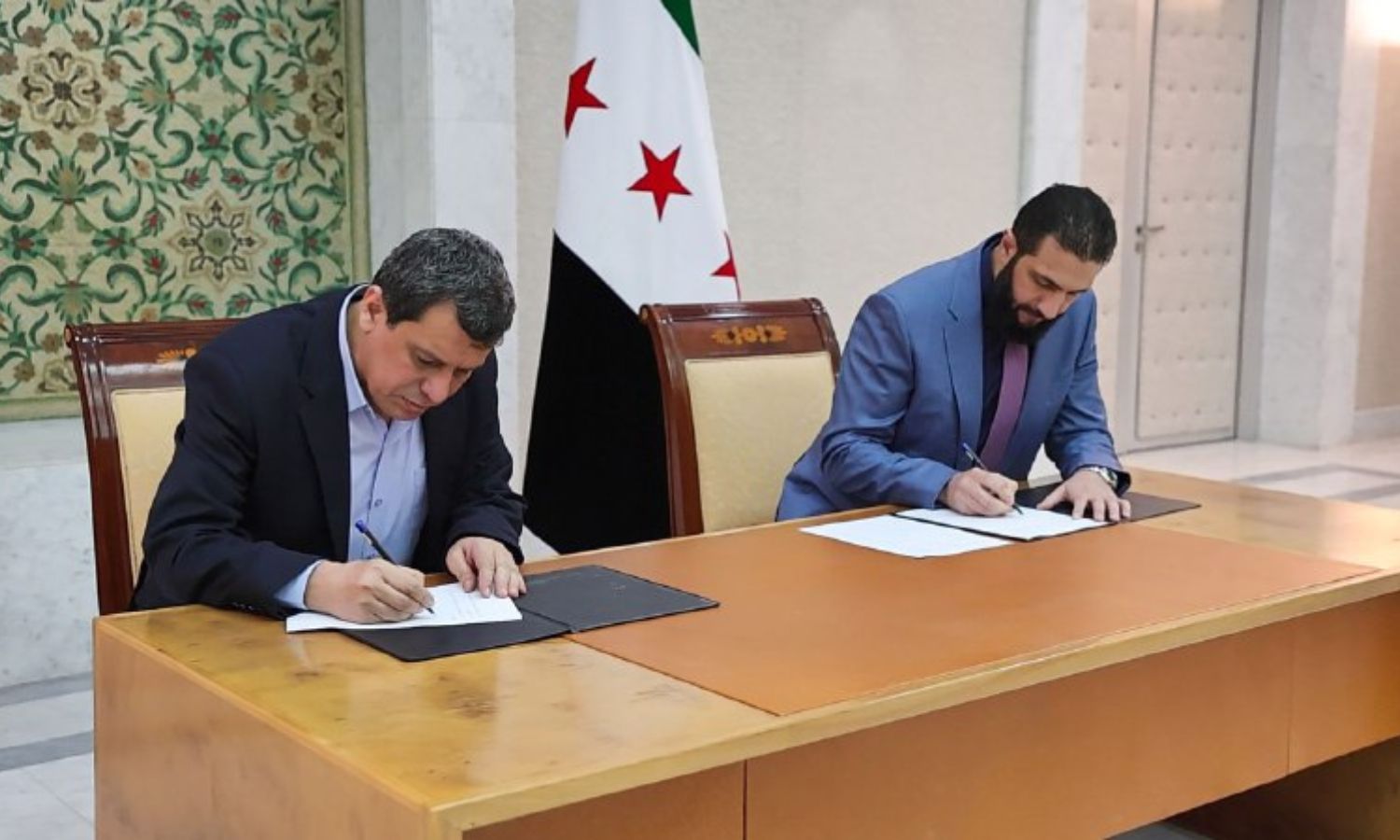
Ending ‘autonomy’: How the SDF-Syrian govt talks broke down into a fight
Mada Masr spoke with sources in the SDF, the Syrian government, Turkey and regional diplomats
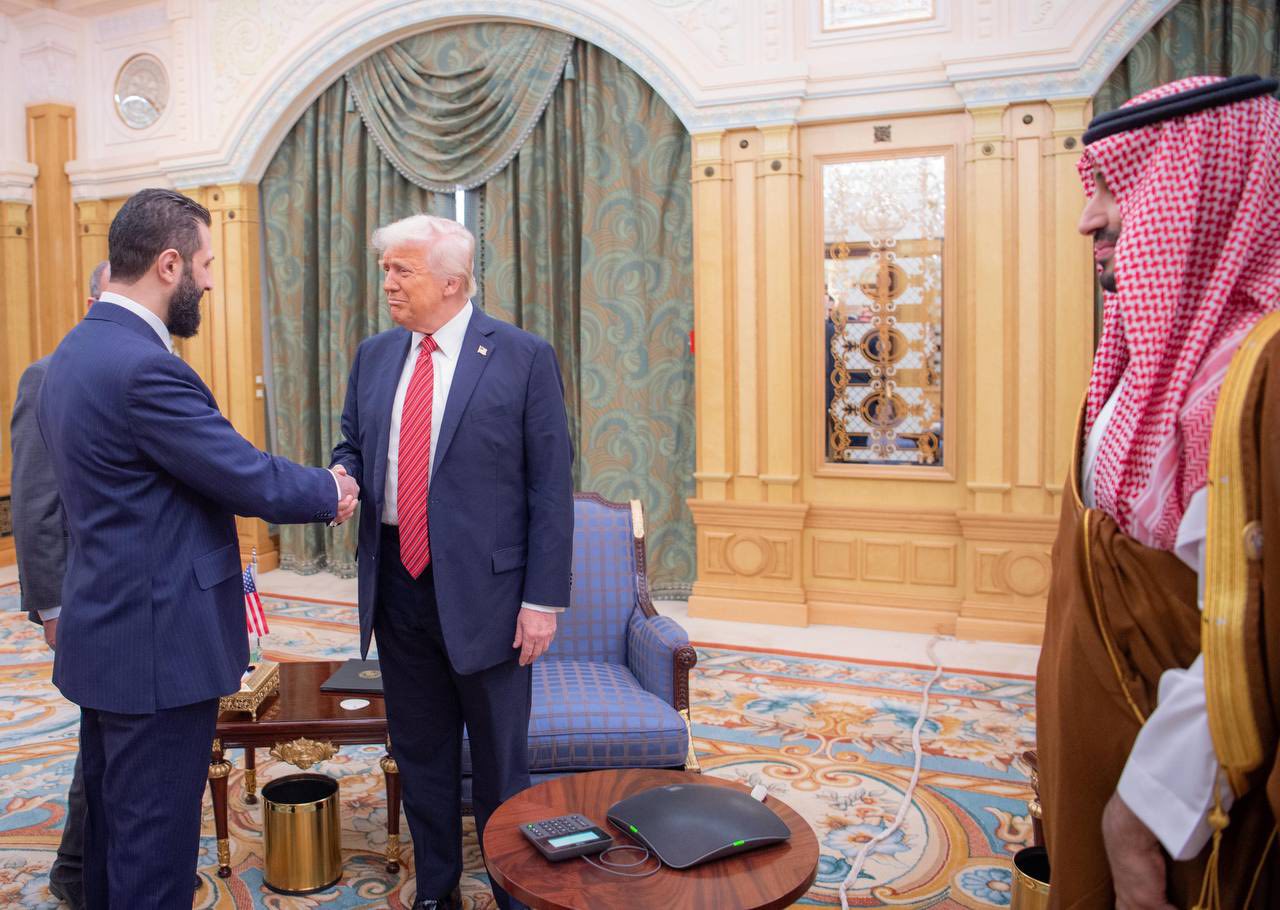
The New Syria, under Israeli-American construction
Syria’s future is tied to a broad regional plan, but the US and Israel are in the driver’s seat.
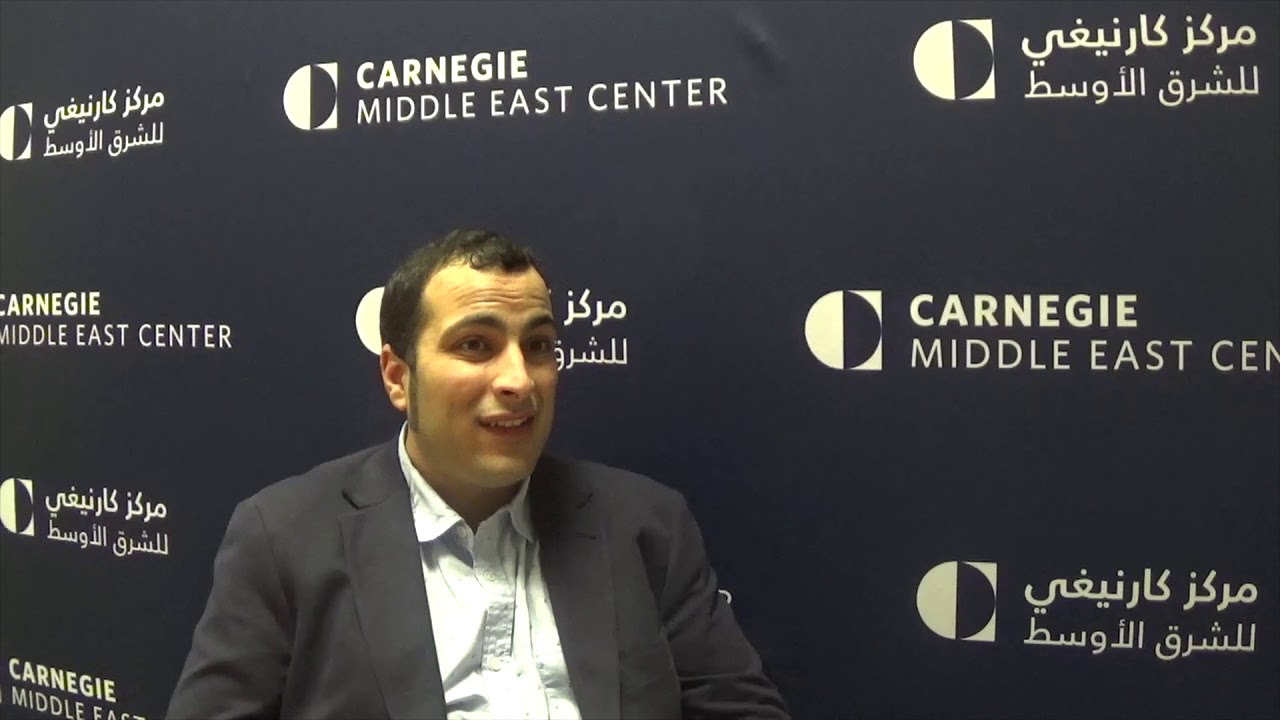
From Aleppo to Damascus, on how Assad fell and what’s next: An interview with Yassin Suweiha
Suweiha takes us through ten tumultuous days that began with Hayat Tahrir al-Sham entering Aleppo.
Your support is the only way to ensure independent, progressive journalism survives.
You have a right to access accurate information, be stimulated by innovative and nuanced reporting, and be moved by compelling storytelling. Subscribe now to become part of the growing community of members who help us maintain our editorial independence.
Join us