
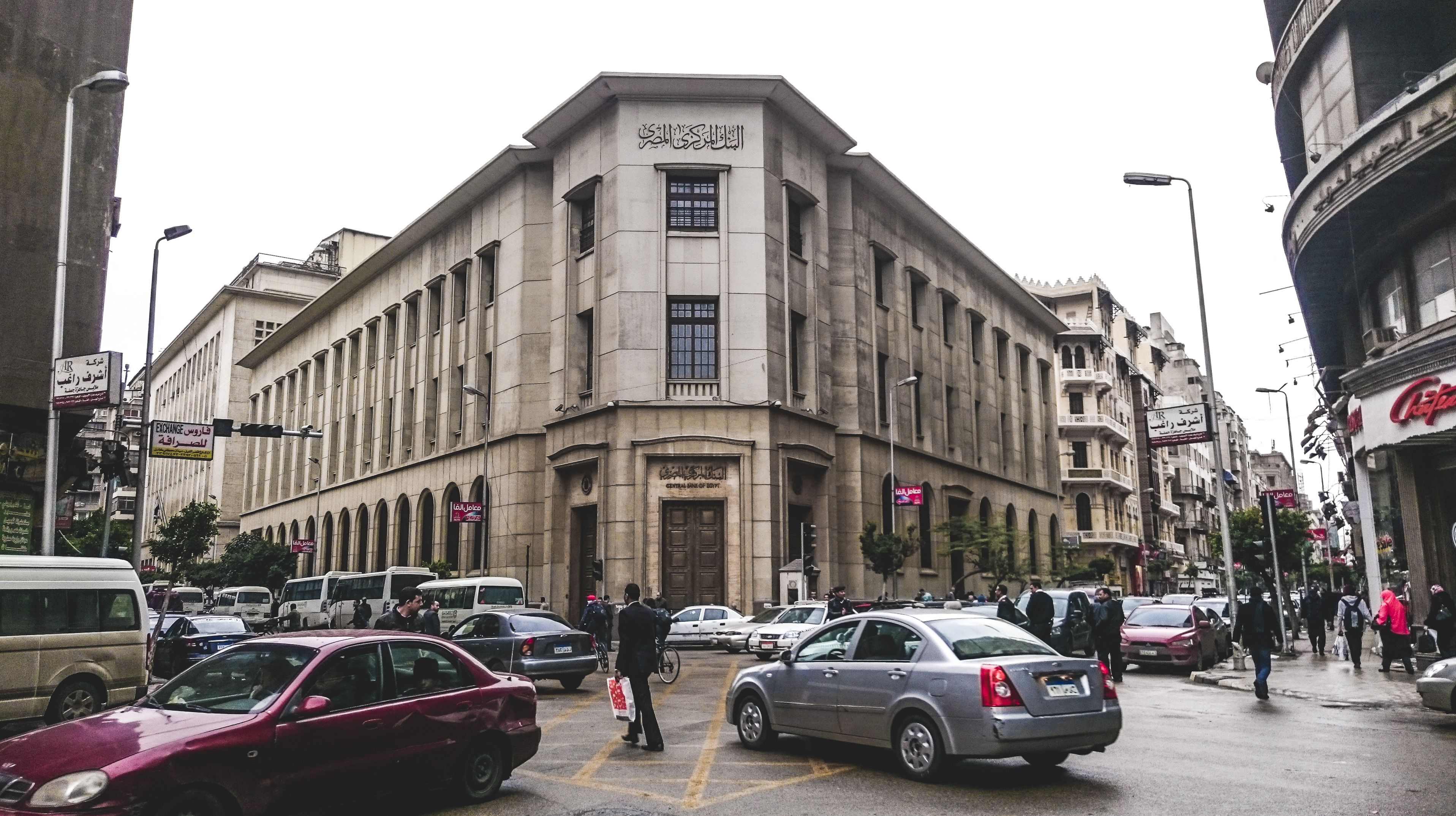
3×3: How will Egypt fare as US Treasury bonds spike in yield?
Yields in US Treasuries have been rising in recent months, as investors look on at the American government’s major stimulus efforts to lift the world’s leading economies out of a harsh recession.
The spike in yields for the 10-year US Treasury note — which amounts to the rate the American government must pay to borrow for a decade — reached as high as 1.41 percent last week, after having fallen to a low of 0.5 percent in 2020.
Belief in an economic rebound has pushed investors out of US government bonds and into riskier assets, such as stocks, causing bond rates to spike to their recent highs and the US dollar to strengthen in value.
However, this may pose a problem for countries in the Global South, including Egypt, with investors potentially moving away from investment in countries’ dollar-denominated and local currency debt in favor of more lucrative returns in the US. Moreover, the fallout of the bond yield surge on the value of the Egyptian pound in light of the appreciation of the dollar’s value remains unclear. Some economic onlookers have expressed concern over the pound losing its competitive edge to the dollar as it has maintained a relatively stable position, a sign that the pound is not fully floated, despite dips in several other “emerging markets.”
To unpack what is happening with the US-dollar-dominated world economy as well as the stakes for Egypt in recent shifts, Mada Masr invited three economists to respond to a series of questions. Their responses have been lightly edited for clarity.


Question 1: Can you explain the recent sharp spike in US government bond yields? Should we expect a shift in Egypt’s foreign exchange or monetary policy in the short or long term? Why?
Noaman Khalid: Vaccines explain everything. Governments, global populations and financial markets have been anticipating the vaccines to be produced, and this happened. Research results or announcements of production were all out during the fourth quarter of fiscal year 2019-2020. It was a big deal, as it meant a global economic recovery is finally on its way or at least in the foreseeable future. The first translation of this was in commodities, mainly oil, jumping by 50 percent (from Sept 2020 through today) and thus increasing the risk of a global inflationary wave. Vaccines were like a snowball and then everything happened, and all that led to higher US government bond yields. With investors and economists worried about rising inflation, they began anticipating that the US Federal Reserve could hike interest rates sooner than expected and thus they would get rid of their current holdings in order to buy back into new securities that would have higher yields in the future.
This is the technical aspect of why yields are rising. The rise is not just today, though. It has been happening since August-September 2020 when the 10-year Treasury note was trading at 0.60 percent. By December 2020, it had risen to 0.90 percent and now sits at 1.60 percent. The acceleration is mainly caused by the idea that vaccine rollouts are becoming a reality and not just a timeline.
Before we address the impact on Egypt, we need to ask a key question here, are the global inflation fears overly exaggerated? Could this just be hype and things will normalize in the coming months? I am a strong believer that there is an unprecedented amount of exaggeration in analyzing the situation. This is not a super commodity cycle — a period when prices of livestock, grains, metals, oil and gas all climb for years, even decades. This is a simple rebound to the pre-COVID-19 period, and the numbers show it. In January 2020, the US Treasury rate stood at 1.80 percent (well above current levels) and oil ranged between US$68 and $70 per barrel. We are moving toward those figures simply because nothing has changed in the fundamentals of global economies, and, for a super cycle to happen, you must have exceptional growth in a key economy. That was the case for China in 2005-2014. So I'm not worried about a supercycle and I think the Fed has enough tools to deal with the situation. Months from now, rates and oil prices will normalize.
For Egypt, a change is possible in its monetary policy, but not in its currency policy, and such a change should be short-lived.
From the position of emerging markets, the bond yield spike must be read in the context of the relationship between emerging markets and the US. Whenever there is a hike in rates or yields in the US, investors pull out from emerging markets and invest back into the US in anticipation of growth in the American economy.
The key concern for Egypt now, from this point of view, is portfolio investments (US and UK investors who invest in Egypt’s debt), specifically the carry trade, where investors take out loans from the US in dollars at very low rates and invest in emerging markets in local currencies at higher rates and lock in the difference while bearing the risk of the currency slippage. In such situations where the cost of funding is getting expensive — as in the case where US yields go up — a central bank has three options: 1) it can offer a discount in its local currency; 2) offer higher local yields; 3) enhance its risk profile. Since the last option is more like a medium-long-term solution, you get stuck with one of the first two options.
Both local bond yields and dollar-denominated bond yields in Egypt have gone up significantly in recent months. For the dollar-denominated bonds, yields go up automatically, as they are extremely correlated to US bond yields. For foreign investors to remain interested in Egyptian bonds, they would need to see other investment instruments going up with a premium to cover the difference. The US bond yield acts as a kind of floor.
Local yields have also gone up by about 0.50 percent since the beginning of the year in order to match the hike in US yields.
We have about $30 billion in foreign investment in local currency bond markets. But the case here is different because the central bank may hike rates to give investors the same premium, but you could have other factors that might see a corrective measure taken down the line whereby yields might drop. That would be related to the central bank cutting interest rates at the end of this year as well as the possibility of Egyptian debt being included on the JP Morgan bond index. This brings a lot of new foreign investors into the debt space and this causes yields to go down. All of sudden you get a lot of new demand on the product, it will cause the yields to go down. That is why I think going forward you will likely see some divergence between the US bond yield and the local currency bond yield.
But for now, a hike in local currency bond yields is a strategy that serves as a replacement to offering a devaluation of the currency. I also think this strategy will be short-lived since I expect that elevated US yields and oil prices will be short-lived.
Amr Adly: The answer is simple. The United States government has been injecting bigger and bigger amounts of money into the US economy in an attempt to reverse the slow-down impacts of COVID-19 and the countermeasures taken to contain it. This translated into an expanding federal debt, financed through issuing T-bonds and bills and offering better rates on them. This is likely to increase the cost of borrowing on international markets for governments in the global south like Egypt (as well as many others like Turkey, Argentina etc..) as they will have to virtually compete with the greatest federal demand for borrowing in dollars.
Whether it will have an immediate impact or not is hard to tell because there is considerable dollar liquidity out there that actually might accommodate the rising sovereign debts of many governments without leading to sharp increases in the cost of borrowing, especially that this is happening in a context of economic recession worldwide. It will definitely increase the cost of borrowing and hence the burden of servicing foreign debt for Egypt, but the question is to what extent and how soon might this translate into major pressure on the price of the Egyptian pound. My read is that it won't in the short-term because there is liquidity on the one hand and the Egyptian government managed to restructure foreign debt into longer-term bonds, which provides badly needed breathing space.
James Swanston: The rise in US government bond yields we have seen this year has come on the back of fiscal developments in the US. The rapid approval of the full US$1.9 trillion stimulus package suggests that the administration of US President Joe Biden is both willing and able to pursue an extremely loose fiscal stance that will give a major boost to the US economy over the next couple years. Moreover, another large spending package focused on infrastructure is on the horizon later this year which will further boost economic growth. In turn, this will add to inflationary pressure, and the headline rate is likely to soon rise above 2 percent and stay a touch above that level even after pandemic-related base effects drop out. This suggests that higher bond yields are justified by a brighter economic outlook.
However, we don’t expect there to be too much of a shift in Egypt’s foreign exchange or monetary policies. The Egyptian pound has been little moved by the upheaval in global financial markets, and even at last week’s Monetary Policy Committee meeting, the central bank, while acknowledging the market turmoil, did not react to the moves and kept interest rates on hold. Real interest rates remain very high in Egypt and capital inflows have been strong in recent months, which is unlikely to deter the central bank from shifting policy for the time being. Indeed, in the accompanying statement to the interest rate decision last week, policymakers echoed our view that inflation is likely to rise further and result in rates being left on hold until later in the year. Looking further out, the rise in US government bond yields is unlikely to have affected Egypt’s monetary policy and we expect the central bank to continue monetary loosening towards the end of this year and throughout 2022 as inflation weakens.
Question 2: How does the way Egypt responded to previous moments of crisis — the 2018 emerging market selloff or in the devaluation of 2016 — inform the present moment?
NK: I would take out the devaluation of 2016 out of the comparison because the central bank implemented a serious shift in the currency system as a whole, so it is a much bigger event than just managing the 2018 emerging market selloff or the current situation. I can say what 2018 tells us in a nutshell. In 2018, the central bank and the banking system allowed for a smooth exit of all foreign investors who exited the bond market with minimal impact on the currency. Similarly today, the central bank has strong buffers against the effects of foreign currency outflows (reserves, banking system net foreign assets and access to international capital markets) that would allow it to smoothly fulfill any possible sell-off in the local debt market, which is unlikely in my view in any case. But the two situations are very different. The situation in 2018 was driven more by a huge policy slippage in Turkey and Argentina (two of the biggest debt markets in the emerging markets), which in turn caused investors to pull their money out of most emerging markets. Now it is different. It’s mostly focused on the Fed’s stance and rising yields, and once it is clear that it is no more than just hype, this risk will not be there. I think also that one of our biggest assets nowadays is the Central Bank of Egypt’s credibility. It has successfully managed endless situations since 2016. You name it, and the central bank has proved to investors that this central bank is of developed market quality, whether in terms of its caliber as an institution in terms of its individual policymakers. So I guess, what will be used is: communication, maintaining the current strong credibility, offering investors a short-term pickup in local yields, and finally be ready with the buffers if needed at any time.
AA: I think it depends on the dynamics of each crisis. In 2016, it was a foreign exchange crisis with a huge balance of payments deficit and external financing gaps. This was tackled by a massive devaluation coupled with a major expansion in foreign debt (from an initial low base as a ratio to GDP). The COVID-19 crisis has very different dynamics worldwide. It is a global pandemic hitting the whole world simultaneously and it is a problem happening in the real economy rather than the financial one. Overall, the Egyptian government has prioritized macroeconomic stability at the expense of tighter public health protection and it seems to be paying off economically and financially. They are still cutting the budget deficit, projecting primary surpluses and preserving their foreign currency reserves.
But it is also clear that the devaluation of the Egyptian pound has not led to the desired impact on exports, meaning that it is already very well-established that an increase in exports in a common customs tariff system in the case of Egypt is quite slow. So the decline in the value of the Egyptian currency had a bigger impact on imports. It made imports more expensive, and hence the improvement in the balance of trade deficit had more to do with a considerable cut of imports that has been sustained rather than an increase in exports. And this is something that has been acknowledged in, for example, a report from the World Bank from a year ago. Even though the report is conveying a very positive picture, you could see easily that there is a major problem with Egypt’s external sector, mainly having to do with exports. And this applies also to FDI. There hasn’t been a major increase in either. It is mainly the decline in imports, which is something we don’t have enough information about how it happened exactly, meaning that some of it had to do with consumption goods but many others had to do with inputs. So you had sectors that could no longer afford the import of their inputs. In some cases, this led to some input replacements. But in other cases, I have no idea whether this meant some companies were going out of business.
Most of this debate is on a neoclassical economic basis. So you have some implicit ideological assumptions there that enable us to take many of these aggregations and estimates pretty much at face value. That is very problematic if you take a critical stance on the basis for assessment.
Some of the financial data being shared on Twitter does indicate that there was something deeply wrong with the devaluation, the idea that it did not lead to a medium-term debt equilibrium. It did fix some of the financial problems in the past four or five years but it didn’t address many of the structural problems. And it also highlights the very fact that you have inflation rates in Egypt being considerably higher than inflation rates in major trade partners. This is an indicator that tells you pretty much who footed the bill of the devaluation. It translated into higher input costs and higher prices and hence lower standards of living, because it meant an erosion in the real income of the vast majority of Egyptians, which is recorded in official records. The spike in poverty rates by 5 percent according to official estimates is something that attests to these negative changes. I think that even though such critiques are based on neoclassical assumptions — it is within this universe of econometric debate — they are critical of the international financial institution discourse, that Egypt is a major success story, because it shows that many of the structural problems are still there and hence many of the financial problems that the IMF was broached to address are still there and are likely to recur as they have in the past.
JS: Egypt’s previous reactions to moments of crisis have varied depending on their origin. When the pound was devalued by 50 percent against the US dollar in October 2016, the Central Bank of Egypt reacted aggressively by hiking interest rates by 300bps at an “extraordinary” Monetary Policy Committee meeting at the start of November and over the following months continued to increase interest rates by a further 400bps, taking the overnight deposit rate from 11.75 percent in October 2016 to a peak of 18.75 percent in July 2017. The central bank opted to respond in this way because of the domestic inflationary pressures that came about from the devaluation, with the headline rate peaking at over 30 percent year-over-year in 2017, and also to try to still attract capital inflows. By contrast, during the emerging markets currency sell-off in 2018, the central bank kept interest rates on hold throughout the market turmoil as the pound held up relatively well and capital inflows were returning. On the basis of these two events, the central bank will follow the course of the 2018 sell-off as it waits for market turmoil to subside and keep rates on hold for the time being.
Question 3: What are the stakes for Egypt in responding to this spike in yields and the effect on its currency’s value? Given these stakes, what can Egypt do to respond to the present challenges?
NK: I do not see major currency movements in the coming period. In order to offer higher rates on local yields and compensate for the rise in US yields, the central bank will look to tighten liquidity in commercial banks by offering attractive high yield instruments. This will, in turn, suppress demand by commercial banks for local currency bonds at government auctions, driving up yield rates, which will be attractive to foreign investors. However, tightening liquidity may hamper the growth trajectory and cause lending activity to private businesses to grow at a slower rate than expected. It is also possible that liquidity tightening could put a hold on IPOs in the coming period as it would have an impact on the equity market (stock market) as well. The central bank and the government could maneuver around this situation by offering some assistance, such as the current initiatives set at discounted interest rates (the 8 percent industrial initiative, the latest 3 percent mortgage loans, and several others). These measures would be key to neutralize the negative impact on economic activity that liquid tightening would have. But again, to put all this in context, if I'm right in expecting the hype of higher US yields and high oil prices to correct in the coming period, we should not expect all this to stay with us for long, maybe just a couple of months.
If the current situation shows anything, it proves how much the financial world is extremely driven by just one single rate: the Fed rate (US yields). And then the rest of the global economy tries to accommodate, some through currency discounts and others through higher yields. Such a situation is of extreme discomfort to any policymaker and the importance the central bank is giving to portfolio investors is not by choice. It is a result of a lack of fundamental foreign currency sources (FDI, tourism, exports, etc..). If foreign portfolio investment continues to remain one of the major components of the foreign currency inflows for Egypt, then this discomfort will continue and we will continue to have serious pauses in our growth situation moving forward. Thus it is important to break this connection through more efforts from bodies, such as the Investment, Tourism and Trade ministries, in order to work on increasing the overall foreign currency flows. And now we have a good chance. Our Gulf Cooperation Council neighbors and other European economies are having accelerated rates of vaccinations which means that Egypt could welcome tourists much sooner than expected, but this needs work and good publicity. The end that was put to the Qatar blockade and possible improvement in Turkey’s political relationship with the Middle East could also offer a good chance for a higher level of FDI from the GCC in general. Only then will portfolio investments not be our key source of foreign currency and the central bank would not need to tighten liquidity in order to keep yields high. This would lead to smoother and more stable growth in the economy.
AA: As for what Egypt can do in response to the ongoing challenges. I don't think they can do much. Egypt's continued and favorable access to the global financial system is paramount for its economic well-being. This creates vulnerabilities towards any external shocks be it with higher interest rates on the dollar or a large withdrawal of short-term hot money from the Egyptian economy, as we witnessed a year ago.
I don’t think that we will be dealing with any major devaluation. There are no economic grounds for it, and politically, definitely, it is not possible. I think that the main critique from the centers of neoliberal discourse production always has this thing about the theory and the application. The theory is never wrong. The problem is that it was not applied enough or was not applied in the correct manner. This might be there, definitely. But the renewed commitment by the IMF in 2020 to the problem of 2016 that was translated into another US$8 billion — through emergency funding and its standby facility program — that they committed to Egypt in support of the earlier program — they didn’t really have any specific conditions because most of the conditions were already met and quite strictly in the first round. And the point is that what they were talking about seems to be that they are not okay with the central bank using its reserves in order to support the Egyptian pound through the banking sector and hence ending up in a situation where the Egyptian pound is overvalued. But this is not major. It is not a devaluation. It is the idea that they would like the central bank to enable it to slide down a bit so that Egypt financially can be more stable. But I think it is quite marginal, to the extent that they were not brought up or even highlighted by the IMF with the new emergency financing and the standby agreement. So I don’t think it is that big.
Propping up the value of the Egyptian pound largely has to do with controlling inflation because you have all these contradictions between fighting dollarization on the one hand, but at the same time trying to curb inflation and trying to bring interest rates down as much as possible to allow the economy to function, as well as not to increase the budget deficit considerably given that debt service is around one-third of total expenditure. So all of these things are entangled with each other and they decided to control inflation, which definitely has socio-political repercussions: the idea of not having another round of high inflation rates, the idea that we have somehow been stabilizing the inflation rate over the last couple of years compared to the unprecedented increase since the late 1980s that followed the devaluation of the pound in 1989. The central bank’s practices are not based purely on policy but also on institutional habits that have to do with the history of the bank. I always expected that the central bank could not tolerate the full liberalization of the exchange rate and that they would pull strings because they still control, through public ownership of banks and many other tools, the biggest parts of the public sector. So what happened is that there is no longer an official rate, but a certain range has been sent through some form of collective organization that includes the central bank and the four or five biggest banks which have the bulk of dollar reserves in the banking sector. So it is an extension of the earlier managed floating. And I don’t think we could do without it because, as a net food importer and a net fuel importer, any depreciation of the Egyptian pound translates directly into higher inflation rates and thus this has to be controlled by whoever is in power. It cannot be left to the whims of I don’t know what. So that is an element that irritates economists. But again, there are so many things to balance. With lower inflation rates, they have also been lowering interest rates to stimulate the economy. It hasn’t backfired so far.
JS: Amid the spike in US Treasury yields, the expected reaction by a central bank in an emerging market would be to hike interest rates. But, in the case of Egypt, real interest rates are among the highest in the emerging world at around 4 percent, and, if nominal rates were raised even higher, it would attract more capital inflows that would put more upward pressure on the Egyptian pound. The pound has strengthened against the dollar in recent years, and, in its latest review of Egypt’s Stand-By Arrangement, the IMF hinted that policymakers should adopt greater exchange flexibility and allow the currency to fall. Additionally, the real effective exchange rate has now made up the ground it lost following the devaluation and is now back to those similar levels. As a result, we think that the best course of action for Egypt, in this case, is to keep interest rates on hold for the time being as inflation strengthens over the coming months, and that toward the end of this year, once inflation slows, we think the door for monetary loosening will open again. We expect that the Central Bank of Egypt will reduce interest rates by a total of 175bps by the end of 2022, which is more easing than the consensus currently anticipates.

تقارير ذات صلة

Govt’s launch of ‘Citizen Bonds’ challenges domestic banks, sources say
The Finance Ministry’s new “Citizen Bond” is being rolled out today, available for individuals exclusively through Egypt Post branches. The 18-month savings and investment instrument offers a fixed annual return…

Queuing for gold
Gold remains a trusted option for people looking to invest their savings despite a volatile market
A day afloat
Egypt will be getting another US$5 billion in loans from the International Monetary Fund as an increase to the 2022 $3 billion loan, IMF representative in Egypt Ivanna Vladkova Hollar…
Your support is the only way to ensure independent, progressive journalism survives.
You have a right to access accurate information, be stimulated by innovative and nuanced reporting, and be moved by compelling storytelling. Subscribe now to become part of the growing community of members who help us maintain our editorial independence.
Join us