
Anatomy of an Incarceration: A story of arms

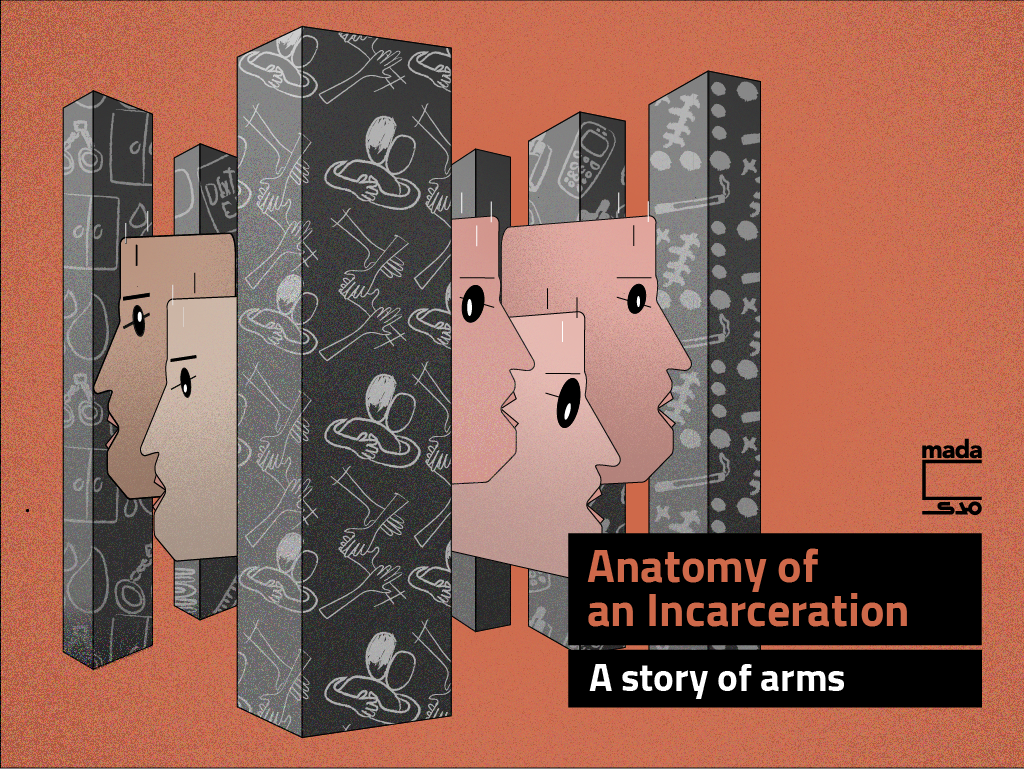
Anatomy of an Incarceration is a multi-part series that focuses on different aspects of prison in Egypt by Abdelrahman ElGendy who spent more than six years behind bars, from October 6, 2013 at the age of 17 until his release on January 13, 2020, at the age of 24.
On October 6, 2013, my life changed forever. It was the eve of my first day as a freshman engineering student at the German University in Cairo when I was arrested in my car by Egyptian police for photographing a peaceful march, alongside my father who was there to protect me out of fear of a security crackdown. I was only 17 years old, a minor, yet I was charged and tried as an adult, and was handed a 15-year sentence in a maximum-security prison, of which I served six years and three months.
I have had my fair share of traumatic experiences in prison, yet some of the most simultaneously heart-wrenching and heartwarming moments of this protracted nightmare came during family visitations.
I cannot fully relay or interpret what those moments felt like, I can only take you to relive them with me, one visit at a time.
***
I bury myself in my mother’s arms. My stench is foul; I have not showered in a week.
Earlier, when they called our names, followed by the word “visit,” I was incredulous. I pushed the bodies stacked against me, on top of me, and tried not to crush the head right beneath my elbow as I leaned to get up. I was sleeping against my father’s chest, the two of us squeezed together in the corner of the cell. He shoved the rest of the sleeping prisoners away from him, and I helped him up.
Ayman, the only friend I made here on the first day, wished me good luck.
We tiptoed and hopped across the cell, not wanting to step on anyone’s head or stomach by mistake — those two hurt the most. We aimed for hands and feet only. I yelled that we were ready as we approached the cell door, and it opened with a bang to let us out for the first time in a week — an entire week spent rotting with 64 other prisoners in a tiny four-by-five meter cell inside a Central Security Forces training camp.
My mother sobs against me uncontrollably, I feel the tears seep through my worn-out shirt, and I cry too. She holds on tighter, not repulsed by my odor of sweat, dirt, and cigarette smoke.
I am sorry, I say. I’m sorry I’m sorry I’m sorry. She weeps.
We sit down at a rusty metal table. I run my finger over the rough surface as she and my aunt blurt out more than we can absorb: they had been reassured we would be released, this was all a mistake, they had called people, my friend knew someone who knew someone, my college mates held a sit-in for me on campus in the first week after my arrest...
My eyes fill with tears. It was supposed to be my first week as a freshman at college; I’m touched by what they did — they don’t even know me.
Rough hands grab my shoulder, then my father’s. My mother cries. I cry. My aunt cries. My mother begs to hug me one last time, but they say it’s over. I wave, she waves, we keep at it until the last second. I am yanked back, she is shooed away. I wave and wave until the last finger on her waving hand disappears, and I can’t see her anymore.
***
Ayman laughs while I shave against the grain and vigorously crisscross my face with the razor.
“What! They say beards grow faster that way. There are still many bald spots,” I say defensively.
He laughs louder, ruffles my hair and leaves the bathroom. It’s been three months since we first met, and we’ve become close friends. Ayman is only two years older than me, but apparently his facial hair genes are stronger than mine.
I hiss as I cut myself, and watch a thin red line appear above my chin, growing thicker until the familiar burning sensation passes. The shower curtain — a strung up blanket — ripples, and my father steps out. He urges me to finish faster: “Take a shower and dress! They have already called our names to prepare for the visit.”
The weekly visit ritual: Rise early in the morning, brush my teeth, shave (or pretend to), take a shower, dress in my white pretrial detention clothes, put on some of my smuggled cologne, pick up the dirty laundry bag, and sit beside the cell door.
The moment I hear our names called again to stand by the door, I spring up, a wide smile filling my face; I am thrilled to see my family.
I pull back from my mother’s tight hug, and turn to my younger 16-year-old sister and 10-year-old brother.
I throw my arm around my brother’s shoulders and ask about his first few months in grade six. I listen to my sister describe her struggles with high school, as my mother embraces me all the while, never breaking physical contact. Her face is flushed. My mother’s heart condition prevents her from taking long walks, climbing the stairs, standing in the heat, or exerting any unnecessary effort. I feel my insides contort with guilt as I watch her smile to conceal a wince. They are forced to wait in line outside the prison for more than five hours under the raging afternoon sun, hauling endless heavy plastic bags filled with clothes, food and books for my father and me.
I saunter over to Ayman’s family and have a warm chat with them. They are one of the loveliest families I have ever met.
Sudden bangs on the door thunder through the visiting hall, and arms start pulling us away from the warmth. I inch forward and grunt that I’ll give them one last hug. We hug tightly again. She cries. I cry.
That’s enough; the arms appear again and seize my shoulder. An arm seizing a shoulder: the very image of unfreedom. I wave, she waves, we keep at it until the last second. I am pulled away by force, she is shooed away with disdain. I wave and wave until the last finger on her waving hand disappears, and I can’t see her anymore.
***
I wiggle into my fitted navy-blue convict outfit, courtesy of a criminal prisoner on our cell block who works as a tailor using only a thread and needle, but who sews surprisingly professional-looking garments.
It’s December 12, 2015 — my 20th birthday. I spray the cologne I borrowed from Ayman, and the scent fills my nostrils; it reminds me of the fresh-cut grass I used to smell on my morning runs. I squat in front of the small bathroom. The cell is crammed; we are twenty-seven prisoners in a space that barely accommodates fifteen. Sleeping in two rows across the floor, our bodies are a tangle of limbs as the cell is not even three and a half meters wide. I see my father slumping against the wall, staring at nothing, the sixty-centimeter-wide sleeping space barely big enough for him. The vicious guilt monster thrashes at my insides, pummeling them without mercy, leaving them eternally maimed, and I fight back the tears. It’s been one year and three months since everyone in our case got sentenced to fifteen years in maximum-security, and we were moved to this hellish nightmare — Wadi al-Natrun prison.
Minutes later, we walk along the gloomy corridors and into the soft sunlight that we only see once every two weeks now; convicted prisoners get biweekly visits.
As we pass through the metal door, I see them in the far corner. My mother holds up a cake and shouts happy birthday as I approach. She sets it on the bench beside my sister and pulls me into a tight embrace. I stay there for a long moment, sinking into her warmth. She pulls back and holds my face in her hands.
“Twenty years old!” she says as she brushes her fingers across the stubble on my cheek and her eyes well up with tears. I feel mine begin to glisten too, so I pretend-laugh and thank them for the cake.
“How did you manage to bring it in?” I ask.
My mother’s expression falls as she hesitantly explains how they only allowed her to bring the cake to show it to me, but that I could neither eat it nor take it inside. My sister tells us how she went from officer to officer, begging them to let her make this tiny surprise for me, until one of them reluctantly complied, but only under these absurd conditions. Do not let them eat cake.
I smile. Rage pulses through my veins. My head pounds. I tremble with the pure loathing coursing through me; but it keeps me going. My fury is an ugly purple, splotching my vision, hazy around the edges.
I smile.
The ten-minute visit ends and we barely manage to talk as usual, but I pass her the hidden stack of letters I have smuggled out of my cell, and in the same motion take the incoming letters from her, swiftly tucking them inside my pants as has been our routine more than a year now — our own clandestine postal service.
I throw my arms around her in a firm hug. Holding on. Recharging for the next two weeks. I feel the cold in my chest dissipate a little.
I am hurting so much mum i am terrified i can’t sleep or think or rest i am lonely and i am scared of all the hate hate HATE i am scared mum —
“I love you,” I whisper as the arms come to snatch me by force, the cold weaving itself around my heart again, hardening it with ice. I wave, she waves, we keep at it until the last second. I am yanked back, she is shooed away. I wave and wave until the last finger on her waving hand disappears, and I can’t see her anymore.
***
My heart is pounding. Fury and terror fight for control of my brain I can’t tell which one is winning, but the evidence of their battle is wracking my body: the blood rushing to my head, the nausea, the black dots dancing in front of my eyes, the clenching of fists, the thundering boom against my rib cage.
My mother is lying on the visiting bench unconscious. The people gathered around her are barking the usual clichés: “Stay back!” “Give her room to breathe!”
I asked her not to come visit me for at least two months while I am here in Tora Reception Prison, where I am taking the finals of my 3rd year in mechanical engineering. It is Ramadan, and she is fasting.
I begged her, but she insisted.
My skin tingles and I sense numbness spreading; a million needle pricks.
Only three days ago, she was visiting my father in the new prison he was transferred to — the Maximum Security Wing 2 of Tora Prison Complex — with many of our case members. Our final appeal had been rejected by the Court of Cassation earlier this year, and the fifteen-year sentence is now final. It’s only 2016: twelve more years left.
My mother’s life has metamorphosed into one endless prison visit. For a year now, all she has done is prepare for my visit, cook for around thirty prisoners, stand in line for five hours carrying bags that weigh a ton, see me, go home to prepare for my father’s visit, cook for another thirty prisoners, stand in line at another prison for another five hours, carrying other bags that weigh a ton, only to go back and start all over again. An endless cycle of torment that I can see taking a toll on her already fragile health. And now my worst nightmare is here — her body has broken down.
“Mum... Are you okay?” I whisper and hear her murmur softly, as she tries to comfort me.
I am trembling. My fourteen-year-old brother, who’s gotten almost as tall as I am, looks helpless and terrified.
Then the arms come.
They pull me back but I violently rip my shoulder away and turn around. I am in attack mode. I scream, spittle flying, all the rage and terror pouring out — I don’t want to leash them anymore. I want to rip the arms from their sockets and shove them down their throats, I want to shred their faces apart to silence them forever, I want them to never pull anyone back again.
I only subside as my mother begs me to stop, in whispers that send tiny daggers piercing infinite holes in my heart.
“I will be okay,” she implores.
“We will stay with her until she is fine,” the families of my fellow prisoners reassure me. Her eyes plead with me; she doesn’t want the arms to hurt me.
I relent, my rage fades, my terror dissipates, my heart is in tiny fragments. I am shattered.
The arms jerk me back and push me toward the door. I am floating backwards, complying; there’s no more fight left in me.
As they take me away, I watch the closing scene: my still-lost brother, a man spraying some water over my mother’s face, her broken smile.
I wave, she waves, but weakly, we keep at it until the last second. I am yanked back, she is vulnerable and suffering. I wave and wave until the last finger on my hand disappears behind the door, and I can’t see her anymore.
I wonder if the fragments in my chest will ever resemble a heart again.
***
My father and I enter the visitation hall in the Maximum Security Wing 2 of Tora Prison, he nods at the state security officer. After a year of interrogations by state security, the detainees who were moved to this prison discovered there was a presidential pardon program initiated for political prisoners and that everyone who was transferred here was brought as part of the selection process. My father wouldn’t stop nagging them about me until they transferred me as well.
I look around the visiting hall, it’s larger than the others. My mother stands up and waves in joy, her face lighting up. We all hug and have an enthusiastic discussion about the implications of my arrival here; we could both be going home together soon.
I hand her the flower bouquet I made for her out of perfumed paper tissues. She breathes in its scent and embraces me. I know she will go home and add it to the hundred others I made throughout the years.
My sister chats about her upcoming art exhibition. The professor in her third year applied arts pottery department recommended her work and the committee was impressed.
I congratulate her and ask my brother about his freshman year in high school. My mother throws in a joke about his poor studying habits; he protests, and we laugh.
My father tells them about life on the inside and how everyone was thrilled to meet me. I listen and notice the prevalent white in his beard that I first noticed when I reunited with him after one year of separation. My mother opens a plastic container so we can all have breakfast together. A family.
We chat, laugh and pass the sandwiches around.
An hour later, the bell rings. I hug each of them tightly, and leave a seed in each of their hearts. The arms arrive
The arms are identical in every prison, but this time I do not resist. I give in.
I wave, she waves, we keep at it until the last second. I am drawn back by force, she is shooed away. I wave and wave until the last finger on her waving hand disappears, and I can’t see her anymore.
A thorny rose blossom peeks out from underneath the icy fragments in my chest, and in each of their hearts.
***
It’s been six months now and I still can’t get enough of seeing my father in civilian clothes.
I observe him throughout the visit: how he smiles, the couple of kilograms he has gained, the decent haircut, but mainly I scrutinize his clothes. He wears his favorite leather brown jacket, it’s a little worn-out and fraying at the hems. He wears a new shirt, checkered red and blue over a white background, buttoned up except for the last button, wrinkled where the shirt meets the dark blue jeans. My gaze ends on his white Adidas basketball shoes, identical to the ones that were confiscated from me three years ago at the welcome party when we arrived at Wadi al-Natrun.
He’s out. He’s not a prisoner anymore. I still remember that day vividly: he stood at the barred cell door opening, delivering the news — his name had been added to the latest pardon list. The world around me had suddenly felt surreal. A miracle after three and a half years. A precarious relief creeped up. “Are you sure?” I asked, my guard instantly rising as it always does whenever hope approaches. When he reassured me without a doubt, the dam finally collapsed. My heart burst open with relief and joy quickly followed by a sudden wrench in my guts, as I realized what was left unspoken.
I was not going home with him.
Standing now in the visit, six months later, I am still stupefied. My emotional system was wrecked beyond repair that day. The violent flood of contradictory feelings, all visceral to the core, had shattered it.
Then another list came out and my name was not on that one either.
I can’t feel or cry anymore. All my emotions are dampened. Happy is not happy. Sad is not sad. Apathy ascends the throne in my chest, tragic crimson confetti from the fragments of my heart beneath its feet.
We chat about their latest news: my sister earned a first-place award in an art exhibition; my brother is turning sixteen next month, and he tells me about that beard supplement ad he saw that he was thinking of purchasing — the bald spots in his beard were annoying him.
“Don’t rush it,” I punch his shoulder and laugh. “It’ll grow in its own time, and don’t reverse-shave it! The only thing that’ll do is give you scars.”
I scratch my month-old beard and talk to him more about how boring it is to have to shave anyway.
I observe their smiles, the shapes of their mouths, their wrinkles, facial expressions, gestures, and relish every moment. I blink my eyelids like a camera shutter to try and capture the insurmountable love I feel now. The ice fragments in my chest thaw momentarily — they always do.
The moment the arms seize me again, my insides freeze.
I shove them away and they stay back. I hug my family tightly, one by one. The arms stay back. I hug them a second time, longer. The arms inch toward me again and I snarl. They stay back.
I wrap my mother in a third, longer embrace, breathe her in, hold on to the feeling, and let go.
I wave, she waves, we keep at it until the last second. I am never drawn back by force again, I would rather be beaten to death. I wave and wave until the last finger on her waving hand disappears and I can’t see her anymore. I hold my breath and cling to the warmth longer, shut my eyes and retain the vivid images on my eyelids, but it all fades away when the final door bangs shut.
***
Like a zombie, I drift through the halls. I reach the exit of our prison ward and two arms begin to pat me down. They check my pockets and reach for the inside of my thighs, but I slap them away — no.
They let it go. Countless altercations, roaring screams, and visibly reciprocated hatred made them avoid me.
When they start to sense you have nothing to lose, their sadistic thrill fades, so they let you be, and move on to taunt other fresh prisoners — there is never a shortage.
Another pardon list was released. Then another. And another.
It’s 2019, and I am not going home. I now know it.
My mother and I sit next to each other, shoulder to shoulder, our backs to the wall. We exchange the letters behind our backs: the stack including my letter to Ayman, and his incoming letter to me. It’s part of our sacred six-year visit ritual.
I embrace my excited family members in turn and stand on tiptoe to kiss my brother on the cheek. White hairs slip out from under my mother’s headscarf and she absentmindedly tucks them back in. As my father bends his knee, I hear it cracking and I notice his wince. My family is growing older without me. And I without them.
The black hole where my heart should be feels like a tooth being endlessly ripped out under heavy anesthesia — there’s no pain, yet it’s a deeply disturbing discomfort.
Last week, I graduated from the faculty of engineering after five exhausting years of insane effort, both on my part and my family’s. Today we are celebrating a miracle. They tell me about the social media reactions to my graduation, how my friends hung a banner at a graduation event with my picture on it and stood in a moment of silence, followed by a standing ovation in acknowledgment of my achievement. I smiled, nodded and hugged them tighter.
My father comments on how long my beard has grown. I retort that I am too lazy to shave it.
“You all already know how ugly I am anyway,” I say teasingly. My sister sings me a song by Adele that she performed at a student event for which she was elected head of the presentation committee during her senior year at college. I ask my brother how his studies for his senior year in high school are going, and he mumbles about calculus, physics and incompetent teachers, scratching his sprouting beard.
I joke about how I’d better start looking for a job now, the market is competitive. They laugh and start suggesting jobs for me.
We ignore prison. We don’t talk about going home anymore. We are here, and here we are a normal family, chatting about normal things, having breakfast together and enjoying each other’s company.
This is my biweekly hour of humanness.
The arms keep their distance and wave for me to stand up and go with them. I ignore them and continue to chat with my family. The arms grab the other prisoners to lead them away, then motion for me again to stand. I don’t, but my mother nudges me that it’s okay.
“We’ll see you soon,” she chirps, the brightness in her voice never reaching her eyes.
I finish my rituals: two rounds of hugs, one longer third embrace for my mother.
I wave, she waves, we keep at it until the last second. I am filled with a bittersweet aftertaste, like a piece of melting dark chocolate at the back of the tongue. I wave and wave until the last finger on her waving hand disappears, and I can’t see her anymore.
And I swallow.
***
I take my first step outside the police station. My first step away from the arms in over 6 years. Wild hair, overgrown beard, lost gaze — I am out.
I inhale, fill my chest with air, and on the back of my tongue the world tastes so… outside.
I am suddenly overwhelmed.
I feel detached, as if I am in a dream or seeing the world through someone else’s eyes. I halt in the middle of the street, uncomprehending; I am the protagonist of this scene. These legs are my legs, these steps are my steps, this is the very scene I had repeatedly played in the theater of my imagination, picturing each time a new, wilder, more beautiful and passionate sensation. I longed for this, because naturally, all the colorful sensations outside will make up for all those I lost.
At a certain point in prison, I started to doubt that I had ever been outside. I couldn’t recall sensations or emotions. My memories were no longer, they became more like distant dreams. My whole past turned into a series of distant hazy images that lacked vividness.
Is this real? Am I making this up? Am I still inside?
At dawn on January 13, 2020, two seconds after my first step in the world, I see them, and I snap back into reality.
They sprint, tears streaming down their faces, and I see my mother; I swear I can glimpse the halo and hear the flapping white wings.
I wave, she waves, we keep at it until I’m crushed by their hugs, their joy, their tears. I tune everything out and bury myself in my mother’s arms, just like I did six years and three months ago.
I am home.

Abdelrahman ElGendy
Abdelrahman ElGendy is a former political prisoner in Egypt who spent more than six years behind bars, from October 6, 2013 until his release on January 13, 2020. He was…
آراء أخرى

Anatomy of an Incarceration: Athazagoraphobia
«"Was I ever outside? The prisoner starts to wonder"»

Anatomy of an Incarceration: Took nothing, saw nothing, know nothing
«“Do you know how we mark snitches?” he asks. “We cut them in a way that sets them apart.”»

Anatomy of an Incarceration: Sweatbox
«A suffering that never seems to end. A sweat-box, as British prisoners’ lingo accurately coins it.»
Your support is the only way to ensure independent, progressive journalism survives.
You have a right to access accurate information, be stimulated by innovative and nuanced reporting, and be moved by compelling storytelling. Subscribe now to become part of the growing community of members who help us maintain our editorial independence.
Join us
لا توجد تعليقات بعد