
Welfare may be halted for unlawful use of water, agricultural resources, says Sisi
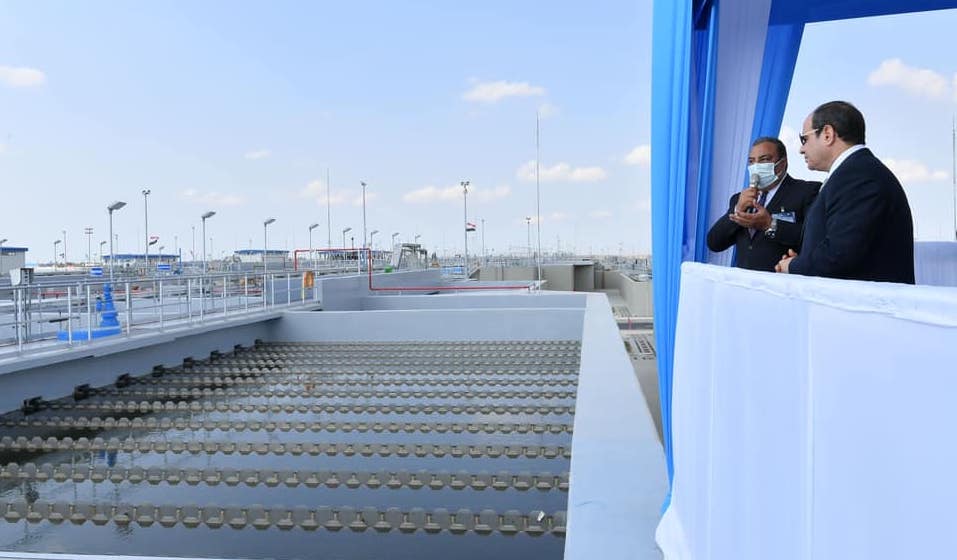
President Abdel Fattah al-Sisi said on Monday that people will be cut off from all state subsidies and support programs that are offered to low-income households if they are found to have used water facilities or agricultural lands unlawfully.
If introduced, the punitive withholding of welfare would be the latest addition to a legislative framework that has expanded since 2018 to centralize and securitize government control over land and water resources.
Speaking at an inaugural event to celebrate the opening of a huge water treatment plant in Port Said on Monday, Sisi spoke on the urgency of securing national water resources and agricultural land, and on the state campaigns that have long sought to “reclaim” the resources.
He cast informal building and unregulated economic and agricultural activity as major culprits impinging on water revenues from the Nile, noting, for example, that the Rashid branch of the Nile River now only registers an annual volume of 30 million cubic meters, rather than the 80 million that used to flow through the western fork of the Nile Delta.
Speaking animatedly, Sisi said, “we’ll keep the data of these people with us, whether its an encroachment on agricultural land or an encroachment on waterways, and, by the way, among the measures I’ll take to reclaim or put an end to encroachment is a halt on the support that the government gives to anyone in violation of the law, whether [in the form of] bread [subsidies] or supply [subsidies] or anything at all, that [welfare] support will be stopped completely. It’s not acceptable for someone to go out and trespass and step over the line.”
Heba al-Leithy, a statistician for Cairo University, told Mada Masr that a legal framework would need to be put in place to allow for the punitive exclusion from subsidies that Sisi described to be enacted.
She also pointed out that it is the poorest families who rely on government support, meaning that their forms of encroachment are most likely limited, which should push the state to focus its efforts on major encroachers.
Yet, undersecretary to the Agriculture Ministry for Qalyubiya Hassan Zayed told Mada Masr that the move would not be without precedent, describing similar measures being carried out by agricultural directorates and governorate offices which have already been instructed to put a halt on state-supported agricultural supplies for any farmers found to have used resources unlawfully.
Zayed explained that these measures are applied to any farmer if the farming association they belong to files a report against them, but added that his directorate has not yet received instructions regarding Sisi’s statements in Port Said.
On Monday, Sisi also instructed governorate officials and police to finish within the next six months the removal of any “encroachments” from the past 20 to 30 years, adding that the Armed Forces could also be called in to assist if necessary.
Agriculture Ministry spokesperson Mohamed Ghanem told Mada Masr on Monday that punishable encroachments could include the unregulated diversion of water resources for agricultural or other uses, whether via digging new waterways or other means such as lifting and pumping stations, or unlicensed construction such as cafes or kiosks on canal banks.
Ghanem pointed to the National Campaign to Save the Nile that has been in operation since 2015, which he said has removed around 63,000 obstructions to the Nile and a further 100,000 cases on canals and drainage systems.
Leithy, who also chairs the state statistics agency and has contributed research to the Egyptian Center for Economic Studies, pointed out that it is the poorest households who rely on government welfare support, meaning that the types of unlawful access to water or agricultural resources are likely the most limited, suggesting the state should focus its efforts on major encroachers.
Egypt’s water and food security constitute a pressing policy concern, with governments under Sisi since he assumed office instituting several legal changes in the file, particularly to toughen criminal penalties for accessing resources without a license. Most recently, in April 2020, new fines for building on agricultural lands were introduced and an executive decree ruled that all those building unlawfully on land designated for agriculture could be referred to military trial.
Penalties for unlawfully building on or diverting Nile or canal resources have also been toughened in several rounds since Sisi assumed office, with amendments to the irrigation law passed in 2015 and again this year.
The wastewater treatment plant in Port Said where Sisi spoke on Monday reportedly cost LE20 billion to construct and will take untreated water from the Bahr al-Baqr drainage network, which stretches all the way from southern Cairo to Lake Manzala in northeast Egypt. The plant is expected to treat 5.6 million cubic meters of water from the drain per day, to be used in projects to reclaim 400,000 feddans in North Sinai for agriculture.

أخبار ذات صلة
Abwab al-Kheir: Charity for a season
The initiative has appeared as state expenditure on social protection has decline over recent years

Bakeries sources: Supply Ministry to increase allocations for bakeries producing subsidized bread
The Supply Ministry is set to increase the financial support it allocates to bakeries producing subsidized bread starting in the new fiscal…
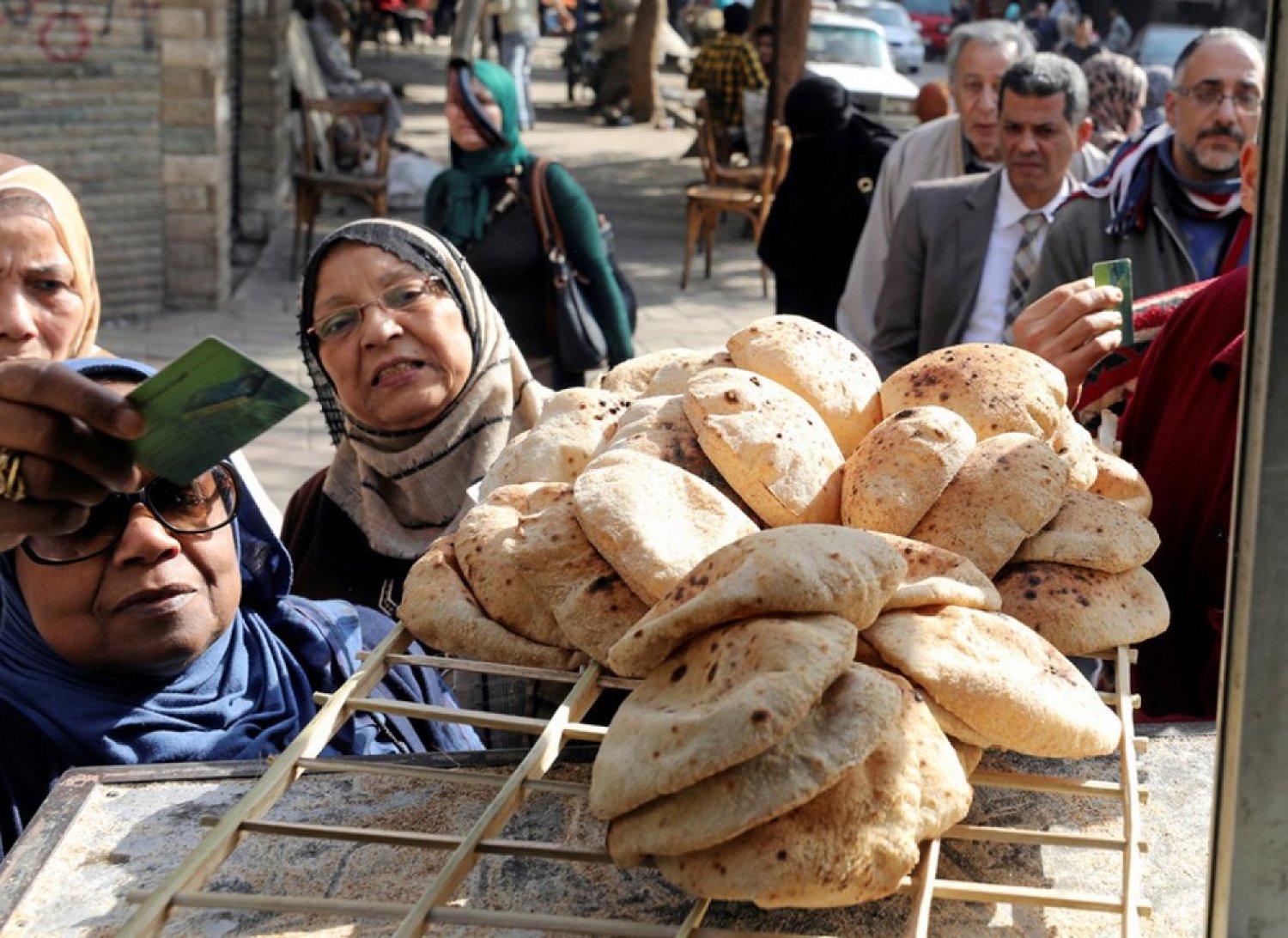
Source: Govt to increase subsidized bread prices by 300% starting July
Informed sources say the government is preparing a 300 percent price increase for subsidized bread.
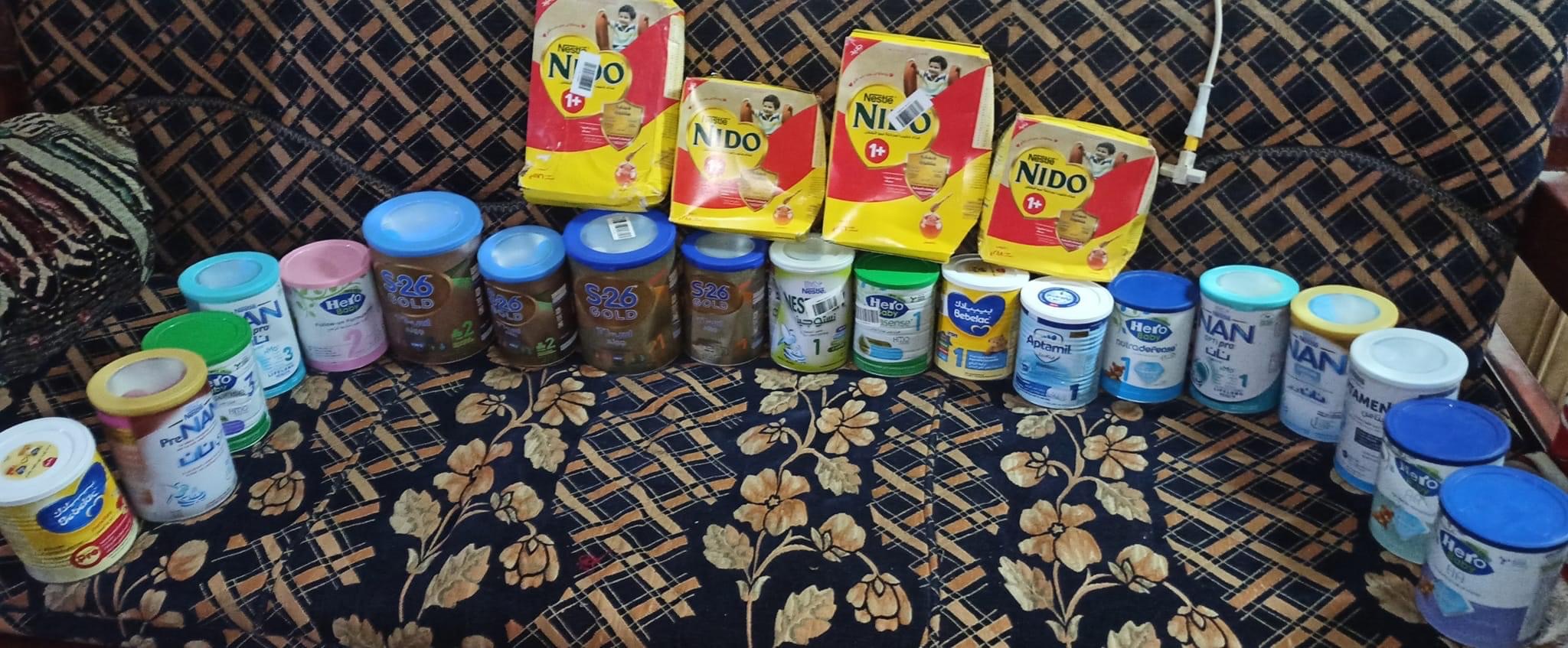
What to do when what a baby needs is nowhere to be found?
For mothers who depend on formula, a good start is hard if not impossible to find.
Your support is the only way to ensure independent, progressive journalism survives.
You have a right to access accurate information, be stimulated by innovative and nuanced reporting, and be moved by compelling storytelling. Subscribe now to become part of the growing community of members who help us maintain our editorial independence.
Join us