
Abwab al-Kheir: Charity for a season
Framing it as a comprehensive social protection initiative, Prime Minister Mostafa Madbuly announced this year’s launch of the presidential initiative Abwab al-Kheir on Tuesday.
The initiative aims to provide the most vulnerable communities across the country with food security during Ramadan through the distribution of dry food boxes and hot meals, Madbuly said.
Abwab al-Kheir, a seasonal initiative launched in 2024, is organized by the Tahya Masr Fund and the Social Solidarity Ministry.
Although the state has not published regular data on the poverty rate for several years, Mada Masr obtained recent data from CAPMAS in a 2025 investigation that showed the poverty rate had risen to 34 percent in 2022, a 4.3 percent increase since 2021, and extreme poverty to 5.81 percent over the same period.
Of Egypt’s population of over 104 million at the time, as per CAPMAS data, over 36 million people were living in poverty and six million in extreme poverty in 2022.
But the Abwab al-Kheir initiative has appeared as state expenditure on social protection has declined over recent years.
At the same time, the initiative comes on the heels of increasing state involvement and control over charity work, raising key questions about who gets to do charity, who benefits and the faultlines between charity and government investment in social protection.
Who can provide charity?
During the initiative’s launch on Tuesday, Madbuly announced it as a partnership between the Social Solidarity Ministry and the Tahya Masr Fund.
Established in 2014, the fund is a black-box account for donations which falls directly under the president’s supervision. At its inception, it received billions of pounds in donations from businessmen, including cases where businessmen close to the authorities deposited money in the fund to settle tax disputes with the state. Meanwhile, the fund’s legal status insulates it from public oversight.
While it initially aimed to "improve living conditions for the disadvantaged,” the fund has engaged in business and investment activity, with the right to establish its own companies or buy shares in existing companies in both the public and the private sector.
It has also played a major role in tightening the state’s grip over charity work, a grip that was specifically marked by the founding of the National Coalition for Civil Work in 2022.
While tens of major organizations joined the coalition, others describe increasing restrictions on their work.
A source involved in charity work cites examples such as the authorities limiting their relief work to Gazans in Egypt and blocking infrastructural work they were trying to support in certain areas in Upper Egypt. “They can stop any work in different ways; soft tools, hard tools,” the source says.
A second source in the charitable sector saysthat their agency was required to submit reviews of the charity's accounts and a percentage of the donations they collected straight to a state agency.
Meanwhile, the first source adds that the work of charity cannot solely depend on the state, because the latter doesn’t have the tools, such as the social connections in different areas that help most identify need. “They can’t replace this work. They don’t have the tools on the ground. The government’s role should not be charity.”
Who receives the charity?
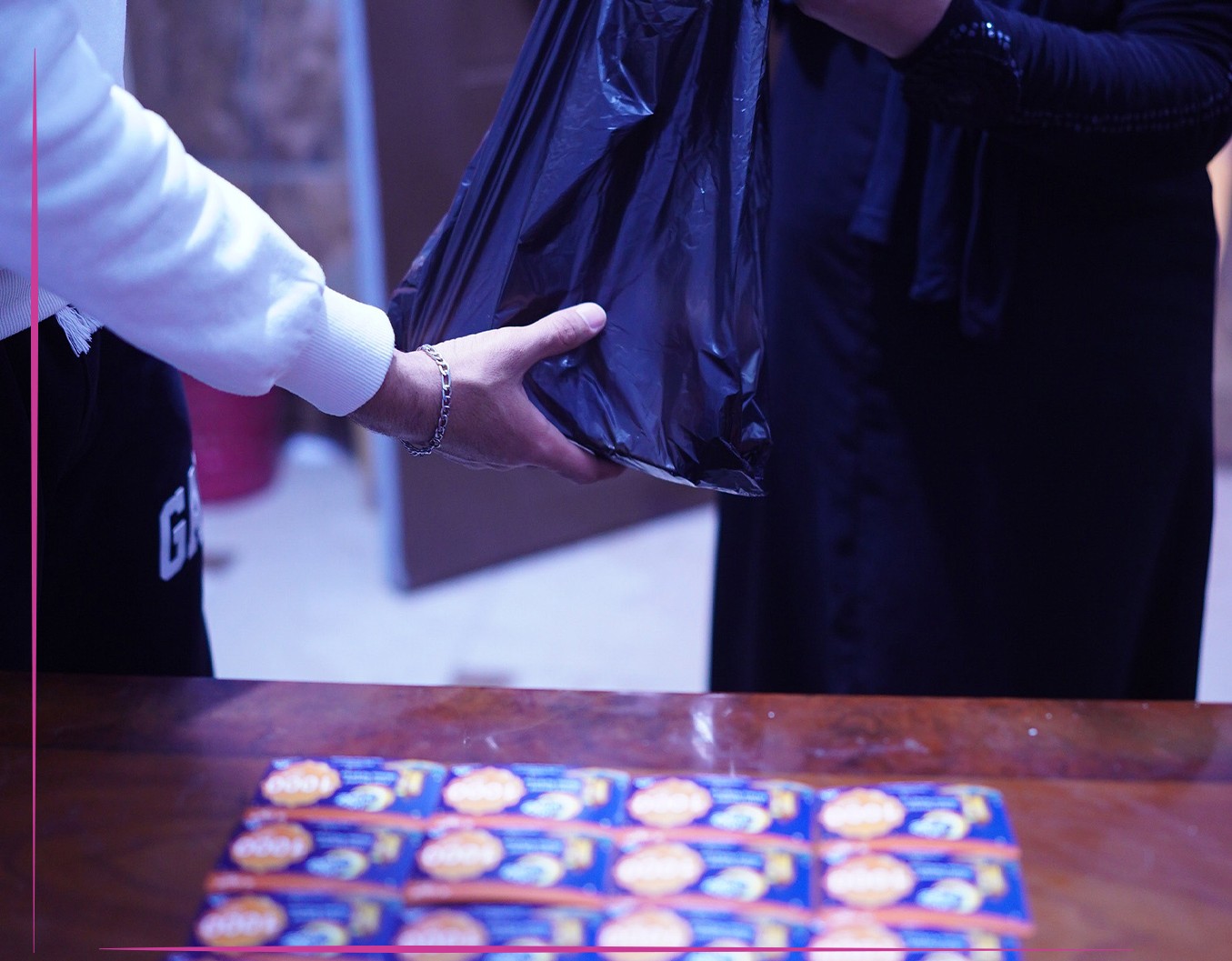
According to Madbuly, the initiative aims to prepare more than four million hot meals through Tahya Masr Fund’s kitchens as well as Al-Mahrousa kitchens, spread across the country and affiliated with the Social Solidarity Ministry.
Tahya Masr Fund Executive Director Tamer Abdel Fattah said on Tuesday that “hundreds of tons of chicken and meat” will be provided to prepare the targeted four million hot meals in the fund’s and the Social Solidarity Ministry’s kitchens.
The initiative also aims to distribute more than 5.5 million dry food boxes through convoys, which Madbuly noted will aim to reach the most vulnerable individuals across governorates. He added that an outlet will be set up to distribute boxes for staff, security personnel and maintenance workers at the new administrative capital.
Abdel Fattah added that the initiative is divided into a number of convoys that will be launched across governorates, noting that governors will be receiving the boxes in preparation for their distribution to beneficiaries according to “verified databases.”
Who will be targeted? State coverage suggests that distribution will be through governorates’ data, and indicates that among them are “9,000 assistance, security and maintenance workers in the governmental district in the new administrative capital.”
Salma Hussein, an independent researcher specializing in social and economic justice, points to the importance of coordination between the interventions of different entities, including ministries and governors, to ensure the efforts complement one another. She adds that the involvement of ministries and governorates in the distribution process makes sense as they have access to databases containing information on the most vulnerable populations.
But the second source engaged in charity works says that existing data on those in need does not reflect the full picture. He cites how “guides” or data collection in different low income areas is usually tied to political parties close to the government, which results in certain levels of corruption and nepotism.
Meanwhile, little data is publicized about Takaful and Karama, which seems to be the more comprehensive conditional cash assistance program. Sources previously told Mada Masr the data remains in the tight monopoly of the Social Solidarity Ministry, protected under a conditionality clause which requires protocols of cooperation for database sharing.
“Controlling the data is the main entry point to corruption,” the second source working in charity says.
They continue: “Will they reach people? Of course. Will they reach the most in need? I am not sure.”
Is charity really a form of social protection?
Madbuly framed the initiative as “concentrated and condensed social protection,” a line that was carried in the domestic press.
Although an increasing number of people fell below the poverty line over the past few years of economic turmoil, raising the need for investment in social protection, the initiative does not reflect a sustained state investment in social protection but a supplementary, seasonal act.
The boxes being distributed via Abwab al-Kheir are in-kind social support; a form of social protection the government used to invest in strongly by dedicating regular spending to subsidize strategic commodities, but it has been gradually drawing back over the past decade.
One of the government’s main arguments for its switch to cash support is to ensure that its subsidies are properly targeted and to avoid false beneficiaries. Abdel Fattah echoed this approach in his note on distribution according to verified data.
It has also referred to the recommendations it has received under successive International Monetary Fund programs
Hussein explains to Mada Masr that while the initiative can be beneficial, namely in areas where poverty and extreme poverty, namely hunger, are concentrated, it cannot be considered a social protection policy, but rather a charitable initiative.
“With in-kind subsidies, you know that each month you will receive a specific amount, that you have a card that gives you certain rights each month,” Hussein says, adding that social protection policies provide individuals with protection, as well as a stable situation they can rely on.
Hussein also notes that while temporary aid addresses immediate hunger, it does not guarantee long-term food security. “I may not be hungry at the moment, but [will] be uncertain whether I’ll be able to secure my next meal,” Hussein says.
Social protection experts speak of social inclusion as a key approach, and it entails more long-term spending on health and education and a broader view that extends beyond improving people’s financial status.
Hussein concludes that charitable initiatives such as Abwab al-Kheir can be considered as a supplement to the state’s network of social protection programs.
Within the very act of charity, that is not staged as social protection, there are different views on what is the most preferable kind of support.
Two more sources — one who owns a charity organization and another who does charity work independently — tell Mada Masr that when it comes to food security in Ramadan, food boxes prove to be more effective than cash support.
The owner of the charity organization argues that providing a family with food staples helps with security for several days and prevents cash support going toward non essential items. They say that oftentimes, other household concerns like debt can consume the money.
The first source involved in charity work prefers supermarket coupons, because they allow families the freedom to choose what they want. “Going into a supermarket can itself be a source of pleasure for some families,” he says. They add that in Ramadan, people tend to take boxes from different sources, and that risks redundancy and food going bad.
Abwab al-Kheir comes after the government announced an LE40 billion social support package days ahead of Ramadan. In the new package, the state increased the cash allocations it granted to social support beneficiaries as part of the shift from in-kind subsidies on commodities to a cash support system. Parliamentarians also described the exceptional package to Mada Masr at the time as part of a similar shift in policy to that entailed in Abwab al-Kheir: one that sees the state deprioritize dedicated social investment, leaving in-kind social protection hanging on occasional, intermittent interventions.
تقارير ذات صلة
What to do when what a baby needs is nowhere to be found?
For mothers who depend on formula, a good start is hard if not impossible to find.
How is the Egyptian government dealing with the global wheat crisis?
The response could mark a departure from a policy direction toward drawing back bread subsidies
Bread politics
An eight-part series that takes an in-depth look at bread subsidies in Egypt
Your support is the only way to ensure independent, progressive journalism survives.
You have a right to access accurate information, be stimulated by innovative and nuanced reporting, and be moved by compelling storytelling. Subscribe now to become part of the growing community of members who help us maintain our editorial independence.
Join us