
Starvation, disease face tens of thousands crowded into Gaza’s ‘safe zones,’ say aid organizations

Another United Nations Security Council vote on a ceasefire was vetoed by the United States on Saturday.
In north Gaza, meanwhile, where only a few hundred thousand people are estimated to remain after intense military operations and airstrikes, clashes between Palestinian resistance factions and the Occupation army have intensified in the camps of Jabalia, Shujaiya and Sheikh Radwan, as well as in Karama. Tens of thousands of people gathered in “safe zones” in southern Gaza face serious risk of starvation induced by Israel, said Save the Children over the weekend.
The World Food Programme (WFP) also said that humanitarian operations are becoming meaningless in the face of people’s needs in the strip, in conditions which render humanitarian work impossible.
Medical resources stored in warehouses are also becoming difficult to access because of the Occupation, according to the WFP.
More than two months into Israel’s brutal war on the Gaza Strip, over a million Palestinians have been displaced and many are now crowded in temporary accommodation in a few comparatively safe areas. 17,487 people have been killed and over 46,000 injured, according to data the Palestinian Health Ministry released on Friday.
Gaza’s infrastructure is all but decimated, and with Israel placing tight restrictions on the food, water, fuel and medical supplies entering the strip, many are now as much at risk from disease and starvation as they are from airstrikes and artillery fire.
This weekend, Both Save the Children and the WFP flagged a severe lack of food and water supplies in the seriously overcrowded areas of southern Gaza — not far from the border with Egypt.
“Israel is squeezing Palestinian children and families into ‘death zones’ dubbed as ‘safe zones,’” said Jason Lee, Save the Children’s country director, currently in Gaza. “I’ve seen children and families roaming the streets of what hasn’t been flattened in Gaza, with no food, nowhere to go, and nothing to survive on.”
Save the Children said that over 7,000 children are currently suffering from the most deadly form of malnutrition and are in need of immediate healthcare.
“Nine out of ten families in some areas spent a full day and night without any food at all,” the WFP said, citing the results of a recent survey, “When asked how often this happened, they told us that for up to 10 days in the past month, they had not eaten food.”
People are gathered in the south because Israeli forces have issued evacuation orders, demanding that Gaza’s residents leave their homes. First, people were instructed to leave neighborhoods in the north. Many walked the 20 kilometers to Khan Younis in the south, only to be met with fresh evacuation orders as Israel expanded its operations deeper into the strip.
With so many people, the healthcare system in southern Gaza is now in a catastrophic state, the Palestinian Health Ministry said Friday, as the number of wounded is more than double the maximum capacity of hospitals and intensive care units. Thousands are taking shelter or seeking healthcare at Nasser Hospital and the European Hospital in Khan Younis.
The World Health Organization has said that in these conditions, more people could die of disease than of bombings, which have so far killed at least 17,700 Palestinians in Gaza.
Fierce ground battles are also taking place in eastern Khan Younis, where the Saraya al-Quds Brigades, the military wing of Islamic Jihad, have said in recent days that they are battling Israeli forces.
For people taking shelter at sites even further south in Muwasi, Tal al-Sultan and Rafah, designated as “safe zones,” conditions are dire.
Aid supplies enter Gaza daily via the Rafah border crossing from Egypt, but these supplies are not enough. Aid organizations, the Egyptian government and authorities in Gaza have said Israeli restrictions are limiting the flow of necessary supplies.
Visiting Gaza on Friday, the Deputy Director of the World Food Programme Carl Skau said, “nothing quite prepared me for the fear, the chaos, and the despair we encountered.”
“With just a fraction of the needed food supplies coming in, a fatal absence of fuel, interruptions to communications systems and no security for our staff or for the people we serve at food distributions, we cannot do our job,” he said.
Both organizations called for an immediate ceasefire.
The Qassam Brigades, the military wing of Hamas, announced on Friday that it ambushed Occupation forces in Sheikh Radwan and Karama, leading Israeli forces to withdraw from both areas.
420 Israeli soldiers have been killed since the beginning of the Aqsa Flood Operation.
Israeli newspaper Yedioth Ahronoth quoted Limor Luria, the head of the Israeli Defense Ministry’s Rehabilitation Department, yesterday, stating that the number of injuries among Occupation soldiers reached 5,000 since the start of the war, adding that hospitals receive about 60 injured individuals daily.
According to the report, the Occupation army classified more than 2,000 injured soldiers as "disabled."
The Occupation forces also targeted the Al-Yemen Al Saeed hospital in Jabalia camp, north of Gaza, after besieging it for several days. The forces bombed the hospital's surroundings and water tanks, as reported by al-Jazeera.
The World Health Organization, meanwhile, expressed its concern that Al-Awda hospital in Jabalia has been besieged since December 5, and that two healthcare workers in the hospital have been shot.

أخبار ذات صلة

‘Resistance will persist’: Q&A with Hamas leader Mohamed Nazzal
Hamas leader discusses Qatar strike, snags in ceasefire, steps for technocratic govt
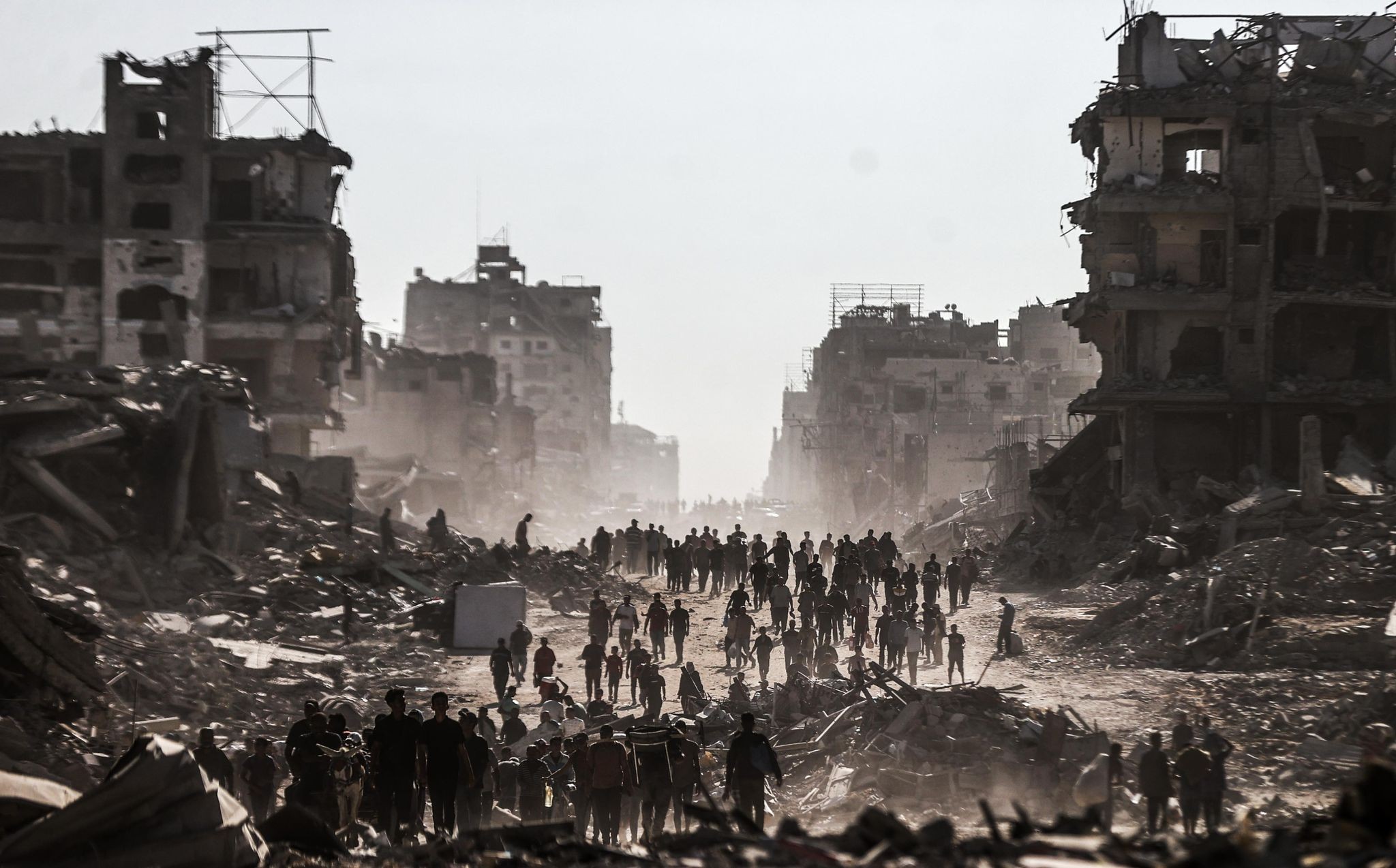
‘The ruins of our homes and lives:’ Return to north Gaza fraught with loss for tens of thousands
“I wish I hadn’t come back” was the first thing Emad Azzam, one of hundreds of thousands of people who returned to…

‘Isn’t there a truce?’ Residents face Israel’s continued assault on Gaza City
Despite a declared “halt” in Israel’s military operation in Gaza City on Saturday, the hundreds of thousands of people still in the…
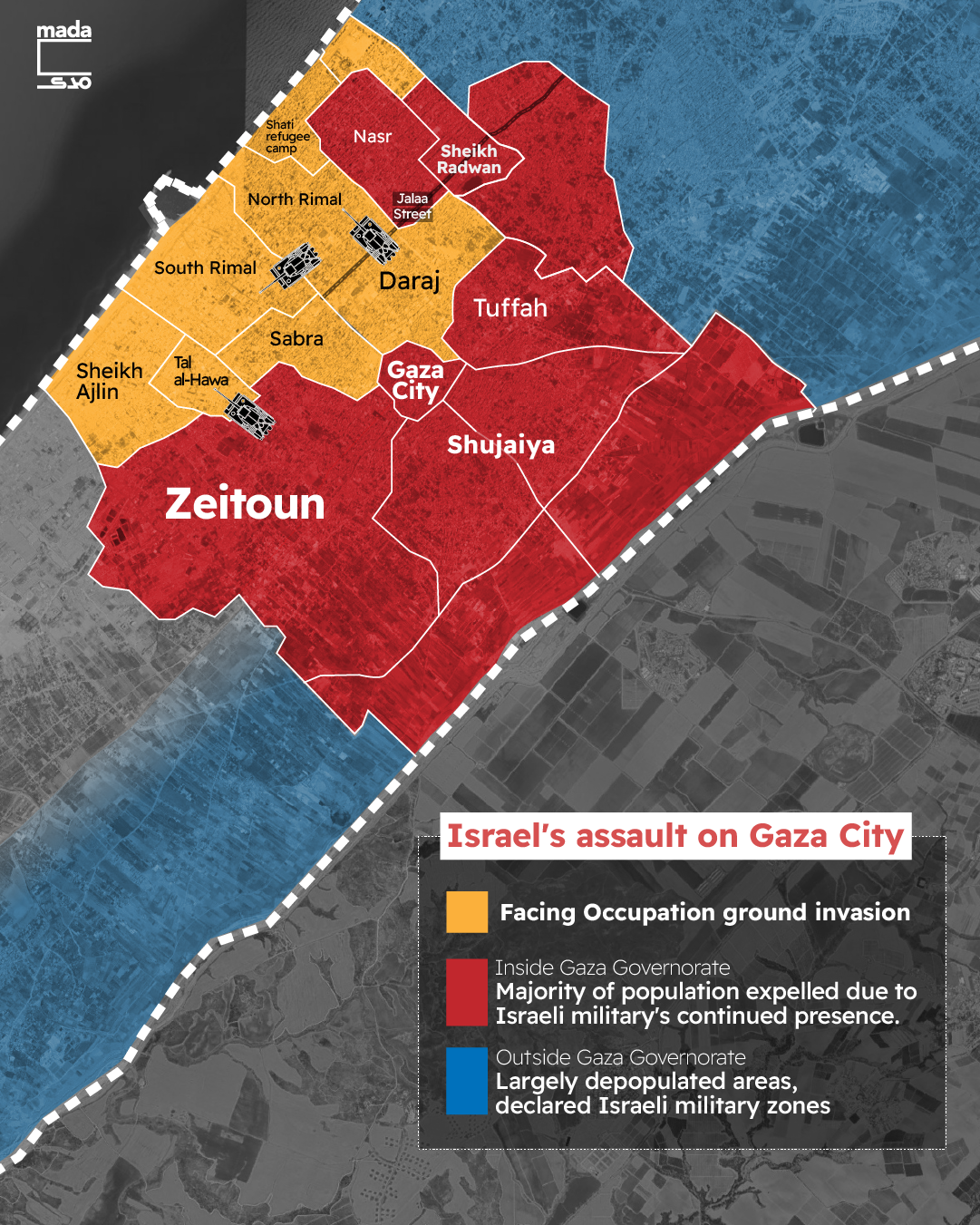
Families isolated in coastal neighborhoods with ‘no means to endure’ as Israel advances into central Gaza City
Hundreds of thousands of people living in central Gaza City are being forced to flee as advancing Israeli forces push with the…
Your support is the only way to ensure independent, progressive journalism survives.
You have a right to access accurate information, be stimulated by innovative and nuanced reporting, and be moved by compelling storytelling. Subscribe now to become part of the growing community of members who help us maintain our editorial independence.
Join us