
Sisi appoints heads of judicial bodies excluding State Council

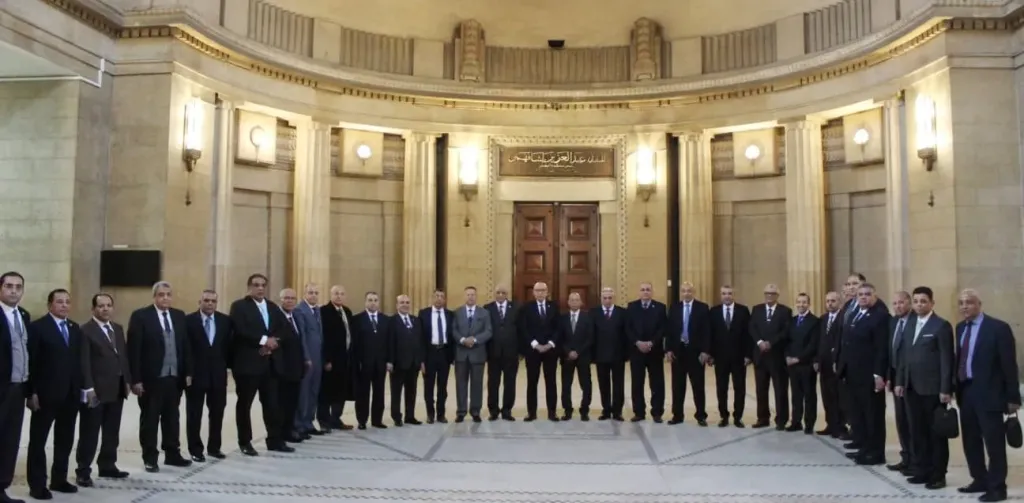
President Abdel Fattah al-Sisi appointed the heads of several judicial bodies on Thursday, an implementation of the controversial chief judicial appointments law passed in April. The law, which replaced the long-standing principle of appointment by seniority, was widely criticized for granting head of the executive authority increased powers to appoint the chiefs of Egypt’s top judicial bodies.
Magdy Abul Alaa was appointed as head of the Court of Cassation instead of Anas Omara who is the court’s most senior judge. Hussein Khalil was appointed as head of Egyptian State Lawsuits Authority instead of the most senior judge, Mohamed Mady, and the Administrative Prosecution’s most senior judge Rachida Fathallah was appointed as its chief, despite her expected retirement in September 2017.
No decision has been made regarding the State Council’s top post, as its current head Mohamed Masoud is expected to retire in three weeks.
In May the State Council directly challenged the recently passed legislation, unanimously nominating one candidate, Yehia Dakroury, for its chairmanship, instead of the three candidates required by the law.
Currently the State Council’s first deputy and head of the Court of Administrative Justice, Dakroury caused tension with the executive authority in June of last year when he struck down the contentious state-backed maritime border agreement to transfer sovereignty over the Tiran and Sanafir islands to Saudi Arabia.
However, Sisi was able to ratify the Tiran and Sanafir agreement later on in June, after an extensive legal contest, when the constitutional court froze all court rulings on the agreement.
The chief judicial authorities law was ratified less than 24 hours after it received parliamentary approval and grants the president greater powers over the appointment of the heads of four of Egypt’s judicial bodies: the State Council, the Supreme Judicial Council, the Administrative Prosecution and the State Lawsuits Authority. Judges have raised concerns that it threatens judicial independence in Egypt.

أخبار ذات صلة
Supreme Judicial Council calls off assembly on ‘grave matter’ affecting judicial independence
The Judges Club has backed down from holding an extraordinary general assembly to discuss what it described in an internal statement as…

Judges of tomorrow to be picked, trained by Military Academy, judicial sources say
Anchor Isaad Younis interviewed on Sunday a crew of newly hired government employees — judges, a diplomatic attaché, a school principal, a legal researcher at the Customs Authority, and an…

Militarizing the Supreme Constitutional Court
In historic first, an Armed Forces general is set to take a seat on the bench of Egypt’s highest court. Mada Masr looks at the politics behind the decision.
Prisoner releases, judicial independence ignite backstage debate, as National Dialogue board determine agenda
The board held a five-hour session that was closed to journalists
Your support is the only way to ensure independent, progressive journalism survives.
You have a right to access accurate information, be stimulated by innovative and nuanced reporting, and be moved by compelling storytelling. Subscribe now to become part of the growing community of members who help us maintain our editorial independence.
Join us