

Militarizing the Supreme Constitutional Court
In historic first, an Armed Forces general is set to take a seat on the bench of Egypt’s highest court. Mada Masr looks at the politics behind the decision.
Marking the first time an Armed Forces officer has been appointed to Egypt’s highest court, Military Judiciary Authority head Salah al-Ruwainy was sworn in as Supreme Constitutional Court first deputy justice on Sunday.
Ruwainy’s appointment was first announced on July 7 via a presidential decree that appointed five new judges in total, including two deputy heads, to the constitutional court. The first deputy justice was listed as “Salah Mohamed Abdel-Magid Youssef,” without mention of his last name, Ruwainy, or his post then as head of the military judiciary.
In a televised statement on Sunday, Supreme Constitutional Court (SCC) President Boulos Fahmy read out the presidential decree verbatim.
Ruwainy’s appointment sheds light on the reach of the Armed Forces' power over various authorities, including the judiciary, and the extent to which judicial authorities have been subject to the control of top military brass rather than judges.
“He is a very respected man. We know him personally,” SCC spokesperson judge Mahmoud Ghoneim tells Mada Masr, speaking of Ruwainy.
According to Ghoneim, Fahmy offered the former military judiciary head the post of vice president, allowing him to join the seniority pecking order at the country’s most powerful court, which could see the general eligible for the chief justice position at some point. After Ruwainy accepted, the spokesperson says, the head of the court referred the matter to the court’s general assembly, which unanimously approved Ruwainy’s appointment after “reviewing his file and vetting by security agencies.”
“We review the classified files of any potential candidate. We filter them with extreme diligence in service to the nation,” Ghoneim says.
Ruwainy’s name first came to public attention in January 2018, when — in his capacity as the military prosecutor — he issued a gag order in the case of former Armed Forces Chief of Staff Sami Anan, who was arrested for “announcing his bid for presidential office without first acquiring a permit from the military” ahead of the 2018 presidential election in which President Abdel Fattah al-Sisi ran virtually unopposed. While it is not clear when he was appointed to the head of the military judiciary, he has served in the post since at least 2019. In October 2021, coverage of a meeting of the recently formed Supreme Council of Judicial Bodies and Authorities, presided over by Sisi, listed Ruwainy as being among the heads of judicial authorities present.
“This is the first time, but it will not be the last. It will be followed by the appointment of other military judges to the Supreme Constitutional Court,” former Court of Cassation first deputy justice Ahmed Abdel Rahman tells Mada Masr. Abdel Rahman explains that the 2019 constitutional amendments incorporated the military judiciary into the wider judicial structure that is subject to the authority of the Supreme Council of Judicial Bodies and Agencies. Therefore, Abdel Rahman says, members of the Military Judiciary Authority have been granted the same right as members of the State Council, the Court of Cassation, or the administrative judiciary to be appointed to and even preside over the Supreme Constitutional Court and its Commissioners Authority.
Agreeing that Ruwainy will not be the last military officer to have a seat at the constitutional court, a senior judge at the Supreme Administrative Court, who spoke to Mada Masr on condition of anonymity, says that the placement of military officers at the court undermines any claims about the independence of the judiciary from the executive.
“The latest constitutional amendments granted the president of the republic complete power over judicial affairs, including appointments, promotions, assignments and so on,” the senior judge says. However, the military judiciary retained a special status, being governed by both the minister of defense and the Supreme Council of Judicial Bodies and Authorities, headed by the president.
“But that was not enough for [the president],” the judge says. “So he chose to insert the military into the country’s highest court to ensure full control.”
Nasser Amin, the head of the Arab Center for Independence of Judges and the Legal Profession, agrees that Armed Forces generals joining the SCC threatens the core of the court’s role and nature. In Nasser’s estimation, while the military judiciary is a judicial entity per the Constitution, it has a very specific jurisdiction, one that is related to military affairs and very distinct from the SCC’s jurisdiction.
Beyond the constitutional court’s mandate to interpret laws and ensure their constitutionality, as well as settle jurisdiction disputes between different judicial entities, its role was expanded last August to include oversight of decisions by international organizations and bodies as well as rulings issued by foreign courts and arbitral tribunals against Egypt in areas related to “national security” and the authority to determine whether they may be implemented.
The court’s spokesperson, however, maintains that the latest appointment is simply a testament to the stature of the SCC, which Ruwainy agreed to join following his tenure at the head of an equally significant judicial entity. “The military judiciary is not a lesser entity than the civilian judiciary or the State Council. The Military Judiciary Authority is an entity just like us. It rules on military crimes. It makes rulings in all terrorism cases. They have a prosecution, as well as criminal and appellate courts,” Ghoneim says.
“When we took in [former SCC vice president] Tahany al-Gebaly, who had worked as a lawyer, it was a first. When we took in [SCC deputy] Fatma al-Razzaz, who had been dean of the law school [at Helwan University], no one said a word,” added Ghoneim, arguing that the sensitivity with which Ruwainy’s appointment has been received by members of the judiciary is unjustified.
The law regulating the constitutional court stipulates that members of the court must be at least 45 years old and may be selected from among members of the court’s Commissioners Authority or other judiciary entities, lawyers who argue cases before the Court of Appeals or the Supreme Administrative Court circuits, or current or former professors of law. However, all but two presidential appointments to the SCC have historically been justices at other civil courts or their respective commissioners authorities. The first exception was former President Hosni Mubarak’s 2003 appointment of Gebaly as a deputy. The second was Sisi’s appointment of Razzaz in December 2020, also as a chief justice of the court.
According to the head of one of the departments of the Supreme Administrative Court, who works as a vice president at the State Council and spoke to Mada Masr on condition of anonymity, the law gives priority to the head of the SCC Commissioners Authority, adding that Ruwainy was brought to the court at the expense of the former head of that authority Emad al-Bishry, the son of Tarek al-Bishry.
Tarek al-Bishry was the former lead deputy justice at the State Council and presided over a committee to amend the Constitution after the January 25 revolution. As head of the Commissioners Authority, Emad al-Bishry had been next in line to be appointed to the constitutional court when the court announced in February that judge Awad Abdel Hameed had been promoted to head the authority in his place and that Bishry had left the country.
Ghoneim does not deny Emad al-Bishry’s entitlement to be appointed to the court but says there has yet to be a presidential decree to that effect. “We had three vacant positions. We requested his appointment alongside two others,” says Ghoneim, adding that when another seat opens at the court, Bishry will top the list of candidates.
While the court’s spokesperson did not address the reasons or criteria used by the presidency or the court’s general assembly in selecting Ruwainy over Bishry, the State Council deputy head says that due to Ruwainy’s outperformance of his competitors in his handling of investigations related to security matters, there is a higher likelihood that he, or other generals to follow him, will head the court as opposed to one of its current justices.
The State Council deputy explains the importance of the post of SCC head by noting that the latest constitutional amendments set the constitutional court apart from other judiciary entities in terms of chief justice appointments. While the amendments instituted four-year term limits on the heads of all judiciary entities, including the Public Prosecution, the SCC was not subject to the same condition. Chief justices can remain at the helm of the SCC until they reach the mandated retirement age of 70. In light of the president’s power to appoint the chief justice from among the court's five most senior members, the 56-year old Ruwainy has a good chance of heading the court for an extended period of time, the State Council deputy says. When Fahmy, the current SCC head who is 65-year old, reaches retirement age in 2027, Ruwainy could succeed him as chief justice for up to nine years.
The court’s spokesperson, however, thinks Ruwainy’s chances to head the Supreme Constitutional Court are minimal. The Constitution mandates that the president choose from among the most senior five members of the court, he explains, with seniority determined based on the length of tenure at the court. Accordingly, Ruwainy would rank 11th in seniority out of the 12-member court. But the State Council deputy’s estimation takes into account that several of the court’s current members are nearing retirement age.
For Ghoneim, at the end of the day, talk about appointing generals to civilian courts is responded to simply with Sisi’s own decision to remove his military uniform and become a civil servant. “What matters to us is his scholarly competence and behavior. We want competent members, because this court is the guarantor of the Constitution,” he says. “We pick those whose integrity we trust.”

تقارير ذات صلة
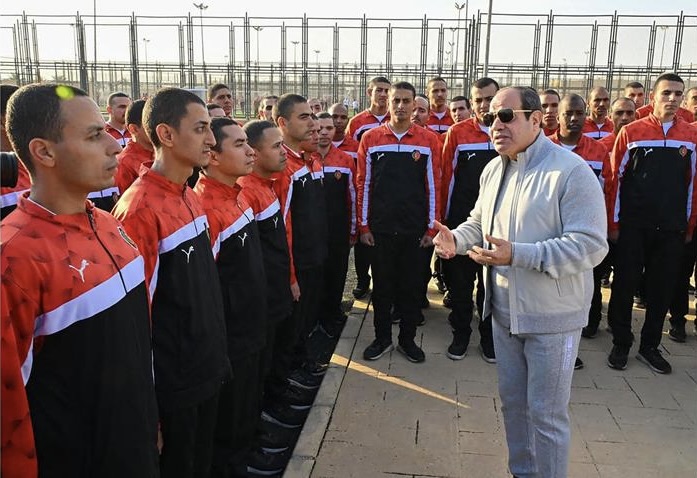
Judges of tomorrow to be picked, trained by Military Academy, judicial sources say
Anchor Isaad Younis interviewed on Sunday a crew of newly hired government employees — judges, a diplomatic attaché, a school principal, a legal researcher at the Customs Authority, and an…

Execution country: How the death penalty became rampant in Egypt
Hundreds of prisoners are languishing on death row, waiting for their sentences to be carried out.
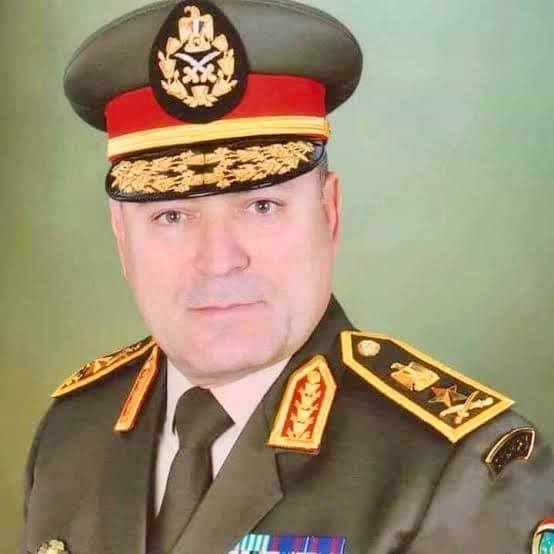
Osama Askar appointed head of the Armed Forces
Lieutenant General Osama Askar was appointed Armed Forces chief of staff on October 27 by al-Sisi.
Your support is the only way to ensure independent, progressive journalism survives.
You have a right to access accurate information, be stimulated by innovative and nuanced reporting, and be moved by compelling storytelling. Subscribe now to become part of the growing community of members who help us maintain our editorial independence.
Join us