
Senior official: Govt looks into abolishing capital gains tax, replacing with stamp duty
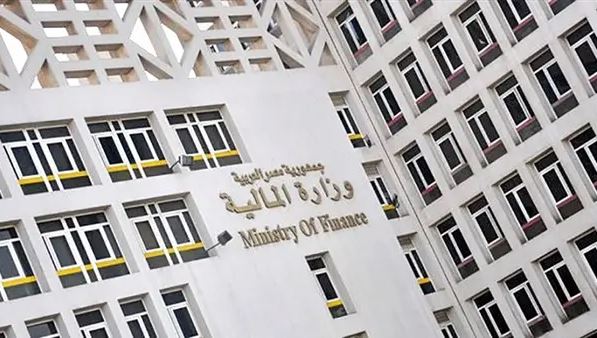
The government is currently considering reversing a law that imposed capital gains tax on stock market transactions and replacing it with a stamp duty, according to a senior government official directly involved in tax policy who spoke to Mada Masr.
Despite a move to enforce capital gains tax in 2014, the tax was levied for only two years, with the Finance Ministry taking faltering steps to reintroduce it ever since.
The official said the new change in direction is motivated by a sense that it is more important to incentivize activity on the Egyptian Exchange than to maximize the government’s taxation revenue from the national stock market.
“Revitalizing the Egyptian stock market is the main objective, even if it results in lower tax proceeds," they said, speaking on condition of anonymity.
The official said that the Cabinet is currently discussing a draft law and is still determining a prospective rate for the stamp duty, to ensure it is somewhat aligned with the revenue the capital gains tax was due to generate.
However, he emphasized that tax revenue is not the government's priority regarding the stock market.
Unlike the capital gains tax, which is levied as a proportion of a seller’s net profit from stock sales after the deduction of losses and broker fees, the stamp duty is imposed on both buyers and sellers as a percentage of the total transaction value — regardless of whether a profit is made.
The draft law reintroducing stamp tax, the official said, will seek to equalize the treatment of Egyptian with foreign investors.
Before repealing stamp duty in 2021, the government had reduced the stamp duty for foreign investors from 1.5 to 1.25/1,000 on purchase transactions, while it was set lower for Egyptian investors, decreased from 1.5 to 0.5/1,000.
Responding to criticism that the stamp duty taxes both gains and losses, the official argued that it should not be viewed as an income tax but rather as a service fee for trading, which is why it is not tied to profitability.
UN tax advisor Ali Hammad criticized the shift in the government’s direction, arguing that it conflicts with the principles of tax justice as it creates only one form of tax revenue that is levied on taxes from security trading.
“Abolishing the tax also deprives the state of revenues that could offset losses caused by the volatility of hot money flows in the market," he said.
Meanwhile, Mohamed Maher, head of the Egyptian Capital Market Association, supported the government's move but told Mada Masr that his association, in previous discussions with government officials, had lobbied for stamp duty not to exceed 0.5/1,000. The government, he said, responded that it might consider a 1/1,000 rate if it moved forward with scrapping the capital gains tax.
Maher pointed to what he described as challenges involved in enforcing the capital gains tax, such as calculating profits and losses while allowing loss carryforwards for up to three years.
However, a former senior Finance Ministry official who spoke to Mada Masr on condition of anonymity dismissed the government's claims about implementation difficulties as "false pretenses." The official argued that the tax had been collected with ease during its brief enforcement period, as all transactions were processed digitally through Misr for Central Clearing, Depository and Registry (MCDR), which oversees stock sales.
Since its introduction in July 2014, the capital gains tax was enforced only until May 2015 before being suspended for two years, until 2017. The implementation of the tax was further delayed until early 2022, but when the deadline arrived, the Finance Ministry refrained from collecting it due to low trading values and volumes.
In 2023, the ministry issued Law 30, reintroducing the capital gains tax with some modifications and setting collection to begin in 2024.
In May 2024, however, the government announced another delay, pushing tax collection to the next tax season, beginning in March 2025. The official rationale cited the absence of the law’s executive regulations and “the need for further clarification on tax calculation and collection procedures through MCDR.”
A former Finance Ministry official, who previously worked directly on capital gains taxation, told Mada Masr that the delay was driven by indirect pressure from major stock market investors. He explained that influential investors leveraged parliamentary allies to intensify scrutiny through inquiries and briefing requests, while media figures launched campaigns against the tax. "We often saw that top business figures did not personally lead opposition efforts but instead relied on lobbying groups to advocate on their behalf," the source said. The law did not include an exemption threshold for small-scale investors, they added, allowing them to align with major market players in a “unified front” against the tax.
أخبار ذات صلة

Govt’s launch of ‘Citizen Bonds’ challenges domestic banks, sources say
The Finance Ministry’s new “Citizen Bond” is being rolled out today, available for individuals exclusively through Egypt Post branches. The 18-month savings and investment instrument offers a fixed annual return…

A little for the public, a lot for the state: PM launches small social spending package prioritizing ‘fiscal wisdom’
The new government launched a new social support package worth LE40 billion during a televised press conference on Sunday. Of the total, LE15 billion will go to the Haya Karima…
Trade-off: Madbuly’s big debt target and even bigger debt problem
A grand debt-swap proposal is gaining government and media traction

‘Accounting games:’ The sukukification of Ras Shokeir
The wording of a presidential decree published in the Official Gazette on Tuesday has stirred considerable debate over its potential implications. The…
Your support is the only way to ensure independent, progressive journalism survives.
You have a right to access accurate information, be stimulated by innovative and nuanced reporting, and be moved by compelling storytelling. Subscribe now to become part of the growing community of members who help us maintain our editorial independence.
Join us