
Saudi Arabia, Egypt finalize investment protection agreement

Egypt and Saudi Arabia announced on Tuesday the formation of a new cooperation council and the forging of an agreement to encourage and protect mutual investments, according to a statement issued by the Egyptian presidency on Tuesday evening.
The statement followed the arrival of Saudi Crown Prince Mohamed bin Salman on Tuesday to Cairo, where he was received by President Abdel Fattah al-Sisi in a meeting that was widely broadcast across national television channels.
The agreement apparently deferred eagerly anticipated Saudi investments in Egypt. Prime Minister Mostafa Madbuly has said in recent weeks that bin Salman has given directions for US$5 billion to be injected into Egypt’s economy, while newspapers have circulated stories that Saudi Arabia could be set to acquire developmental rights for a piece of coastal land, akin to the landmark Emirati deal to develop Ras al-Hikma.
But sources who spoke to Mada Masr in recent weeks said that protecting Saudi investments in Egypt emerged as a key priority in talks between the two since Prime Minister Mostafa Madbuly paid a visit to Riyadh in September.
Speaking to Mada Masr on condition of anonymity, a source from the Saudi Chamber of Commerce said that the Saudi Investment Protection Agreement holds Saudi investors in Egypt at the top of its priorities as it aims to facilitate and incentivize their operations. Investors themselves requested the agreement, the source said.
The source, who attended a meeting between Madbuly and a number of Saudi investors during the PM’s recent visit to Saudi Arabia, added that the Egyptian government had pledged to resolve all obstacles facing Saudi investments and finalize the agreement as soon as possible.
Although details of the investment agreement weren’t announced on Tuesday, sources told Mada Masr that Saudi investors have voiced grievances over several key obstacles, including the following:
Liquidity shortage hampering profit repatriation
An Egyptian investor who attended the Riyadh meeting told Mada Masr on condition of anonymity that Saudi companies in Egypt had accumulated $5 billion in profits that were stuck in the country.
Saudi Arabia has previously expressed frustration over complications preventing the repatriation of profits from investments, a financial consulting firm manager told Mada Masr on condition of anonymity.
A chronic scarcity of foreign currency liquidity in Egypt prevented the withdrawal of large sums from the country until March this year, when the pound was devalued and a bailout program worth US$35 billion restored greater flexibility in Egypt’s banking system.
"Saudi Arabia was upset because the UAE was able to repatriate its profits, while Egyptian authorities argued that the Emiratis acted independently without receiving any special concessions by Egypt regarding foreign currency access," the consulting firm source said. “In practice, the Emiratis were actually able to do this by using branches of Emirati banks in Egypt, particularly Mashreq Bank, an option not available to Saudi Arabia."
The source also said that Mashreq Bank was able to provide the necessary dollar liquidity by offering Egyptians in the UAE a currency exchange rate that matched the black market, which encouraged them to transfer part of their income in foreign currency through the bank. This stood in contrast with the common practice at the time — before the pound's devaluation — where most Egyptian expatriates transferred money outside the official banking system.
Energy crisis hampering production
The Egyptian investor who attended Madbuly’s meeting in Riyadh pointed out that another of the main grievances was the government’s failure to ensure consistent energy supplies for some companies in which Saudi investors hold stakes.
Among the hardest hit in recent months due to natural gas supply disruptions has been the fertilizer sector, in which Saudi Arabia holds various investments, including a 20-percent stake in Abu Qir Fertilizers and a 25-percent stake in the Misr Fertilizers Production Company (MOPCO) acquired in a deal in summer 2022.
Despite the seemingly positive atmosphere at the Riyadh conference, a company linked to Saudi Arabia’s Public Investment Fund (PIF) has divested a total of three percent of its shares in Abu Qir Fertilizers Company, according to stock exchange data.
Two sources in the energy and financial consulting sectors speaking to Mada Masr on condition of anonymity attributed the divestment to Egypt’s energy crisis and gas supply disruptions in factories.
Egypt’s balance of fuel supply to demand has become more precarious over recent years as national consumption paired with a small export program have exceeded supply. The government started implementing an energy load production program last year by cutting electricity from households and commercial areas over the summer for 3 hours or more a day. Egypt produces a majority of its own natural gas as well as importing additional volumes from Israel.
Since the beginning of Israel’s onslaught on the besieged Gaza Strip, Egypt’s fuel availability has been severely impacted by several temporary closures of the Israeli Tamar gas field which halted import volumes.
Land seizure and compensation
The way the government handles land designated for investments was another major complaint from Saudi investors, according to the Egyptian investor. The government frequently takes away land from investors, offering alternative plots in different locations or occasionally providing financial compensation, though often without any compensation at all. In a recent instance, according to Asharq Business, the Saudi Dallah Al-Baraka Holding Company gave up four million square meters of land on the North Coast in exchange for 500 feddans in eastern Cairo.
***
Aside from the investment agreement and formation of a cooperation council, Sisi and Bin Salman discussed regional affairs, including “the situations in the Gaza Strip and Lebanon,” with both agreeing on the need for a ceasefire, according to the presidential statement.
أخبار ذات صلة

Sudan Nashra: Idris in Cairo as part of Egyptian-Turkish-Saudi coordination to prop up Sudanese military, Egyptian official says | RSF seizes Musa Hilal stronghold, stoking tribal tensions | RSF attacks North Darfur border town, engages Chadian forces | Hemedti in Uganda as head of parallel govt
Subscribe to our Lens on Sudan newsletter here. A week of heavy clashes in North Darfur has strained the region’s tribal landscape,…
Sudan Nashra: Burhan invokes Jeddah Agreement to set new negotiation terms | Over 150 abducted in South Kordofan in RSF-SPLM (Hilu) forced recruitment campaign | RSF launches major attack on Babanusa | Joint opposition forces in South Sudan clash with govt troops
With regional allies now propping up his forces on the battlefield, Sudanese Armed Forces Commander-in-Chief and Transitional Sovereignty Council Chair Abdel Fattah…

The Quad War
After the fall of Fasher, Egypt turned to Turkey to find a way to deter the growing Emirati threat
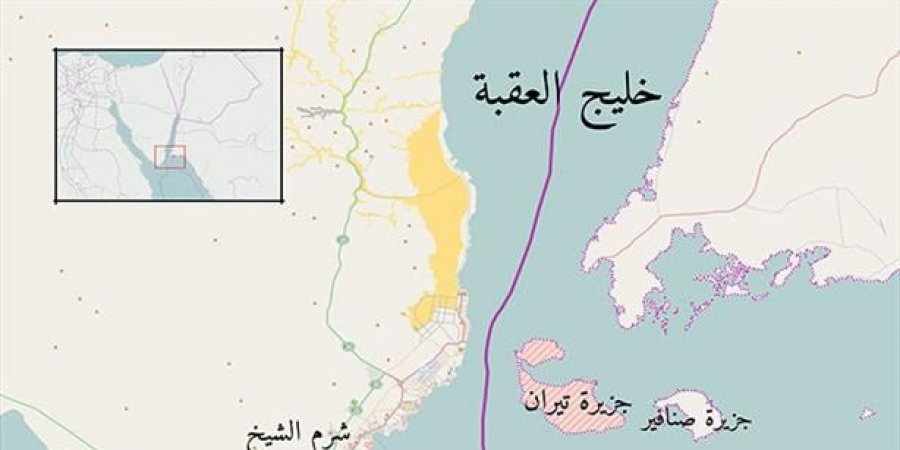
Lawyers reignite fight against govt’s transfer of Tiran, Sanafir islands to Saudi Arabia
The appeal calls for the annulment of the 2017 presidential decree and argues that the transfer viol
Your support is the only way to ensure independent, progressive journalism survives.
You have a right to access accurate information, be stimulated by innovative and nuanced reporting, and be moved by compelling storytelling. Subscribe now to become part of the growing community of members who help us maintain our editorial independence.
Join us