
Professor at German University: They thought my students’ work was immoral so they terminated my contract
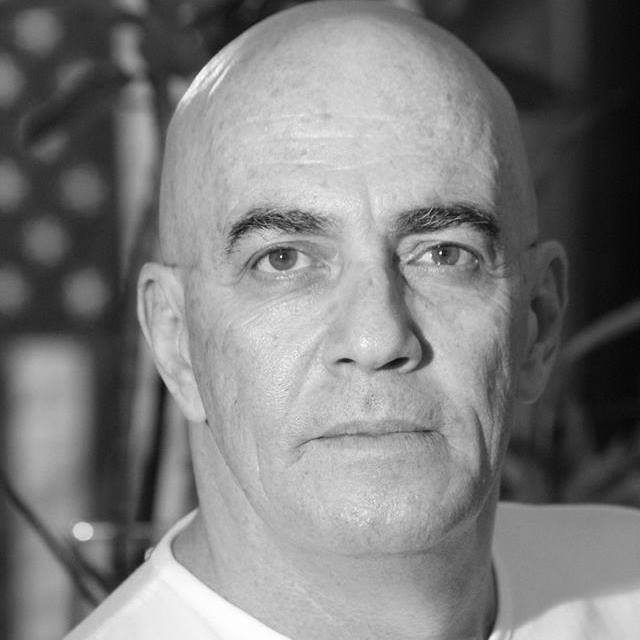
Renowned architect and professor of architecture at several international universities, Tarek Naga, was abruptly informed of the termination of his contract at the German University in Cairo (GUC) last week.
An email he received from the university’s human resources departement had little explanation of the termination of his contract.
Naga spoke with Mada Masr about a crisis that he says was brewing for several weeks before the decision was taken not to renew his contract around the graduation projects of two of his students deemed by the university to be immoral.
In July, Mina Maurice, one of Naga’s students, informed him that a number of works and drawings, prepared as his personal graduation project, had been torn-up and taken down from the exhibition walls. The exhibition included the works and graduation projects of all of Naga’s students.
On learning from Maurice that his drawings had been destroyed and removed, another student, Hussein Salem, went to look. He was shocked to find that his own drawings had similarly been defaced and destroyed.
Naga was traveling abroad at the time of this incident, and was unable to communicate with the dean of the department, Tamer al-Khorazaty.
Maurice had gone to the management of GUC security, who advised him to ask the university’s administrative staff.
During his time abroad, Naga believed that the university’s security personnel were responsible. On his return and upon learning about the termination of his contract, however, Naga says he realized that it was GUC’s administration behind the issue.
This was Naga’s second academic year at GUC where he taught architecture and supervised students’ graduation projects. His classes included a small number of students — “Each semester I taught 10 students, 11 at most,” he says.
The professor explains that his classes were conducted within the studio, whereby each student would choos a broad topic or theme on which they would work for several months. Part of this process included the preparation of a collection of different visual references.
Each student is taught the technical and methodical aspects of architecture in the classes, and uses these ideas in their projects – developing them through a number of different stages, Naga adds.
At the end of each course, the students submit presentations of their projects, which are then displayed on the university’s exhibition walls. These exhibits are open to visits from professors, students, family and friends.
Salem describes Naga's approach as one of “experimental teaching.”
During his final semester, Maurice chose to explore “nudity in the history of humanity” for his graduation project, while Salem was researching “feminine divinity across civilizations.” Accordingly, both students included visual references in their works that entailed nudity. These works were adapted and developed for their architectural graduation projects.
Naga teaches in Egypt, he says, the same way he does anywhere in the world and no restrictions are imposed on his students’ ideas.
Upon learning of the decision to terminate his contract, Naga contacted the dean of the department, who assured the professor that he fully supported him. Khorazaty went on to reassure him, Naga says, that he had personally explained the situation to the university’s administration, and briefed them about the students’ projects.
The dean also wanted Naga to contact the university’s administration so as to clarify his position. Naga would not do so, however.
“My stance was that had I entered into a discussion with them, it would essentially mean that they are in the right. If they have an objection, it is required that they notify the professor in question — and this did not happen.”
Regardless of the adminstration’s reasoning, he adds, “they do not have the right to tear-up or destroy a student’s work. It is an insult to the departement and all its students.”
Khorazaty did not respond to Mada Masr’s several requests for a comment.
Several GUC students have rallied to Naga’s cause, launching a campaign on social networks. Using the hashtag #GUC_Censorship, they are expressing their discontent with the university administration’s stance of interfering and censoring students’ projects.
According to a report recently issued by the Association for Freedom of Thought and Expression (AFTE), there have been several encroachments on academic freedom in Egypt.
The report documents several cases of violations of academic freedoms in Egypt’s universities. Some of these relate to the crackdown on scientific research, such as preventing participation in research opportunities abroad and by banning individuals from partaking in international conferences by stipulating that participants must first receive approval from the Ministry of Foreign Affairs.

أخبار ذات صلة
Dozens protest ban on niqab at Cairo University
Dozens of Cairo University students, faculty members and medical staff protested on Sunday against a ban on wearing niqab, both on campus and at university-affiliated medical centers. Although the demonstration…
Cairo University reverses cancellation of professor’s sabbatical
Cairo University has reversed its earlier decision to cancel faculty of arts Assistant Professor Kholoud Saber’s sabbatical, Saber reported on her Facebook…
Cairo University professor exposes security intervention in academic freedoms
Egypt’s academic community has been fighting intervention by security bodies into academic life since former President Hosni Mubarak. Many scholars have voiced major concerns over the state’s tight grip on…
On March 9, rights group points to deterioration in academic freedom
The Association for Freedom of Thought and Expression (AFTE) issued a statement warning of the growing restrictions on academic freedom and independence…
Your support is the only way to ensure independent, progressive journalism survives.
You have a right to access accurate information, be stimulated by innovative and nuanced reporting, and be moved by compelling storytelling. Subscribe now to become part of the growing community of members who help us maintain our editorial independence.
Join us