
On March 9, rights group points to deterioration in academic freedom
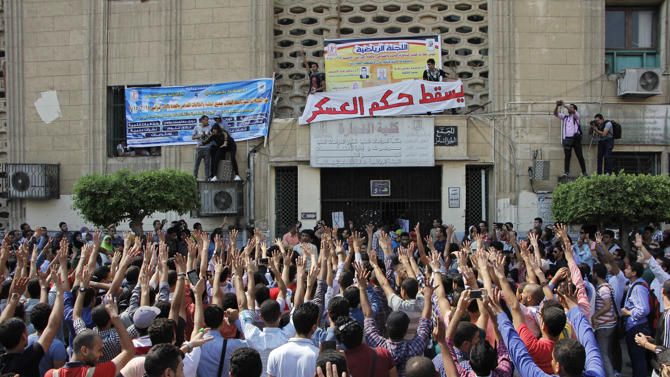
The Association for Freedom of Thought and Expression (AFTE) issued a statement warning of the growing restrictions on academic freedom and independence of universities. The organization also cautioned against the interference of the government in amending legislation pertaining to universities.
In a statement issued on March 9, commemorating the independence of universities, AFTE called for an end to interference and pressure on university staff and the academic community at large.
It said that universities in Egypt, along with Al-Azhar University, were subject to political pressure by the media as well as the state during the past academic year.
University administrations also imposed limitations on academic research and teaching, AFTE said.
The association cited four specific cases reflecting a violation of academic freedom, including that of Adel Badr, a professor of philosophy at Mansoura University, who was suspended for six months without pay for criticizing the regime during a discussion of a student’s thesis. Badr was referred to a disciplinary committee where he was investigated for inciting violence and conspiring to overthrow the regime.
Another case was that of Madiha al-Sayeh, professor at Cairo University, who was also referred for investigation and suspended for three months after she included writings by Sayed Qutb, a leading member of the Muslim Brotherhood, in her curriculum.
AFTE called for providing an atmosphere that guarantees the right to exchange knowledge.
It warned against the growing threats to the work of university staff and researchers, holding university administrations responsible for protecting the staff from political, cultural and ideological pressure.
On March 9, 1932 Cairo University's first president Lotfi al-Sayed resigned in protest of a ministerial decision to sack Taha Hussein, then dean of the Faculty of Arts. A movement dubbing itself “March 9” was formed in 2004 advocating for the independence of universities.
Last October, the movement organized a silent protest at Cairo University against the Cabinet’s approval of a legal amendment giving university heads the power to sack staff members without disciplinary hearings. The movement condemned the amendments, saying they are a way of expanding the powers of university heads at the expense of university councils, and that, along with other amendments over the last year, it feeds into the executive authority’s general plan to deal with universities in a more security-oriented manner.

أخبار ذات صلة
Professor at German University: They thought my students’ work was immoral so they terminated my contract
The contract of professor at Cairo's German University was terminated because they deemed his students' works immoral.
Dozens protest ban on niqab at Cairo University
Dozens of Cairo University students, faculty members and medical staff protested on Sunday against a ban on wearing niqab, both on campus and at university-affiliated medical centers. Although the demonstration…
Cairo University reverses cancellation of professor’s sabbatical
Cairo University has reversed its earlier decision to cancel faculty of arts Assistant Professor Kholoud Saber’s sabbatical, Saber reported on her Facebook…
Cairo University professor exposes security intervention in academic freedoms
Egypt’s academic community has been fighting intervention by security bodies into academic life since former President Hosni Mubarak. Many scholars have voiced major concerns over the state’s tight grip on…
Your support is the only way to ensure independent, progressive journalism survives.
You have a right to access accurate information, be stimulated by innovative and nuanced reporting, and be moved by compelling storytelling. Subscribe now to become part of the growing community of members who help us maintain our editorial independence.
Join us