
New Education Ministry hiring competition sidelines thousands of part-time teachers
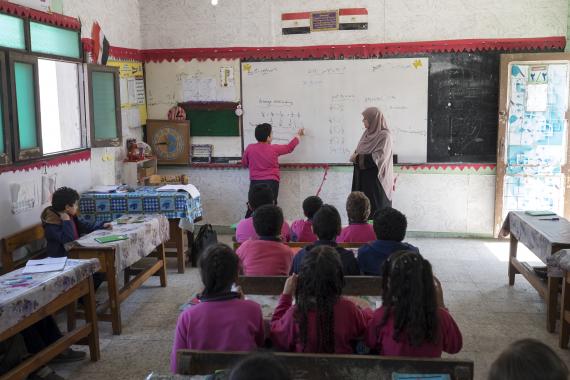
When a new series of hiring competitions were announced by the Education Ministry last month, Amin*, a recently graduated math teacher who gets paid per class at a public school in Beni Suef, was among the teachers who realized their chance at getting a stable contract was fading away.
Next to his low-paying teaching job, Amin is among thousands of others who have been studying for their teaching diploma in hopes that it will allow them to apply for the long-awaited hiring competition.
But when the competition was finally announced last month, he discovered that one of the eligibility requirements excludes him from the chance of even applying for a stable and full-time teaching job in a government school.
Amin will not be able to provide his diploma certificate by the competition deadline since he will still be sitting final exams.
“I finish my exams on July 3 and the competition deadline is on July 5. How will the faculty issue my diploma before the competition deadline?” Amin told Mada Masr, adding, "I lost my chance at the competition after what I've endured for a whole year; giving classes for LE40, facing serious financial difficulties, all while I have a family to provide for.”
Amin is not alone, as many of the tens of thousands of per-class teachers nationwide are faced with similar obstacles and find themselves in situations where they are unable to apply.
A long-term freeze on state hiring to meet budgetary restrictions since the pandemic means that the Education Ministry has relied over recent years on teachers who are paid per class. These teachers are employed under temporary contracts by schools to fill the shortfall in permanently contracted staff for primary and secondary education, estimated at a gap of nearly 470,000 teachers.
Since per-class teaching was introduced in 2020, more and more teachers began to apply for the per-class roles with their numbers now ranging between 50,000 and 60,000 nationwide.
But the precarious working conditions they face, including low wages, uncompensated hours and a general lack of job security mean that many had hoped that the upcoming government hiring competition could bring them more job stability. This is why teachers are angry about the unrealistic eligibility requirements, especially given that the government had portrayed this year’s competitions as a way to acknowledge per-class teachers’ dedication and experience.
When this year’s round of per-class teaching competitions was announced in June, math, arabic, science and social studies teachers were the only categories of candidates required, limiting the general eligibility to apply for around 23,000 jobs announced so far.
Teachers groups on social media were quickly flooded with panic, anger and demands that the requirements be loosened to give all part-time teachers a chance.
Alongside Amin are thousands of per-class teachers who are still studying to receive their teaching diplomas — one of the main eligibility requirements — and will not get the paperwork until after the competition deadline. Amin said that he was one of 1,200 people in Beni Suef alone who filed complaints about the diploma certificate requirement. MP Abdel Moneim Imam intervened on their behalf in late June, submitting a briefing request to the Education Ministry and the head of the Central Agency for Organization and Administration, which is organizing the competition, asking them to reconsider the need for the certificate.
Teachers are calling for their proof of enrollment to be accepted instead of the certificate, but the ministry has provided no official response or decision regarding their demands.
Per-class teachers of other subjects, such as psychology and philosophy, likewise discovered that they were not eligible for the hiring competitions, since their subjects are now excluded from the competitions due the subjects’ removal from the thanawaya amma syllabus in the 2024/25 school year.
The humanities teachers have decried their marginalization, after years of service in the schooling system including volunteering.
Also excluded from applying are older educators, defined as those above 45 years. Many have spoken out since June arguing that they should be entitled to the full time contracts given their years of hard work and experience in precarious conditions, calling on the education minister to “return the favour.”
In one of their statements, they highlighted that many of them are of the generation that previously fell victim to the 1998 decision that cancelled the system that used to automatically assign public teaching posts to education faculty graduates. Former Prime Minister Kamal al-Ganzoury claimed at the time that the state budget could no longer bear the burden of assigning education faculty graduates.
The conditions that per-class teachers work in now, nearly 30 years after the decision, represent a sad decline in stability.
“When I started working, we used to get paid LE20 per class. The amount would eventually come to LE14 after deductions,” said Asmaa*, a math teacher who has been working per class for the past four years and who applied for the competition. She added that payments were made per term at the time.
“This year, the situation changed a bit,” she says, adding that “we received our salaries on a monthly-basis — well, not exactly every month, but roughly — and the pay per class was [increased to] LE50.”
“After deductions and everything,” however, teachers still only “ended up with LE37.5 per class," she concluded,
The Cabinet approved the wage increase in August last year, a move that the head of the Teachers Syndicate described at the time as the government’s way to express appreciation for per-class teachers and their hard work.
But Amin says that even after the increase, the amount falls short of covering his family’s expenses. “The salary is very low, I have a family and I am supposed to provide for them with LE40 per class ? it does nothing,” he said.
Late payments were also highlighted by the teachers as an issue undermining job stability.
“You can receive April’s salary in June. We do eventually get paid, but it gets delayed,” he said, adding that since he cannot only rely on his teaching job to provide for his family, he gives private lessons later in the evenings and occasionally does farm work.
Another issue highlighted by the teachers who spoke to Mada Masr was the number of uncompensated classes they give.
The number of classes per-class teachers give per week depends on the shortage of teachers in each school, Asmaa explained, adding that in theory, the maximum number of classes allocated by the school to each part-time teacher per week is set at 20 in the schedules. Any extra classes taught are unpaid for by the school.
“[But] In reality, you do give more than 20 classes a week. My schedule this school year had 24 classes a week, or 96 classes per month, but you only get compensated for 80 classes per month,” she added.
Amin also described giving classes “on a voluntary basis,” which, although uncompensated financially, are in fact a requirement as per their employment agreement with schools.
The precarious working situation of per-class teachers is exacerbated by the fact that they do not get paid during national holidays, unlike their fully employed colleagues in the state education sector. While their salaries are usually estimated at nearly LE3,000 per month, teachers can see them shrink depending on national holidays.
“If there is a national holiday, full-time public school teachers are paid for these days, but this is not the case for us. It is like ‘you came on that day, then you get paid for it, but if you did not, then no payment will be made,” Amin explained.
Per-class teachers see full-time contracts as the solution for their difficult working conditions. This was also put forward by Kamel Abdallah, treasurer of the Teachers Syndicate in Giza and a private school director.
Full-time contracts would also mean better learning for students, Abdallah said, highlighting the crucial role these teachers play in combatting core capacity issues in the education system. Without enough teachers, overcrowded classrooms become chaotic, he explained, and “students end up not learning a thing.”
In what they said would amount to “compensation” for their years of work amid difficult circumstances, per-class teachers have also called on the government over recent years to provide stable contracts directly, and to stop offering them only via the yearly competitions hiring process that the Education Ministry has begun to rely on to bridge the staffing gap at public schools.
The recruitment model launched in 2019 gave way to several initiatives in the following years, including one in 2022, aiming to hire 150,000 teachers over the course of five years to fill the teacher gap in kindergarten and primary school grades.
Many educators — not only those working per-class — have criticized the hiring scheme in the form of competitions for years and protested their selection criteria, describing the requirements, which include physical fitness tests and interviews at the military academy, as obscure and biased.
Abdallah lamented the fact that the most simple solution is not the one the state is opting for at present. “There are problems coming from every direction, but the solution to this issue is teacher hires. Hire the teacher because officially employing them provides experience and grants proper status,” the syndicate official said.
أخبار ذات صلة
Victims’ lawyer: Military Prosecution to take over school assault investigation under ‘presidential directive’
“On presidential directives,” the Military Prosecution has taken over the ongoing investigation into a series of sexual assaults perpetrated against children at…
Govt amendments to education law approved as critics warn changes could worsen inequality
Critics have repeatedly flagged the amendments as a gateway to worsening existing inequalities in th
Income slashed for thousands of teachers after changes to high school curriculum
When the education minister announced that several subjects would become non-essential to school curriculums last month, Ali Abdou al-Sheikh, a teacher of…
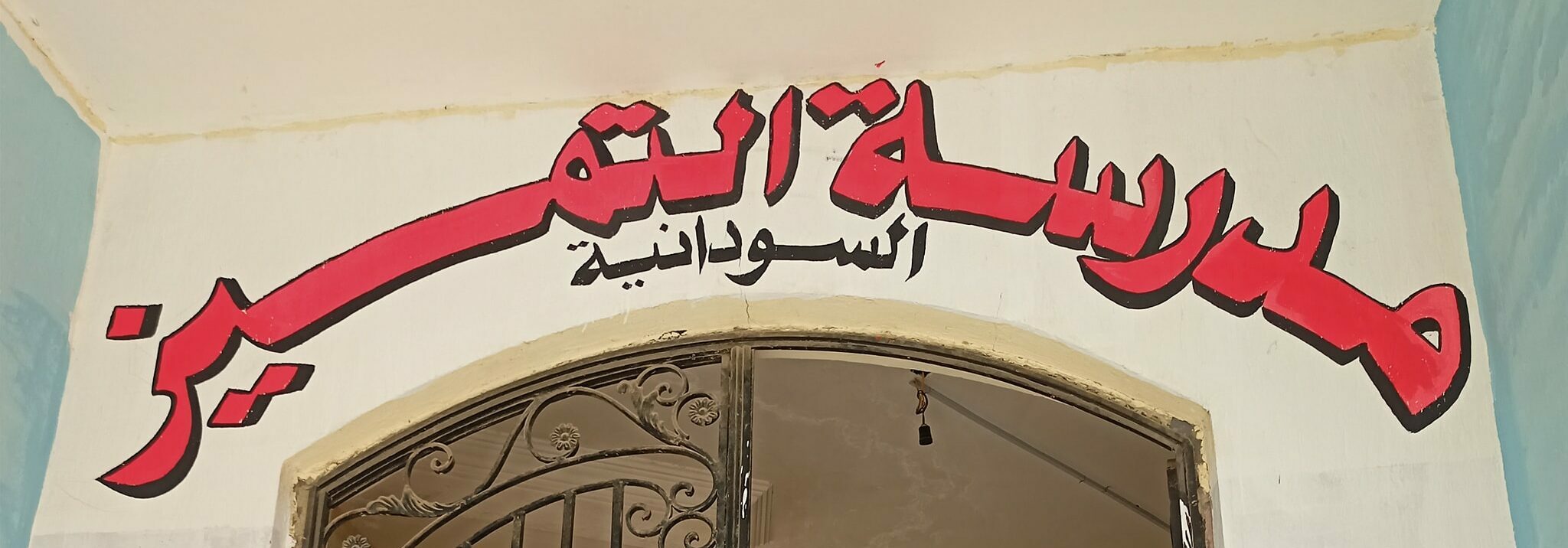
State regulation drive shutters 300 Sudanese community schools, disrupting learning
Many worry the state’s unclear legalization requirements could lead to indefinite shutdowns.
Your support is the only way to ensure independent, progressive journalism survives.
You have a right to access accurate information, be stimulated by innovative and nuanced reporting, and be moved by compelling storytelling. Subscribe now to become part of the growing community of members who help us maintain our editorial independence.
Join us