
Juhayna struggles on stock market following senior executives’ arrests

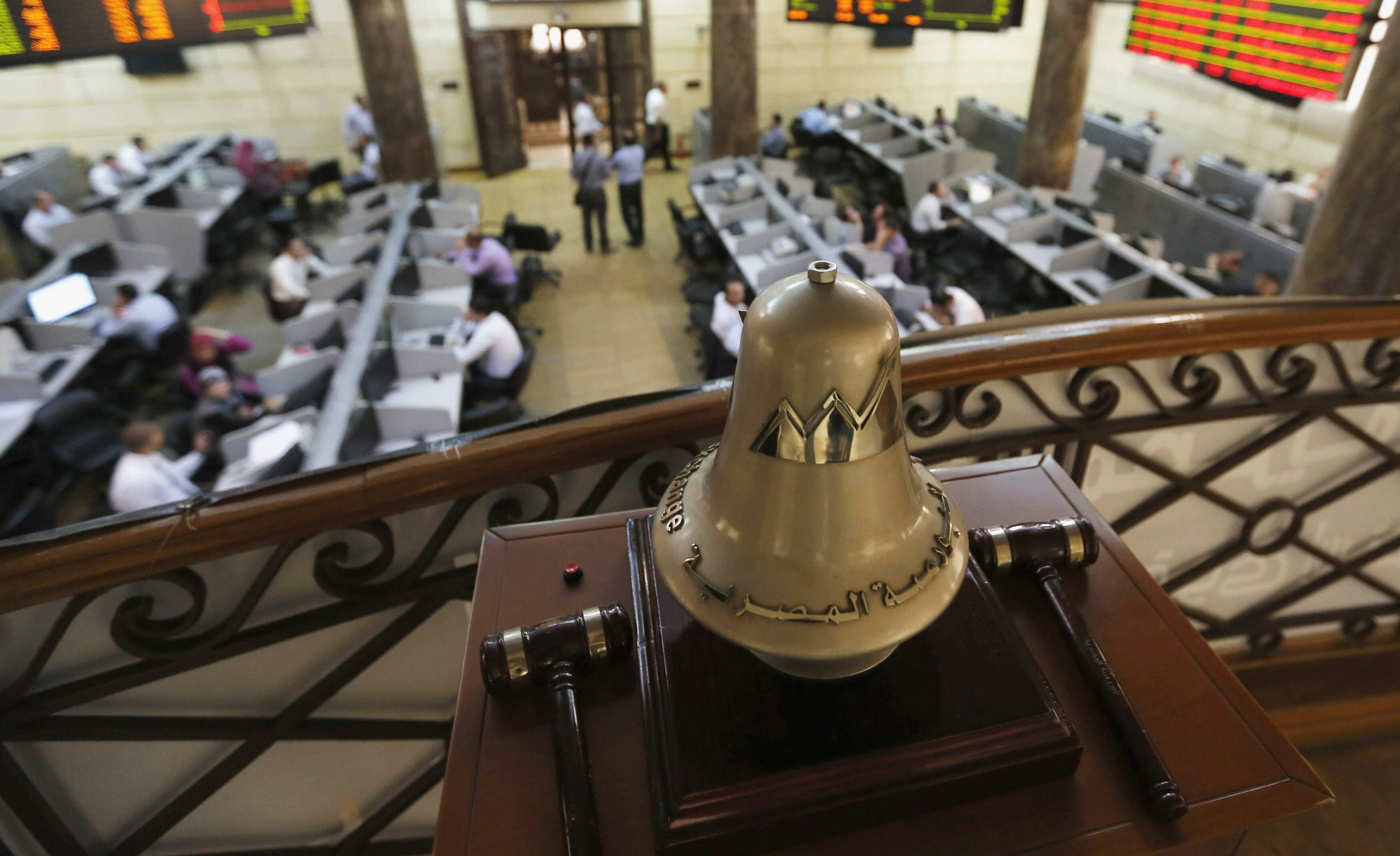
Juhayna, one of Egypt’s largest food product manufacturers, could face punitive measures on the Egyptian stock market for failing to submit financial statements for the 2020 fiscal year before the June 1 deadline, the Egyptian Exchange announced in a Tuesday statement.
Following the statement, shares in Juhayna began trading on Wednesday on the Egyptian Exchange’s “D-list,” a classification comprising companies either seeking delisting or facing punitive delisting for not adhering to disclosure rules and deadlines.
First listed on the Egyptian Exchange in 2010, the relegation of Juhayna to the D-list is a first for the company, which has long been on the A-list specified for the most active stocks. Juhayna’s addition to the D-list means the company’s stocks are not permitted to trade on margin purchases and same-day sales, while a five-percent up or down limit has been placed on movement in the share value before trading of the company’s shares is halted.
The demotion on the EGX follows the arrest of Juhayna’s founder and chief executive Safwan Thabet in December, and the February arrest of his son Seif Safwan, who had taken over from his father as CEO for a short period of two months, which several market and financial analysts told Mada Masr has thrown the company into an internal state of disarray.
Thabet was accused of belonging to the Muslim Brotherhood in 2015 and subjected to an asset freeze at the time, rumors that a political source told Mada Masr reemerged around the time of his December arrest. Yet, another political source said the arrest came shortly after the government had propositioned Thabet to merge elements of his company with state enterprises.
The share value currently stands at LE4.23, an almost forty percent drop from its value on November 30 value, according to data from Mubasher, and the lowest the company has seen since its share value was posted at LE3.92 in October 2016, shortly before the value of the Egyptian pound fell by almost half following its flotation. Shares in the company stood at around LE7 before the Thabets’ arrests.
On Tuesday alone, the company’s shares spiraled eight percent, though the share valuation made a partial recovery Wednesday, climbing four percent. Commenting on Wednesday’s share-price increase, Prime Securities analyst Mohamed Saad told Mada Masr that shareholders are trying to compensate for the losses they have sustained since the Thabets’ arrest by buying up the company’s stocks at what many estimate to be their lowest possible value in the hope of future gains if the share value recovers.
If the company’s financial disclosure statements are not forthcoming, the company could be delisted from the Egyptian Exchange, financial analyst Mohamed Tawfik told Mada Masr.
Juhayna Investor Relations Director Khaled al-Daader took a positive outlook in a public statement on Tuesday, asserting that Juhayna’s addition to the D-list is temporary and that the company is unlikely to be delisted. Daader said that two auditors employed by Juhayna are currently working to finalize the financial statements, with one almost complete and the other expected to wrap within two weeks after it requested a deadline extension.
Yet, Cairo University Investment Professor Hisham Ibrahim believes that the future of the company and its recovery are dependent on whether Thabet and his son get out of prison.
Both Tawfik and Ibrahim described Juhayna’s addition to the D-list as mirroring the state of “floundering” in which the company has been mired since the arrests of Thabet and his son Seif.
Ibrahim compared the situation to the “violent shock” undergone by the Talaat Moustafa Group in 2010 when its executive director Hisham Talaat Mostafa was arrested for the murder of Lebanese singer Suzan Tamim.
According to Ibrahim, despite the ongoing presence of an executive board led by Saudi businessman Mohamd al-Dagheem the company’s activities are “severely affected” by Thabet and his son’s absence.
A political source speaking to Mada Masr earlier this year, however, said that “proposals” are currently on the table to mediate the crisis in the company, adding that “it is not in the state’s best interest to have talk of asset freezes of businessmen under various pretexts, which gives a negative impression about its intervention in the economy.”
Juhayna was first listed on the EGX in 2010 after the company decided to offer 40 percent of its shares up for trading, with 32 percent made available for private investors and the remaining 8 percent traded publicly.
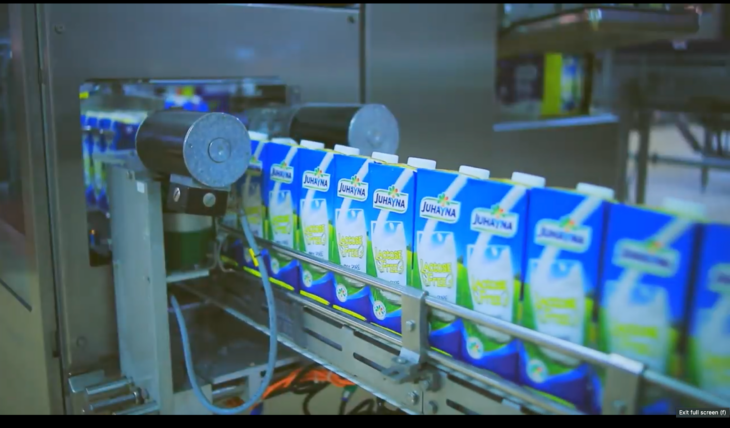
The company was established in 1983 and entered the market in 1987 as the first company to produce packaged milk in Egypt. Thabet was the company’s CEO and chair since it was established and until his resignation in January, five weeks after he was detained on December 2.
Thabet, once a dining mate with President Abdel Fattah al-Sisi and a regular donor to the black-box Tahya Misr fund for nominally charitable donations, is now facing charges of “funding terrorism and joining an illegal group to achieve its goals.”
Thabet’s arrest comes on the heels of a gradual fallout from the regime’s favor. Earlier in May, Mada Masr spoke to businessmen as well as political and legal sources informed of the crisis around the Thabet family to understand what led up to the Juhayna chairman’s arrest. What emerged was a picture not of a company harboring Brotherhood assets, as some rumors and official charges would suggest, and more of one increasingly wary of demands for ever-larger donations and cooperation in state-led projects.
Aside from the winter arrests, Juhayna has also complained that “incomprehensible and unjustified” procedures are being taken against the companies’ vehicles by the Giza traffic administration and traffic investigation department, which the company feared could lead to losses. In a letter seen by Reuters, Juhayna officials described enforcement vehicles stationed “almost continuously at the company’s factories and the product loading sidewalks in the factories and branches.” The company said that these authorities revoked the licenses for vehicles transporting dairy products, including 94 sales cars and 12 trucks, in addition to 26 heavy trucks belonging to outside contractors, and submitted complaints to the ministries of trade, industry and supply, the chamber of food industries in the Federation of Egyptian Industries and to the head prosecutor of the 6th of October prosecution office.

أخبار ذات صلة

e-Finance’s EGX debut: What’s whetting investor appetite for the govt payment services provider?
The company saw its share price skyrocket by 40 percent on the first day of the listing
US Congress probes Sarwa Capital IPO after Sawiris bid
The questionable IPO process of a partly US-funded company led to suspension of Beltone's IPO arm.

Concerning content: What the arrest of food bloggers uncovers about Egypt’s food safety inspection system
A thumbnail shows content creators Al-Alkilans and Sultanji standing at a kitchen counter top, wearing matching tee-shirts displaying a cartoon bee, a…
Milk turns sour, cattle sold off as customers tighten purse strings in response to inflation
“What I can do is reduce my production capacity in order to stop the losses.”
Your support is the only way to ensure independent, progressive journalism survives.
You have a right to access accurate information, be stimulated by innovative and nuanced reporting, and be moved by compelling storytelling. Subscribe now to become part of the growing community of members who help us maintain our editorial independence.
Join us