

e-Finance’s EGX debut: What’s whetting investor appetite for the govt payment services provider?
A company that holds sway as the sole provider for all of Egypt’s government e-payment services, e-Finance Investment Group, saw its share price skyrocket over 40 percent on Wednesday, its first day of trading on the Egyptian Exchange, following an IPO being described as the country’s biggest since 2015.
After only an hour of trading, share prices for e-Finance jumped to LE20 from the offering price of LE13.98, with 29.61 million shares traded at a turnover of LE577.05 million.
Trading on e-Finance shares started officially on Wednesday, the Egyptian Exchange (EGX) announced, just one day after the share subscription period for the IPO that was originally due at the end of 2019.
e-Finance is the first sign of life in a government share sale program that was originally due to see stakes in 23 state-owned firms make their way onto the EGX. The program was launched in 2018 in accordance with the policy recommendations that came with the $12 billion loan agreement Egypt signed with the International Monetary Fund in 2016, though coronavirus and the 2018 emerging markets crisis saw the program stall repeatedly.
Turnout from the private sector to win a share of the formerly state-owned company was remarkable. High investor demand greeted both tranches of the offering, the size of which was boosted from an initial 16.1 percent up to 26.1 percent, with the final IPO nevertheless closing 10.2 times oversubscribed.
The company’s popularity, according to Abdel Rasoul Abdel Hady, a member of the Egyptian Society for Taxation board of directors, could be down to the company’s exclusive status as the only digital payments provider licensed to facilitate government payments.
A big fish in a small pond
The group’s core subsidiary, e-Finance for Digital Operations, provides a suite of digital payment solutions that powers all of the digital payment and collection services that facilitate transactions between the public and the private sector and the state.
For example, Abdel Hady explains, e-Finance prevails over the digital tax payments system, with some six million corporate taxpayers paying LE350 in annual subscription fees to facilitate their due VAT, income tax and other payments.
As the government moves to digitize and centralize all of its tax-related communications, payments, complaints, inquiries and disputes services under one platform, e-Finance is set to absorb a market that is expanding. The new one-stop shop is already being piloted by some 11,000 financiers and will be expanded gradually to cover all six million institutional taxpayers, according to Abdel Hady. Moreover, companies, banks and firms have to use e-Finance’s internal network to pay other government fees, such as insurance premiums.
The “monopolistic advantage” that e-Finance enjoys, according to Abdel Hady, gave space for the subscription value to be raised relatively freely, adding that the number of clients is set to increase given the nature of the service that e-Finance is providing, which will “automatically mean an increase in e-Finance’s revenues.”
e-Finance is also the service provider for Egypt’s general public when they pay utilities and service fees to the state, Prime Securities analyst Mohamed Saad told Mada Masr. For example, anyone who pays an electricity bill via the state electricity company’s mobile app is also using e-Finance’s network as a gateway for e-payments to the Electricity and Energy Ministry.
As such, the volume of transactions that e-Finance handles is exceptional.
A major digital payments competitor, the EGX-listed Fawry, handled LE54.5 billion worth of payments in the first half of 2021. By comparison, e-Finance handled payments worth LE1.05 trillion, or around 18 times more than Fawry.

The disparity translates to the companies’ net profits. While Fawry achieved a net profit of LE113 million in the first half of 2021, e-Finance achieved over 140 percent more profit, reaching as much as LE272 million.

A not-so-uncertain outlook
Though the private sector will now join the government in owning the firm, trimming the state’s ownership down from 100 to 67.5 percent, experts say that doesn’t mean a change in how e-Finance is managed is on the way.

Saad told Mada Masr that while positive investors join the ownership structure in order to change the business pattern in some respect, the passive investor model is “clearly the pattern here in the case of e-Finance.”
Prior to the IPO, ownership of e-Finance was divided between a number of state-run entities, with the National Investment Bank as the major stakeholder, and other portions held by the National Bank of Egypt, Banque Misr and the Egyptian Banks Company, along with the Egyptian Company for Investment Projects — a company whose precise ownership is somewhat obscure, though information from 2013 showed shares to be split equally between two former senior military officers. The majority of the IPO came out of the National Investment Bank’s shares, which declined by about 15 percent from 63.6 percent to 48.7 percent, while the shares of the rest of the old shareholders declined by 2.1 percent.
The decrease in the government’s stake in the company could raise the question of a change in business model, but Saad said that this is not likely in the near future.


Meanwhile, Ibrahim Sarhan, the chair and managing director of e-Finance Investment Group, said that the proceeds of the company's stock market debut will be used within 18 months to finance the expansion of its existing subsidiaries, including Khales, e-Card, enable and e-Finance for Digital Operations. Yet, Sarhan highlighted the company’s health insurance subsidiary as the one to watch.
e-Finance launched a digital healthcare service platform with the General Authority for Universal Health Insurance in September. The new company, named eHealth, is a platform that provides comprehensive and integrated services to the healthcare sector, from managing and operating the daily operations and health technology systems to technical support services and consulting. The platform will manage and operate the tech backbone of the government’s universal healthcare scheme.
The e-Finance IPO is only the second to make its way on the EGX this year, after the private education services provider Taaleem went public earlier in 2021. Though the government shares program was originally set to include 14 IPOs as well as additional stake sales in nine already-listed companies, Eastern Tobacco Company was, until now, the only company to have increased its shareholder component, after it offered a 4.5 percent stake in its business in March 2019.
Writing: Mohamed Ezz
تقارير ذات صلة

Partially privatizing Misr Insurance, Misr Life Insurance: Inviting investors into a sector primed for growth
The state's move to partially exit the local insurance market comes due to extreme economic need.
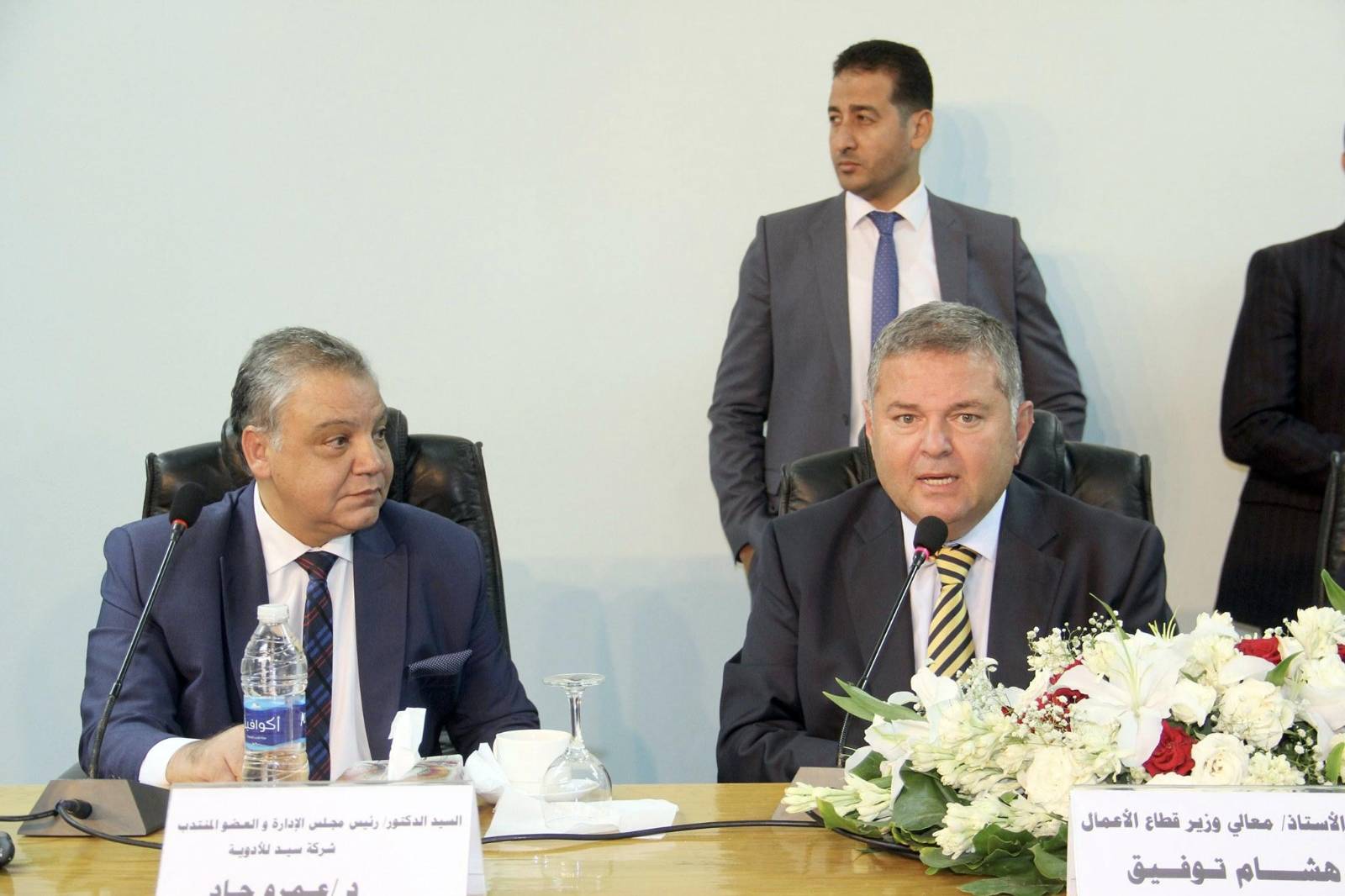
Worker-management rift remains as state pharma company reopens after strike
One trade union representative called the move to shutter the firm amid the strike 'unprecedented'

New bill proposes financialization of public utilities providers
The bill raises questions about the cost for the public who will use the services.
Your support is the only way to ensure independent, progressive journalism survives.
You have a right to access accurate information, be stimulated by innovative and nuanced reporting, and be moved by compelling storytelling. Subscribe now to become part of the growing community of members who help us maintain our editorial independence.
Join us