
Importers face higher banking fees, placing further pressure on companies’ liquidity
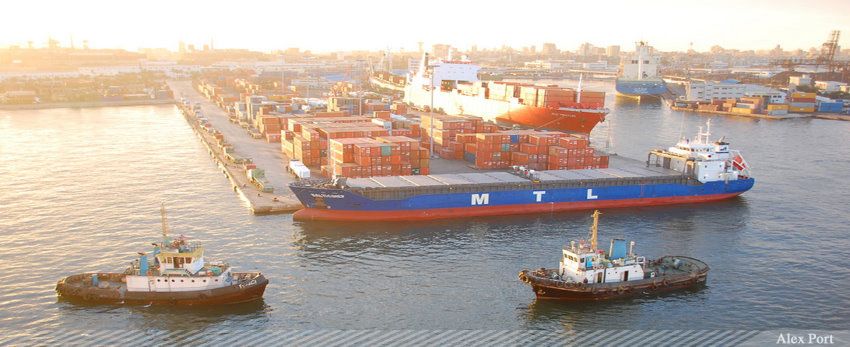
Banking fees for importers wishing to secure the supply of their goods to Egypt were hiked without warning by as much as 1,150 percent before the July Eid al-Adha holiday, import traders working in various sectors told Mada Masr.
The higher banking fees place further strain on the liquidity of companies importing goods from abroad, and could ultimately add to the cost-price paid by the consumer, the importers told Mada Masr last week, with the potential to exacerbate already high inflation rates that hit a three-year peak in May.
New import regulations implemented since February by the government and the Central Bank of Egypt have transformed the market for many businesses, and have disrupted the supply of an array of industrial and consumer goods, from medicines to seeds for agricultural crops.
From February, Egypt’s importers were required for the first time to pay in advance for their goods, as opposed to on arrival. They were obliged to request permission from banks to open a credit line, and to deposit in advance the full cost of the import transaction in the required foreign currency. The bank would then guarantee payment to the exporter on receipt of the goods.
Traders told Mada Masr at the time that the new rules hit smaller businesses hard, as few had enough liquidity to be able to pay so much foreign currency upfront.
Now, the fees required to open a new credit line with the bank have leaped from around US$100 to around $1,000, with rates as high as $1,250 quoted by some import traders, who said that the cost varies from bank to bank, as well as on the basis of each traders’ transaction history.
Banks are also inconsistent, said some traders, describing the process as akin to an “auction:” agents who pay higher fees find that bank employees act faster to set up their credit lines. “It’s you and your wits against the bank,” said one, who spoke to Mada Masr on condition of anonymity. “You get what you’re after if you manage to apply some kind of pressure to get a lower rate, but if you don’t manage to do so then you need to pay what’s asked of you to open a credit line.”
Foreign companies with branches in Egypt face their own difficulties. They are exempted from the documentary credit system and the requirement to pay all the import costs to the bank up front, and can instead manage their supply requests directly with parent companies abroad and pay on delivery of the goods. But the director of one such company told Mada Masr on condition of anonymity that banks have instead hiked the commission they take on currency exchange transactions. Where they used to take around 0.004 percent of the value of the transaction, the source said, they now take as much as 1.5 percent of its value, or around 374 times more.
The impact on consumer prices will be slight, said a number of importers, pointing instead to the pressure the fees place on the foreign currency liquidity of the companies. Some told Mada Masr that as a result, they are currently calculating the exchange rate at LE22 to the US dollar, instead of at the official rate of 18.96.
Economists who spoke to Mada Masr earlier this year said that the sudden regulatory pressure on importers was intended to increase the amount of foreign currency liquidity in the embattled banking system.
Over the first six months of 2022, over US$20 billion left the Egyptian bond market as investors pulled their money out of the emerging market amid increasing global inflation and instability, exacerbated by the Russian invasion of Ukraine.
أخبار ذات صلة

Govt’s launch of ‘Citizen Bonds’ challenges domestic banks, sources say
The Finance Ministry’s new “Citizen Bond” is being rolled out today, available for individuals exclusively through Egypt Post branches. The 18-month savings and investment instrument offers a fixed annual return…

Queuing for gold
Gold remains a trusted option for people looking to invest their savings despite a volatile market

Sources: Hot money exits from govt debt markets in waves amid expectation of devaluation
Yields on one of the Egyptian government’s primary debt instruments hit record levels on Sunday.

United Bank of Egypt announces listing on EGX after 2 years of stalled offerings
The United Bank, a financial institution fully owned by the Central Bank of Egypt (CBE), announced its plan to list 30 percent…
Your support is the only way to ensure independent, progressive journalism survives.
You have a right to access accurate information, be stimulated by innovative and nuanced reporting, and be moved by compelling storytelling. Subscribe now to become part of the growing community of members who help us maintain our editorial independence.
Join us