
Foreign reserves hold steady while Egypt looks to raise funds, reduce imports

The Central Bank of Egypt announced this week that foreign reserves held steady again in December, with a marginal rise to US$16.445 billion at the end of the month, compared to $16.423 billion in November.
Meanwhile, government officials have been seeking external funding and tightening import regulations.
After dropping from $18.096 billion in August to $16.335 billion in September, reserves have gradually inched up each month, with October reserves put at $16.415 billion.
Egypt closed 2015 with a stronger reserve position than it did the previous year. The CBE reported reserves of US$15.33 billion at the end of December 2014.
In December, Egypt anticipated receiving loans of $500 million from the African Development Bank and $1 billion from the World Bank, both of which were approved during the month.
There has been no formal announcement clarifying whether the loans have arrived. On January 3, CBE governor Tarek Amer told privately owned Dot Masr news site that both loans had yet to be transferred to Egypt.
By contrast, on January 4, Minister of International Cooperation Sahar Nasr told state-owned Ahram Online that both loans had been transferred on December 31.
On January 4, Nasr also announced that Egypt had reached an agreement with Saudi Arabia to borrow $1.5 billion to develop the Sinai Peninsula and US$1.2 billion to finance oil purchases over the next three months. Saudi Arabia will also provide Egypt with a $500 million grant to purchase Saudi products, Bloomberg news reported.
In addition to seeking foreign funding, Egypt has also been placing limitations on imports, a strategy aimed at both protecting reserves and supporting domestic production.
New regulations announced by the CBE on December 21, which come into force as of this month, require importers seeking letters of credit to provide a 100 percent cash deposit, rather than the 50 percent previously required. Importers also have to obtain documentation directly from foreign banks, rather than from their clients, which should make it more difficult to doctor receipts.
Only a few vital commodities, such as medicines and staple foods, will be exempt.
Also on January 4, the Cabinet’s economic group decided to revise Law 121 of 1982, which requires people who bring trade goods into the country to sign on to the “Importers Register” and meet conditions including possessing Egytian nationality and a clean criminal record and not holding a government post relating to commercial activities.
According to a Cabinet statement, the law needs to be reviewed “in order to establish rules to ensure the proper organization of import operations.” Reforms will be aimed at “protect the internal market” from low-quality imported goods.
Reforms will be discussed by the Federation of Industries and the Federation of Chambers of Commerce before being presented to the Cabinet.

أخبار ذات صلة

Govt’s launch of ‘Citizen Bonds’ challenges domestic banks, sources say
The Finance Ministry’s new “Citizen Bond” is being rolled out today, available for individuals exclusively through Egypt Post branches. The 18-month savings and investment instrument offers a fixed annual return…
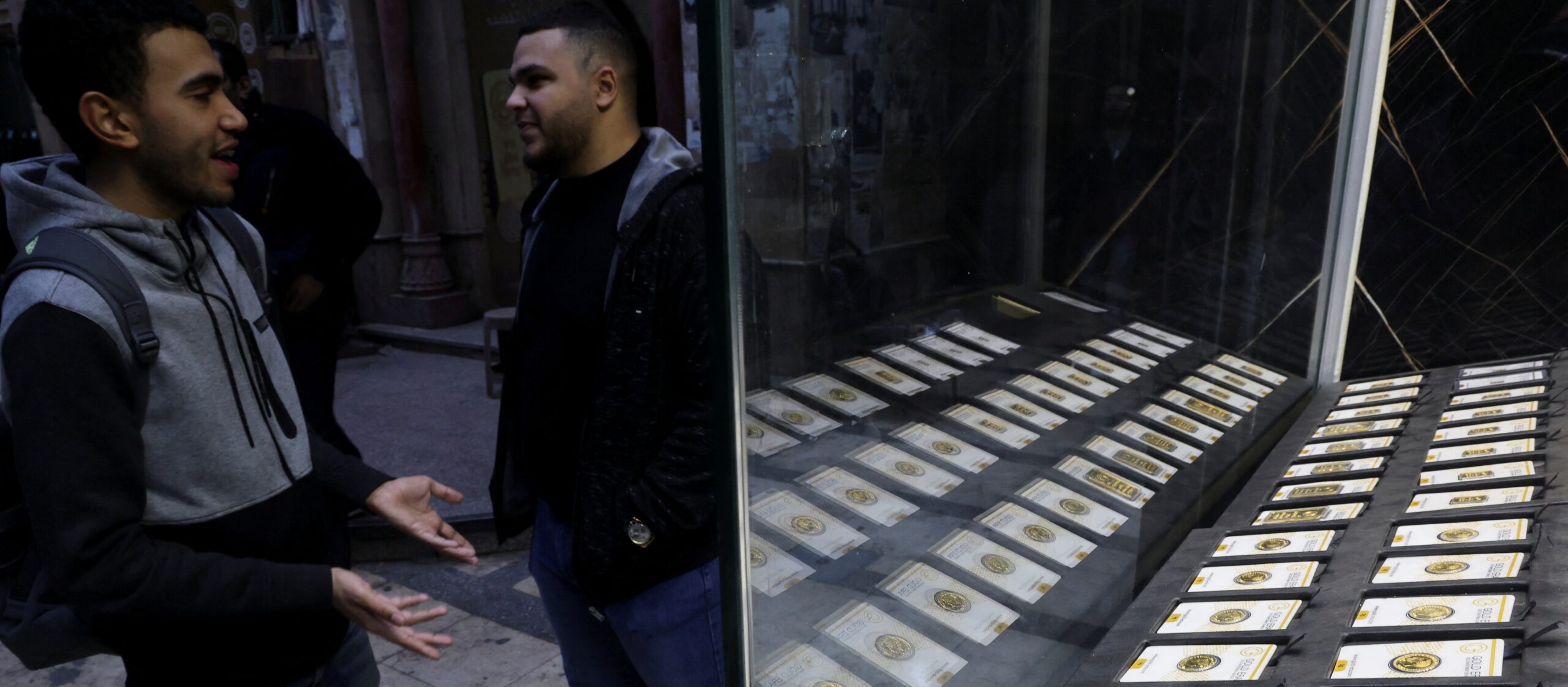
Queuing for gold
Gold remains a trusted option for people looking to invest their savings despite a volatile market

Sources: Hot money exits from govt debt markets in waves amid expectation of devaluation
Yields on one of the Egyptian government’s primary debt instruments hit record levels on Sunday.
United Bank of Egypt announces listing on EGX after 2 years of stalled offerings
The United Bank, a financial institution fully owned by the Central Bank of Egypt (CBE), announced its plan to list 30 percent…
Your support is the only way to ensure independent, progressive journalism survives.
You have a right to access accurate information, be stimulated by innovative and nuanced reporting, and be moved by compelling storytelling. Subscribe now to become part of the growing community of members who help us maintain our editorial independence.
Join us