
Finance minister says govt spending on bread subsidies increased after devaluation

The Finance Ministry announced on Sunday evening that the government's spending on subsidies for wheat and petroleum products is becoming a big burden.
“After liberalizing the exchange rate of the pound, the cost of one loaf of bread went up to 115 piasters, while it is sold for only five piasters,” Finance Minister Mohamed Maiet said during a press conference on Sunday.
Maiet’s comments on the cost of state subsidies come less than a week after the central bank devalued the Egyptian pound, effectively reducing public purchasing power amid what is already a historic inflationary wave.
Egypt, the world’s biggest wheat importer, purchases 9 million tons of wheat per year from abroad. Some of this is bought by the government and allocated to the bread subsidy system, through which 60 percent of the country has access to the relatively cheap dietary staple.
But years of economic crisis have thrown the bread supply chain into turmoil.
Severe foreign currency shortages rendered the Egyptian pound's value, along with local prices, subject to volatility over recent years, which pressured the government to oversee multiple devaluations of the currency — driving up the cost of importing wheat for both public and private sector purposes.
For flour and pasta company Egyptian Swiss Group, the cost of importing basic materials has risen with the latest devaluation, though the company is more focused on the upside of the materials actually coming in after months of imports backlog, general manager Ahmed al-Sebaie told Mada Masr.
The finance minister’s comments anticipate that devaluation will also increase costs for the government and its management of the subsidy system.
Before 2022, the government was considering cutting or altering its management of bread prices for low income households.
But when Russia’s invasion of Ukraine pushed up wheat prices worldwide in 2022, the Supply Ministry initially took the opposite direction, intervening to control prices in the commercial bread market as well as in the subsidized one.
However, industry insiders told Mada Masr in recent weeks that the ministry has stopped controlling commercial bread prices. The price per commercial loaf increased from LE1 or LE1.5 by as much as an additional 50 piasters as a result.
The ongoing inflationary crisis has also impacted bakeries producing subsidized bread. Khaled Sabry, spokesperson for the Bakeries Division of the Federation of Egyptian Chambers of Commerce, told Mada Masr that the division is in contact with government officials in hopes that it will increase the funds allocated to the bakeries, as the small profit margin they are allowed to make has dwindled over the past period as costs rise.
How prices will settle domestically over the coming period is yet to be seen. Last week, the Central Bank of Egypt raised interest rates by an unprecedented six percent in a bid to stave off inflation, while the exchange rate was adjusted once again on the same day. The national currency lost 60 percent of its value, falling from LE31 to the dollar to around LE49.5, which will inflate the costs of new imports, including wheat.
Subsidies on bread secure access to the staple for a majority of the Egyptian public, especially as the cost of other food items balloons.
The prices of many strategic commodities increased at the start of the year, including basic food necessities, along with transportation, telecommunications and electricity costs.
Moreover, Egypt’s annual inflation rate skyrocketed in January, namely due to increasing food commodity prices, reaching 36 percent in February, a nearly five percent increase from January, the Central Agency for Public Mobilization and Statistics announced last week.
Month-over-month inflation saw a record-setting jump in February, appreciating from 1.7 percent in January to 11 percent in February.
أخبار ذات صلة
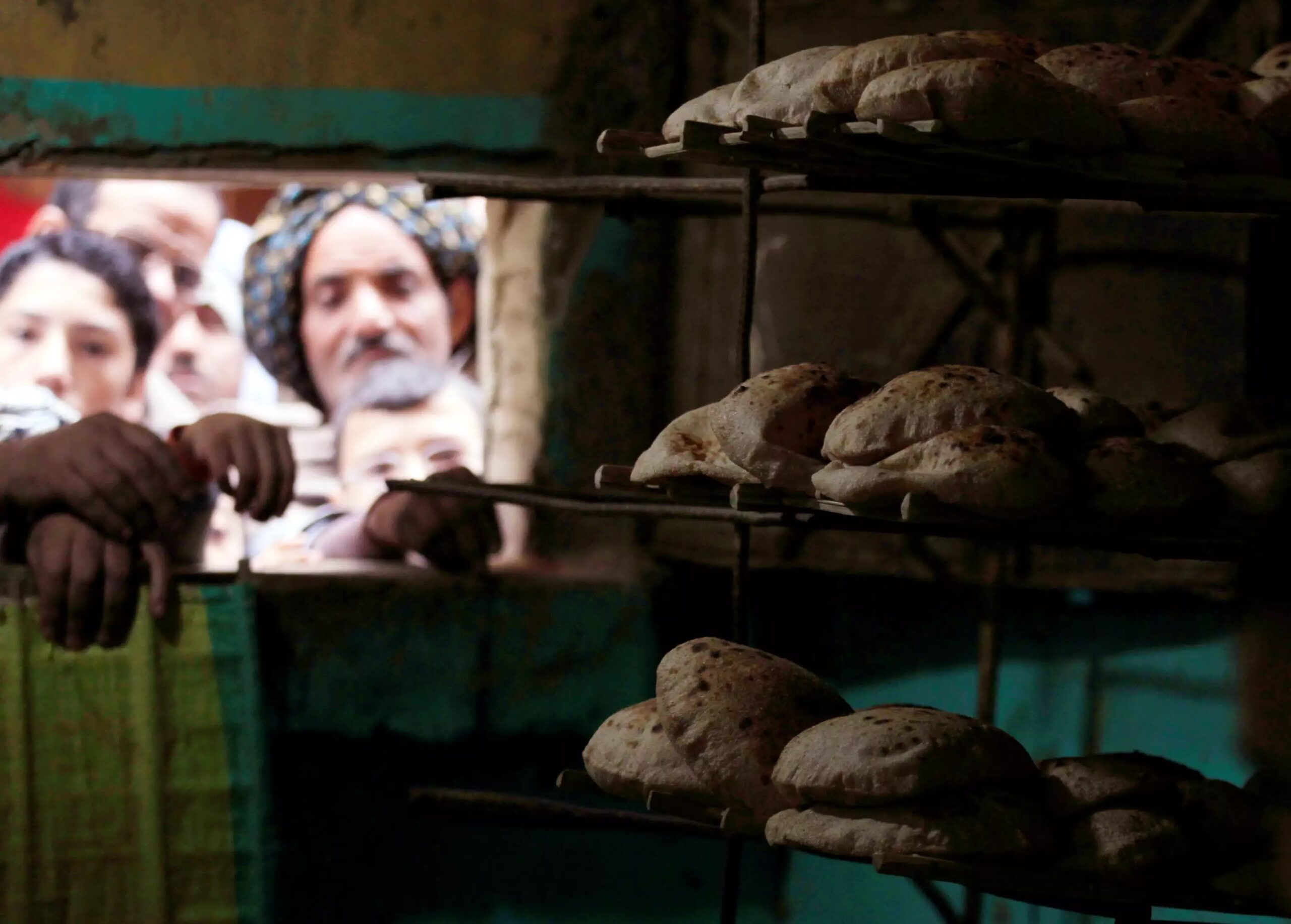
Govt sources say upcoming bread price hike won’t be last
The first increase to the price of subsidized bread in Egypt for 30 years will not be the last, said two sources…
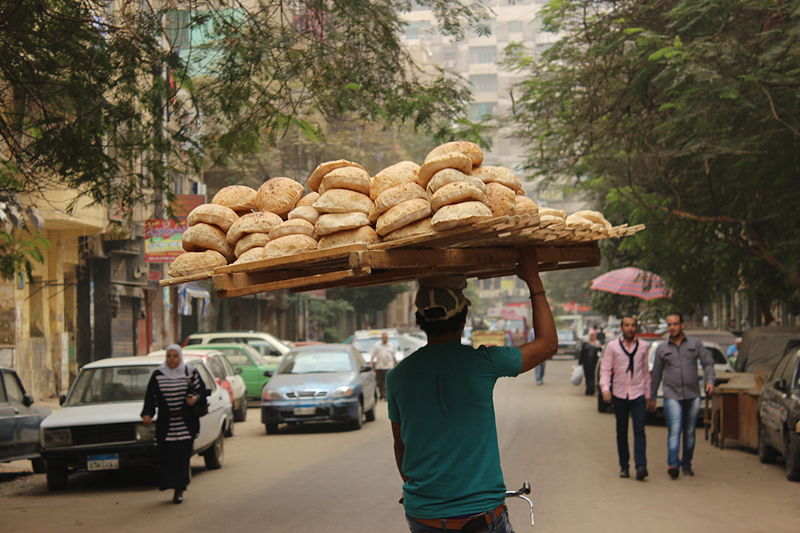
Cost of bread creeps up as Supply Ministry rolls back commercial price controls
Bread prices see sudden spike due to Supply Ministry’s decision to reverse price controls.
Egypt fixes prices for unsubsidized bread as inflation spikes amid war in Ukraine
The government set new price controls for free market bread for the first time since the 1980s.
Bread politics
An eight-part series that takes an in-depth look at bread subsidies in Egypt
Your support is the only way to ensure independent, progressive journalism survives.
You have a right to access accurate information, be stimulated by innovative and nuanced reporting, and be moved by compelling storytelling. Subscribe now to become part of the growing community of members who help us maintain our editorial independence.
Join us