
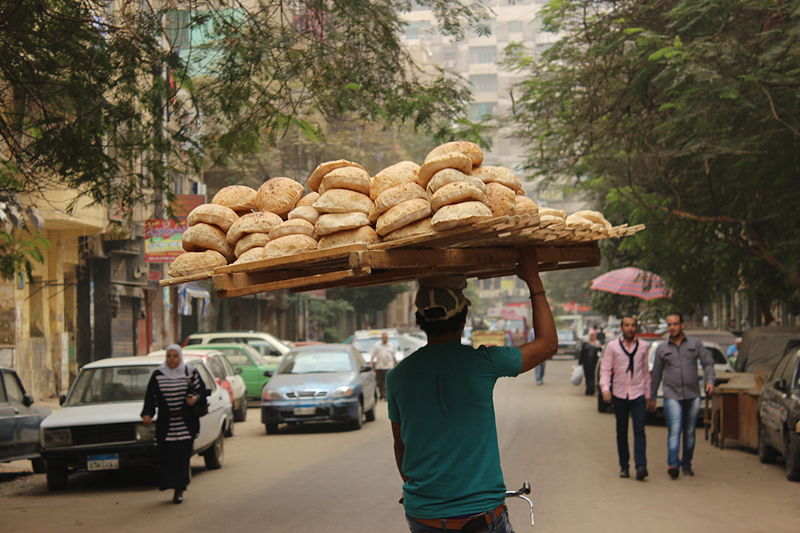
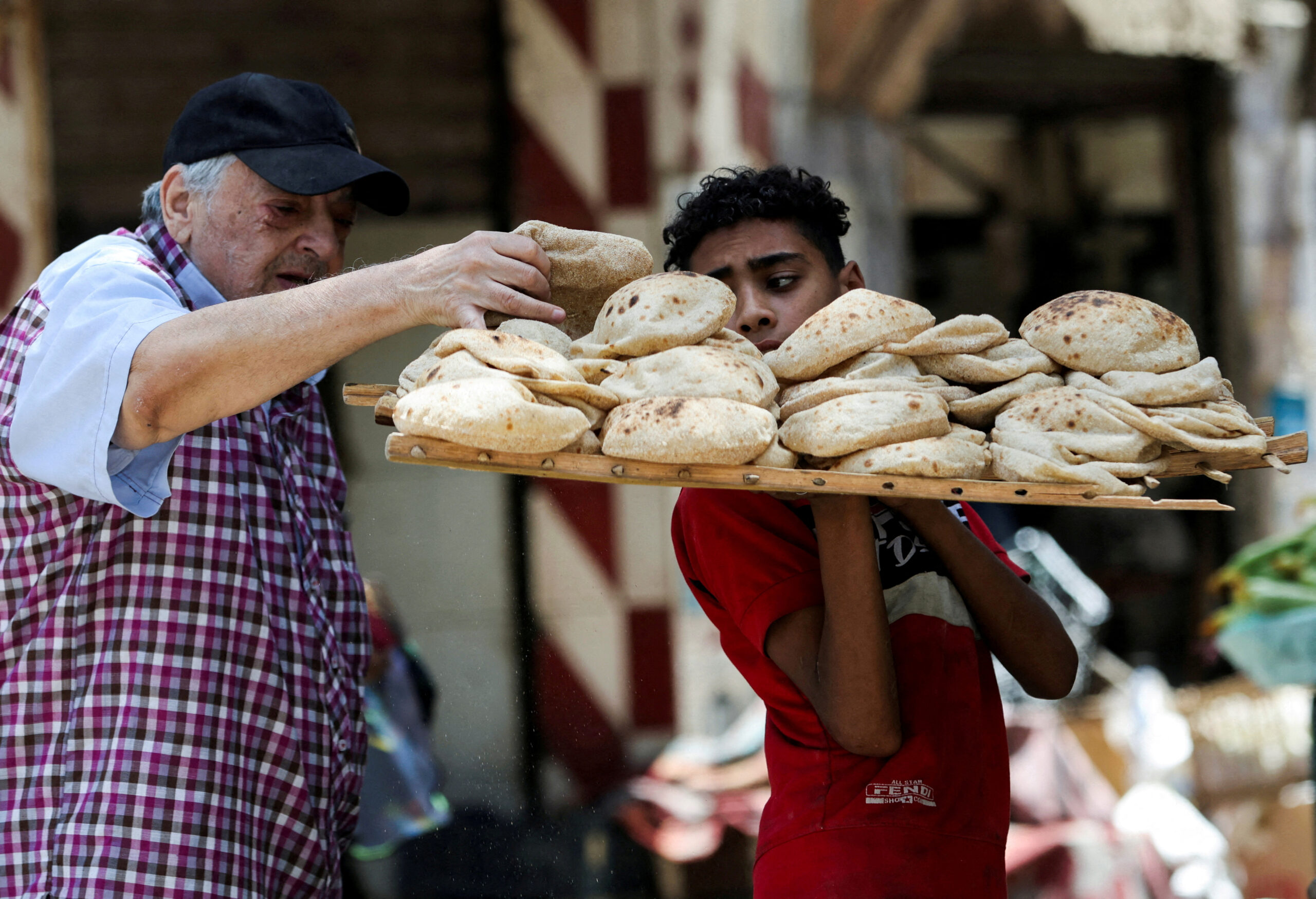
Loaves of bread sold commercially have increased in price over recent weeks by as much as 50 piasters.
The sudden price spike is due to the fact that the Supply Ministry has stopped intervening to maintain the price controls it had introduced almost a year ago, according to industry insiders who spoke to Mada Masr.
It comes as global wheat prices rise and wheat harvest season approaches in Egypt, with national stocks depleting toward the end of the agricultural year. As a result, the cost of controlling prices has increased for the Supply Ministry at a moment when Egypt’s government is grappling with a foreign currency shortage.
Consumers, as a result, are confronted with more expensive loaves of bread, alongside higher prices for other key commodities, which have contributed to keeping domestic inflation at over 30 percent.
Subsidized loaves of bread at fixed prices are still available to households who have a subsidy card — granted to families who meet particular income thresholds and entitling the owner to purchase a quantity of key household goods at subsidized rates. But around 40 million people depend on commercially sold loaves.
Since 2022, unsubsidized loaves of bread at licensed commercial bakeries have been priced at fixed rates of LE1 and LE1.5 per loaf as well. Licensed commercial bakeries were required to keep prices stable as the Supply Ministry provided them with a regular quota of subsidized flour.
The ministry intervened in the market in the wake of disruptions to the global wheat market due to Russia’s invasion of Ukraine, which caused prices to soar to as much as LE3 per loaf in some bakeries.
Khaled Sabri, spokesperson for the General Division of Bakeries at Egypt’s Chamber of Commerce, said that the bakeries used to receive five sacks of flour daily — around 250 kg — priced at LE10,000 per ton, enough for a single bakery to produce around 4,000 loaves.
But the Supply Ministry stopped delivering flour to bakeries in late December, said Sabry.
Now, commercial bakeries are purchasing flour from the free market at prices ranging from LE15,000 to LE20,000 per ton, raising the price per loaf for consumers.
A source in the Bakeries Division who spoke to Mada Masr on condition of anonymity said that it had become increasingly costly for the Supply Ministry to provide subsidized flour to commercial bakeries. This is especially true given the rise in global wheat prices making imports more costly, paired with the strain on Egypt’s foreign currency resources placing downward pressure on the exchange value of the Egyptian pound.
The source also noted that the local wheat reserve is diminishing as harvest season approaches in three months. "The ministry's priority is certainly to provide flour for the ration card program," they said.
Industry sources anticipate that prices will swing further upward now that the Supply Ministry is no longer intervening. Licensed commercial bakeries represent no more than around 10 percent of the total number of bakeries nationwide, with many bakeries operating informally.
But licensed bakeries’ commitment to a fixed price per loaf has helped keep the market stable, especially in major governorates, said various sources in the sector who spoke to Mada Masr on condition of anonymity.
"When licensed bakeries fixed their prices, the price difference between them and the bakeries that did not receive any subsidized flour was minimal,” another source in the Bakeries Division told Mada Masr on condition of anonymity.
“Now, with licensed bakeries increasing their prices, other bakeries will follow suit, and those who used to sell a loaf for LE2.5 will now sell it for LE3.5," they said.
Egypt’s government had planned in 2022 to scale back its spending on bread subsidies, on which around 70 million people nationwide currently depend.
But since Russia’s invasion of Ukraine and the ensuing economic fallout, the government has shelved the plans, and the Supply Ministry has also come under pressure for failing to control prices outside of the subsidy system.

أخبار ذات صلة
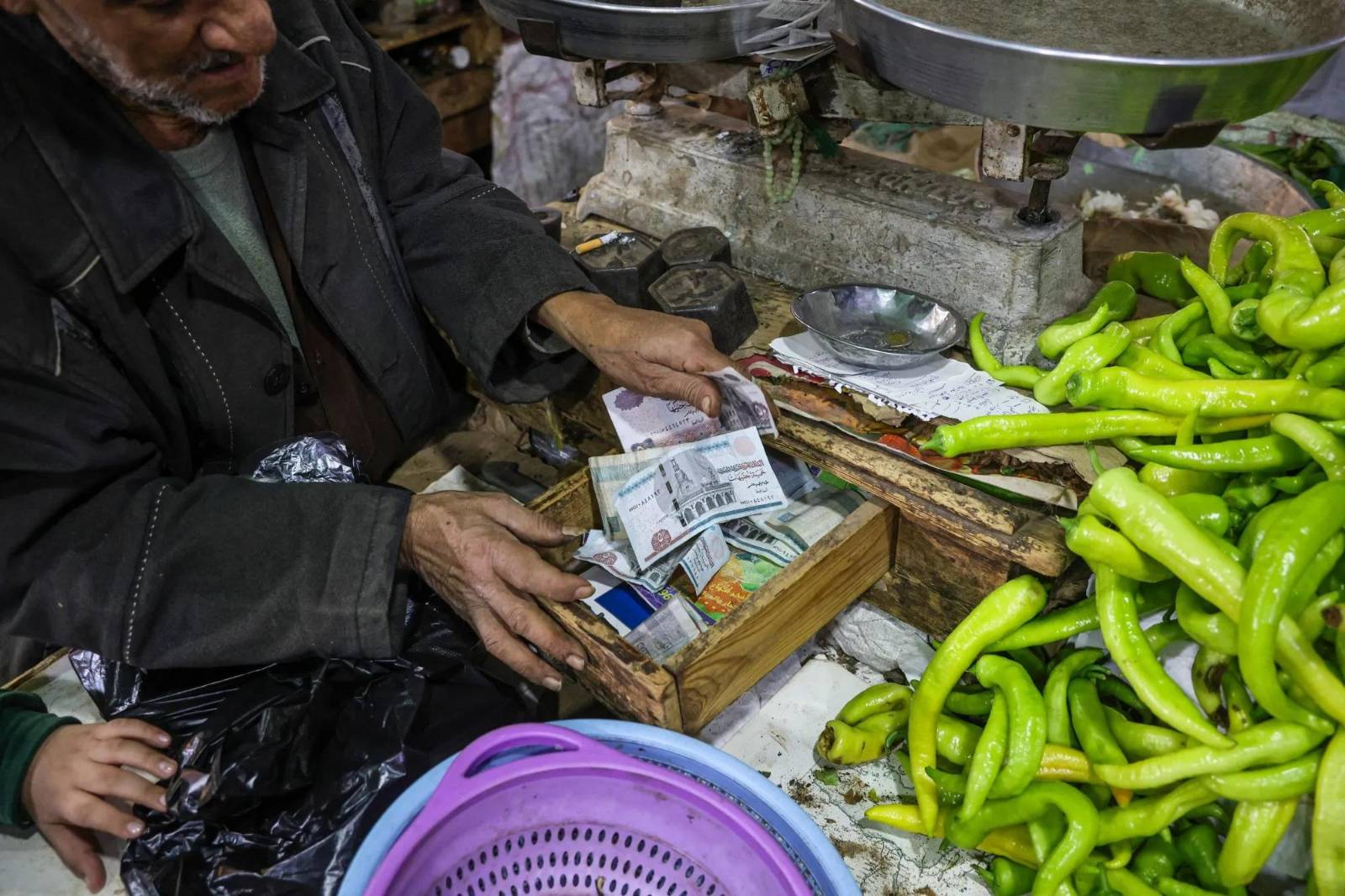
Brandishing the military trial stick: The govt’s price control bluff
Another wave of inflation is crashing in. On March 10, and for the third time in the course of a year, the government raised fuel prices again, justifying the decision…
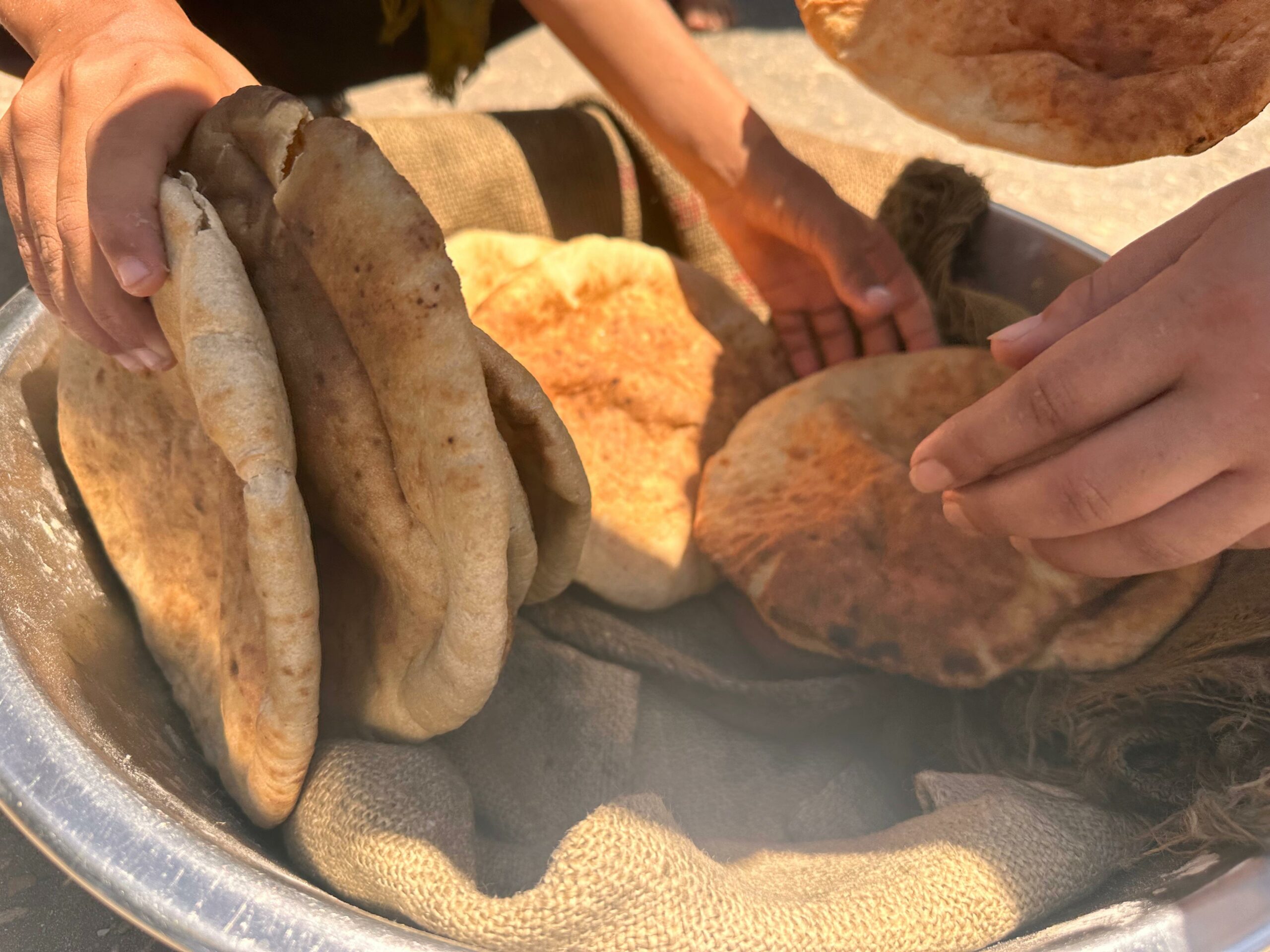
Egypt launches program to fortify subsidized bread against iron deficiency
A source in the Supply Ministry said that the fortified bread will be distributed in 13 governorates
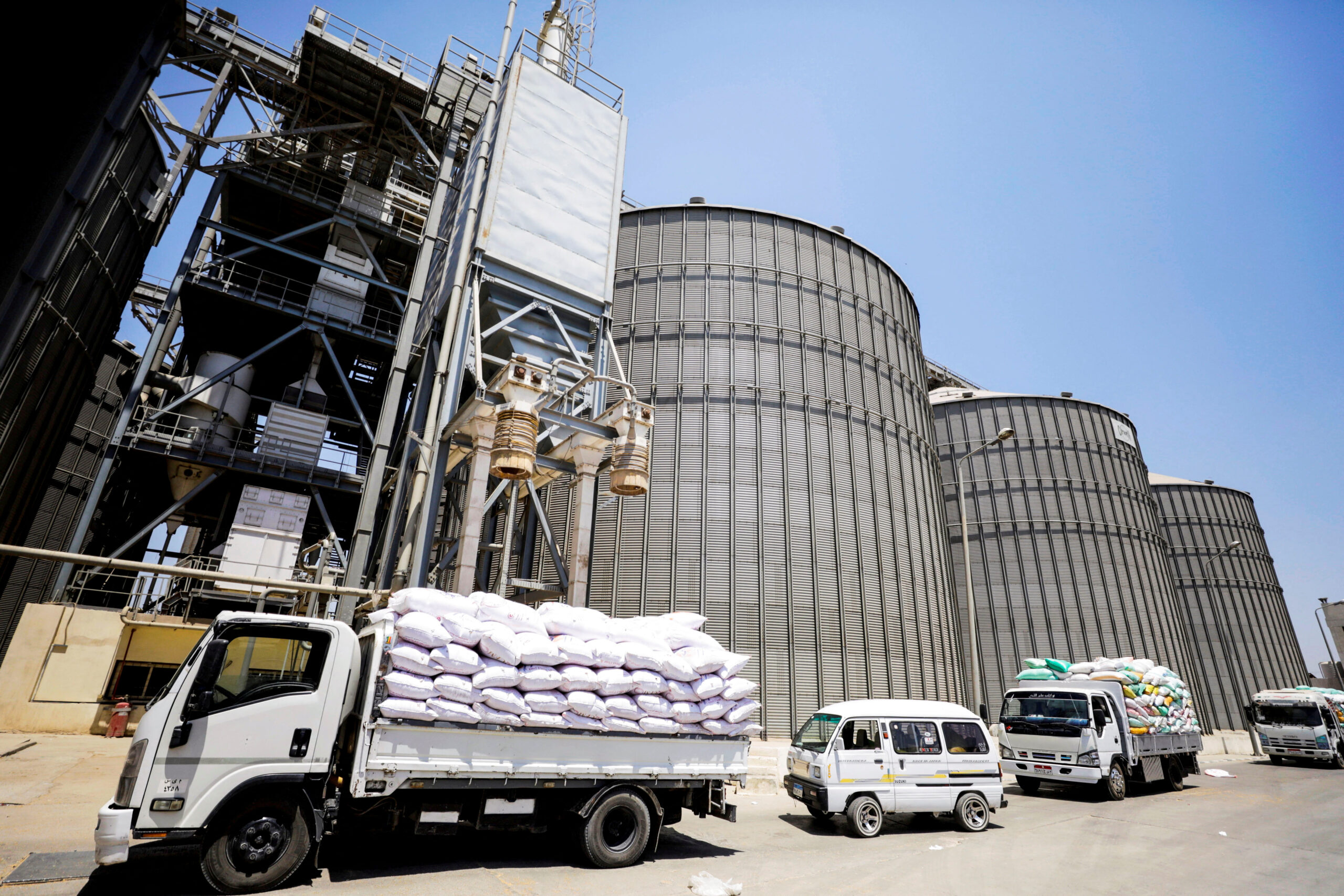
New player bids to import wheat for Egypt’s state silos
The Future of Egypt, a sustainable agriculture agency, announced on Wednesday that it had issued a tender to import 60,000 tons of…
Supply Ministry introduces new penalties for bakeries, mills amid changes to bread subsidy system
Supply Minister Sherif Farouk imposed new regulations on the production of subsidized bread this week, introducing fines for bakeries and mills found…
Your support is the only way to ensure independent, progressive journalism survives.
You have a right to access accurate information, be stimulated by innovative and nuanced reporting, and be moved by compelling storytelling. Subscribe now to become part of the growing community of members who help us maintain our editorial independence.
Join us