
Egypt revives agriculture scheme in Sudan’s strife-ridden Blue Nile State
A series of bilateral meetings has resulted in an agreement between Egypt and Sudan to pursue agricultural and water integration projects, in yet another sign of a friendlier state of relations between the two often testy neighbors.
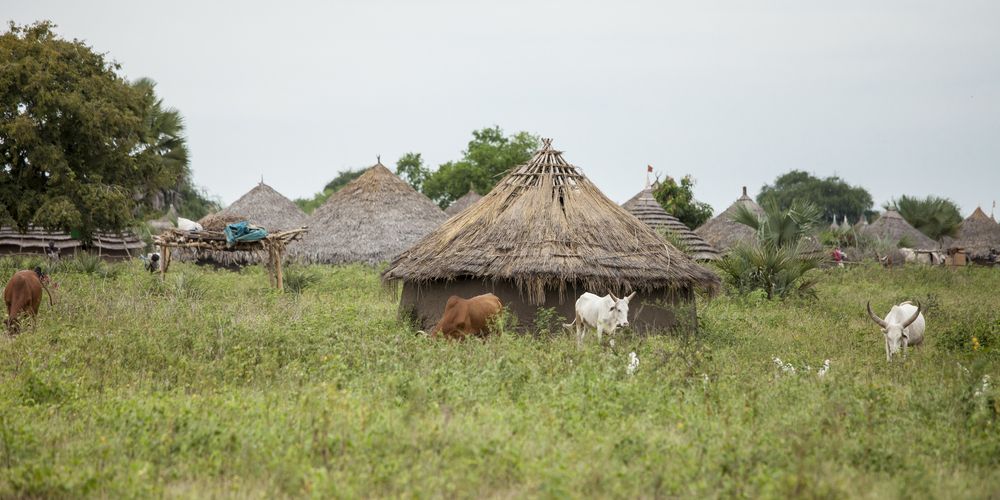
Among the projects is a plan for Egypt to cultivate around 92,000 feddans of land in the Damazin area of the Blue Nile State. The Egyptian-Sudanese Integration Company would be contracted for the job. The company, which was established more than 40 years ago, currently grows sunflowers and other crops on around 20,000 feddan in the same area.
The project will involve clearing acacia trees off 70,000 feddan of land, as well as expanding into livestock and fish production, a Cabinet statement said.
Relations between Sudan and Egypt have been frosty over the past few years, but they've recently begun to thaw thanks to a series of conciliatory diplomatic gestures. In October 2014, President Abdel Fattah al-Sisi and Sudanese President Omar al-Bashir upgraded representation in a joint committee aimed at strengthening bilateral ties. On Monday, a group of 101 Egyptian fisherman returned to Egypt after being detained since April for allegedly trespassing into Sudanese waters. In return, Sisi freed 44 Sudanese citizens imprisoned for illegaly crossing the border.
The same cannot be said, however, for relations between Khartoum and armed rebels in the border zones with South Sudan. The Blue Nile State where the proposed Egyptian project is to take place is one of the worst-affected areas.
The state has been the site of an ongoing conflict since 2011, when a fierce confrontation began between the ruling regime in Khartoum and the northern branch of the Sudan People’s Liberation Movement (SPLM), which won independence for South Sudan after a 2005 peace deal.
As of October 2014, the United Nations estimated that about 2 million people in Blue Nile and the nearby state of South Kordofan have been affected by the conflict, with more than 540,000 people internally displaced and an additional 250,000 fleeing to South Sudan and Ethiopia. Another 24,500 people were reportedly displaced this June.
Power-sharing and the distribution of wealth between southern states and the capital are at the root of the conflict. The SPLM contends that natural wealth from the south is still enriching Khartoum rather than the local population.
Meanwhile, with most of its oil revenue lost to South Sudan, Khartoum has been seeking other sources of funding, including agricultural investment from Arab countries.
Although Egypt’s plans to cultivate crops in Sudan date back four decades, Egyptian investment projects in foreign agriculture run counter to a more recent trend. In April 2014, former Agriculture Minister Ayman Abu Hadid said Egypt planned to lease around 60,000 feddans of agricultural land to Arab investors as a way of bringing foreign funds into the country.

أخبار ذات صلة
‘We inherited this land, we cannot leave it:’ Rent hikes over 170% threaten farmers on Endowments, Agricultural Reform land
The hikes come within a recent push to maximize state revenue and prioritize large-scale farming
Rice export ban for everyone but Argany
In early February, the Egyptian Customs Authority renewed its ban on rice exports, which has been in place for over eight years per the given rationale that it will help…
Egg traders confronted with price-fixing lawsuit by state competition agency
The state accused 21 egg producers of price-fixing and complicity in “the suffering of citizens.”
New LE150 bn program aims to support small agricultural, industrial businesses
The program will allow companies to apply for financing at an interest rate of just 11 percent
Your support is the only way to ensure independent, progressive journalism survives.
You have a right to access accurate information, be stimulated by innovative and nuanced reporting, and be moved by compelling storytelling. Subscribe now to become part of the growing community of members who help us maintain our editorial independence.
Join us