
Egg traders confronted with price-fixing lawsuit by state competition agency
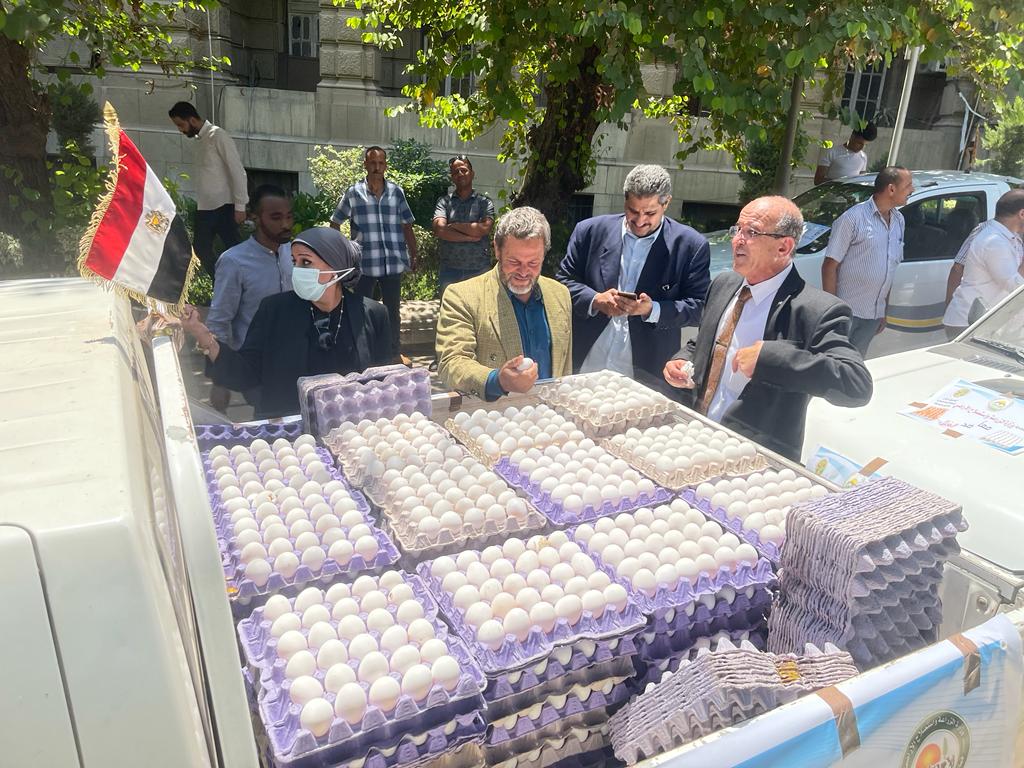
Twenty-one table egg producers face possible investigation after they were accused by the Competition Protection Agency of coordinating to raise prices and “deliberately colluding to undermine government initiatives aimed at alleviating the suffering of citizens.”
The price fixing allegations come amid a surge in the cost of living which has seen market prices fluctuate wildly in Egypt’s import-dependent market.
Government subsidy cuts in line with recommendations under an ongoing program with the International Monetary Fund caused inflation to spike again in August. But politicians have pointed to trade practices as a root cause of price fluctuations.
Traders, meanwhile, have called for listing poultry on the official commodity exchange to support price regulation. But since the decision would compromise traders’ control of the sector, progress toward establishing an exchange needs to come from authorities, said one source in the sector, speaking to Mada Masr on condition of anonymity. "There are beneficiaries who are obstructing the establishment of an official exchange that would transparently reveal production costs and demand levels, as this would result in significant losses for them,” said the source, a poultry industry insider.
The Competition Protection Authority case filed on Monday seeks the prosecution of 21 major egg producers on charges that they violated competitive practices by coordinating together and agreeing to raising egg prices gradually on a daily basis. A statement published by the authority claimed the companies agreed to fix egg prices daily, disrupting natural supply and demand mechanisms.
Sources in the poultry sector and table egg producers confirmed to Mada Masr that monopolistic practices are rampant in the food industry, particularly in the poultry sector. The sources noted that those in the industry depend on informal stock exchanges and other informal entities to control market prices, enabling major traders to dominate the market and manipulate prices.
The Competition Protection Authority's statement said that egg prices are meant to be determined daily by the Table Egg Division of the General Union of Poultry Producers, which communicates with major farms to determine prices based on supply and demand and informs market actors of the agreed-upon prices through merchant pages, the division and the union. The authority accuses 21 producers, which were not named in its statement, of coordinating between themselves to increase prices, disregarding supply and demand.
Commenting on the lawsuit raised by the agency, Mohamed Saleh, a board member of the General Union of Poultry Producers, said that the actions may have a short-term impact but do not address the crisis in the long-term due to the market's economic “immaturity.” Saleh told Mada Masr that the Egyptian market is unstable and relies on numerous informal entities operating without a legal framework. Additionally, production cycles have been disrupted by dollar crises and halted imports, complicating efforts to control markets and prices.
Some poultry producers actually agreed to lower chick prices over recent months to reduce poultry production costs, Saleh explained, pointing to an example of socially oriented informal practice. "Their intentions were good — they wanted to help stabilize the market, even though it would cost them money.”
“However, they were sued for monopoly because they coordinated on pricing, and were fined heavily despite their good intentions, which caused them significant financial damage."
The Competition Protection Authority filed a monopoly case against a group of poultry brokers in May citing their role in causing price increases, a case which sources described to Mada Masr at the time as an “inane solution,” emphasizing the need instead for an official poultry exchange or for offering poultry through the commodities exchange.
Commercial and socially conscious poultry industry actors are overwhelmingly in favor of an official exchange as the best possible move toward greater market stability. The industry insider said that officials from the commodity exchange met several times this year with a number of major producers to discuss listing poultry on the exchange. Yet, no agreements were reached and the government failed to respond to requests from some of the sector workers to officially reinstate the poultry exchange, with the Agriculture Ministry overseeing it. The poultry exchange was suspended in 2011.
Poultry prices have declined gradually over recent months, a trend that began before the announcement of the “brokers” case. Yet the decline could be merely another sign of market instability. As Tharwat al-Zaini, vice president of the General Union of Poultry Producers, explained to Mada Masr, “a kilo of chicken costs LE60, but a chick costs LE40. When you add the cost of feed, electricity, vaccination, labor and profit, the final price will definitely exceed LE60. This indicates that the market is turbulent and could collapse at any moment.”

أخبار ذات صلة
‘We inherited this land, we cannot leave it:’ Rent hikes over 170% threaten farmers on Endowments, Agricultural Reform land
The hikes come within a recent push to maximize state revenue and prioritize large-scale farming
Rice export ban for everyone but Argany
In early February, the Egyptian Customs Authority renewed its ban on rice exports, which has been in place for over eight years per the given rationale that it will help…
New LE150 bn program aims to support small agricultural, industrial businesses
The program will allow companies to apply for financing at an interest rate of just 11 percent

Video | Hibiscus for your heart
Well known for lowering blood pressure, hibiscus is especially loved during Ramadan
Your support is the only way to ensure independent, progressive journalism survives.
You have a right to access accurate information, be stimulated by innovative and nuanced reporting, and be moved by compelling storytelling. Subscribe now to become part of the growing community of members who help us maintain our editorial independence.
Join us