
‘We inherited this land, we cannot leave it:’ Rent hikes over 170% threaten farmers on Endowments, Agricultural Reform land
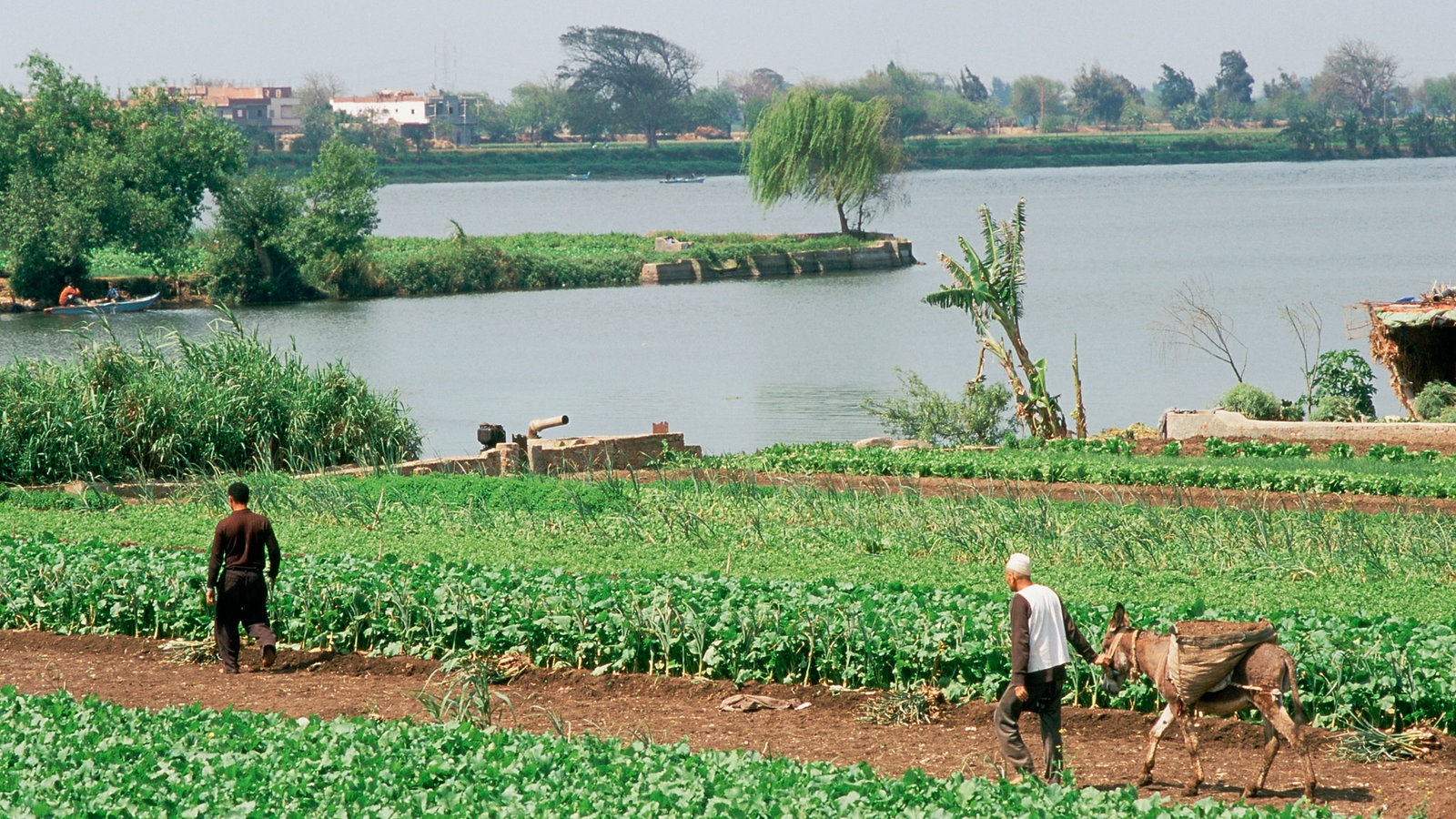
About a month ago, Samir and his siblings went to the local Agriculture Ministry directorate’s office to buy subsidized agrochemicals for their farm — a small piece of land, a little over a feddan, in a village in Beni Suef, which generations of the family have rented from the government in one form or another since the 1950s.
The office told them that, to claim the subsidy, they have to pay the land’s annual rent to their current landlord — the Endowments Authority.
So the family prepared their annual rent of LE15,000 per feddan, a backbreaking rate introduced just last year and the latest in a series of hikes the authority has introduced in recent years. When Samir and his siblings brought the payment to the authority’s office, they were informed that the land had been recently reappraised and that yet another rental rate was being introduced: LE45,000 per feddan.
Samir’s family are not alone in facing massive increases this agricultural year. Farmers renting government-managed land across the country have been discovering similar hikes over recent weeks, with rates as much as tripling compared to the previous year in many governorates.
Rates for lands managed by the Religious Endowments Ministry were hiked by about 200 percent, while the rate for lands managed by the Agricultural Land Reform Authority saw a 170-percent increase, farmer union and local officials told Mada Masr.
The Religious Endowments Ministry, which has sought higher and higher income from the land since controls were lifted in recent years, has responded by saying the hikes are in line with fair market prices.
But many farmers have decided to boycott the new rates, raising calls on social media for the rates to be revised and petitioning for the support of MPs, many of whom have backed their demands, with TV anchors later joining the wave of figures warning that the unbridled rent increases will put massive pressure on small farmers, who represent a large proportion of the tenants on state-managed farm land.
Land managed by both authorities was protected by some of the only rent controls that have remained in place after land rent was broadly liberalized, farmer representatives explained to Mada Masr.
But since 2018, the chain of successive hikes and the deferral to market forces to determine pricing have gradually pushed small farmers out of business.
Which farmland rents are being hiked?
The Endowments Authority and the Agricultural Land Reform Authority are two of the main state bodies that lease out government-managed farmlands, a Cairo agriculture directorate official told Mada Masr.
The first body manages a massive and varied inventory of assets acquired through the waqf system, a centuries-old Islamic institution of donating assets to religious authorities for charitable use or public utility only.
These assets include around 265,000 feddans of farmland rented to farmers nationwide, head of the general farmers and small farmers union Abdel Fattah Abdel Aziz told Mada Masr.
The second body manages around 800,000 feddans of land that it leases to farmers, Abdel Aziz said.
These lands were originally seized from major landowners in the 1950s under the land reform policies of President Gamal Abdel Nasser. Rural researcher Saker El Nour told Mada Masr there were three mechanisms for redistributing the seized lands: the first saw land ownership granted to small farmers, a policy which benefited only a limited percentage; the next involved a general policy to stabilize land rents, which benefited all farming tenants; and the third saw the state retain some of the land for use as state-managed farms. But by the end of the 1970s, state farms ceased to exist and the land was instead leased out to tenants who farmed it, Nour explained.
Samir’s land is an area called the Khedive Ismail's Basin. The area, which used to be filled with ponds and swamps, was distributed under Nasser’s land reform program to poor villagers and families of war martyrs, including Samir’s, who reclaimed it and turned it into farmland. When the Endowments Authority was established under the Sadat administration in the 1970s, it took over the land and became the family’s landlord.
Samir and his family are among over a million families whose livelihoods depend on farming land owned by one of the two authorities, according to Abdel Aziz.
Nation’s Future Party MP Hesham al-Hosary, who heads the House Agricultural Committee, told Mada Masr that the majority of endowments land tenants are small farmers who hold just two feddans or less each.
As contracts for agricultural tenancies were passed down by inheritance, the land would also be split among siblings, causing it to become more and more fragmented, as in the case of Samir, who shares 30 carats with his eight siblings.
How do the authorities manage rental rates for agricultural land?
There used to be a wider variety of agricultural lands that were leased out to small farmers by entities and individuals, but Abdel Aziz explained that many small farmers have been pushed out of the system since rent stabilization measures were repealed and market forces were unleashed in agricultural rental relations since the 1990s, with the introduction of Law 96/1992.
Since then, he said, farmers have suffered successive rent hikes. Those managing smallholdings have been hit especially hard, the union head explained, as land rent represents 35-45 percent of farming costs for the average farmer.
Lands controlled by the two authorities were excluded from the liberalization wave until recent years, the union head said.
But since 2018, the market has gradually come for farmers on these lands, too. The Endowments Ministry, Abdel Aziz explained, first increased rates from an average of LE500 to LE4,800 per feddan.
Later, during a parliamentary session in 2019, the endowments minister announced that rates would be set according to market prices. Since then, Abdel Aziz said, rental rates rose each year, from LE6,000 to LE7,200, then LE9,600, and so on.
Rates on Agricultural Land Reform Authority lands saw a similar gradual liberalization, followed by successive jumps after a 2021 State Council decision cleared the way for market-determined pricing, Abdel Aziz added.
The goal is to maximize returns on the assets, a policy the Endowments Ministry has furthered since 2019 by surveying the vast portfolio of assets under its control, valuing them at LE1.37 trillion, and seeking to position those not being rented for investment. But disputes have arisen over the land ownership and how it would be impacted by large-scale investment in the Endowment Ministry's waqf assets, since the lands are endowed to the state for charitable or public benefit.
The Endowment Authority’s new head Khaled al-Tayeb, appointed in March this year, comes from the business sector and has previously held CEO and board-level positions at multiple companies.
The new increases
This time, the rent increases have been massive. A ministry spokesperson stated last week that the hikes would vary from governorate to governorate.
A Qalyubiya farmer union leader confirmed the variation to Mada Masr, explaining that the rent for a feddan of land managed by the Endowments Authority in his governorate was increased from LE18,000 to LE54,000.
For lands owned by the reform authority, according to Abdel Aziz, the rent per feddan jumped from an average of LE10,000 to LE27,000.
The new hikes were not announced formally or all at once, but have been disseminated to tenant farmers through local officials at different times starting as early as October in some governorates, with others informed only in recent weeks.
The Qalyubiya union source and an official at the Agriculture Ministry’s Qalyubiya directorate told Mada Masr that the rollout began in October, but that the directorate only issued an official decision in a document signed and dated in November, which Mada Masr reviewed.
The decision determined the rental rate for agricultural land for the 2025-2026 agricultural year at LE50,000 per year.
Both Samir and a village mayor in Beheira, meanwhile, said that farmers in their respective areas were informed of the decision verbally by endowments officials, who did not produce documentation of the decision.
The Endowments Ministry has explained that the rate increases were determined at variable rates based on separating lands into four categories of valuation based on size, accessibility and degree of service provision.
The hikes are also being enforced inconsistently by authorities in different areas. Samir said he and his siblings have faced threats that the Endowments Authority will take measures against him for not paying.
A large number of tenant farmers have responded to the hikes by refusing to pay the new rates, according to the two union sources, who said that many have also filed official complaints to the farmer unions. Farmers have also published social media posts over recent weeks protesting the increases and calling on government officials to intervene.
Beside speaking out on social media and refusing to pay, Samir and his family have filed multiple complaints with the Endowments Authority’s directorate in Beni Seuf and the ministry’s headquarters in Dokki, but have yet to receive a response.
The Behira village mayor also told Mada Masr that tenants on endowment lands in his local area protested the new hikes when they learned of them a month ago, and were told by local endowments officials that the increases were still under consideration and that no implementation dates had been set.
The farmers’ anger has proven effective enough to stir parliamentary and media opposition to the decisions. The Senate Agriculture Committee said it has already sent a memo to Endowments Minister Osama al-Azhary regarding farmers’ complaints about the hikes. Hosary told Mada Masr that all members of the House Agriculture Committee also plan to launch inquiries against the “shocking” increases once the new House of Representatives convenes.
TV anchor Ahmed Moussa also made similar comments on his TV program on Sunday last week, calling on Azhary to introduce a “fair rental value” that takes poor farmers into consideration.
According to the Qalyubiya agriculture official, there is a strong inclination within the government to reconsider the severity of the hikes, with Prime Minister Mostafa Madbuly expected to sit down with Azhary soon to discuss the issue.
Maximizing returns
In response to the public reactions, the Endowments Ministry has come out in defense of its rental hike.
The ministry said the decision was made after the endowments authority formed a committee to conduct a deep study of rental contracts and land values, finding “major defects” in them that “squandered the endowment funds.”
The statement stressed that the new rental values are “fair and merciful,” pointing to the ministry’s decision to roll out variable rather than blanket increases as a way of gradually approaching “fair” market rental values without burdening farmers, and insisting that special consideration is being given to farmers leasing very small plots of land fragmented over generations through inheritance.
But Hosary and Abdel Aziz believe that the ministry committee’s work has not taken into consideration the financial burdens to which small farmers are already disproportionately exposed, including the increased costs of farming and diminishing returns on crops. “Farming no longer even covers the rent itself, let alone animal feed, seeds, fertilizer, water and labor,” the Qalyubiya union source said.
Samir says the new hike is not only unaffordable but also exaggerated as a market-based appraisal, given the land is in poor condition and lacks connection to state utilities. The farmland is far from a fresh water source, and his family irrigates it by running a gasoline-powered water pump for hours at a time, a costly operation given rising fuel prices. The family therefore often relies on sewer water for irrigation, which has damaged the quality of the land.
“It barely produces three or five ardebs of wheat; we have to purchase the same amount again just to sustain ourselves,” Samir said. “It’s acidic and unproductive, but fertilizers are expensive, agrochemicals are expensive, and there is no fresh water source.”
Nour notes that government rhetoric in recent years has shifted to stress maximizing the usage of every ministry’s resources, meaning that market logic is increasingly dominating the state’s approach to its lands.
This approach sidelines the concerns of individual farmers, he believes, and explains why the government’s priorities for agriculture lie in establishing large state projects like the Mostaqbal Masr farms or supporting major agro-investors instead.
Even other land rental programs, like the desert land reclamation project that once aimed to encourage youth to develop small to medium pieces of land, now prefer major investors seeking larger areas, Nour says.
In this context, Nour, the Qalyubiya official and union sources all warn that market-based land rental evaluations are increasingly pushing small farmers — and their knowledge of the land — out of agriculture.
Samir anticipates that authorities could get involved more forcefully as well. He says that Endowments Authority officials have begun calling him to threaten that he’ll be reported for encroaching on “endowments land” if he does not pay the new rate. “No one can pay this amount,” he insists, noting that a majority of the farmers he knows have already been reported because they could not afford last year’s LE15,000 per feddan rate.
But leaving the land and their livelihoods is not an option. “We inherited this land from our grandfathers. We have had it for over 75 years. I cannot leave it,” Samir told Mada Masr.
تقارير ذات صلة

What’s up tomatoes?
During Saturday’s press conference, Prime Minister Mostafa Madbuly addressed the recent surge in tomato prices, following a tour of the Obour Wholesale Fruit and Vegetable Market. “There was a problem…
Rice export ban for everyone but Argany
In early February, the Egyptian Customs Authority renewed its ban on rice exports, which has been in place for over eight years per the given rationale that it will help…
Video | Home-grown wheat, home-baked bread
The pressure on farmers has posed a threat to the private wheat reserves of many Egyptians
Your support is the only way to ensure independent, progressive journalism survives.
You have a right to access accurate information, be stimulated by innovative and nuanced reporting, and be moved by compelling storytelling. Subscribe now to become part of the growing community of members who help us maintain our editorial independence.
Join us