
Egypt defends HR record amid criticism at UN review

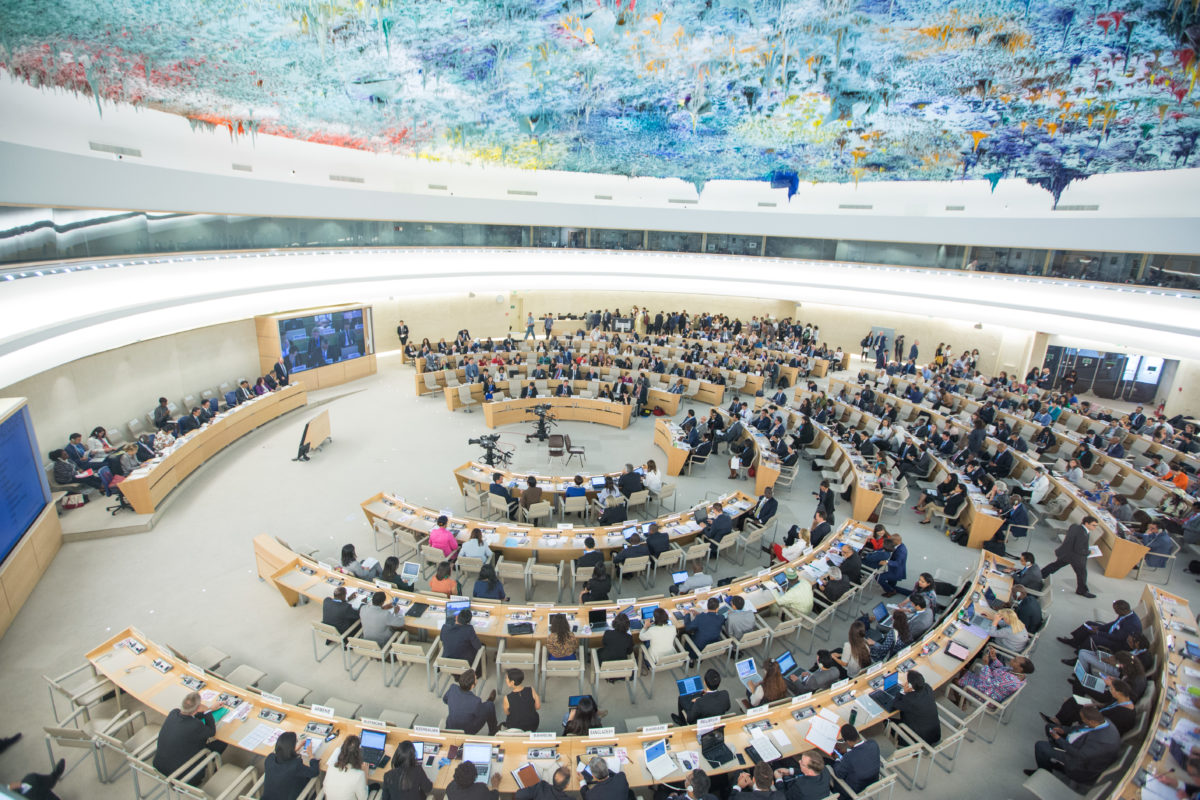
National representatives defended Egypt’s human rights record amid criticism from several countries during a review session at the UN Human Rights Council in Geneva on Wednesday.
Criticism focused on several oppressive laws, which speakers claimed limit space for civil society and restrict freedom of expression and association.
The Egyptian delegation, headed by Minister of Transitional Justice Ibrahim al- Heneidy, defended Egypt’s human rights record, asserting that a committee is currently working on reconciling several laws with the 2014 Constitution and enacting legislative reforms, including potential amendments to the controversial Protest Law.
In his opening speech, Heneidy said human rights and freedoms are a major priority for the current government, referring to laws “organizing the right of assembly” and the work of NGOs. Both of these laws have been criticized by human rights defenders as repressive tools that are used to crack down on the rights to protest and organize peacefully.
US Ambassador Keith Harper conveyed his nation’s deep concerns over restrictions on freedom of expression and assembly in Egypt, which he said have deprived thousands of Egyptians of fair trials and undermined the role of civil society.
Heneidy rejected accusations that Egypt’s judiciary is politicized, asserting that it is beyond pressure or influence.
Several speakers, including representatives from Turkey, the Netherlands, Sweden, Britain and Germany raised similar concerns.
The German Ambassador in Cairo, Hansjorg Haber, spoke to Mada Masr about the questions and recommendations his country made to the Egyptian delegation in Geneva.
Germany recommended that Egypt fully protect freedom of association by adopting a new NGO law that is more in line with international standards. They also raised issues concerning restrictions on foreign funding proposed in a new bill, and suggested Egypt modifies the Protest Law to uphold the right to peaceful assembly enshrined in the constitution.
The UN review comes amid a state-led crackdown on suspected terrorist groups in Egypt, particularly the Sinai Peninsula. While Ambassador Haber acknowledged the threat Egypt is facing from groups like Ansar Beit al-Maqdes and Ajnad Misr, he said the nation “is still an island of relative stability,” given the violence sweeping the region.
Speaking about the Muslim Brotherhood, Haber said the Egyptian government “has not yet managed to convince us that the Brotherhood is a terrorist organization.”
“We accept the notion that they are advocating violence, but this is not terrorism in our understanding,” he added.
Haber acknowledged that “there is a lot of popular support for stability, but emphasized, “true stability comes from a vibrant civil society,” not from restricting the activities of NGOs, echoing his country’s official recommendations to Egypt at the UN review.
Heneidy deflected criticism, saying, “I do not exaggerate when I say that we’ve succeeded in identifying the right path for Egypt that is in harmony with the Egyptian reality and that we have already started on the first step.”
The UN Human Rights Council held its Universal Period Review on Egypt in Geneva on Wednesday, the first of its kind since 2010.
Every four years, UN member states are given the opportunity to outline the actions they have taken to protect human rights. Organizations in the respective countries are permitted to submit recommendations to be discussed during the session, along with a report authored by the UN Office of the High Commissioner for Human Rights.
After the session, the UN presents its recommendations. Should the states accept them, they commit to ensuring their implementation over the four years until the next review.
On Tuesday, seven Egyptian human rights organizations released a statement saying they had decided to boycott the UN review for fear of government retribution and prosecution.
Egypt participated in a 2010 review that resulted in 165 recommendations, of which the government accepted 119 and rejected 21.

أخبار ذات صلة
Egypt prepares to present human rights record to UN Human Rights Council
Egypt is set to present its human rights record for review before the United Nations Human Rights Council (UNHRC) on January 28, amid stark discrepancies between the government's depiction of…
UN human rights experts raise concerns about Egypt’s Criminal Procedures bill in letter to govt
A group of United Nations human rights experts have sent a communication to the Egyptian government expressing their concerns about draft articles…

Ramy Shaath seeks damages from Egypt at African rights court
Since his release, Shaath has faced "threats and intimidation" from Egyptian officials and media

Parliament bites back after EU deplores ‘continued lack of basic political rights and freedoms in Egypt’
Egypt's parliament said the resolution violates the independence of its prosecution and judiciary.
Your support is the only way to ensure independent, progressive journalism survives.
You have a right to access accurate information, be stimulated by innovative and nuanced reporting, and be moved by compelling storytelling. Subscribe now to become part of the growing community of members who help us maintain our editorial independence.
Join us