
Dozens of Egyptians still missing after migrant boat sinks off Tobruk coast

Dozens of Egyptian migrants remain missing after a Europe-bound boat capsized off the Libyan coast in the early hours of July 24.
Some of the migrants’ families told Mada Masr that identifying and obtaining information about their relatives’ whereabouts has been difficult to navigate and that the official response has been slow.
Omar Fathy, who buried one of his cousins on Tuesday and is still searching for another, described the process of identifying victims and repatriating their bodies to Egypt as “haphazard.”
The boat, which carried 81 migrants, sank off the coast of Tobruk in Libya on July 24, the city’s Maritime Search and Rescue Office announced. Ten people were rescued — including eight Egyptian nationals. A total of 18 bodies were retrieved over the course of the ensuing days, of whom only six have been identified, according to the office’s statement. The International Organization for Migration (IOM) said in a statement on Tuesday that roughly 50 people are still missing.
“Three of the six were from our hometown in Badary, Assiut, two were from Sharqiya and one was from Minya,” Fathy said.
The Egyptian vice consul told Fathy that three identified bodies — including that of his cousin — were to be repatriated via the land crossing between Libya and Egypt on Sunday. But on his way to Salloum, the official contacted Fathy again to say that there had been a mistake and that his cousin’s body had been sent with a dozen unidentified bodies to the morgue in the Libyan city of Derna.
The family completed the required procedures — including a National Security Agency interrogation of the victim’s brother at the Salloum border crossing — before their relative’s body was shipped the following day.
Throughout the process, most of the information the families have received came via the Tobruk-based Abereen Foundation and the Tobruk search and rescue office rather than from Egyptian authorities, according to Fathy. The two entities were responsible for informing families when bodies were identified.
Relatives then travelled independently to the western border city of Salloum to retrieve their loved ones.
The Egyptian Foreign Ministry issued its first statement on the matter on Wednesday, a week after the incident, stating that it is following up on the survivors' cases in preparation for their repatriation from Libya. The statement did not mention the number of fatalities or survivors, but said the ministry is overseeing the transfer of the identified bodies and is participating in efforts to identify the remaining victims.
But with around a dozen bodies still unidentified, Fathy believes that Egyptian authorities’ delayed and sparse communication with the families has contributed to the ongoing confusion.
Families only began on Tuesday to submit DNA samples to the Cairo forensic authority to assist in the identification process, a source at the Egyptian agency told Mada Masr on condition of anonymity.
This was after substantial confusion had already taken place. At one point, the Tobruk search and rescue office mistakenly stated it had found and identified the body of Fathy's other cousin, only to retract their announcement after one of the survivors recognized the body in question. A similar mistake was repeated with another body, according to the office’s statements.
To try and find Fathy’s missing cousin, his family submitted a DNA sample at Cairo’s central labs on Wednesday.
The families first had to obtain a letter from the Foreign Ministry before having samples taken at the Cairo forensic authority, which then coordinates the delivery of the results to the Libyan forensic authorities, the agency source said.
The eight Egyptian survivors were held by Libyan authorities until Wednesday, but were later released by the western Tobruk prosecution. They are set to be handed over to Egyptian authorities once deportation procedures are complete.
Mostafa Nassir, a relative of three Egyptians who are still missing, told Mada Masr that Libyan authorities rely on survivors to help identify the recovered bodies, which is why they are being held until search and recovery operations conclude.
Egyptian authorities could hold them in custody for a few additional days while they file illegal migration reports before releasing them, Nassir explained, citing his past experience having attempted irregular migration himself.
According to Nassir, one of the survivors rescued in the afternoon of July 24 said the boat they departed in was in very poor condition, capsizing around eight kilometers into the voyage.
The survivor said most of those on board were from the governorates of Assiut, Minya and Sharqia, along with South Sudanese nationals, according to Nassir.
Nassir said that five people from Assiut’s Badary are thought to be missing, while Ibrahim Mohamed, who is searching for his two nephews, told Mada Masr that 22 young men from his hometown of Bilbeis in Sharqiya are still missing. The bodies of another three Bilbeis residents have been identified.
Like many other families who spoke to Mada Masr, the Bilbeis families have been unable to reach the Egyptian intermediaries who convinced their sons to make the journey. Brokers tell the young men that they will be going to a good place with decent housing, the families say, but that is seldom the case.
“Once they arrive in Libya, they’re met with humiliation and torture at the hands of smugglers,” Nassir said. “And when they die, the brokers turn off their phones and disappear.”
The IOM described the tragedy as “a stark reminder of the deadly risks people are forced to take in search of safety and opportunity.”
The organization also stressed that Libya continues to serve as a key transit point for migrants and refugees, who face “exploitation, abuse and life-threatening journeys.” It renewed its call for greater regional cooperation to establish “safe, regular and dignified migration pathways.”
According to the IOM’s latest Libya migrant report, covering data from March to April, Egyptian nationals now account for 19 percent of all migrants attempting to reach Europe via Libya.
The total number of migrants in Libya has risen to over 867,000, representing 44 nationalities — a 20 percent increase compared to the same period last year, in an upward trend that has continued since December 2023, according to the report. Just this month, weekly reports documented that the Libyan coastguard has intercepted boats carrying a total of 1,717 migrants.
أخبار ذات صلة
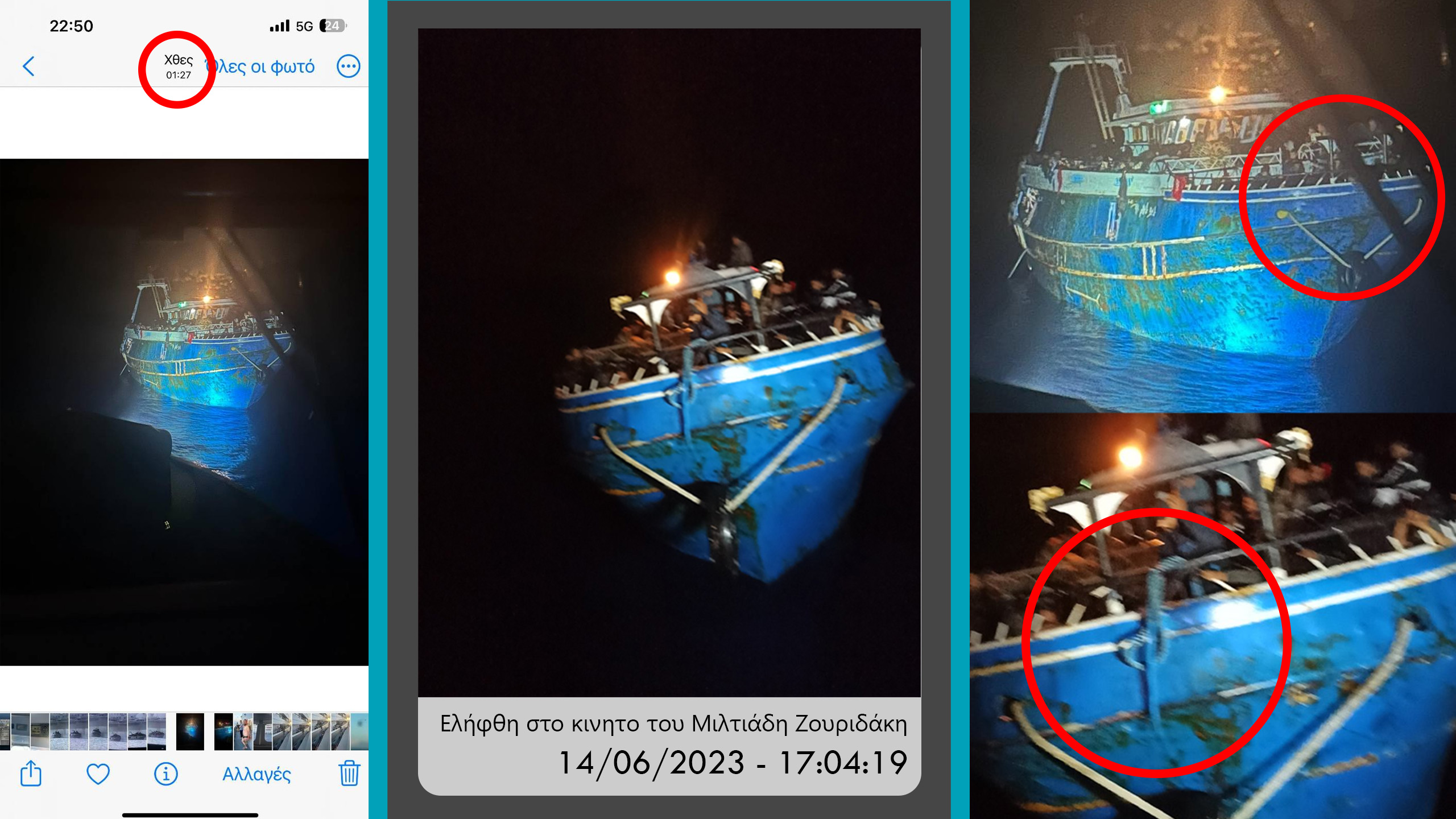
The Pylos shipwreck, the disappearing blue rope, and the trial ‘to determine the kind of world we want to live in’
A boat carrying hundreds of migrants, including 200 Egyptians, sank off the coast of Pylos in 2023
What was the Greek coastguard doing instead of rescuing 750 people?
Recordings reveal the coastguard was busy preemptively staging its own impunity before the ship sank
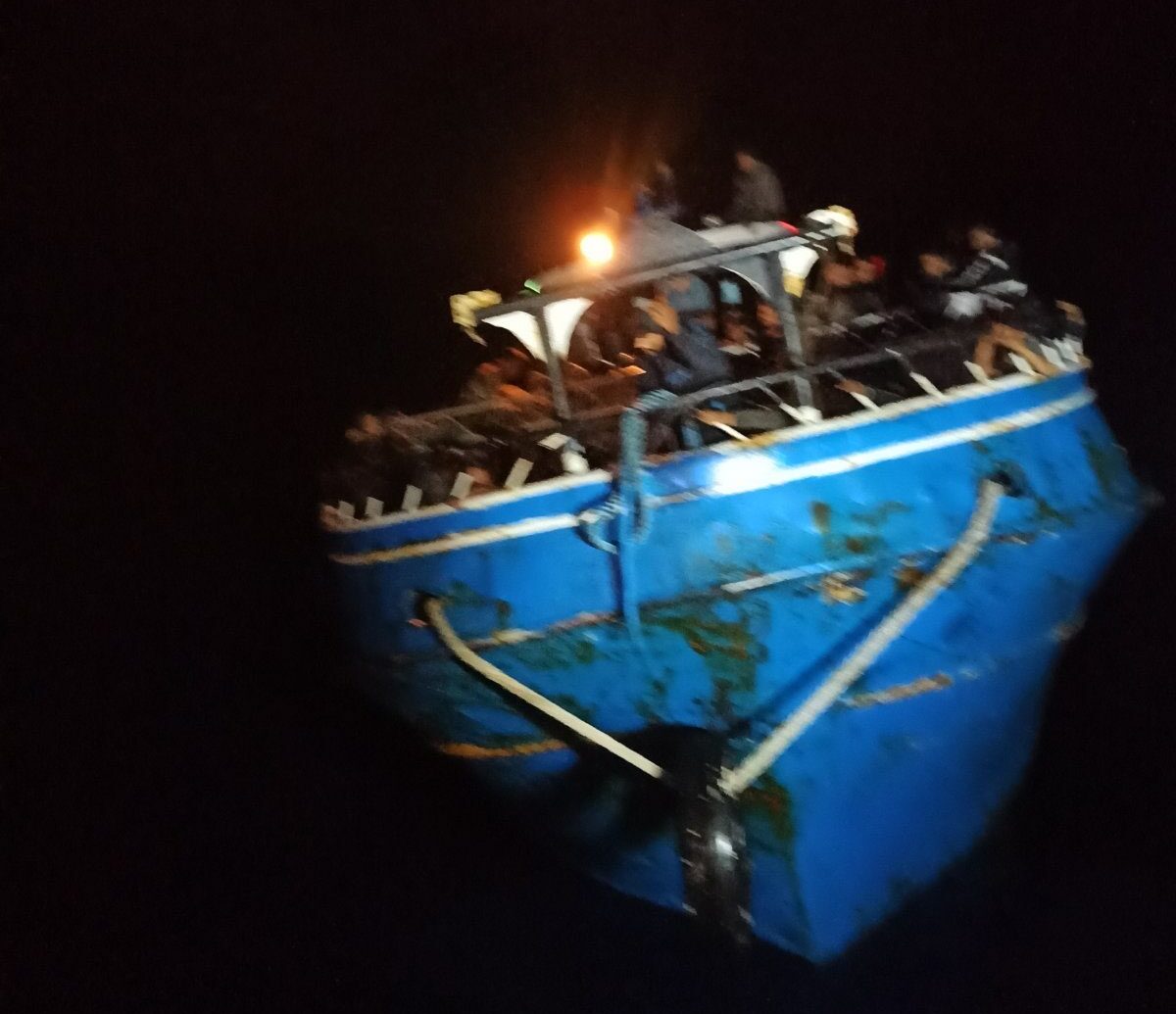
Greek coast guard officials face criminal investigation 2 years after deadly shipwreck
A naval court in Greece has referred 17 members of the country’s coast guard to criminal investigation for causing the deaths of…
Bodies of 3 Egyptians repatriated following deaths on Balkan route to Europe, humanitarian organizations say
The three minors died in forested areas in the country’s southeast
Your support is the only way to ensure independent, progressive journalism survives.
You have a right to access accurate information, be stimulated by innovative and nuanced reporting, and be moved by compelling storytelling. Subscribe now to become part of the growing community of members who help us maintain our editorial independence.
Join us