

At least 471 people were killed and 314 injured by an Israeli airstrike on the Ahli Arab Baptist Hospital on Tuesday, according to data published by Gaza’s health ministry, causing a wave of popular protests and official condemnations across the region.
The ministry’s spokesperson, Ashraf al-Qidra, said Tuesday that the ambulance crews are still trying to find the bodies and extract the remains of hundreds of victims, most of whom are children and women whose "features have become unrecognizable."
The degrees of injury sustained by the wounded, according to Qidra, exceeded the capabilities of the medical teams on the ground, who were forced to perform surgeries without anesthesia in unsterilized hospital corridors in a race against time before the remaining available resources were depleted.
The Anglican Diocese of Jerusalem, which operates the hospital, condemned the Israeli attack in a statement it released on Tuesday, describing it as a "crime against humanity."
Hospitals are considered safe havens under the principles of international humanitarian law, the church said in its statement, which Gaza is still deprived of, necessitating the condemnation and punishment of Israel.
Other voices of condemnation from around the world have intensified their calls after the massacre.
In Egypt, President Abdel Fattah al-Sisi said in a statement on Tuesday that he had been following with “deep sorrow” Israel’s shelling of the hospital, which resulted in the deaths of hundreds of victims, and affirmed that the bombing is a blatant violation of international law, international legitimacy and humanitarian principles.
Al-Azhar, in turn, appealed to Arab and Islamic nations, demanding a "radical" reconsideration of relying on the "arrogant European-American West" and that they stand with all their power, money and equipment behind Palestine and its people, who are facing an enemy devoid of conscience, feeling and empathy.
Arab countries also condemned the Israeli attack on the hospital. The United Arab Emirates called for an immediate cessation of violence and a similar stance was taken by Saudi Arabia, which described the attack in a statement it released on Tuesday as a "heinous crime committed by the Israeli occupation forces." The Kuwaiti foreign affairs ministry emphasized that the occupation forces’ targeting of hospitals and public facilities constitutes a violation of the principles of international humanitarian law, and called on the international community and the United Nations Security Council to immediately put an end to these "inhumane" practices.
A few hours after the attack, the Jordanian foreign minister announced the cancellation of a summit that was meant to be held in Jordan today in the attendance of US President Joe Biden, Egyptian President Abdel Fattah al-Sisi, Jordanian King Abdullah II bin al-Hussein and Palestinian President Mahmoud Abbas, prompting Biden to call off his Jordan visit.
Meanwhile, official statements released by Western countries carefully condemned the "party responsible for the incident," without directly blaming Israeli occupation forces and effectively opening the door to exempting them from holding responsibility for the attack and blaming the massacre on the Palestinian resistance.
Biden, who was “outraged and deeply saddened” by the “explosion,” immediately got in contact with the Jordanian king and Israeli Prime Minister Benjamin, leaving out the details of their conversations from his statement and directing the US National Security Agency to gather information on “what exactly happened.” But in a public appearance with Netanyahu, Biden blamed the massacre on “the other team,” the Palestinian resistance.
French President Emmanuel Macron condemned in a social media statement the attack “which made so many Palestinian victims,” while also calling for more information on the "circumstances" that led to it.
Pressure demanding the entry of humanitarian aid was escalated by the International Committee of the Red Cross, and calls for a ceasefire were issued by France and Jordan.
UN Secretary-General António Guterres also expressed his horror at the “killing of hundreds of Palestinian civilians in a strike on a hospital in Gaza," affirming that hospitals and medical personnel are protected by international humanitarian law. Guterres' position aligned with that of the World Health Organization, which pointed out that the hospital was one of 20 in northern Gaza that received evacuation orders from the Israeli army.
"The order for evacuation has been impossible to carry out given the current insecurity, critical condition of many patients, and lack of ambulances, staff, health system bed capacity, and alternative shelter for those displaced," according to the statement.
This coincided with claims by the Israeli occupation forces, who attempted at several points to absolve themselves of responsibility for the attack and blame the Palestinian resistance. The Islamic Jihad Movement denied the Israeli claim, pointing out that shifting blame onto the resistance is a tactic that the occupation forces have adopted several times in the past, with the latest before Tuesday’s attack being the accusation of Palestinians in the murder of journalist Shireen Abu Akleh. The Israeli defense forces later admitted the involvement of their soldiers in her killing.
The Israeli massacre has sparked waves of popular and official reactions. Large demonstrations took place in several countries, including Iran, Jordan, Turkey, Iraq, Tunisia, Lebanon, Yemen, Qatar, Kuwait, and Hebron in the West Bank.
Locally, dozens gathered in a demonstration in the 6th of October City, some of whom were arrested, while the Journalists Syndicate and the Lawyers Syndicate committee for supporting the Palestinian resistance called for demonstrations today.
The United Arab Emirates and Russia requested the discussion of the Israeli bombing of the hospital in a UN Security Council session today, which is also expected to vote on a resolution presented by Brazil calling for a ceasefire and allowing humanitarian aid into Gaza.
The vote comes after the failure to pass a similar resolution yesterday and an escalation in Iranian threats and retaliatory military threats from America, while Hezbollah called for a "Day of Anger."

أخبار ذات صلة
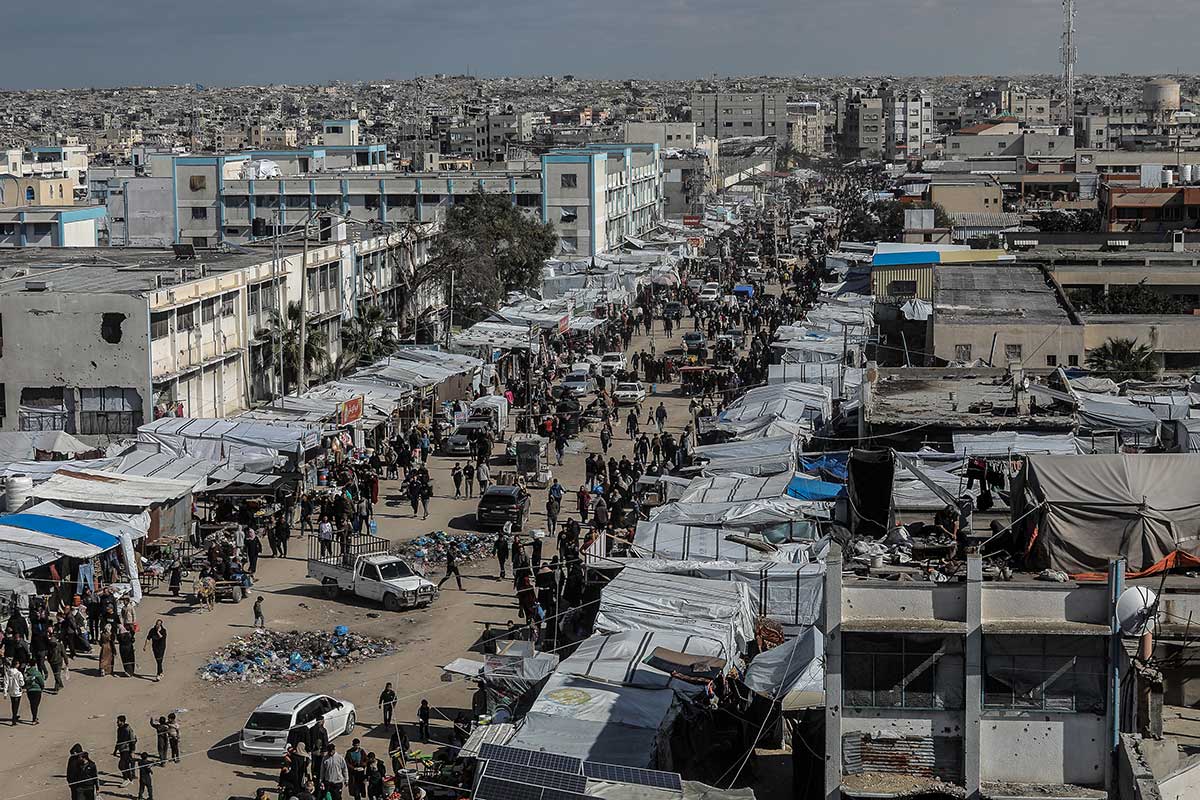
Prices surge in Gaza redoubling food insecurity after Israel shuts borders citing attack on Iran
For the first week of Ramadan, Reem al-Masdar was cooking vegetables, salad and bread to prepare iftar and sohour meals for her…

Gaza, the Board of Peace and the active cancellation of the past
The future By the time we get to the speech of Cypriot-Israeli real estate businessman and billionaire Yakir Gabay at the Board…
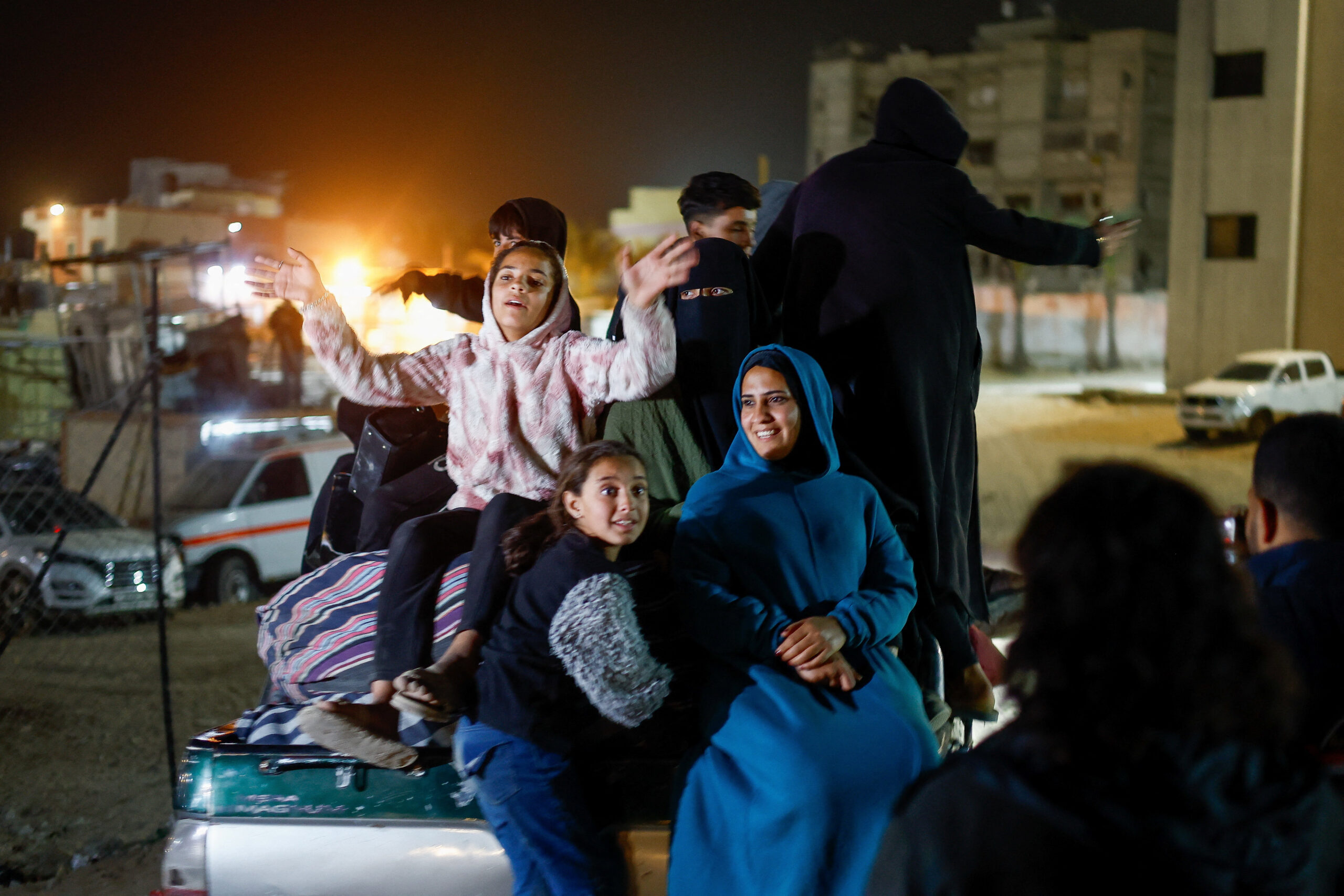
Only 12 Palestinians permitted to return to Gaza Strip since Rafah crossing opened
Sabah al-Raqab is one of only 12 Palestinians who have been able to return to the Gaza Strip via the Rafah crossing…

Israel agrees to limited reopening of Rafah border crossing — details pending
Israeli Prime Minister Benjamin Netanyahu’s office announced on Monday that it has agreed to a “limited reopening” of the Rafah border crossing…
Your support is the only way to ensure independent, progressive journalism survives.
You have a right to access accurate information, be stimulated by innovative and nuanced reporting, and be moved by compelling storytelling. Subscribe now to become part of the growing community of members who help us maintain our editorial independence.
Join us