
Court rules military should leave Qursaya island
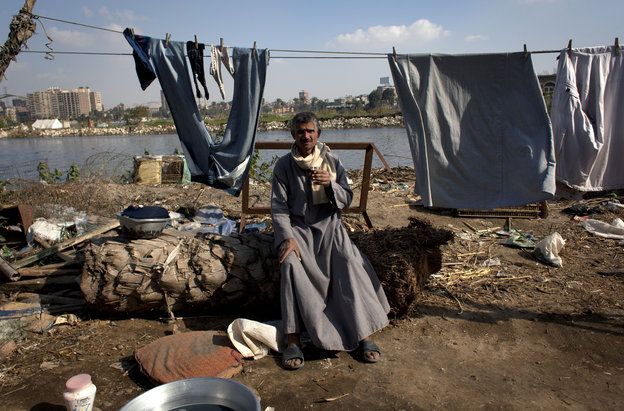
The Administrative Court ordered the Armed Forces to retreat from the Qursaya island on Tuesday, reinstating the residents' right to stay, the state-run EgyNews website reported on Thursday.
Qursaya island, located in the south of Cairo, is home to some 5000 people who have been in a tense standoff with the state since 2007, when it began trying to evict them for what was believed to be a tourism investment plan.
A presidential decree issued by former President Hosni Mubarak in 2001 appropriated the land for the Armed Forces. However, the residents managed to reverse the eviction attempt through a court ruling in 2010 that reaffirmed their right to stay.
Yet violence erupted again last in November when army troops tried to forcibly evict the residents. Many residents were arrested and faced military trials. The army claimed that it already owned the land and that the people there should be evicted.
Today's court found that the military's control over the island is unlawful since it is considered part of an agricultural plot and the main economic activities of residents are agriculture and fishing. Because it has been found to not be desert, the decision to appropriate desert land for the army by Mubarak is void in this case.
The court also found that military control over the island violates the protectorates law, as it was declared a protectorate in 1998. A protectorate cannot legally be appropriated by the Armed Forces for any military related activity.

أخبار ذات صلة

Welcome to Sharm el-Sheikh: President’s City, City of Peace, City of COP27
Beneath the mask the city’s donned for COP27 are the marks of years of uncalculated redevelopment
Inside a regime’s last days: Mubarak and his inner circle during the 2011 revolution
“When we went out on January 25, we weren’t thinking we would end Mubarak’s rule”
Three days of mourning announced for former President Hosni Mubarak
The presidency issued a statement expressing “great sadness" over Mubarak's death.
Hosni Mubarak (1928–2020): The rise and fall of Egypt’s longest-ruling president
Mubarak used fear of Islamists to justify a repressive police state.
Your support is the only way to ensure independent, progressive journalism survives.
You have a right to access accurate information, be stimulated by innovative and nuanced reporting, and be moved by compelling storytelling. Subscribe now to become part of the growing community of members who help us maintain our editorial independence.
Join us