
Three days of mourning announced for former President Hosni Mubarak
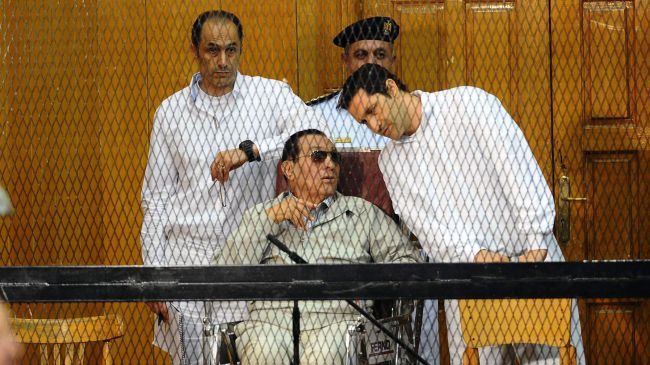
Egypt’s presidency has announced three days of nationwide mourning, beginning on Wednesday, following the death of former President Hosni Mubarak at the age of 91.
Mubarak was Egypt’s longest-serving president, ruling from 1981 until 2011, when he was ousted following a mass uprising against his rule.
The presidency issued a statement extending condolences to Mubarak’s family and expressing “great sadness” over Mubarak’s death, calling him “one of the leaders and heroes of the glorious October war,” referring to the 1973 war against Israel.
The House and Cabinet also mourned Mubarak’s death in separate statements. The general command of the Armed Forces released a statement describing him as “a son of the Armed Forces and a leader of the October War.”
Unconfirmed media reports have indicated Mubarak will receive a military state funeral.
In May 2015, Mubarak was convicted, along with his sons Alaa and Gamal, to three year and four-year prison terms for embezzling state funds and spending them on private mansions. Customary practice prohibits those convicted of crimes considered an “offense against honor” from receiving a military funeral, Ahmed Abdel Rahman, the former vice president of the Court of Cassation, tells Mada Masr. Abdel Rahman says that granting Mubarak a military funeral would be a political decision, since his conviction in the presidential palaces case did constitute an offense against honor.
According to the Law on the Exercise of Political Rights, Mubarak was prohibited from running for public office following his conviction.
Read Mada Masr’s full obituary on Mubarak here.

أخبار ذات صلة

Welcome to Sharm el-Sheikh: President’s City, City of Peace, City of COP27
Beneath the mask the city’s donned for COP27 are the marks of years of uncalculated redevelopment
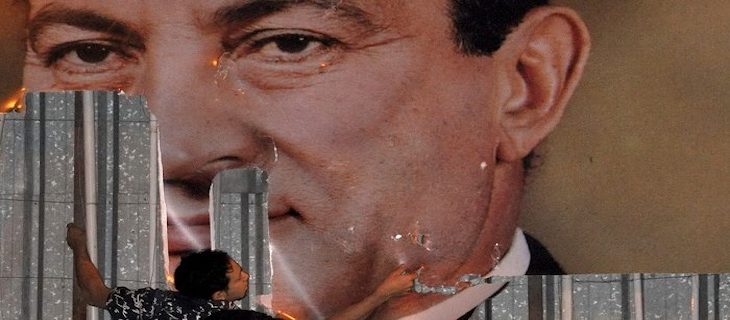
Inside a regime’s last days: Mubarak and his inner circle during the 2011 revolution
“When we went out on January 25, we weren’t thinking we would end Mubarak’s rule”
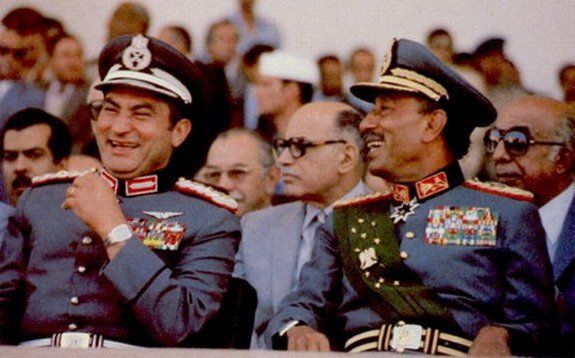
Hosni Mubarak (1928–2020): The rise and fall of Egypt’s longest-ruling president
Mubarak used fear of Islamists to justify a repressive police state.
Is the government building a parallel bureaucracy?
Power is concentrated in the presidency and military at the expense of other state institutions
Your support is the only way to ensure independent, progressive journalism survives.
You have a right to access accurate information, be stimulated by innovative and nuanced reporting, and be moved by compelling storytelling. Subscribe now to become part of the growing community of members who help us maintain our editorial independence.
Join us