
Concerns about widespread student absence persist as minister announces back to school plan
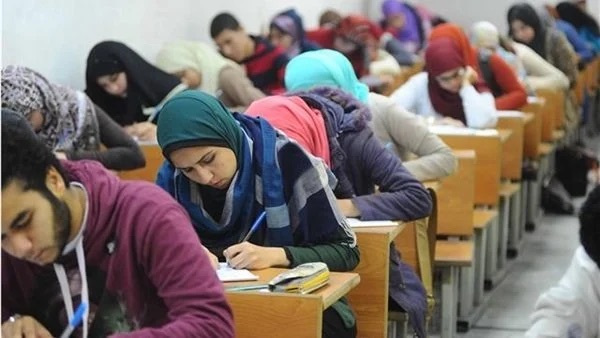
Education Minister Mohamed Abdel Lateef announced a new set of reforms for government schools on Wednesday, including a system to make more classrooms available.
Underfunding, classroom overcrowding and a shortage of teachers have made learning difficult for children in Egypt’s education system for years.
The issues in the schooling system translate into high student absence rates and often lead parents and students to resort to private lessons to compensate. “My daughter is in primary school and stopped wanting to go,” Osama, the parent of a high school student, said to Mada Masr.
A former official at the Education Ministry explained to Mada Masr that the reform decisions look good on paper. But he reserved judgment about whether they will improve children’s learning.
“The most important thing is how changes are implemented, and that students are present in schools,” the former official said, speaking on condition of anonymity.
Many students, little space
Set to start with the new academic year in September, Abdel Lateef announced scheduling changes intended to increase the efficiency of how students are allocated to existing school facilities to reduce classroom overcrowding.
“Some classrooms have up to 200 students,” said the minister, noting that another 250,000 classrooms are needed to accommodate students.
The plan, according to Abdel Lateef, is to shuffle students between the limited available classrooms in different school facilities. Secondary school students are to take classes later in the day, allowing middle school students to use their classrooms earlier, while elementary school students will shuffle accordingly into classrooms vacated by the secondary school students.
The change will mean that some children will attend classes in more than one school facility, but the minister stressed that facilities will not be more than one kilometer away from one another.
But it could still prompt issues for parents, said the former Education Ministry official. If a parent has children in different learning stages, it will be complicated to pick them up at different facilities everyday, the source said.
Adbel Lateef also laid out plans to use empty facilities, such as examination halls, as classrooms.
Not enough teachers
The education minister noted on Wednesday that 469,000 more teachers are needed in government schools, sketching plans to continue to hire more via “competitions.”
The competition hiring scheme was introduced to bypass a freeze on government hires and allow for the exceptional hire of 30,000 kindergarten and assistant primary school teachers yearly.
Tens of thousands applied in 2022, with 14,000 teachers rejected at the final stage. Over one hundred of those rejected have taken legal action against obscure and prejudiced hiring criteria, namely medical, physical fitness and verbal testing at the military academy.
The Education Ministry source said that teachers need a better deal. “If I don't respect the teacher, he will never work. He should provide first for the needs of his household, and if he can’t he will never work with a clear mind,” the source said. “Everyone knows this, I don't think officials at the Education Ministry or the Information and Decision Support Center are unaware of this.”
The finance ministry allocated LE8.1 billion for additional salaries for school teachers in February, reflected in salary increases which varied between LE325 to LE475 per month.
But the former ministry source said that despite the recent increase, rewards and incentives are still valued based on the basic salary rate set in 2014.
Will the changes be enough for children and parents?
Abdel Lateef was asked during Wednesday’s presser about low rates of attendance. Lateef stressed in response that a “feeling of success” at school is all that the students need to be encouraged, explaining that the philosophy of stimulating students’ engagement is necessary.
To make the curriculum more manageable, Abdel Lateef also announced that only 15 subjects will be on offer in September, compared to 32 subjects in previous years.
Chemistry and physics will be included as an integrated sciences subject, while scores in second foreign language and religious education will not be counted in children’s overall grades.
The minister explained that the new system will mostly affect the future generation that will attend high school in the year 2026/27, adding that the focus should be on skills built with teaching methods, rather than the number of subjects.
The aim, as framed by both Abdel Lateef and the prime minister, who also attended the presser, is to keep up with the modern international education standards and relieve the burden on Egyptian families.
Osama noted that the existing curriculum was a problem for his daughter. “They give them topics and subjects that are not in their capacities,” he said. “So we made a deal, she only goes to schools on the days where she has a private lesson after the school day.”
The high number of students depending on private lessons is another central issue the minister was asked about. The minister responded by saying that “technical solutions” are underway to address the phenomenon.
Private lessons and school absence are connected in many cases. Osama told Mada Masr that school has become disturbing to students as many students are already enrolled in private lesson centers, where they receive the same information they would get in school, he explained.
The former Education Ministry source also noted that it will be important to make sure children can adapt to the new curriculums, and that care be given to their learning skills and capacities.
The source summarized the scale of the problem: “We should first provide the elements of school attendance; for the shortage of teachers to be addressed, students to be fairly divided in classrooms, for teachers’ salaries to increase according to the current economic situation, give them their rights according to the year 2024 and fill the gap in teachers.”
“We should also take strict decisions for school absences. I can't make students attend without a teacher being present at school, and it’s necessary for the teacher’ salary to be adequate and for private lessons to be criminalized, he added.”
In the meantime, parents who have lost faith in the schooling system struggle to ensure their children keep up.
“Nearly half of my salary goes to classes in private centers, not schools,” said Osama.
أخبار ذات صلة

Interview: X’s new restrictions fail to protect users from AI image manipulation
Mada Masr spoke with digital helpline coordinator Tasneem Mounir on why X’s ban falls short
Navigating digital consent violations: Speak Up’s founder talks partnering with Pornhub
In February, Speak Up partnered with Aylo — parent company of Pornhub and other adult websites

January 25 lived by teenagers
We are Wizza and Inaam Hanim, two Egyptians who belong to a young generation that witnessed Egypt’s 2011 revolution from behind TV screens. The uprising is a movement that sprouted…
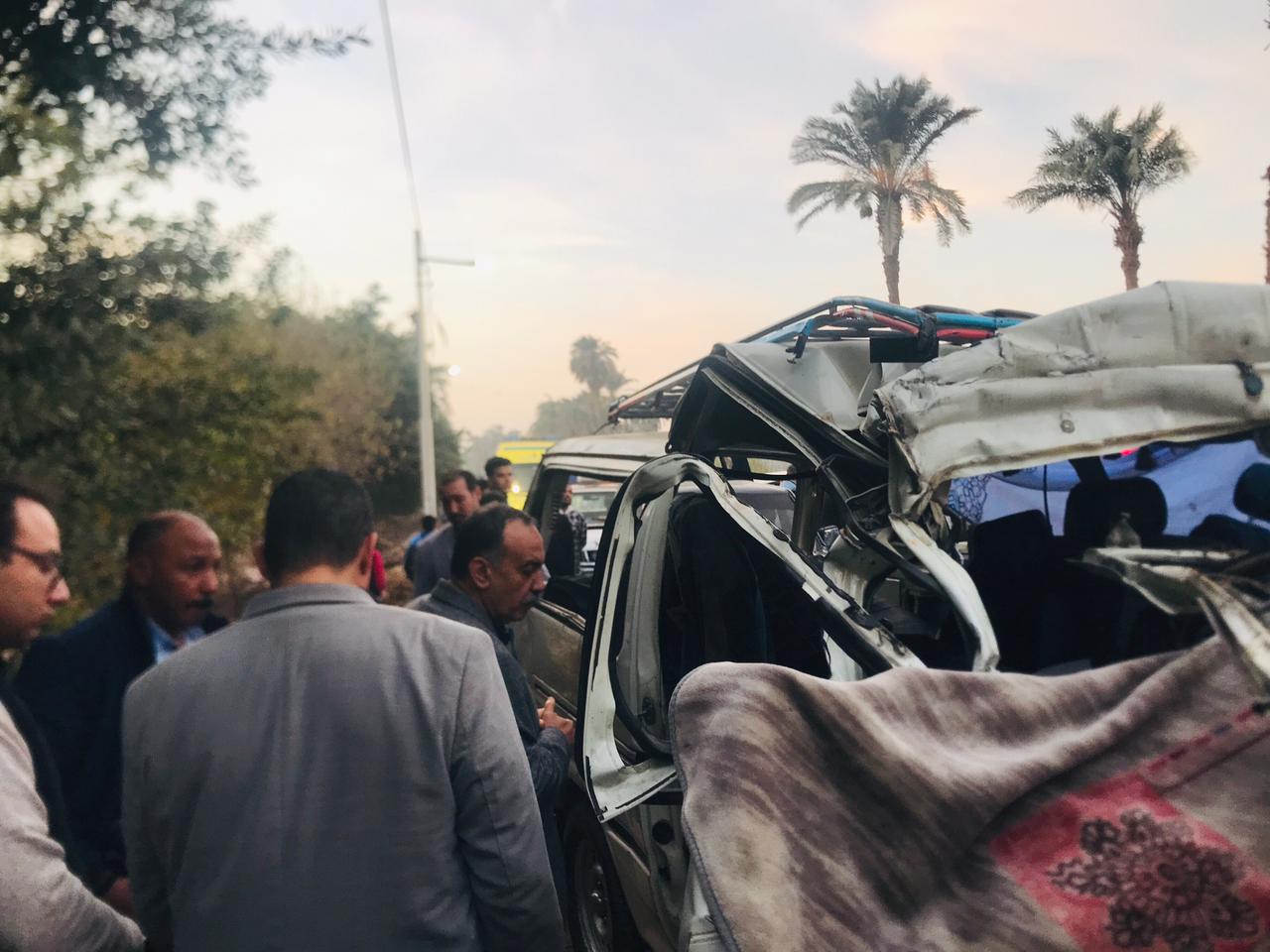
Fifteen killed in traffic collisions on Cairo-Assiut Agricultural Road in past 24 hours
Fifteen people have been killed since Tuesday night in two separate traffic incidents that took place within 24 hours on the portion…
Your support is the only way to ensure independent, progressive journalism survives.
You have a right to access accurate information, be stimulated by innovative and nuanced reporting, and be moved by compelling storytelling. Subscribe now to become part of the growing community of members who help us maintain our editorial independence.
Join us