
Competition regulator approves ADQ’s acquisition of stakes in 3 state-owned petroleum companies
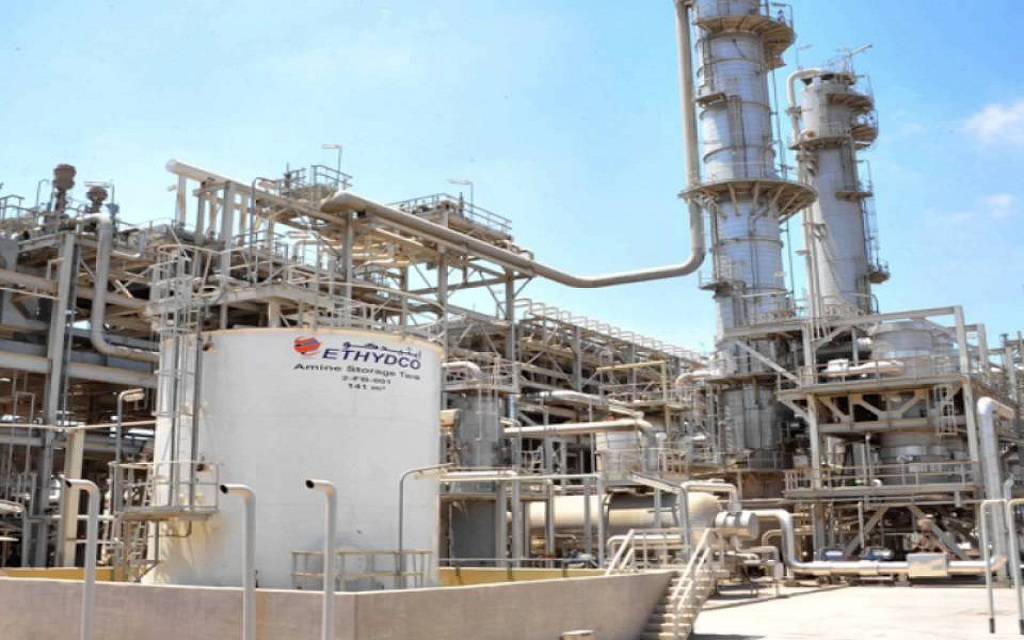
The Egyptian Competition Authority (ECA) approved on Monday Abu Dhabi Development Holding Company (ADQ)’s acquisition of large stakes in three Egyptian petroleum firms, more than a year after the government’s announcement of the deal.
The Emirati firm is to acquire a 25 percent share in the Egyptian Drilling Company, a 30 percent share of the Egyptian Ethylene and Derivatives Company (ETHYDCO) and 35 percent in the Egyptian Drilling Company and Egyptian Linear Alkyl Benzene Company (ELAB).
The decision follows the government’s earlier announcement in July 2023 of ADQ’s planned US$800 million investment in these state-owned petroleum firms.
Informed sources told Mada Masr at the time that the deal would take some time to complete as the Sovereign Fund of Egypt had not yet signed the contracts with the Abu Dhabi sovereign fund.
The government’s offering of the petrochemical companies came amid the privatization program it attempted last year, a strategy to privatize select assets aimed to address significant shortage in foreign currency liquidity and reduce the government’s role in the economy, which align with recommendations in the country’s ongoing loan program with the International Monetary Fund.
While delays in contract signing with the Egyptian Sovereign Fund were initially reported, the deal has since progressed, with added incentives for ADQ.
The Central Bank of Egypt provided a guarantee to ADQ, ensuring it will receive an eight percent annual return on its $800 million investment in the three firms for the coming four years, according to a Cabinet report reviewed by Mada Masr last year.
While sources familiar with the negotiations said at the time that the central bank will pay back the value of the investment over the four-year period along with the interest, after which time ADQ will have the option to either repurchase the shares or sell them through a public offering or to another investor.
A financial analyst who spoke to Mada Masr described the arrangement including the guarantee as making the fund’s investment function more like a “debt instrument.”
According to the Cabinet report issued last year, the government lacks initial information on which of its companies generate profit, while in the case of profitable companies, the state offers increased guarantees for investors to hedge against any drop in the firms’ performance amid turbulence in Egypt’s market.
Mohamed Badrawi, member of the House Planning and Budgeting Committee, explained to Mada Masr that recently published reports about investment guarantees also coincide with currency exchange instability and predictions that the valuation of the Egyptian pound could drop further against the dollar.
Accordingly, he added, an agreement such as the ADQ deal allows the sovereign fund to exit at a later date by reselling its stakes to the government, with the guarantee of recovering its initial foreign currency investment plus a set premium, which mitigates potential losses from currency depreciation.
Over the past year, many privatization deals with Gulf investors have been hampered due to disagreements with Egyptian authorities on the valuation of the companies and whether it should be in dollars or Egyptian pounds given the weak Egyptian pound.
A few weeks ahead of the ongoing IMF review of its $8 billion loan program with the country — with Egypt facing a cumbersome debt repayment schedule and seeking to review some of the loan prescriptions — the lending authority suggested that the government instead slightly devalue the Egyptian pound to attract greater foreign investments, a source informed on the negotiations told Mada Masr last month.
The pound’s value has dropped slightly in value since the beginning of the month, reaching 49.2 on Tuesday, a nearly two percent drop in its value since October.
Following the landmark Ras al-Hikma deal Egypt signed with the UAE in February, the central bank allowed the Egyptian pound to float, causing the national currency’s value to drop around 60 percent against the dollar, and raised interest rates by an unprecedented 6 percent.

أخبار ذات صلة
Foreign companies given favorable terms in new oil, gas exploration deals
Two oil and gas exploration agreements came across the desk of lawmakers in the House of Representatives earlier this week, with parliamentarians…
Price of butane hiked 33%, diesel 21% due to ‘positive results of economic reform’
Despite staggering price increases in recent months captured by historic inflation rates in February, the Fuel Automatic Pricing Committee announced early this…
Lights off in Egypt to rationalize natural gas consumption
Egypt’s domestic natural gas production is barely sufficient to meet demand
Gone with the wind: The flotation’s impact on Egyptian exports
"We import the buttons, we import the zippers, then we cheer when we export the ready-to-wear shirt"
Your support is the only way to ensure independent, progressive journalism survives.
You have a right to access accurate information, be stimulated by innovative and nuanced reporting, and be moved by compelling storytelling. Subscribe now to become part of the growing community of members who help us maintain our editorial independence.
Join us