
Two oil and gas exploration agreements came across the desk of lawmakers in the House of Representatives earlier this week, with parliamentarians granting approval to both on Sunday, according to documents reviewed by Mada Masr.
Both agreements, the first amending an existing oil exploration contract in the Western Desert, and the second a new deal for gas exploration in Port Said, represented highly favorable terms for the foreign companies, two former staff members of the Petroleum Ministry told Mada Masr.
One of the sources, a former ministry official, noted that terms for foreign companies are improving as the government grapples with declining domestic production and mounting debts to foreign oil and gas companies operating in Egypt.
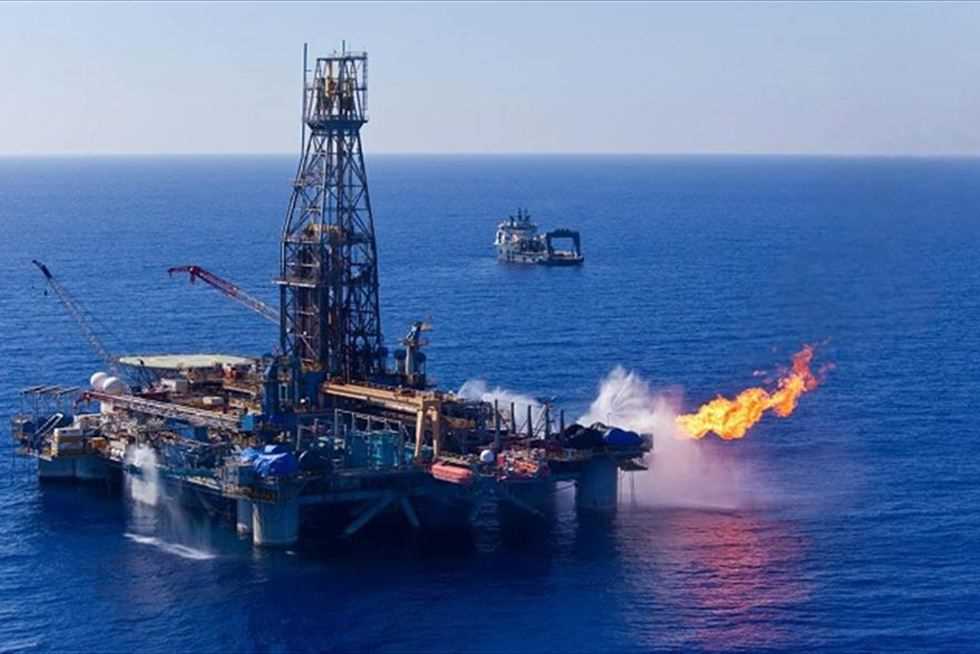
The East Port Said deal is for offshore gas exploration, and will see the state-owned Egyptian Natural Gas Holding Company (EGAS) contract with a consortium of foreign companies, including Eni-owned International Egyptian Oil Company (IEOC), British Petroleum, and QatarEnergy, according to the documents.
Under the deal, the consortium will gain exploration rights to a 2,621 square kilometer concession, which, the second source, a former official from the Egyptian General Petroleum Corporation (EGPC), noted lies near several producing fields and commercial discoveries, making it a highly promising location.
The consortium will have eight years to conduct exploration in the concession after which the agreement will be terminated if no commercial discovery is made.
The contractor is required to invest a minimum of US$40 million and drill one well during the first three years of the deal, according to the joint committee’s reports.
Under the terms of the agreement, the contractor will be required to drill at least two wells and invest a minimum of $60 million over the course of the following five years.
EGAS will not bear any exploration costs if no commercial discovery is made by the end of the exploration period, which is set to begin within six months of the agreement.
The agreement also lays out stipulation for a $3 million signing grant and a $100,000 training grant to fund and develop training programs for EGAS employees at international training centers.
If gas is discovered, the agreement stipulates that 40 percent of output per quarter be allocated to recoup the costs incurred by the consortium for research, development and operation.
The remaining 60 percent would be split between EGAS and the foreign companies, with EGAS receiving 65-70 percent, sliding toward the higher end of the scale if global gas prices rise or daily production volumes increase.
The former EGPC official said the agreement is largely formulated in favor of foreign companies which he attributed to the government’s weak negotiating position and the lack of competition.
The deal is formulated as though the exploration site lacks promise, they said, pointing to the lengthy exploration period and the limited number of wells companies are required to drill.
The same source said that the $3 million signing grant, an upfront, non-refundable payment from the foreign partner upon signing the contract, is a relatively meager sum compared to the tens of millions of dollars that have accompanied similar deals in the past, pointing as an example to the $78 million signing bonus paid out for the 2013 concession at the Seabird field in Hurghada.
But the new East Port Said concession gained approval from a joint parliamentary subcommittee that included members of the energy, constitutional and legislative affairs, environment, and budget and planning committees, which argued that it secures good returns for Egypt through non-refundable grants and the $100,000 training program, according to the joint subcommittees’ reports, which Mada Masr also reviewed.
The government, which issued the initial tender for bids on the contract, submitted the bill for the agreement to Parliament on January 12, according to the documents.
The other agreement Parliament approved on Sunday was an amendment to an existing oil agreement in the Western Desert, originally issued under Law 171/2005, between EGPC and a consortium of foreign companies including IOEC and APEX International Energy.
The amendment increases from 30 to 40 percent the share of oil to which the companies will be entitled in order to cover their investment costs, while also raising their share of oil sold for profit to 22-30 percent, up from the previous 16-22 percent.
These improved contract terms favoring foreign companies in both existing and new agreements can be attributed to Egypt’s ongoing energy crisis, the former Petroleum Ministry official said, pointing to the billions of dollars the government owes in unpaid dues to foreign companies alongside declining domestic energy output.
The favorable terms would likely be replicated in pricing agreements in the event that gas or oil is found, the source noted.
The government is undertaking a push to boost domestic gas production, the official said, noting that higher national output would represent a cheaper option than sustaining the import of liquefied natural gas, a strategy the government turned to last year to keep the lights on as depleted reserves forced rolling cuts nationwide.
With the government grappling with a balance of payments deficit, driven by declining revenues from the Suez Canal and rising import costs for both commodities and petroleum, its outstanding dues to foreign companies reached $5.5 billion last year, the same two sources had previously told Mada Masr. The amount was confirmed by a third source from the private sector.
Dues to Eni and BP accounted for 85 percent of the total, the sources said at the time.
Domestic gas production, meanwhile, fell to 5 billion cubic feet per day in the second quarter of last year, marking its lowest level in seven years, according to a report by energy publication Middle East Economic Survey (MEES).
أخبار ذات صلة
Govt raises fuel prices by LE2, natural gas for vehicles up 43%
The government raised fuel prices on Friday, increasing the cost of gasoline and diesel by LE2 per liter and natural gas for…
Egypt offers eight offshore oil, gas fields to investors
Egypt’s state-owned gas company EGAS will hold an auction for eight oil and gas exploration blocks in the Mediterranean Sea, the Petroleum…
Egypt signs US$400 mln in oil and gas contracts
Egypt signed six new agreements for oil and gas exploration in the Western Desert and the Gulf of Suez this week. Worth a total…
Egypt starts paying off debts to Dana Gas, BG Group
The Egyptian government has made a payment of US$60 million to the United Arab Emirates-based company Dana Gas, an amount representing 28…
Your support is the only way to ensure independent, progressive journalism survives.
You have a right to access accurate information, be stimulated by innovative and nuanced reporting, and be moved by compelling storytelling. Subscribe now to become part of the growing community of members who help us maintain our editorial independence.
Join us