

Violent clashes erupted on Saturday between the Sudanese Armed Forces and the Rapid Support Forces in several areas of Khartoum and other parts of Sudan, following growing tensions between the two sides.
In the Sudanese capital, the clashes were concentrated in the vicinity of the General Command of the Armed Forces, the Khartoum residences of the commanders of the two rival forces, as well as inside the Merowe air base, in northern Sudan — areas where the RSF had deployed its forces since April 11.
Since Saturday morning, Mada Masr's correspondent has observed the sound of gunfire coming from southern Khartoum, where the RSF camps and headquarters are located. Smoke was also seen rising from the area.
Meanwhile, eyewitnesses told Mada Masr that the clashes moved to the vicinity of the General Command, where both Armed Forces commander Abdel Fattah al-Burhan and RSF leader Mohamed Hamdan “Hemedti” Dagalo reside. Gunfire was also heard in eastern Khartoum, as well as in the city of Khartoum Bahri. One eyewitness said that the military’s armored corps had deployed tanks in the streets surrounding its headquarters.
Shortly after the clashes began, the Rapid Support Forces took to Twitter to claim that it had taken complete control of the presidential palace and guest house, the Khartoum and Merowe airports, and other military positions across the country, in addition to arresting a Sudanese military force.
Viral photos on social media showed armed men in military uniforms in the Khartoum Airport. However, who held control over the key sites of political and military power as well as who initiated the fighting remained unclear as of the time of writing.
The RSF said in a statement that it was surprised this morning by a large military force raiding its headquarters at the Soba camp in Khartoum and besieging the RSF personnel present there, before attacking them with light and heavy weaponry.
The RSF statement added that in response to the attack, the paramilitary force contacted the Quartet Mechanism (US, UK, UAE and Saudi Arabia), as well as the mediation group represented by Malik Agar, Minni Arko Minnawi and Jibril Ibrahim, to inform them of the situation.
For its part, the Sudanese Armed Forces issued a brief statement through its spokesperson, accusing the RSF of “betrayal and treason” and of attacking military positions in the Sports City area, south of the capital, as well as other locations. “Our armed forces are confronting it ... God is great, and glory to our dear homeland,” said the statement.
Burhan said in statements to Al-Jazeera that the RSF attacked the military headquarters at the presidential guest house — his place of residence as the head of the Sudanese Sovereignty Council — and blamed the start of the Saturday clashes on the RSF harassing the military forces in the Sports City area.
In response to RSF claims on Saturday morning that it had taken control of several military locations across Sudan, Burhan stressed that no one was able to breach the General Command, and that all the strategic facilities of the Armed Forces command and the presidential palace were under military control. According to Burhan, RSF troops were only able to infiltrate Khartoum Airport and set some planes on fire before being confronted by the Sudanese military.
Following the morning’s clashes, the fighting escalated, with low-flying fighter jets being seen in the skies over Khartoum.
The Sudanese Armed Forces announced it conducted several air raids on RSF camps and arrested the RSF personnel stationed in areas where the paramilitary group claimed to have established control.
Soon after the military announcement, RSF commander Mohamed Hamdan Dagalo appeared on Al-Jazeera and called on Sudanese Armed Forces soldiers to join the RSF in its fight against Sudanese military commander Abdel Fattah al-Burhan and his associates, whom he described as “criminals” in the live broadcast.
On April 11, the RSF deployed its forces near the strategic Merowe airport in northern Sudan. The city of Merowe is about 430 km north of the Sudanese capital, and it includes an airport with a military air base that covers air defenses for northern, central, western and eastern Sudan. A Sudanese military source told Mada Masr that the RSF troops did not respond at the time to the requests of the military zone command in the city asking them to withdraw, stationing themselves in an empty area adjacent to the airport.
The Sudanese military said in a statement on Thursday that “the country is going through a historic and dangerous juncture whose dangers are compounded by the RSF leadership’s mobilization of forces inside the capital and some other cities.”
On the same day, the RSF positioned a number of armored vehicles at several locations in the capital, two days after they were mobilized from the RSF-affiliated Zurq base in North Darfur state.
Long simmering tensions between the two sides rose again to the surface this month after the Armed Forces reiterated its demand for the integration of the RSF into its ranks as stipulated by the framework agreement signed in December between civilian political forces and the military, according to which a civilian government was to be formed on April 11, ending the current military rule in Sudan.
However, the demand for a unified military force was stymied by disagreements between the two commanders as to how the force would be organized and who would lead it.
Before coming head to head, Burhan and Hemedti had been ruling Sudan together since October 2021, when they co-led a violent coup that saw the military and the Rapid Support Forces overthrow the civilian parties with which they had shared power since the 2019 revolution and brutally repress protesters who rose up to challenge them.
أخبار ذات صلة

Sudan Nashra: RSF captures Heglig oil field, Juba deploys to protect facilities | Sources in premiership: Ministerial dismissals imminent | Humanitarian collapse in West Kordofan, RSF drone strike kills over 100 in South Kordofan | TSC source: Military, armed movements agreed on mass deployment, recruitment across Kordofan
In a major shift that hands the Rapid Support Forces a powerful economic lever, the paramilitary group seized West Kordofan’s Heglig oil…

Sudan Nashra: RSF seizes military’s last stronghold in West Kordofan | Military advances into SPLM-N territory in South Kordofan | Afwerki pushes for Russian logistical center on Sudan’s Red Sea coast in Port Sudan meetings | UN envoy probes Khartoum for new political track
While the map of military control in south-central Kordofan is rapidly shifting, Port Sudan hosted two high-profile visits on Saturday — one…
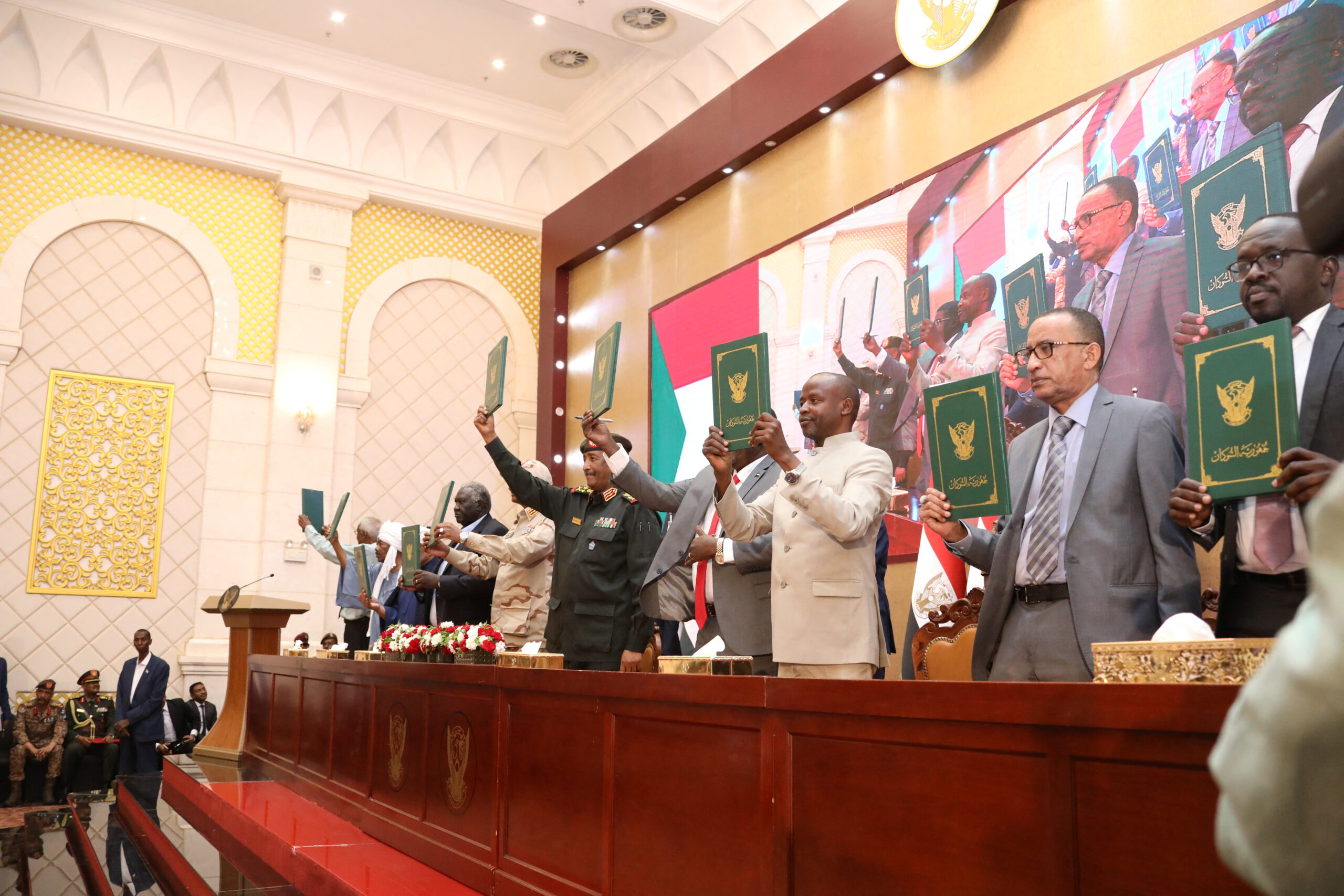
Sudanese military signs framework agreement with civilians over 1 year after coup
Prominent armed groups and grassroots activist groups have criticized the deal
Israeli security delegation visits Khartoum at invitation of Rapid Support Forces
Neither the Sudanese Armed Forces nor the Foreign Ministry were aware of the visit in advance
Your support is the only way to ensure independent, progressive journalism survives.
You have a right to access accurate information, be stimulated by innovative and nuanced reporting, and be moved by compelling storytelling. Subscribe now to become part of the growing community of members who help us maintain our editorial independence.
Join us