
African court to consider Cabinet clashes case
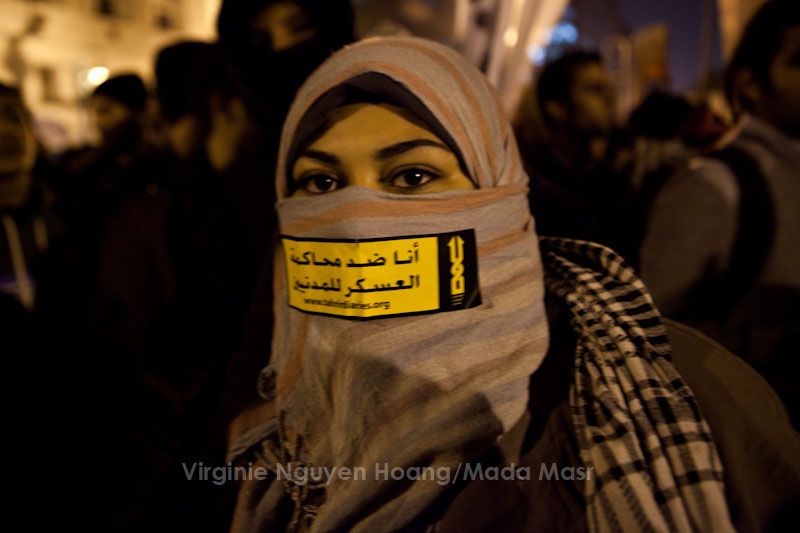
Two and a half years after deadly clashes in front of the Cabinet building that left 18 people dead, the African Commission for Human and Peoples’ Rights has agreed to consider the case against security forces filed by the families of the victims.
This would be the first time a case of killing protesters in post-revolution violence would be brought to international arbitration.
The violent confrontation started on December 16, 2011. Police and Armed Forces personnel attacked protesters at a sit-in near the Cabinet building as they demonstrated against the appointment of an old regime figure, Kamal al-Ganzouri, as prime minister. The clashes lasted for five days and left more than 900 people injured.
According to the Egyptian Initiative for Personal Rights (EIPR), one of the human rights organizations that filed the complaint on behalf of the families, military police fired live ammunition and brutally assaulted both protesters and passers-by during the clashes. The EIPR documented women being dragged on the ground by security forces, as well as an incident of soldiers stripping one woman of her abeya and stepping on her body. Images of the attack went viral, provoking international outcry.
Other signatories to the complaint include the National Group for Human Rights, the Cairo Center for Human Rights Studies and the Behind You with the Report campaign. They filed the case acting as representatives for the victims’ families.
The African Commission for Human and Peoples’ Rights was established in 1987 under the auspices of the African Union to implement the African Charter on Human and People’s Rights, which was ratified by Egypt in 1992. Its legal provisions are recognized by Egypt.
According to Bahaa Ezzelarab, a legal advisor at EIPR’s regional litigation unit, the groups resorted to the African Commission after exhausting all other means of holding policemen and military personnel accountable for protesters’ deaths.
"The injured and the families of the victims in the Cabinet clashes filed several complaints to the prosecutor. They were first heard as victims, but investigating judges transferred the case to the Cairo Criminal Court in May 2012, where they accused 269 people of attacking policemen and army personnel and of destroying public property,” explained Osama Mahdy, a lawyer representing the victims' families who works for the National Group for Human Rights.
"What's funny is that most of the defendants in the case are those injured in the clashes. The prosecutor interrogated them as victims before they were transferred to the court as criminals,” Mahdy said. “No answer was given on who is responsible for their injuries.”
The trial continued until November 2013, when the presiding judge demanded that a fact-finding mission’s report be included in the evidence. The mission had been formed under ousted President Mohamed Morsi’s administration to look into cases of political violence following the January 25 revolution. However, the report was never submitted to the judge.
The judge and the court section for the case were eventually changed. Last February, lawyers representing the defendants were surprised to find that the new court section specializes in terrorism cases.
The new judge is also presiding over a case in which journalists from the Qatar-based Al Jazeera channel face charges of spreading false information, as well as a case where Muslim Brotherhood leaders are accused of overlooking torture acts in the Rabea al-Adaweya sit-in held to demand Morsi’s reinstatement.
In March 2013, the African Commission accused the Egyptian government of sexually assaulting women journalists and activists in May 25, 2005, an incident known as Black Wednesday. The commission demanded that the government reopen the investigation, prosecute the accused and pay compensation to the victims for both physical and mental harm. Egypt has not yet responded to these demands.
"The commission's decisions are non-binding for the Egyptian government, but the importance of the ruling we get lies in reactivating the case one more time,” Ezzelarab said.
“These rulings champion the principle of state responsibility for violations against citizens, and not just the responsibility of those who committed the violations directly, from policemen or army personnel, for example," he added.
The African Union severed Egypt’s membership after the military removed Morsi from power in July, 2013. However, in February the chairperson of the union said that Egypt could be readmitted after electing a new president.

أخبار ذات صلة
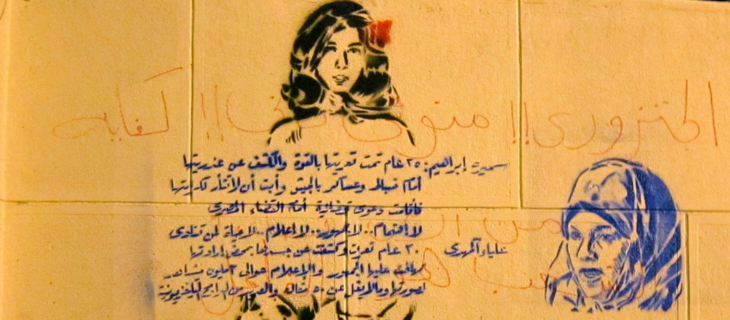
‘Virginity tests’ survivor hopes African commission demand for Egypt to compensate victims will protect women in future
"that one could receive even a small measure of justice is indescribable"
As Ethiopia seeks Red Sea access via Somaliland, why is Egypt supporting Somalia?
Egypt is building on its longstanding relationship with Somalia and resentment for Ethiopia.

No deal and not much drama: 12 years of Grand Ethiopian Renaissance Dam negotiations come to end
Twelve long years of negotiations over the distribution of Nile waters between Egypt, Ethiopia and Sudan came to an end this week. The talks in Addis Ababa closed on Tuesday,…

Ramy Shaath seeks damages from Egypt at African rights court
Since his release, Shaath has faced "threats and intimidation" from Egyptian officials and media
Your support is the only way to ensure independent, progressive journalism survives.
You have a right to access accurate information, be stimulated by innovative and nuanced reporting, and be moved by compelling storytelling. Subscribe now to become part of the growing community of members who help us maintain our editorial independence.
Join us