
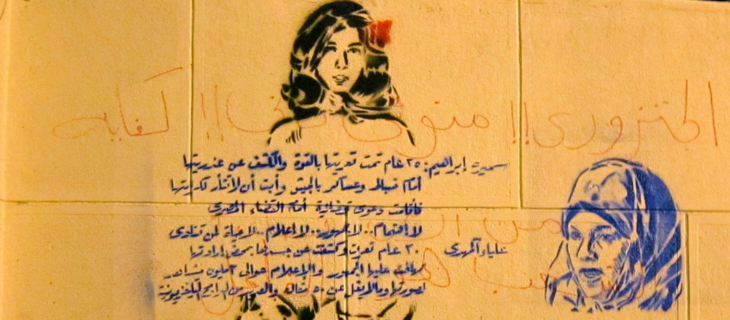
‘Virginity tests’ survivor hopes African commission demand for Egypt to compensate victims will protect women in future
Rasha Abdel Rahman was quietly informed on Sunday that the bid for justice she began around 13 years ago had finally yielded a result.
She was one of over a hundred people who were taken by military personnel from a sit-in they were continuing in Tahrir Square during March 2011, after the ouster of late President Hosni Mubarak. They were held within the Egyptian Museum, which had been converted into a temporary military base, where they were beaten, electrocuted and tortured.
From there, she and 16 other women were transported to a military prison where they faced further abuses, were assaulted and subject to forced genital exams under the pretext of “virginity testing” — a practice which has been illegal since, though cases of its use are still recorded.
Abdel Rahman and Samira Ibrahim sought justice from authorities after their ordeal, sharing their story amid popular outcry over the multiple instances of assault perpetrated by authorities and plainclothes groups against women making political demands at the time.
Efforts to secure accountability domestically were referred to a military court, which disregarded the victims' testimonies, failed to investigate who had ordered the assaults and prosecuted only a single medical conscript who was ultimately acquitted in proceedings Human Rights Watch described as a “sham.”
So, with the support of advocates from Egypt and further afield, Abdel Rahman and Ibrahim turned to the African Union’s Commission on Human and Peoples' Rights, a quasi-judicial body established by the African Charter in 1987 to promote and protect human rights in the member states, which had just accepted a similar case that was generating a lot of conversation.
Though the commission ruled the case admissible in 2013, it was not until this week that Abdel Rahman was informed that it had issued a decision in favor of her legal representatives, recognizing “virginity testing” as a form of torture with no legal justification, ordering that Egyptian authorities pay her compensation, undertake to prosecute the perpetrators who assaulted her and six other women, and take clear steps to prevent similar offenses recurring.
Though the ruling is far from providing a resolution to her years-long pursuit for change, “the very idea of the ruling, that one could receive even a small measure of justice, is indescribable,” Abdel Rahman tells Mada Masr.
She and lawyers following the case say that the ruling is significant as it sets a precedent for future advocacy and ongoing engagement with Egyptian authorities.
However, lawyer and advocate Sibongile Ndashe, who acted on behalf of the women to present the case to the commission in 2013, tells us that enforcement now depends on mechanisms that have weakened over the last decade.
Just as the legitimacy of other multilateral bodies has been challenged over recent years, the African Union’s authority has been challenged by states like Egypt, which seek to evade accountability and resist international pressure, Ndashe says.
But after a 13 year wait, Abdel Rahman does not intend to give up now.
***
Abdel Rahman says that her legal battle began long before she explored the African Union route.
“I filed a report that a lawyer friend submitted to the Military Prosecution,” she tells us. “But they didn’t investigate and simply filed it away. Later, after being repeatedly told that no report existed, I obtained a certificate proving I had filed an official report.”
Following the March 2011 assault at the military prison in Hikestep, a coalition of human rights organizations acting on behalf of Samira Ibrahim — who had shared her story with the media — filed a lawsuit against the head of the Supreme Council of the Armed Forces, the military prosecutor and the commander of the Central Military Region.
The Administrative Court subsequently outlawed the military’s use of “virginity testing” on women in its custody. The court relied on an Amnesty International report, submitted by Ahmed Hossam of the Egyptian Initiative for Personal Rights, which showed that military leaders had acknowledged conducting the tests and attempted to justify them.
The government’s defense tried to deny that the Supreme Council of the Armed Forces had issued a decision authorizing the tests, however the court rejected the argument on the basis of the Amnesty report.
But no individuals were ever charged. Members of the military repeatedly denied that the virginity tests took place. The military prosecutor then ordered military police to gather evidence at the prison to verify Ibrahim’s complaint, and ultimately summoned the military doctor, Ahmed Adel, who was on duty at the prison and a serving member of the military. He denied that the procedure had occurred.
However, at the time, then-Supreme Council of the Armed Forces member Major General Abdel Fattah al-Sisi acknowledged that virginity tests had indeed been conducted on the detainees, justifying them as a measure to protect the military from potential rape allegations and stating that such tests would not be repeated.
The doctor accused of performing the forced genital examinations in the 2011 case was acquitted of all charges by the military court in March 2012.
It was in this year that Abdel Rahman turned to the African Union.
“When I joined the case with Samira, it was based on my original report,” she says. EIPR and Ndashe, who represented the International Centre for the Legal Protection of Human Rights (Interrghts) at the time, brought Abdel Rahman and Ibrahim’s case to the African commission, calling for the perpetrators to be tried in civilian courts on the basis that military courts lack independence and allow impunity for violations against civilians.
The case was ruled admissible the following year, in 2013 — a step that Abdel Rahman says “confirmed that the military had ignored it.”
Lobna Darwish, EIPR’s gender program officer and head of advocacy, tells Mada Masr that the African Union pursues cases only after domestic remedies have been exhausted.
Ndashe, who has years of experience in AU litigation and now represents the Initiative for Strategic Litigation in Africa (ISLA), said that Interights adopted the case at the time after being approached by EIPR.
The case represented another “major legal documentation of the use of sexual violence as a tool to supress women’s political participation in Egypt,” she says, and followed a landmark ruling in feminist litigation in which the African commision found that the state of Egypt failed to protect women journalists protesting in downtown Cairo in 2005 during the mass sexual assault known as the Black Wednesday incident.
According to Ndashe, the first case had already set an African precedent for prosecuting “organized violence against women in public spaces, especially those who were engaged in politics,” and Interights saw a clear connection between the two.
The second case was an opportunity to seek accountability for a similar type of violence, whose victims are often faceless given the barriers faced by those who speak out against assault.
Ndashe says the commission was more effective in its engagement with Egypt at the time, and that there was a degree of respect and responsiveness from Egyptian authorities toward the African human rights system.
All these factors made it logical to bring Ibrahim and Abdel Rahman’ss case before the African commission when the Egyptian legal system failed them, she says.
But it was here that progress slowed. Some of this was down to typical legal and bureaucratic delays. “African [Union] cases take time because sessions are only held twice a year,” says Abdel Rahman, “and delays were further compounded when Ebola swept through Africa, pausing sessions for several years, followed by the coronavirus.”
But Ndashe notes that the yearslong delay is also due to political developments that have weakened and slowed the effectiveness of the commission, frustrating complainants trying to hold states like Egypt accountable.
These developments include measures such as the African Union Executive Council’s Decision 1015 of 2018, which rights organizations have said Egypt played a leading role in advancing, and which Ndashe believes significantly undermined the commission’s effectiveness.
The decision introduced confidentiality requirements for cases tried before the African commission, meaning the commission does not publish case lists or information on pending cases, in contrast to other regional bodies and the United Nations.
It also prohibits complainants from disclosing that they had filed cases, severely limiting advocacy and public pressure.
“We couldn't do advocacy,” Ndashe says. “We couldn't use the fact that there was a pending case to leverage it in other forums, or in other cases that we had against Egypt, such as [the state’s] discrimination against people of the Baha’i faith.”
Even final rulings remain confidential for long periods of time, as they can only be announced after their final adoption and approval by the African Union, according to the 2018 decision.
This happened with Ibrahim and Abdel Rahman’s case, for which the ruling was adopted by the commission in March 2023 but was only announced publicly in November 2025.
The African Union is also not transparent about the voting record of each member state on its decisions, which are adopted by consensus.
This “secrecy,” the lawyer believes, is fundamentally inconsistent with the right to access justice, particularly given the risks and vulnerability faced by victims who bring sexual assault cases before the commission.
The Coalition for the Independence of the African Commission (CIAC), formed by Amnesty International and a number of African NGOs, has been advocating against the decision.
The commission’s decline, according to Ndashe, must be understood within a broader context of weakening regional and global human rights accountability in recent years. “States don't want to be held accountable. And states violate human rights. When we have fewer states that are willing to fight in defense of these mechanisms, the ones that want the system to fail, because they don't want to be held accountable, usually prevail,” she said.
***
The ACHPR ruling, made public for the first time under three months ago, says that Egypt violated eight articles of the African Charter on Human and Peoples’ Rights, including those on torture, freedom of expression and assembly, and fair trial.
The decision stressed that virginity testing constitutes a form of torture and gender-based violence that has “no legitmate justification,” calling the practice “illegal, torturous, inhuman and degrading.”
The ruling also accused Egypt of failing to conduct effective, independent and impartial investigations into the abuses suffered by the two civilian victims by looking into their cases — which include accusations against a military institution — before a biased military court. “It is evident that the State failed in its legal obligation to protect the Victims against discrimination and take measures to thoroughly investigate, prosecute, and punish in cases where discrimination occurs by leaving the perpetrators unpunished,” it stated.
Based on these violations, the African commission ordered the state to provide compensation worth LE100,000 for the physical and psychological harm they suffered.
In addition, the commission urged the Egyptian government to desist and eradicate the practice of virginity testing and “reform the military prison procedures code to include strict guarantees for respecting the bodily integrity and privacy rights of prisoners during searches, medical check-ups and during their detention.”
It also asked “for the civil prosecutor and civil courts to have exclusive jurisdiction to investigate and adjudicate allegations of violations by military personnel against civilians.”
The commission urged the re-prosecution of the perpetrators of the sexual violations and requested for Egypt to report on the steps taken to implement its recommendations within 180 days.
“This ruling restores my reputation and that of my colleagues — all seven [of the 17] victims” who filed cases at the time, says Abdel Rahman.
She adds that “it is very sad. I used to feel crushed when I saw ordinary people saying, ‘No way, these girls are lying!”
“This is why publishing the verdict and its reasoning was essential because it documents the psychological and physical torture, and it states that Egypt violated some of the human rights treaties it signed,” she stresses.
“The confirmation is important; it is meant to prevent this kind of violation from happening again, and protect any girls who may be detained in the future,” she continues. “After many years of patience, this victory is not just for me or Samira Ibrahim, but for all women in Egypt.
But Abdel Rahman stresses that the key issue is whether the state will implement the agreement and recognize the ruling.
Darwish and lawyer Negad al-Borai said the union’s ruling is legally binding since Egypt is a signatory to the African charter, with Darwish clarifying that the 2014 Constitution says all treaties and charters signed by Egypt have the same status as laws. Borai added that the ruling is significant for clearly designating virginity tests as a form of torture in a binding decision.
The Egyptian government is responsible for implementing the recommendations, says Darwish, and NGOs, the National Council for Human Rights and women’s groups should put pressure on the government to see them through.
But the council has not engaged with Abdel Rahman’s case at all, National Human Rights Council member Ayman al-Zohry says to Mada Masr. No-one has reached out to Abdel Rahman about the compensation either, although she says this is the least important part of the ruling.
“The idea of pursuing further action is something I will definitely discuss with the initiative more thoroughly,” she says.
“If there’s a legal course of action we can take, we will. And if there are any mechanisms to exert pressure to prevent this from happening again, we will explore them as well.”
Ndashe, too, says that the ruling is still important and should provide a launchpoint for further action, although she emphasized the essentiality of organizing and advocating to create possibility for change.
"We don't have the luxury not to have hope."
تقارير ذات صلة

No deal and not much drama: 12 years of Grand Ethiopian Renaissance Dam negotiations come to end
Twelve long years of negotiations over the distribution of Nile waters between Egypt, Ethiopia and Sudan came to an end this week. The talks in Addis Ababa closed on Tuesday,…
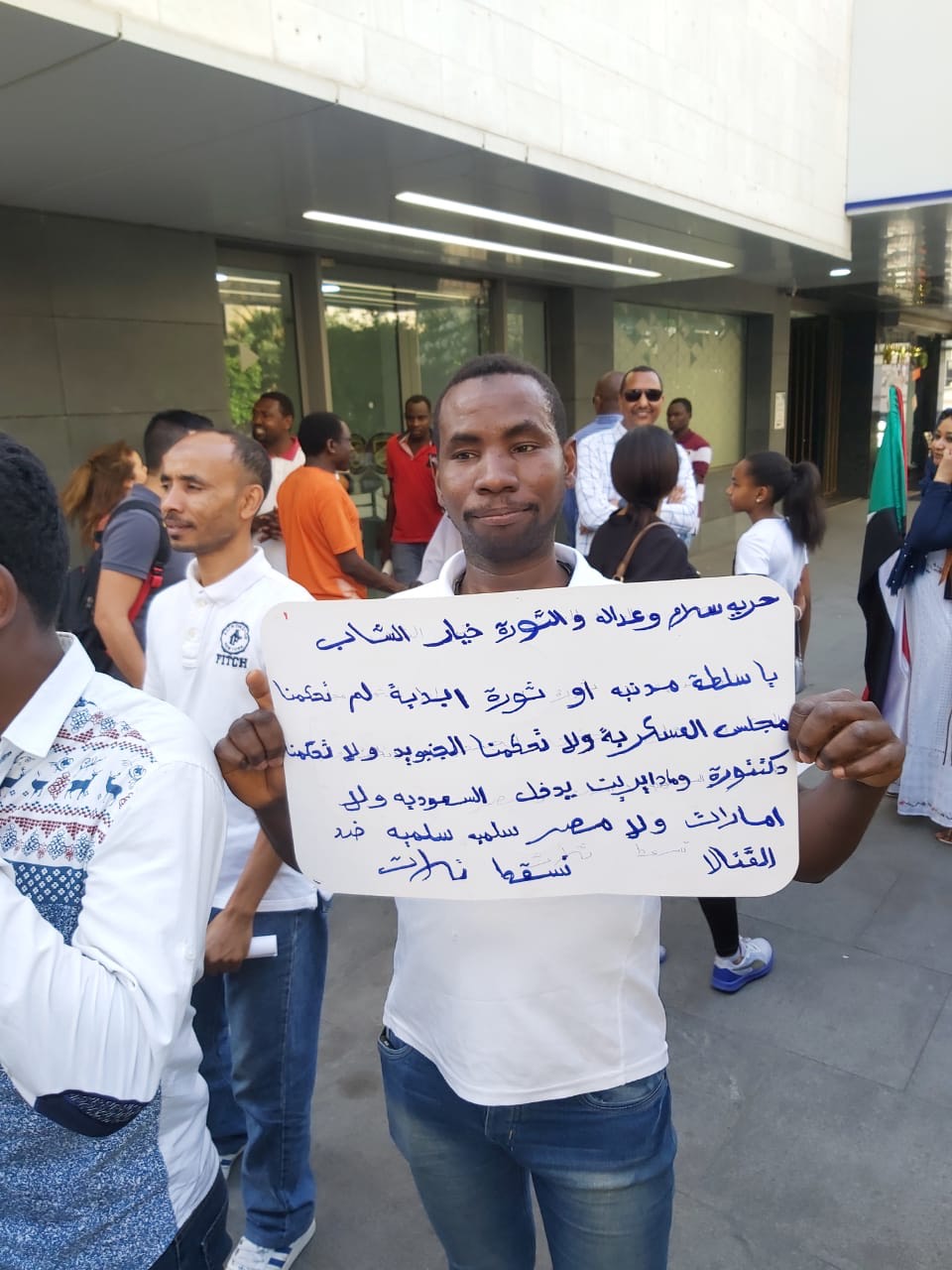
Ethiopian bid for mediation, African Union suspension trouble Egypt’s play for role in Sudan’s transition
Egypt is an eager mediator in Sudan but its position is contested by Ethiopia and Kenya
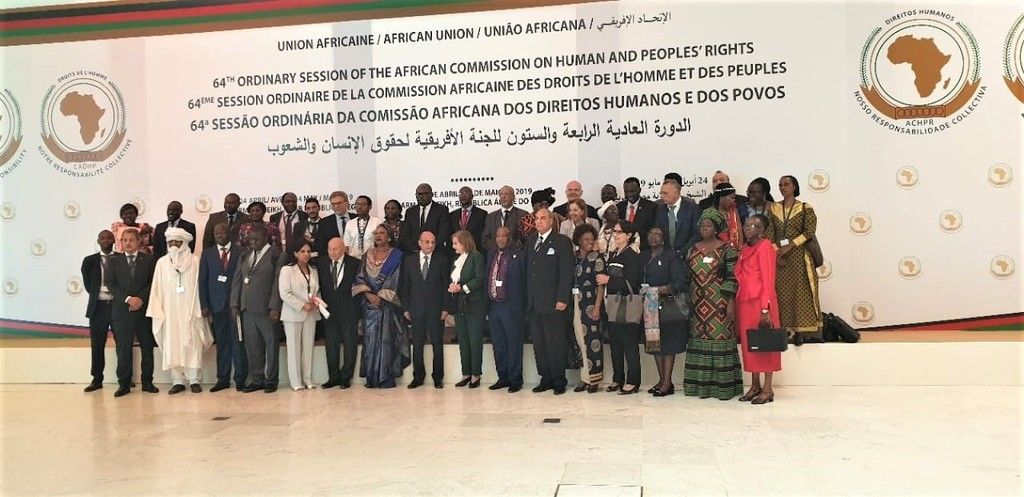
Intimidation, surveillance, restrictions: African human rights officials describe mistreatment by Egyptian security in Sharm el-Sheikh
Attendees said they were subjected to unprecedented intimidation and restrictions by Egypt officials
Your support is the only way to ensure independent, progressive journalism survives.
You have a right to access accurate information, be stimulated by innovative and nuanced reporting, and be moved by compelling storytelling. Subscribe now to become part of the growing community of members who help us maintain our editorial independence.
Join us