
9 death sentences carried out in relation to 2013 Kerdasa violence
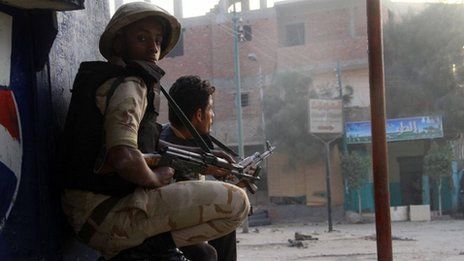
Nine people were executed by the Prison Authority on Monday morning at the Wadi Natrun Prison Complex in Beheira, news outlets reported.
According to the privately owned Al-Watan newspaper, which cited security sources, the nine men were convicted for perpetrating a 2013 raid on the Kerdasa Police Station in Giza in which at least 10 police personnel were killed. The 2013 raid took place in the wake of the Nahda and Rabea sit-in dispersals.
No official statement was issued carrying the names of those executed on Monday.
The defendants were among an original list of 188 defendants who faced charges of illegal assembly, intentionally destroying and damaging public and private property, murder, attempted murder, using force and violence against police officers and possession of unlicensed arms and ammunition, among other charges.
According to the investigations at the time, all the defendants were allegedly affiliated with the Muslim Brotherhood and other Islamist groups. They were accused of using firearms, rocket-propelled grenades and Molotov cocktails to break into the station, steal weapons and kill the security personnel inside, whose bodies were then mutilated and paraded through the streets.
All 188 defendants were sentenced to death in the initial verdicts, except for a juvenile who was handed a 10-year sentence. Following a series of appeals and a retrial in July 2017, the Cairo Criminal Court sentenced 20 people to death while others received lengthy prison sentences, with the Court of Cassation upholding the sentences in September 2018.
Monday’s executions were carried out shortly after the Ramadan TV series, Ikhtiyar 2 (The Choice 2), included a depiction of the Kerdasa events in one of its episodes. The series is produced by Synergy, an intelligence-affiliated company.
Amnesty International Middle East and North Africa Research and Advocacy Director Philip Luther, as well as others, commented on the executions being carried out in Ramadan, when executions are less common. Egypt’s Criminal Procedure Code does not permit carrying out death sentences on national holidays, as well as the holidays observed by the defendant’s religion, although it is unclear whether the article applies to Ramadan. “By carrying out these executions during the holy month of Ramadan the Egyptian authorities have displayed a ruthless determination to persist with their escalating use of the death penalty,” Luther said.
The Egyptian Initative for Personal Rights has noted that data on Egypt’s use of the death penalty over the past three years has shown a “steady increase in the number of cases that end with a death sentence,” as well as an increase in the number of people sentenced to death in single cases and in the total number of death sentences issued by Egyptian courts in one year.
Fifty-three executions were carried out in October, a figure which marked the largest number of death sentences to be carried out in one month over the last five years.

أخبار ذات صلة
Nine sentenced to death by hanging for operations supporting ‘terrorist’ Muslim Brotherhood
Courts sentenced nine people to death on Saturday for affiliation with the Muslim Brotherhood.
Interior Ministry Carries out 7 executions in 2 days
Ten defendants convicted in the same case were executed in October 2020

Execution country: How the death penalty became rampant in Egypt
Hundreds of prisoners are languishing on death row, waiting for their sentences to be carried out.
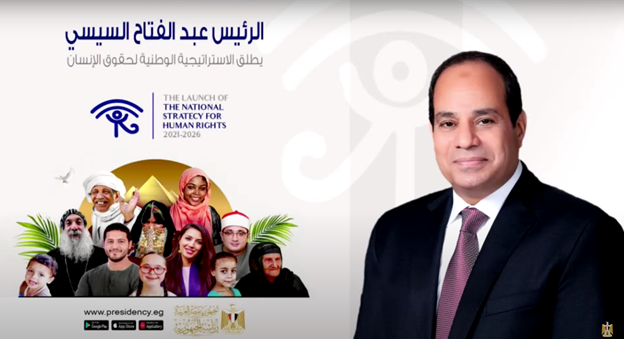
Egypt’s human rights strategy is finally out, but will bring few ‘major developments’ in criminal justice reform, says source
Mada unpacks the strategy and its delayed rollout and looks to what it means moving forward.
Your support is the only way to ensure independent, progressive journalism survives.
You have a right to access accurate information, be stimulated by innovative and nuanced reporting, and be moved by compelling storytelling. Subscribe now to become part of the growing community of members who help us maintain our editorial independence.
Join us