
Interior Ministry Carries out 7 executions in 2 days
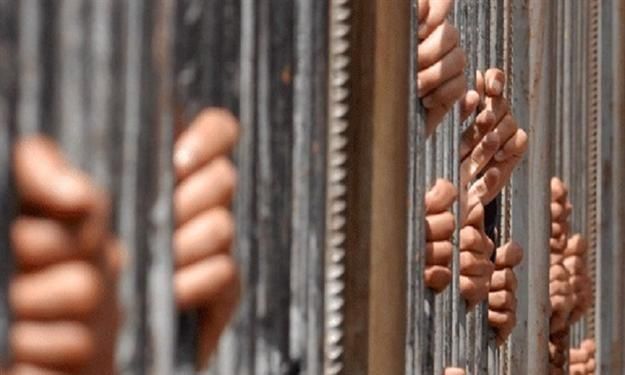
The Interior Ministry executed seven people last week, Khaled al-Masry, the lawyer of one of the executed men, told Mada Masr.
All of them were convicted on terrorism charges in two cases, Masry said, with four men killed by hanging on March 8 and another three on March 10.
Mohamed Moanis, Bilal Sobhy Farahat and Mohamed Hassan Ezz Eddin were executed on March 10, according to Masry, who said he was informed of their deaths by the father of his client, Moanis.
Following an investigation of events that took place in 2014, Moanis, Farahat and Ezz Eddin were tried and handed death sentences for joining a terrorist group, possessing arms and explosives, planning to overthrow the state and to target army, police and judicial personnel, a ruling that was upheld in May 2019 by the Court of Cassation, Egypt’s court of last resort.
Ten defendants convicted in the same case were executed in October 2020.
Four other defendants, identified by the rights group We Record as Abdullah Mohamed Shoukry, Mahmoud Mohamed Abdel Tawab, Mahmoud al-Genedy and Ahmed Salama Ashmawy, were also executed on March 8.
Masry said that the four men who were hanged on March 8 had been convicted of carrying out a series of attacks and of killing eight police personnel in Helwan in 2014. The defendants were also convicted of joining a terrorist group and possessing arms and explosives.
The executions are evidence that the authorities are not serious about acting on the promises entailed in the national human rights strategy, Cairo Institute for Human Rights Studies director Mohamed Zaree told Mada Masr.
The strategy, which was launched in September 2021 as a blueprint for cross-sectoral reform to bolster a broad spectrum of rights and freedoms, included a target to review the law on the death penalty and crimes designated as punishable by death.
All executions should have been halted at least until such a review is carried out, said Zaree.
Mada Masr has recorded a leap in the rate of executions, as well as a number of violations of due process with regard to how the death sentence is implemented.
Egypt has expanded the use of the death penalty extensively since President Abdel Fattah al-Sisi took office in 2014, a shift that was in part propelled by the formation of terrorism circuit courts in 2013, though death sentences can also be leveraged as punishment for a variety of criminal offenses.
Over the last eight years, the number of death sentences and executions in Egypt has skyrocketed, with executions often carried out en masse. In 2020, the number of death sentences carried out tripled to over 130, including of those convicted in both terrorism and regular criminal cases. In October 2020 alone, authorities executed 53 people, exceeding the annual total for each of the three preceding years.
On multiple occasions, the families of people on death row did not receive any notice prior to the execution of their loved ones and were shocked by the news of their death without having a chance to say goodbye, according to several first-hand accounts related to Mada Masr. The failure to inform family members of a convicted party before an execution takes place is a legal infraction on the part of prison authorities.

أخبار ذات صلة

Imprisoned former Muslim Brotherhood leader speaks out on harsh prison conditions
Ezzat’s prison conditions are not unique, but rather an example of violations suffered by hundreds
UN human development report on Egypt criticized for overlooking human rights concerns
“Our goal was to release the report at any cost and to avoid the fate of the previous one”

Pompeo expresses ‘outrage’ over prisoner death, rights groups call for Red Cross oversight
The statement describes hundreds of prisoners as at risk of “untimely death” due to medical neglect.
UN rights review roundly criticizes Egypt over prison conditions, civil society violations, discrimination
Of the 193 UN member states, 133 submitted recommendations to the Egyptian delegation
Your support is the only way to ensure independent, progressive journalism survives.
You have a right to access accurate information, be stimulated by innovative and nuanced reporting, and be moved by compelling storytelling. Subscribe now to become part of the growing community of members who help us maintain our editorial independence.
Join us