
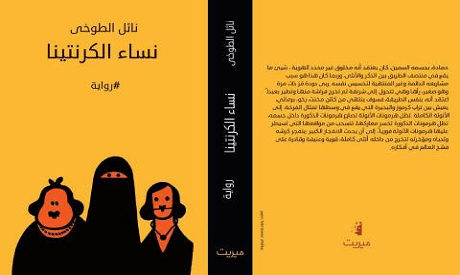
Women of Karantina: An outrageous novel for outrageous times
In an article published in the Lebanese online magazine “Al-Modon” in May, Mohamed Farrag wrote that when author Nael al-Toukhy was asked “Why did you write Women of Karantina?” he had no choice but to disclose his secret. Toukhy answered: “When the fashion was to write small novels I wrote small novels, when it was big novels I wrote big novels. No big deal.”
A tacky answer like this can be seen as a common intellectual trick to escape a trite question by over-triting it regardless of how honest the answer is. Thus it is with Toukhy, an Egyptian author, translator and blogger in his mid-thirties, and his fourth novel, Women of Karantina (published in Arabic by Dar Merit this year): triteness is now original, precious, honest and faithful.
Karantina is a poor neighborhood in Alexandria where a lot of the book's action, which follows three generations of rival families, takes place. The novel is a big one: 364 pages.
I’m not a huge fan of novels in general, especially long ones. I find novel writing nerdy in a contagious way. Individuals waste years imagining agonies and distress happening to other people, and other individuals spend days and weeks reading the result trying to convince themselves that it’s real and thanking God that their own lives are better. The difference between this and a cheap soap opera is that people don’t speak classic Arabic in soap operas — sometimes they do though — and the focus of struggle in soap operas is usually as obvious as a piece of land in Upper Egypt, or a profitable business. In novels however the author can much more comfortably claim that his or her work is about humanity seeking the meaning of its existence in the moment just after the first decade of the 21st century, and get away with it.
There’s something undeniably trivial about reading a novel in which the author tries to convince you with all the eloquence he or she possesses that you are in the presence of an unfolding epic. Universal drama, a breathless whirlwind of events, changing times, sculpted ornamental language, wisdom that penetrates your scrawny awareness to pick you out of your meaninglessness only to throw you into deeper meaninglessness. It takes a long time overdosing on books to get used to that much pretentiousness, override your psychological disorders as well as the author’s, and calm down enough to enjoy the moments of happiness — real or fake — between the lines.
And this is exactly what Women of Karantina is not trying to disown.
Women of Karantina makes fun of you and your love for books, of your naivety and your appetite for manufactured illusion. The novel grabs you with a self-consciously epic opening scene set in some undefined point in the future. We watch a miserable dog being shot by some needlessly cruel soldiers, in a depressingly blunt, desperate melodrama with excessively obvious symbolism. It is told with a style that starts very poetically before sinking deliberately into trite silliness:
“Fate plays its game sometimes. It merges what can’t be merged. A human being can have power and money and respect and suddenly he has no money or power or respect. Fate can combine two colleagues or neighbors or stray dogs of the same breed, connect them with love and then suddenly tear them apart. How wondrous fate’s ways are.”
The scene prepares you for the experience of reading the novel. It strips you of your expectations and forces you to pay attention.
Very complicated family connections, an endless list of characters, power struggles, machine guns, explosions, drugs, jealousy, love, and both justified and unjustified physical contact: Women of Karantina sells you its content as cheaply as possible, and tells you in advance that it’s going to be a novel with preaching, information, entertainment, and everything else that people put in novels to make them interesting.
You follow the ups and downs of a cast of characters, but you have a hard time understanding what they are exactly. The novel sometimes talks about them as if they are superheroes who spend their lives changing the world:
“In addition to the fact that Hamada’s image in the area’s collective memory didn’t have any important information, people always said that Hamada was a hero, but heroism is usually heroism with people against other people, only Hamada’s heroism was just heroism, with no friends or enemies. The devil was not in the details because there were no details in the first place.”
Then it slaps you right away with the decadence and littleness of their lives:
“The five used to meet on the way to and from school. Joy and cheerfulness were what they were all about at that time. Laughing all the time. Throwing stones at people. Hitting each other in the face with koshary bags. Exchanging delicate insults starting with mothers and not ending with genitals and religion. Tenderness and sweet love gathered them together but later they were kept apart by the sugar cane war and lizards.”
You get the feeling that all the characters are megalomaniacs and only the novel knows it. It feels very honest when it describes what the characters are thinking, how they see themselves in relation to the universe or history, or how they see those around them, but as soon as it gets to say what it thinks it’s not ashamed to call them a bunch of nasty lowlives. After a bit you start feeling that the novel itself is megalomaniac. It seems to give itself a lot of credit for being honest, intelligent, eloquent, patient and deep, and it doesn’t seem to notice how insignificant its task actually is, though it frequently points out the insignificance of its characters. Toukhy himself is probably aware of the fact that his novel is megalomaniac and he presents that as some form of well-crafted entertainment. Maybe that makes him see himself as rather grand too. Perhaps it’s not a coincidence that the “Karantina” of the title sounds a bit like “Tarantino.”
In Women of Karantina there is an implied admission of a sick, hysterical relationship between authors and readers living in a country that is going through excellently trite and tacky times, with all the appropriate detail. Money, violence and injustice and anything that can live parasitically off those three elements are at the core of the novel. Exaggeration in everything reaches new horizons when the events of January 25 2011 pass in barely a page and a half, written in the thinnest way, triggering a bitter cynicism with barely any effort.
After June 30 and the toppling of the government there was a discussion between me and Toukhy and some others about the intellectuals of Egypt and their shocking support of the military coup situation. Toukhy had an opinion that — in my opinion — suited his writing perfectly in terms of his feelings towards collective hysteria. He said: “If you’re pimping you should benefit, otherwise you look like shit.”
*Translations by Andeel

Andeel
Andeel was born in Kafr al-Sheikh in 1986. His uncle told him that his paternal grandfather was a filmmaker who made a feature film called “Horses,” which he took to…
تقارير ذات صلة
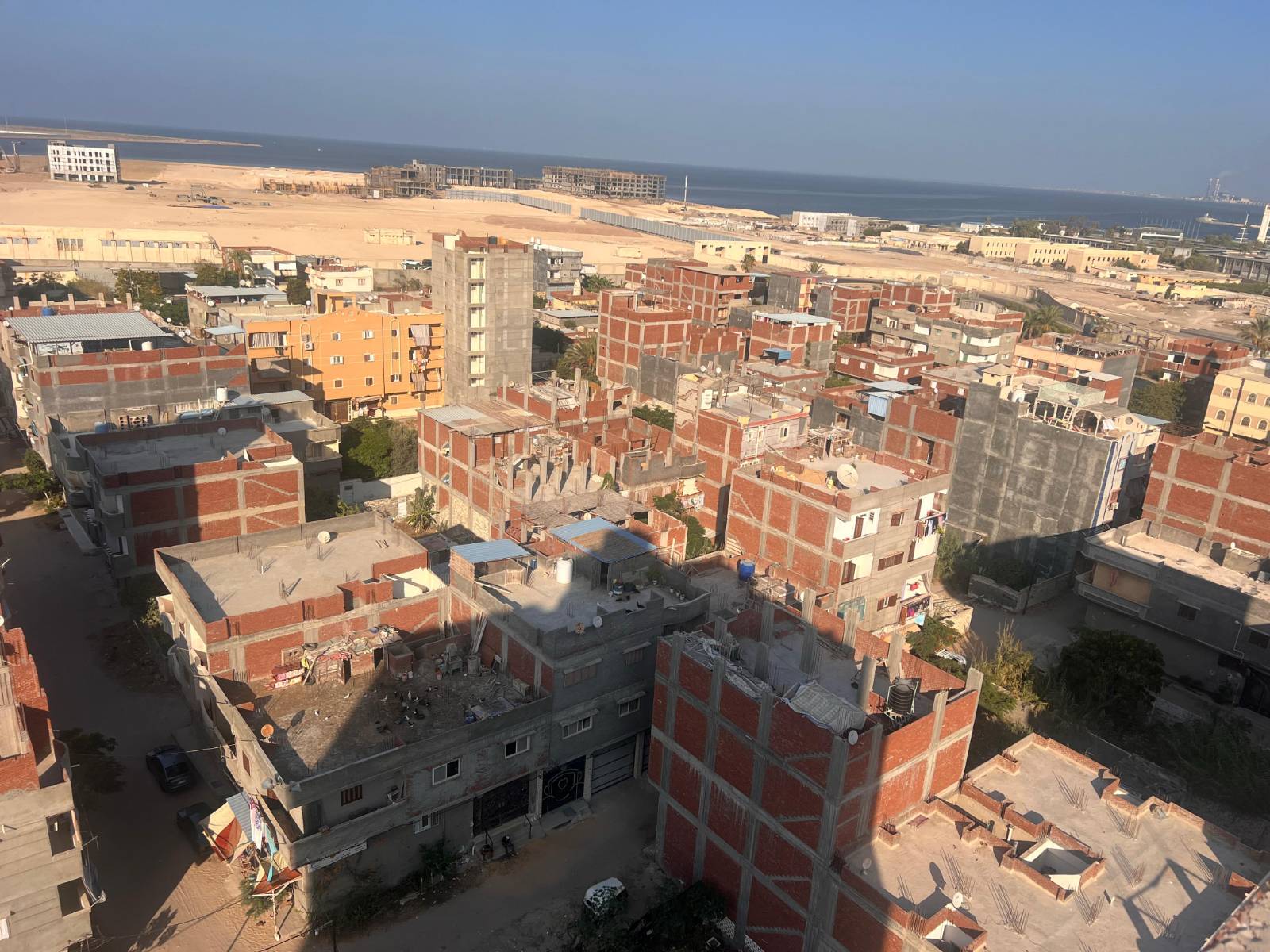
Govt to tear down Toson residential area of east Alexandria
Tension between the residents and local authorities has built over the course of the year
Video | Making her way
Mada hit the streets with three women in Alexandria who ride scooters in different contexts
Video | Keeping their eye on the ball
Some are trying to form professional teams in clubs, striving to compete internationally.
Your support is the only way to ensure independent, progressive journalism survives.
You have a right to access accurate information, be stimulated by innovative and nuanced reporting, and be moved by compelling storytelling. Subscribe now to become part of the growing community of members who help us maintain our editorial independence.
Join us