
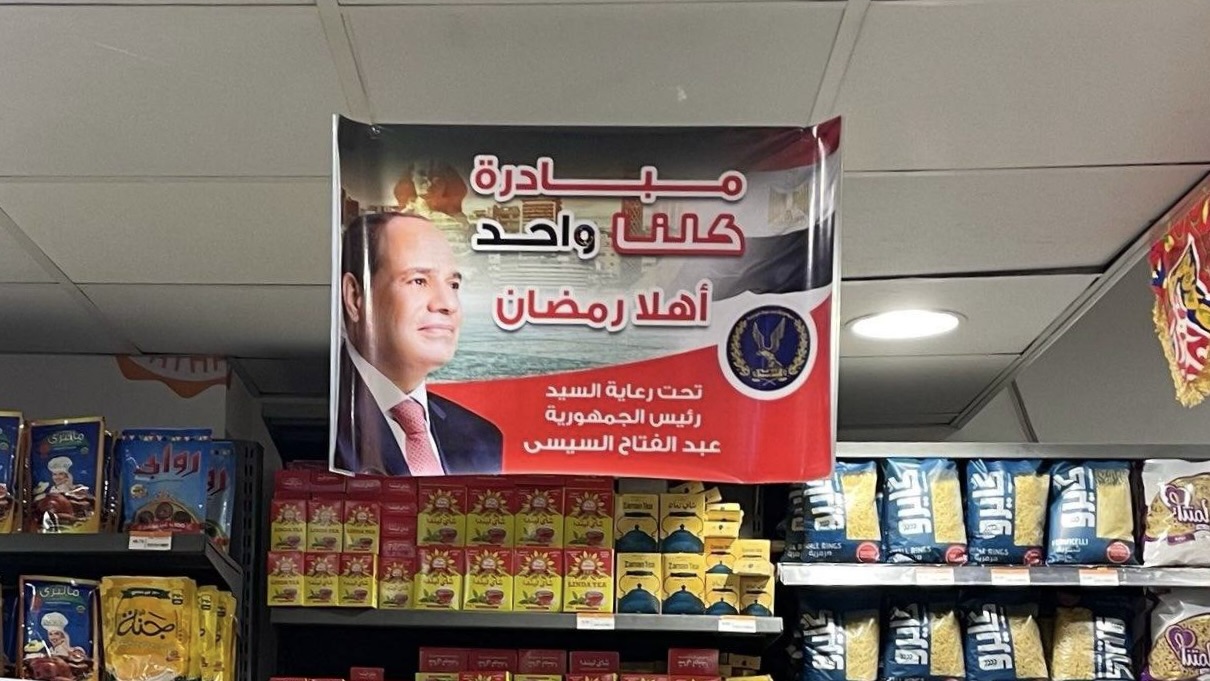
Where is Ahlan Ramadan?
“Where did they tell you it was?” was the answer of several people in Cairo and Giza when I, a lost Mada Masr reporter, asked them where I could find the government exhibitions for affordable goods the week before last.
The Ahlan Ramadan market scheme is not new. The series of exhibitions is organized on a yearly basis ahead of Ramadan to preempt the annual spike in spending on household goods that comes with the holy season.
What is new, however, is how high prices have become in formal markets and the fact that various key goods are often scarce or totally absent from stores.
More than 100 Ahlan Ramadan exhibitions were launched nationwide this year by the Federation of Egyptian Chambers of Commerce and Supply Ministry, who work with the governorates to provide strategic goods at reasonable rates.
In the process of tracking down Ahlan Ramadan outlets in central Cairo and Giza, however, I found that there were much fewer outlets on the ground than the number listed in the public statements.
Three exhibitions announced to be open for consumers in Giza’s Dokki neighborhood were yet to be set up until last week, and the usual location of Faisal neighborhood’s exhibition was moved to Omraniya, confusing citizens who frequent it every year.
Many shoppers I met at the outlets I did find, who said they were regulars at the annual exhibitions, shared my sense of confusion around this year’s Ahlan Ramadan exhibitions. They noted later opening days, much closer to Ramadan than in previous years, fewer outlets overall, and a disappointing set of discounts on offer in comparison to regular market rates.
This year’s initiative comes under a presidential directive to provide “the best goods at competitive prices to reduce the effects of inflation on citizens,” Supply Minister Ali Meselhy said in a press conference on February 28, adding that discounts would range from 15 to 30 percent.
Ramadan Shehata, director general at the Supply Ministry’s media office, told Mada Masr that “discounts go up to 30 percent this year. Pasta prices start at LE9, and in many exhibitions, rice prices start at LE29.”
But many people I spoke with expressed dissatisfaction with the discounts. For instance, the average market price of one kilo of rice ranges from LE34.1 to LE36.44, according to the government’s Information and Decision Support Center’s local and international price portal.
At the biggest Ahlan Ramadan branch located in Cairo, rice was initially available for LE38 at the Nile Company for Consumer Complexes outlet, affiliated to the Holding Company for Food Industries and the Supply Ministry.

Unprocessed short-grain rice was available between LE35 and LE36 at another Ahlan Ramadan outlet in Nasr City.
“Why would I buy a bottle of oil for LE80? It’s sold at the same price everywhere else,” said a woman at one of the fairs in Talaat Harb Street in downtown Cairo.
Another man, choosing to buy the bottle, said “What will we do? One has to save some money these days.”
Days after I visited the Talaat Harb branch, Supply Minister Ali Meselhy announced that the price of an 800 ml bottle of mixed oil, a cheaper option than pure cooking oils, had been reduced to LE65 from LE70 in all Ahlan Ramadan exhibitions and outlets across the country.
Another set of price rollbacks, also pushed by Meselhy “to ease the burden on citizens,” were advertised on rice, oil and imported Sudanese meat on February 29. The price of unprocessed rice went down from LE31 to LE29 for a kilo, a liter of oil from LE98 to LE70 and fresh Sudanese meat dropped to LE320 from LE480.
Meselhy advertised the set of discounts after people’s perplexity with the initiative’s prices escalated into frustration and disorder in other exhibitions across the country.
During the inauguration of Qalyubia’s Ahlan Ramadan exhibition on February 17, discontented attendees angrily bore down on Meselhy with questions and remarks about the food prices.
Similar scenes of angry crowds circulated from the opening of the chief exhibition in Monufiya a few days later, which led MPs to criticize the high prices, shortages of basic commodities, and absence of control over the markets amid the recent unprecedented surge in commodity prices.
The incidents marked the height of popular frustration with the Supply Ministry over recent months. Basic commodities’ prices have been rapidly fluctuating, partly due to the unstable value of the Egyptian pound on the parallel market and its impact on the import-dependent country’s capacity to implement lasting solutions.
While MPs have blamed the crisis on “merchant’s greed,” Egyptian citizens have criticized the government for the unprecedented price hikes.
The supply crisis stemming from economic issues has increasingly rendered key goods like sugar, oils and rice hard to find in shops over the last months.
The Supply Ministry had to field some criticism as a result. Several MPs called on the minister to submit his resignation in light of the stormy economic crisis during a mid-January general House session, and state-aligned news anchors have denigrated his performance in office. New legislation and security campaigns have also targeted traders for market manipulation practices such as price gouging.
Another Ahlan Ramadan offer on show sought to address people’s unending quests for sugar — one of the hardest goods to get hold of at the moment.
While the Supply Ministry offers sugar at LE27 per kilo in its affiliated outlets, the severe shortage in the basic commodity’s supply has forced many citizens to pay up to LE50 for one kilo when buying from private and parallel market sellers.
When asked to compare this year’s Ahlan Ramadan exhibitions and last year’s, the Supply Ministry media representative said the main difference is in the sugar offerings. “Just the sugar regulatory process — it is offered at the exhibitions for LE27 and without a designated limited quantity for purchase,” said Shehata.
Many shoppers told me that they showed up at the exhibitions hoping to find sugar and that, if they did find it, they hoped it would be available at lower prices.
“There are four tons of sugar, 25 cartons of oil and half a ton of rice pumped into each Ahlan Ramadan exhibition on a daily basis,” Wasfi Abdullah, the director of the ministry’s Supply and Internal Trade Directorate in Beni Suef, said.
However, despite the numerous attempts to address the sugar crisis, the supply of the strategic commodity at many exhibitions did not keep up with demand.
A vendor at the Talaat Harb exhibition told one customer three days after its opening that sugar would be available “the day after tomorrow.” “When should I come?” was the reply of the man who had inquired.
Queues at other exhibitions in a number of governorates were also reportedly filled with people over the past few weeks, all present for the same purpose. Overcrowding ensued in some cases.
An eyewitness at the Omraniya branch told Mada Masr last week that queues for sugar start at 11 in the morning and that supply runs out in the afternoon.
The sugar rush was a factor contributing to the queues and overcrowding, but the managing authorities’ disorienting organization of the exhibitions were another main factor. Opening days were postponed and locations changed, with anger and confusion mounting amid the lack of supply with Ramadan just around the corner.
“If they don’t let us in today, I won’t come tomorrow. Do you know the size of this exhibition space? There is only one hall. People will kill each other tomorrow,” one of the people waiting at the door of the main exhibition in Nasr City said upon finding out that the opening day was postponed.
Even though an assistant to the supply minister had announced that the Ahlan Ramadan exhibition at the Nasr City Fair Zone would be open to the public on February 28, people were barred from entry upon arriving. “No entry is allowed today, the minister is coming from 5 to 7 to inaugurate the exhibition,” a security guard at Nasr City’s Fair Zone told them.
People were only allowed in the following day, and the exhibition is set to stay open for only 10 days in total, until March 9, the day before Ramadan.
A similar delay happened at the Omraniya branch in Giza, another of the largest branches, with no information provided on the reason behind the postponement.
One of the people waiting at Nasr City feared they would miss out on the best discounts if they didn’t get in on February 28. “The same thing happened last year, but some people stayed and ended up being allowed in at the end [after the minister left] even though they told us to come the next day.”
“Those who came the next day found the same commodities offered at higher prices,” they said.
A number of the people waiting in the sun on February 28 “with the hope of [the exhibition] opening” told Mada Masr that the location of the main Nasr City exhibition has been changed this year, as it used to be set in a much larger building at the fair zone, the Cairo International Conventions and Exhibition Center.
Nasr City hosted this year’s main exhibition. It was held in an area of 6,000 square meters and included 124 pavilions for a number of participating companies and entities, located in an area within the Nasr City Fair Zone allocated to the Micro, Small and Medium Enterprises Development Agency.
The limitations of the smaller space were made apparent the following day with severe overcrowding, as the long, jostling queues for sugar, oils and meats stretched on for hours. Police officers and security personnel were deployed to exercise a level of crowd control.

When asked why the location was changed this year, Shehata stated that it was only because the space had two floors, rather than last year’s larger, single floor.
When asked about the reason behind the overcrowded outlets, Shetaha said “the exhibitions are offering big discounts compared to prices outside, which is leading to the large influx of citizens.”
“There is a lot on offer this year [in the exhibitions], enough for people,” he continued, stressing that supply is abundant this year.
تقارير ذات صلة
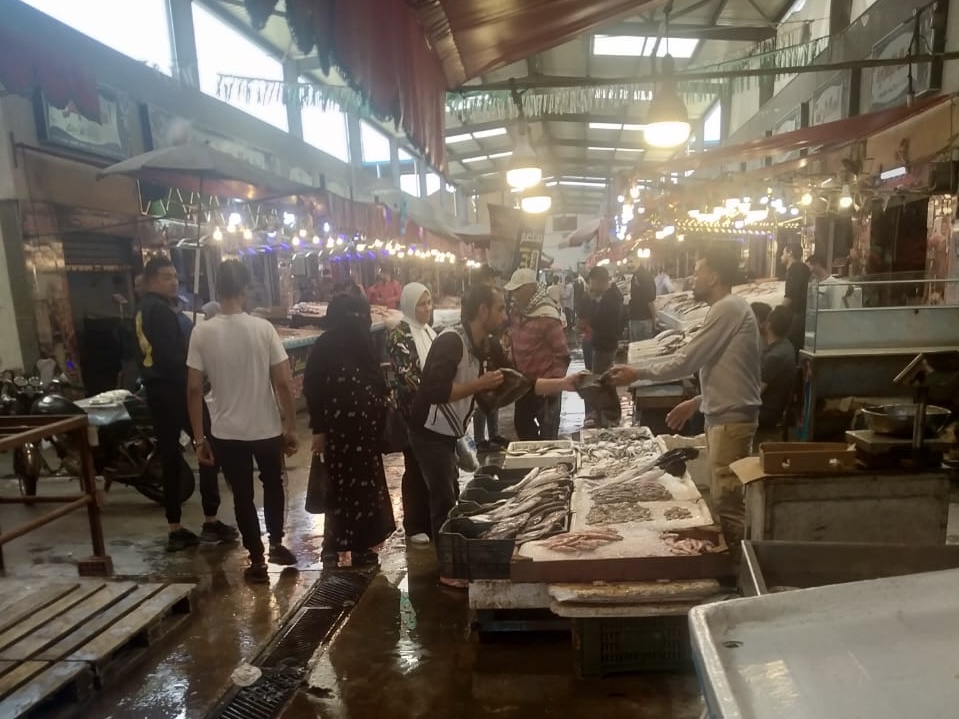
Let it rot?
A new boycott campaign out of Port Said aims to tackle soaring fish and seafood prices

Priced out of protein
How the economic crisis has taken protein out of the mouths of Egyptians.
Seven years of tinkering with the subsidy system
The new system is one whereby subsidy beneficiaries are turned into market consumers
Your support is the only way to ensure independent, progressive journalism survives.
You have a right to access accurate information, be stimulated by innovative and nuanced reporting, and be moved by compelling storytelling. Subscribe now to become part of the growing community of members who help us maintain our editorial independence.
Join us