
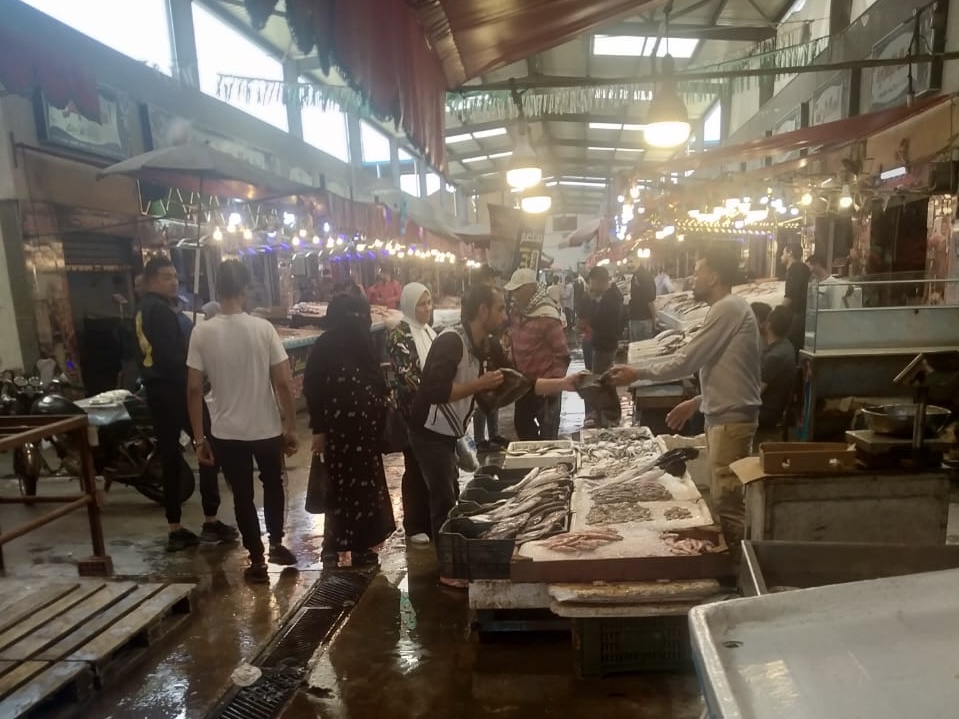
If you want to buy a large-sized fish from a market in Egypt these days, it is going to set you back. At about 500 grams — a portion for one person — a large tilapia or mullet is going to cost you a maximum of LE100 to LE250 respectively.
The prices depend, of course, on quality. Fish from polluted fish farms will cost you less. The price of high-end fish products will be even steeper. That contrast is most clear with shrimp, which depending on the size, can cost you LE350 to LE900 for a kilo.
These are staggering prices for most Egyptians who consider fish and seafood part of their diet. Over a period where wages have largely remained stagnant, inflation for fish and seafood prices has reached 180 percent this April, according to data from the Central Agency for Public Mobilization and Statistics (CAPMAS).
Two weeks ago, a group in Port Said had had enough and decided to take matters into their own hands.
“Let it rot,” they declared, expressing their intent to boycott fish purchases in a move to pressure traders to lower prices. The rallying cry has become the slogan for the campaign, garnering positive attention from privately-owned media, which praised it as an "ingenious" idea.
“Let it rot” campaign coordinator Wessam al-Safti tells Mada Masr that the initiative started last Sunday with an initial plan to run for a week. However, due to its “significant success,” evidenced by a 50 percent drop in fish prices, the campaign has been extended until just before the Sham al-Nessim holiday.
Safti says that the concept of the boycott is backed by the state, as it aligns with President Abdel Fattah al-Sisi’s directives to avoid purchasing goods that have skyrocketed in price (which are most goods given Egypt’s historic inflation).
Port Said Governor Adel al-Ghadban also supported the initiative by refusing to enter the fish market last week on a recent tour. "I won't enter until prices drop," he said.
“Since the campaign began, not a single fish from farms or elsewhere has entered Port Said,” Safti tells Mada Masr, adding that he contacted traders before the campaign, requesting price reductions. However, traders told him that rising production and operational costs, along with debts reaching up to LE300,000 for farm owners, were the reasons for the high prices.
Despite this rationale, Safti continues to attribute the staggering prices to traders' “greed,” a talking point that the state has repeatedly used to explain rising prices across all basic commodities and food items. Safti says that the 50 percent price decrease in the price of fish is proof of the egregious profit margin traders were taking in and is not a loss on their side. Using the boycott as an example, he urged the government to enforce price controls in other sectors.
However, several traders, sellers and fish farm owners tell Mada Masr that the boycott campaign is not as impactful on the ground as promoted by the coordinator. They argue that the current period is the "fish selling season" due to heightened demand from Christian consumers ahead of the coming Orthodox Easter. They stressed that real price reductions require addressing surging production and operational costs, which have reached unprecedented levels in recent months.
To explain why prices have gone up so markedly, Mohamed al-Zayyat, a fish farm owner, tells Mada Masr that there is a long list of input costs that have increased in recent years, such as the price of fishing nets rising from LE200 to LE800 per kilogram. Diesel fuel has also gone from LE1,000 a year ago to LE2,000 per barrel (200 liters).
The cost of diesel impacts running costs for water circulation systems on farms as well as transportation vehicles which move the catch to markets. A transport vehicle now costs LE3,000 per load compared to under LE500 previously. He adds that ice blocks now cost over LE1,000 daily, which ice producers attribute to increased electricity prices.
Additionally, feed prices for shrimp have climbed to a staggering LE60,000 per ton. While the industry relies on feed, there have been no recent price reductions. Moreover, the fish production cycle spans from eight months to over a year. Even if we were to assume, Zayyat explains, that there has been a decrease in feed prices in recent months with the recent influx of US dollars, which there has not been, the fish being sold today would have been raised with feed procured at the exorbitant prices of last year.
Fish production came in at 2 million tons in 2021, according to CAPMAS data. Fish farms constitute the primary source of fish, catering to 78 percent of Egypt’s total consumption. Lakes contribute 12 percent, while production from the Red Sea and Mediterranean Sea constitutes less than five percent.
In addition to rising production costs, labor wages have also risen. A fish market trader in Port Said told Mada Masr that even the smallest shop he deals with, employing only two workers, is paying daily wages ranging between LE200 to LE300, compared to LE100 a few months ago. The fees for fish cleaning workers have risen from LE5 per kilogram to LE15. Delivery workers have increased their fees from LE10 to LE20 per delivery.
The profit margin per kilogram typically falls between LE5 and LE10, according to the source, with the “most greedy” commanding up to LE20. The trader said that he needs to increase profit margins to cover operational expenses for labor, transportation and rent currently ranging from LE5,000 to LE15,000.
Fish prices vary by type, and even within the same type, according to sources. Factors influencing this variance include compromised fish quality, as is the case, for example, from Lake Manzala, due to water pollution. Also, there is the size of the fish, with larger mullet sold at a higher price, for instance. There are also varying prices for fish with roe and those without.
Over time, there has been a decline in fish production, according to the sources, whether from farms, lakes, or other sources, coupled with diminishing direct sales from stores to consumers, due to a general decline in fish demand. "Someone who used to sell 25 kilograms a day now sells only ten," says a market seller.
Traders and sellers in Port Said agree that if industry stakeholders find themselves forced to buy fish at prices that result in losses, farm owners and fishermen may be forced to halt operations.
Conversely, the Consumer Protection Agency’s monitoring and quality control department head Amir al-Koumi tells Mada Masr that popular boycott campaigns of goods, especially food items, are not a sustainable or structural solution to high prices.
Koumi cautioned against "haphazard" campaigns, as he described them, noting that they can cause harm and losses to some along the production chain, potentially prompting price hikes once the campaign ends, to offset incurred losses. He says that it is the government's responsibility to address market issues and foster an environment conducive to price reduction through competition and an abundance in commodity production, “We are not reinventing the wheel here.”
Koumi adds that misguided government policies have made the entire food sector susceptible to economic crises tied to the availability of dollars, due to the state’s heavy reliance on imports.
Families have been forced to boycott food items on their own, regardless of any campaigns, turning to cheaper food items solely to meet their nutritional needs.
This is corroborated by data from a 2022 CAPMAS study titled, "The impact of the Ukrainian crisis on families," which indicated that over 92 percent of households opted to curtail their consumption of fish, meat and poultry due to low incomes and price hikes.
The current economic crisis and unprecedented surge in food prices have seen Egyptian households drastically reshape the quantities and varieties of protein sources on their dining tables. Instead of solving existing structural food production issues, the state’s heavy reliance on imports in food production and supply is evident in policies that prioritize short-term supply over sustainability of distribution. “Let me live today and kill me tomorrow,” an agriculture expert previously told Mada Masr.
تقارير ذات صلة
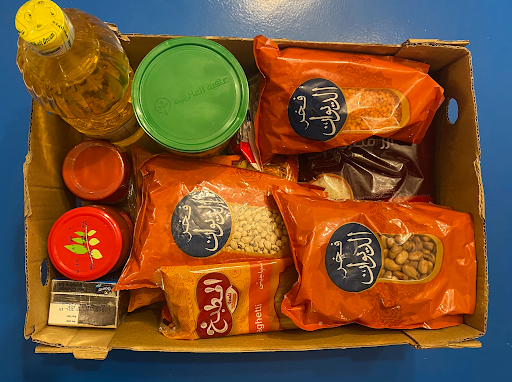
Generosity knocked out of the box: How economic crisis has shrunk Ramadan food donations
Every year, millions of donated food boxes, known as "Ramadan cartons," are distributed across Egypt throughout the month, circulated from individuals to small charitable organizations to large entities, including government…
Ras al-Hikma: No effect on citizens’ wallets yet
Egypt has secured US$10 billion from the United Arab Emirates as the first installment in the US$35 billion Ras al-Hikma deal. This inflow of funds came less than a week…

Your guide to desert lands ownership law
Sisi ratifies controversial law allowing foreigners to own Egyptian lands amid security concerns.
Your support is the only way to ensure independent, progressive journalism survives.
You have a right to access accurate information, be stimulated by innovative and nuanced reporting, and be moved by compelling storytelling. Subscribe now to become part of the growing community of members who help us maintain our editorial independence.
Join us