
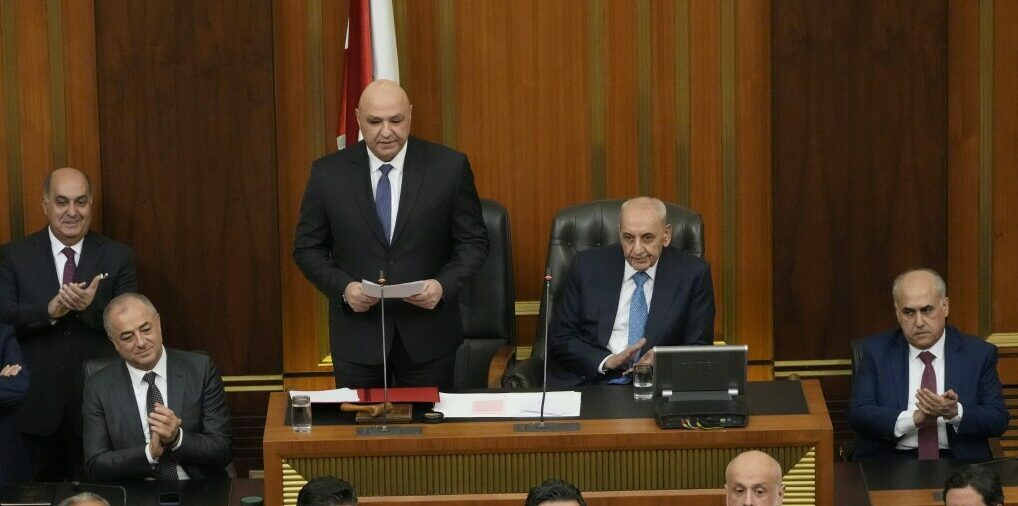
Hezbollah vote secures General Joseph Aoun’s election as new Lebanese president, underscoring party’s concessions to new regional reality
When the Lebanese military began to send the first of its soldiers to the south of the country on November 28, hours after a ceasefire was suddenly announced, it marked the end of years of waiting.
Per the terms of the United Nations resolution that ended the 2006 war with Israel, the military should have been empowered to deploy long ago. UN resolution 1701 set out terms intended to support the Lebanese military deploying in the south, supported by a full Israeli withdrawal from areas it was occupying and, ultimately, a Hezbollah retreat from the border area.
The resolution was never fully implemented by either side. Hezbollah doubled down on its military presence, using it as a launching point to command significant sway in domestic and regional politics, and Israel continued to occupy parts of southern Lebanon, drumming up Zionist dreams of further expansion.
The military’s deployment was not the only thing that had been kept in limbo. In recent years, Lebanon has sunk into political and economic gridlock. When Michel Aoun resigned as president in 2022, it only heightened the political tension of a country beset by economic crisis since 2019. The selection of a new president became a political grinding stone on which sectarian divides were sharpened. On one side, non-Hezbollah aligned parties looked to marginalize the group, arguing that economic aid would only flow into the country with a president willing to take a firmer stance toward the group and appease Western demands for financial oversight. Still the most powerful economic and military actor in the country, Hezbollah refused.
When Israel’s lower level aggression erupted into a full scale assault and invasion of Lebanon’s south again in September, actors in Lebanon’s political scene — both internal and external to the country — were quick to try and seize the war as an opportunity to foreclose Lebanon’s political impasse by hastening the selection of a president.
An end to the war with Israel, the implementation of UN resolution 1701, and the charting of a route out of the political and economic limbo thus became intertwined.
Today, Lebanon has a new president — Armed Forces General Joseph Aoun — and the military has been able to secure a position in the country’s south. But when the military deployed to the south on November 28, they did so under the terms of a ceasefire that materialized just hours earlier and that still represented a leap into the dark.
At the time, none of the actors in the Lebanese political scene had a clear idea on the future. Would the ceasefire be political theatre? A pause in fighting and a chance for either Hezbollah or Israel to regroup? Or would the much beleaguered and underfunded military actually be able to wield any real influence? For all actors, the ceasefire was a gamble on what was to come.
And what came was the fall of the regime of Bashar al-Assad, a stunning and rapid move at the hands of the Turkey-backed Hayat Tahir al-Sham. A mere two weeks after the ceasefire went into effect, the geopolitical map had been redone.
Today, Lebanon, a country whose domestic politics have always been shot through by geopolitical maneuvering, is trying to find its way in this new regional makeup.
Sources who have spoken to Mada Masr in the last two weeks say that the fall of Syria and the significant financial burdens Lebanon now faces have emboldened the military and forced Hezbollah to make several concessions, including the Thursday election of Aoun as president, who all parties hope will be a conduit for much-needed foreign aid to flow into the country.
***
The ceasefire agreement published by Lebanon’s caretaker Cabinet on November 27 laid out a roadmap to enforce resolution 1701 over the course of a 60-day period.
It specifically outlined the military’s role in monitoring and enforcing against “any unauthorized entry of arms and related material into and throughout Lebanon” and, starting with the deployment of 10,000 troops to areas south of the Litani River, dismantling "unauthorized facilities involved in the production of arms and related material” and military infrastructure.
The military and security forces were also tasked with securing all regulated and non-regulated land, air, and sea crossings and with setting up checkpoints throughout the country’s south.
Enforcing such a decision would be a major blow to Hezbollah’s base of power, however, and before much time had passed, the party, via Hezbollah's liaison and coordination officer Wafiq Safa, asked the military to pull back its forces near the border so that it could redeploy.
But caretaker Prime Minister Najib Mikati and Aoun refused, a political source close to Mikati told Mada Masr.
“Aoun told Safa that the military and the government are committed to implementing Resolution 1701 and ensuring there are no impediments to the military’s work. Hezbollah fully understands its obligation to uphold the ceasefire agreement,” the source added.
And in recent weeks, Aoun and the military have worked to carry out their mission outlined in the ceasefire agreement.
“We recently launched a campaign targeting the remainder of Hezbollah’s weapons depots, particularly in the south,” a source in the Lebanese military command tells Mada Masr. “These depots are now completely empty. This is a significant achievement for the Lebanese military, which previously faced constant obstruction from Hezbollah. The military intelligence was handed over all of Lebanon’s ports from south to north, and they’re all now under the military’s jurisdiction. The military has also reassumed control of the Beirut International Airport."
Government control of the airport, which the state was unable to bring about in a 2008 bid to sidestep Hezbollah’s influence at the facility, marks a major shift.
“Aoun is resolute in ensuring the group does not regain its foothold,” the source adds.
No matter Aoun’s resolution, any reasonable assessment of Hezbollah's remaining military capacity is elusive, as a mediator to the 2006 ceasefire told Mada Masr in recent months. According to the source, there is no clear information regarding the scale of Hezbollah's arsenal, and estimates regarding the degree of its degradation are unknown.
Nonetheless, the scale of destruction in the south, the human costs Hezbollah suffered in the war, and the loss of a land route with Syria have placed Hezbollah in a difficult position.
The town of Khiam along the southern border — the first town near the border that the Lebanese military resumed control of after the ceasefire — provides a crystallization of the issue.
Israeli forces opened a front on Khiam in mid November, with the town remaining the site of an intense battle right up until the ceasefire was announced. Footage published online showed Israel bombarding the area. Hezbollah’s forces carried out multiple operations at close combat and with rocket volleys to repel the attempted advances.
When the ceasefire was announced, residents returned to find that much of the town had been razed.
Hezbollah and the Southern Council committed to providing residents with support to rebuild their homes in the town, but the process will be a long and difficult one. Residents of south Lebanon who previously spoke to Mada Masr on condition of anonymity said that Hezbollah, which has conducted surveys and begun to compensate property owners in cities like Nabatieh, further from the border, is yet to do so for Khiam and other border towns and villages, where Israeli forces are still present until now.
For Nejme Abed Abu Abbas, who was a resident of Khiam before she was displaced by the Israeli aggression, the main concern with the reconstruction process is that any compensation may not even cover a fraction of the original costs.
"Our house cost US$150,000 to build before the 2019 financial crisis and can’t be reconstructed with the $50,000 on offer by Hezbollah and the Southern Council to rebuild properties," Abu Abbas told Mada Masr.
Already plagued by a severe economic crisis brought on by the Central Bank of Lebanon’s use of depositors’ accounts to pay off foreign bonds, as well as a chronic balance of payments issue and lack of any real productive economic sector, the war added significantly more costs to Lebanon’s ledger. Damage to physical property due to the war has been estimated at nearly $3.5 billion, and economic losses due to the war at over $5 billion, while ministers have said that the economy is in need of at least $15 billion to recover.
Now, all parties seem to be in implicit agreement that courting foreign financing is a chief priority to both bolster their own standing in the domestic tussle for power as much as to rebuild a country destroyed by Israel’s unmitigated aggression.
"Our military needs equipment and other resources," the Lebanese military command source says, adding that they received reports indicating that Washington, under the upcoming Trump administration, is preparing a substantial budget to support both the Lebanese and Syrian militaries. France, too, is expected to contribute, offering military and combat training programs for the Lebanese military and even the internal security forces, the source adds.
Indeed, the United States is already taking steps toward that end. Earlier this week, the US decided to divert $95 million in military aid allocated for Egypt to Lebanon.
And the various anti-Hezbollah actors are looking to cement ties with other regional actors.
According to a source in Lebanon’s Foreign Ministry, while US support will focus on strengthening security institutions, particularly the military, Saudi Arabia, Qatar and Turkey are expected to contribute economically through investments.
The source underlines that Lebanon’s needs extend beyond military aid. "The country requires essential supplies such as fuel and wheat. Previously, Russia supplied wheat to Syria, which then made its way to Lebanon. Now, Turkey is expected to step in to provide wheat and its derivatives, as well as other essential food commodities for both Lebanon and Syria. As for fuel, Saudi Arabia and Qatar will play a role in that.”
The source close to Mikati, who spoke to Mada Masr after the caretaker prime minister made a trip to Ankara in the wake of the fall of the Assad regime to Turkish-backed militias, agrees.
“Turkey is poised to act as the godfather of settlements and negotiations in the region, alongside Saudi Arabia. Both countries are expected to focus on Syria and Lebanon in economic and military matters. The Syrian military is currently depleted of weapons, ammunition, and defense systems, while the Lebanese military also requires substantial equipment. Washington and Turkey are expected to finance the militaries of both countries, aiming to strengthen their roles without reliance on any foreign militias,” the source says.
A Turkish parliamentary source underscores Ankara’s interest in supporting Lebanon as a “means to prevent Iran from permeating the region once again, particularly as followers of the Syrian-Iranian regime are not gone — they are lingering between Syria and Lebanon. They may resort to creating chaos, terrorism, and sabotage to disrupt Syria’s transitional government and destabilize Lebanon’s security.”
“Turkey’s extensive intelligence experience enables it to work with Saudi Arabia to ensure regional security in coordination with Washington, which remains a friend and ally to both countries,” the source says.
Saudi Arabia and Turkey aren’t the only two countries Lebanon is keen to maintain good relations with.
At the close of December, Lebanese authorities detained poet and Egyptian national Abdel Rahman Yusuf al-Qaradawi, the son of late Islamist cleric Yusuf al-Qaradawi. A few days prior, Abdel Rahman had filmed himself inside the Ummayad Mosque in Damascus criticizing the regimes in Egypt, Saudi Arabia, and the United Arab Emirates for normalizing relations with Israel.
Both Egypt and the UAE requested Qaradawi’s extradition following his arrest, but Lebanon’s public prosecutor and government ultimately responded to the UAE, agreeing on Tuesday to hand him over to the Gulf country, Lebanese Information Minister Ziad Makary told reporters on Tuesday evening.
The Lebanese government’s memorandum on the decision, which was circulated in the media, confirmed that there is no bilateral extradition agreement with the UAE but defended the decision as a “sovereign matter” and praised the Emirati legal system, stressing that Beirut received assurances from Abu Dhabi that Qaradawi will receive “fair and humane” treatment.
A senior judicial source informed of the proceedings said that former Prime Minister Saad Hariri asked President Najib Mikati to hand over Qaradawi because Lebanon’s interest, especially with the UAE, is much more important than the issue of human rights, and Lebanon is in a position that does not allow it to enter into any dispute with “a sister Arab country.”
“Even Hezbollah accepted the idea of handing over Qaradawi because Mikati discussed with them the idea that Lebanon has detainees from the party in the UAE, and the cooperation provided by the party will facilitate, in return, the negotiation process on the issue of Hezbollah detainees in the UAE.”
***
With rebuilding being a clear priority, Hezbollah’s willingness to make concessions received its biggest stress test on Thursday, when the Lebanese parliament met to hold a session vote on a new president.
Since the 2022 resignation of Michel Aoun, who is not related to Joseph, the country’s administrative bodies have been limited in remit, with repeated attempts to build consensus on a presidential candidate undermined by tussling between strongly opposed blocs in parliament.
Ahead of the session, several names were bandied about, a Lebanese parliamentary source told Mada Masr, including: Ibrahim Kanaan, aligned with the Free Patriotic Movement; Farid Haykal al-Khazen, a current MP; and Ziyad Baroud, a former interior minister with significant public support.
Suleiman Frangieh — the leader of Lebanon’s Marada Movement and an ally of the Assad regime broadly viewed as a Hezbollah ally — was also running.
“And of course, Joseph Aoun, the Lebanese military commander who enjoys widespread public backing as well as US and French support, making him one of the most likely candidates,” the source said. "Aoun’s candidacy, however, certainly faces opposition from Hezbollah and Michel Aoun’s blocs."
A Hezbollah MP confirmed the party’s lack of willingness to support Aoun, telling Mada Masr that, “while General Joseph Aoun is the most discussed name, he is neither our candidate nor that of the Shiaa duo,” referring to the Amal Movement.
But as the vote approached, the situation began to change.
First, Frangieh pulled out of the race on Wednesday morning, leaving Hezbollah without a natural candidate to put its weight behind. Thus, the party was left with a choice: support another candidate or sabotage the vote.
According to two MPs within the Amal Movement, Hezbollah and Amal members submitted 17 blank ballots during the first round of voting, preventing Aoun from reaching the required threshold of 86 votes. “The message was, ‘Without these votes, the session would have been postponed to another date,’” one of the MPs says.
Following the first vote, Amal leader Nabih Berri suspended the session for two hours for deliberations. According to the second Amal source, a delegation from the Amal Movement, including MP Ali Hassan Khalil and MP Mohamed Raad, met with Aoun before the second round and requested guarantees regarding the Shiaa share in the government, the role of the resistance, and the formulation of a defensive strategy to confront Israeli attacks on Lebanon.
“That’s why we went back and voted for Aoun, and, in the end, we all agreed to compromise for Lebanon’s benefit. Choosing Aoun represents salvation and the beginning of getting rid of the economic crisis. This man enjoys substantial support internationally, in the Arab region, and domestically. Today, we set aside personal interests to help Lebanon rise before it is too late, as there was a glimmer of hope, and we worked to expand it,” says the first MP. “No country would have provided aid to Lebanon if Joseph Aoun had not been selected.”
Hezbollah MP Ali Fayad underlined the economic motivations behind the party’s move to support Aoun, calling his election a “great achievement” and highlighting parts of the new president’s acceptance speech that he felt were promising, including those in which Aoun mentioned building strong relationships with countries in the region and opening the door to Lebanese agricultural and industrial products in those countries. Fayed also praised the president’s comments on the need for a defense strategy that will protect Lebanon from Israeli aggression and his recognition of the degree of destruction resulting from the latest aggression, referring to a moment, around 10 minutes into his first speech as president, in which Aoun set out a vision to applause from assembled MPs for “a comprehensive defense strategy at the diplomatic, economic, and military levels that will enable the Lebanese state to remove the Israeli occupation and deter its aggression."
“My pledge is to restore what the Israeli enemy destroyed in the south, the suburbs, the Beqaa, and all parts of Lebanon,” the new president said. “It is time for us to bet on Lebanon’s investment in its foreign relations, not to bet on the outside as a means of getting one over on each other.”
Even as it voted for the man who is working to disarm it in the south on Thursday, Hezbollah remains committed to trying to maintain its sway in domestic politics.
And that includes key Cabinet positions. “Hours before Frangieh’s withdrawal, the French envoy met with Nabih Berri to convince him of the necessity of a dual Shiaa vote for Joseph Aoun, as this would be in Lebanon’s interest, in exchange for France pledging to keep the finance minister position in the hands of a Shiaa politician,” rather than one from Hezbollah, says a third Amal MP.
A Hezbollah parliamentary source emphasized that Hezbollah’s popularity with its base remains intact and might have even grown significantly within the Shiaa community. “The party will continue participating like any party in Lebanon, taking part in the next government, parliament, and security appointments. Hezbollah’s current military weakness doesn’t signify its end,” the source says. “We will resist the enemy to the last bullet.”
تقارير ذات صلة
Poetry in the face of history: Letter to an Israeli soldier
Under what conditions could a confrontation between poetry and history yield to the defeat of history? And what is it in poetry that could defeat history? Is it the simple…
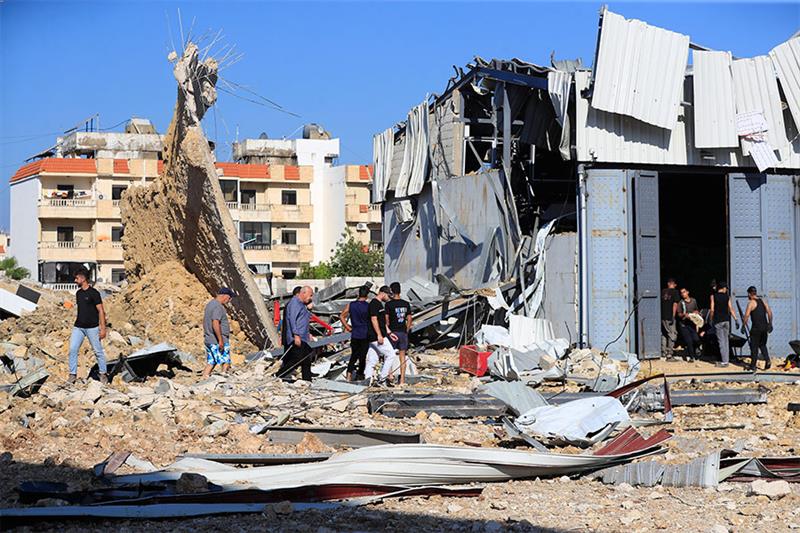
How proposed 21-day ceasefire would still face significant hurdles to end Lebanon war
More than 650 people have been killed, 7000 injured in under a week.
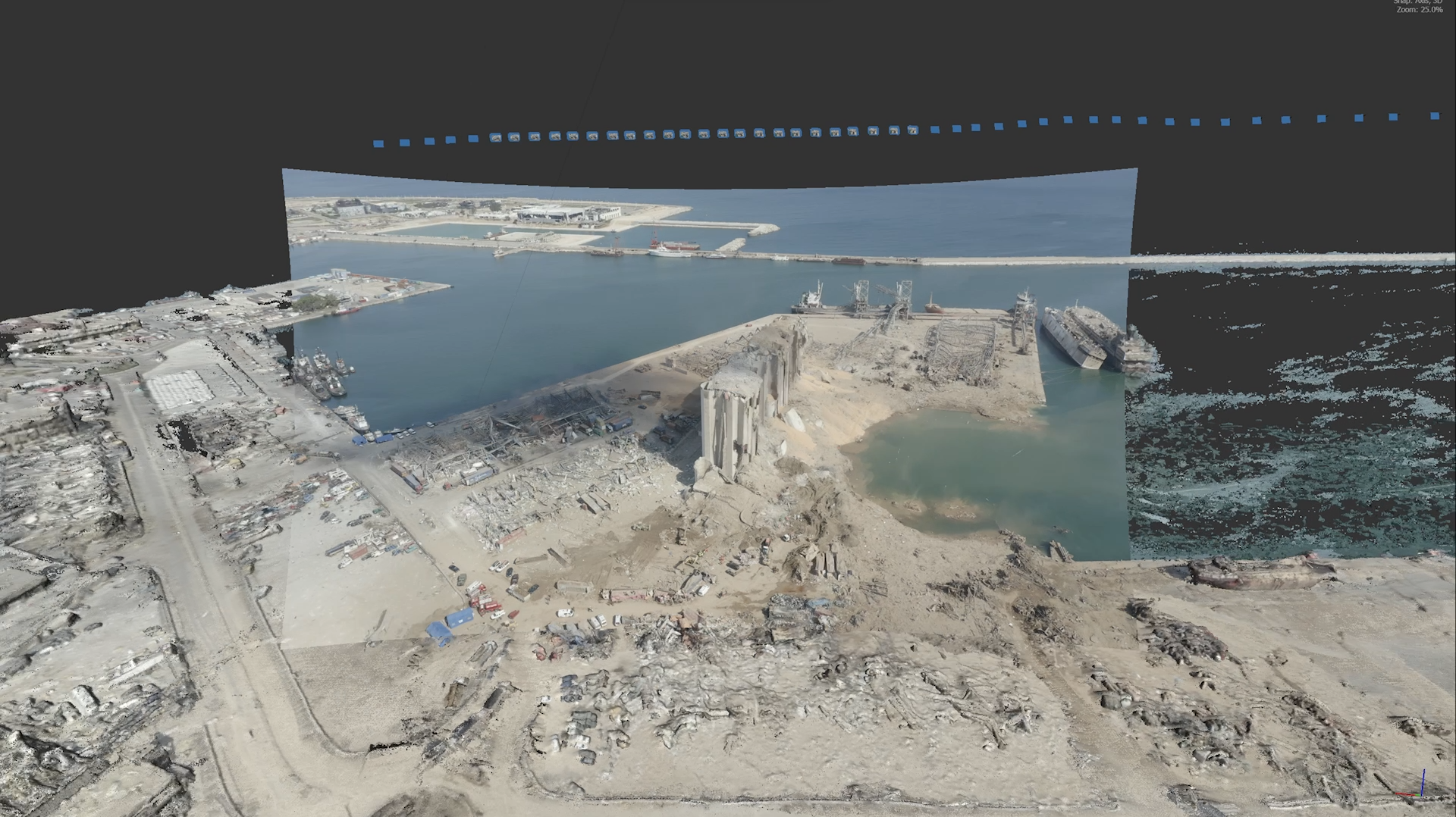
Video | Destruction of destruction: The Beirut Port silos
Febrayer partnered with Forensic Architecture to create a unified narrative of the silo's collapse
Your support is the only way to ensure independent, progressive journalism survives.
You have a right to access accurate information, be stimulated by innovative and nuanced reporting, and be moved by compelling storytelling. Subscribe now to become part of the growing community of members who help us maintain our editorial independence.
Join us