
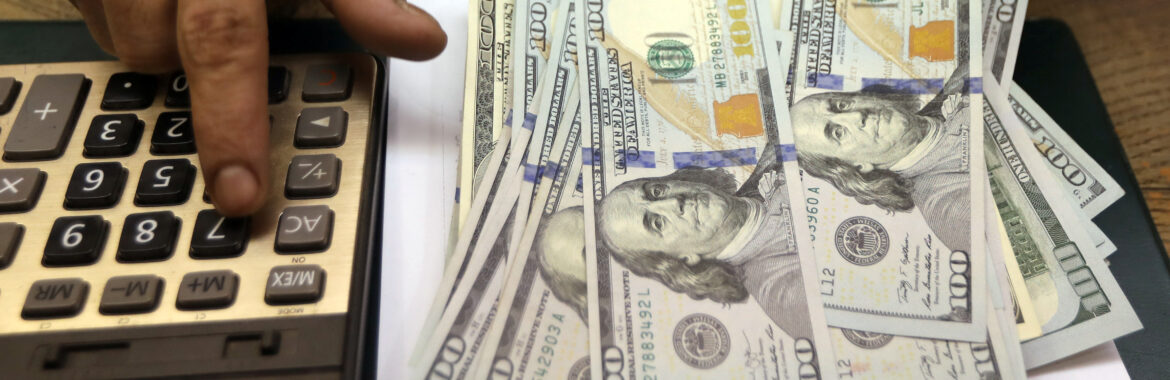
Understanding the implications of devaluation
In recent weeks, mounting evidence has led many to believe that the government’s official recognition of the real value of the pound is imminent. The value of the currency has been steadily depreciating since its recent flotation in January 2023, with the exacerbation of the foreign currency shortage crisis. The current official exchange rate of the US dollar (around LE31 to the dollar) does not align with market reality, where the dollar is valued between LE60 and LE70.
This has prompted demands for an adjustment to reflect true market value, a concern underlined in recent government negotiations with the International Monetary Fund (IMF) expected to secure the multibillion-dollar loan that has been agreed upon for over a year, in addition to talks of an increase in the total value of the loan amounting to several billion US dollars.
Many anticipate that a devaluation’s impact on markets would not be drastic — markets have already been operating for a while now based on the unofficial exchange rate. The move would not go beyond formalizing an existing reality, according to that perspective.
Despite the relative validity of this analysis, it overlooks some inevitable repercussions the decision would have on various sectors and activities, especially those managed by the state, that affect large segments of the population — particularly the impoverished.
These direct consequences include an inflationary impact as well as implications for the general budget, especially concerning external debt and government expenditure on importing essential goods.
Inflation
At first glance, the anticipated decision’s inflationary impact may be limited, as most imports are already priced based on the unofficial market exchange rate.
A macroeconomic analyst at a bank speaking to Mada Masr on condition of anonymity says that the projected impact on inflation is expected to be minimal due to what is known as the base effect, which has already been evident over recent months.
The annual inflation rate is calculated by comparing the rate of price increases in a specific month of the current year with the same month in the previous year (the base year). A decrease in inflation does not necessarily equate to drops in prices throughout the year but it signifies a slower rate of price increases compared to the previous year. This is known as the "base effect" in inflation calculations.
"We know, of course, that the [early months of the current year] compared to the [early months of the previous year] witnessed a significant increase in inflation rates, which will reduce the rate of inflation in the coming few months," Pieter Du Preez, a senior economist at Oxford Economics Africa, says.
On the other hand, a recent report from the economic advisory firm Oxford Economics obtained by Mada Masr forecasts that a decision to liberalize the exchange rate would lead to an increase in the average annual inflation rate to a staggering 45 percent in the third quarter of 2024, based on forecasts that the decision would price the dollar above LE50.
Du Preez explains to Mada Masr the reason behind this projection. “It’s somewhat true that the prices of some products have already been set according to black market prices, but the government and some private sector companies still import at the official rate,” Preez says. Therefore, any official increase in the dollar’s value would represent an additional cost for these imports.
Energy
Mostafa Shafie, a macroeconomic analyst at Arabeya Online, tells Mada Masr that “there will be direct repercussions of the pound’s official devaluation on inflation, with energy prices at the forefront, set by the Fuel Automatic Pricing Committee.”
The Fuel Automatic Pricing Committee was established toward the end of 2018. It comprises representatives from the finance, petroleum and mineral resources ministries, as well as the general authorities for both petroleum and mineral resources, under the provisions of the agreement signed with the IMF in November 2016.
The committee’s role involves phasing out energy subsidies through quarterly reviews of the cost of petroleum products to align their selling price with their actual cost.
“The pricing of petroleum products issued by the committee is primarily based on energy prices in the global market on one hand and the official exchange rate on the other. With every change in the exchange rate, it is assumed that this will lead to a change in energy prices,” Shafie says. “All types of petroleum products have a direct impact on inflation, especially diesel, which affects the production cost of some goods, and gasoline, which directly impacts the transport of people and goods and agricultural machinery operations,” he continues.
Shafie further notes that the pound’s devaluation — following the anticipated decision — would likely lead the government to abandon the approach it had been trying to adopt by avoiding raising gasoline prices in particular due to their significant and direct impact on inflation.
Essential goods
Preez's mention of some private sector companies still importing at the official foreign exchange rate indicates that the pound’s devaluation in the formal market would result in price increases for these imported goods. This is supported by statements from an official at the Central Bank of Egypt who spoke with Mada Masr on condition of anonymity.
The official cites directives issued by the bank years ago that prioritize access to foreign currency for several sectors, particularly those involved in importing essential goods. This means that these sectors still have the ability to access foreign currency at the official rate, albeit partially given its scarcity in banks.
An investor in the food sector speaking to Mada Masr on condition of anonymity explained that the prioritization of foreign currency access for the food sector is still in effect. They note that this sector continues to have some access to foreign currency at the official rate compared to other sectors.
Customs
While the cost of purchasing goods is linked to the pound's value in the parallel or official market, the cost of customs duties levied on imported goods is tied only to the official exchange rate. This means that a depreciation of the pound due to a new flotation would raise the cost of customs duties.
The customs dollar is a specific rate for the dollar that is lower than the set price in the official market, used to calculate customs duties on imported goods and is sometimes employed by the government as an attempt to reduce the cost of customs.
The government adopted the customs dollar system and set it at LE16 during the March 2022 flotation. It then raised it twice later before canceling the system altogether.
The discontinuation of the system in mid-2022 left the determination of customs costs subject to changes in the official dollar rate set by the central bank.
According to a source at the Egyptian Customs Authority speaking to Mada Masr on condition of anonymity, the current practice since the cancellation of the customs dollar system involves determining the daily dollar rate for customs based on the previous day's average rate at the central bank.
“It is unlikely that the government will revert to adopting the customs dollar system again,” Shafie says.“The customs dollar system is closer to contradicting the overall economic liberalization measures.”
Matta Beshay, a member of the Importers Division at the Federation of Egyptian Chambers of Commerce, previously told Mada Masr that “the increase in the dollar rate used for determining customs value has significantly added more burdens to the work of importers."
Debt and subsidies
Aside from the impact of a potential devaluation on market prices, other implications include the state's general budget, where expenditures would rise and lead to a larger budget deficit or a lessened ability for the government to reduce deficit.
MP Mohamed Badrawy, a member of Parliament’s Planning and Budget Committee, believes that “the impact of the pound's liberalization, or rather its devaluation, directly affects the cost of external debt in particular.” He explained that the debt of public entities listed in the general budget “amounts to more than US$83 billion [out of a total external debt of $165 billion], so it represents over LE2.5 trillion in local currency at the current official exchange rate.”
Public entities listed in the general budget include ministries but not entities such as economic bodies and public banks.
According to Badrawi, for every LE1 decrease in the pound’s value, the cost of external debt increases by LE83 billion in one go. This means that a change in the exchange rate would entail an increase in the cost of external debt. The pound's value dropping by LE15, for example, entails a cost increase that amounts to nearly LE3.7 trillion.
This does not account for the indirect impact made on the external debts of government entities not included in the general budget, such as the Egyptian National Railways Authority.
The total external debt of public government entities, including those included and excluded from the budget, amounts to $110 billion.
“The rise in the cost of external debt translates to an increase in the government’s expenditures on purchasing foreign currency from the banking system to service its debts,” Badrawi says. “This means that estimating the size of external debt in Egyptian pounds is not just an accounting matter but rather reflects an actual cost.”
Badrawi stresses that it is important to understand the impact on the ratio of total public debt to GDP. “A surge in external debt in this manner leads to an increase in the debt of budget entities as a percentage of GDP,” he says.
“The longer the decision to devalue the exchange rate is delayed toward the end of the fiscal year, the less its impact on that ratio,” he adds.
Badrawi suggests that the government’s delay in the decision to liberalize the exchange rate stems from its recognition of the impact of the pound's devaluation on external debt costs.
He notes that “the changes in the pound’s exchange rate in FY 21/22 and FY 22/23 had a clear impact on external debt expenses, which was one of the reasons for the government's prolonged hesitation to allow exchange rate flexibility, since the dollar rate in the official market reached its current level in January 2023.”
In March 2022, the central bank permitted the Egyptian pound to depreciate. This saw the dollar’s official market price rise from LE15 to around LE18. It rose further to about LE24 in October of the same year. Following Egypt’s signing of a loan agreement with the IMF in December of that year, the Central Bank authorized another devaluation which pushed the dollar price to over LE30.
According to Badrawi, fixing the exchange rate has essentially made the official rate akin to the government dollar system in the 1980s where the government procured the dollar at a different rate than the import rate.
Egypt adopted a dual exchange rate system until the late 1980s as the government's needs, such as repaying external debt installments and importing essential goods, were funded by the central bank through a different exchange rate than the one used to finance everything beyond the government's needs in commercial banks.
In light of the impact of the exchange rate’s depreciation on external debt, evident in the past two years, the government has opted to wait several months before allowing for a new devaluation.
It is waiting for the current fiscal year, whose budget estimates are based on the current exchange rate, to end in an attempt to mitigate the impact of adjusting the exchange rate on those estimates, according to Badrawi.
Regarding the government's imports of subsidized goods, they are financed at official market rates, unlike private sector imports that may be financed at black market rates. Consequently, a depreciation of the pound in the official market will significantly impact their cost.
Unlike petroleum product subsidies, the government is not obligated to reduce or cancel subsidies for essential goods. This means that a significant portion of the cost difference between the import and selling prices of essential goods is borne by the general budget.
In this context, Badrawi states that the reduction in the value of essential goods subsidies, which have been fixed at LE50 per individual since 2017, diminishes the government's ability to raise prices of subsidized items available on ration cards, which would have reduced the cost on the general budget.
Badrawi further explains that “a depreciation of the exchange rate in the last quarter of the current fiscal year [from the end of March to the end of June], for example, means that the government is unlikely to need to raise the prices of subsidized goods without incurring additional costs. This is because its stock of subsidized goods purchased at current exchange rates will likely suffice until the end of the fiscal year. However, at the beginning of the new year, the government will have to choose between a significant increase in subsidy allocation, raising the prices of subsidized goods or a mix of both directions. Based on data from the IMF, it is most likely that the subsidy allocation will increase significantly.”
Three years ago, President Abdel Fattah al-Sisi declared his intention to raise the prices of subsidized bread after approximately 30 years with the dietary fixture being sold at a fixed price. However, it appears that he retracted his decision for political reasons.
Badrawi believes that the additional cost on the general budget resulting from the pound's depreciation will be offset by an improvement in the value of dollar income from sources like the Suez Canal.
However, “naturally, the gap between expenditures and revenues will widen with the pound's depreciation, increasing the budget deficit numerically. This is evident in the government's forecast of a deficit in the next general budget reaching 7.2 percent of GDP [in the general budget preparation for the upcoming fiscal year] compared to an expected 7.5 percent by the end of the current fiscal year. It is worth noting that reaching the targeted level for the next year will require other measures to reduce expenditures, including cutting down on investment spending, as announced days ago. Failing to implement these measures would result in further worsening of the budget deficit in the next fiscal year in light of the impact of the exchange rate change.”
تقارير ذات صلة

Generosity knocked out of the box: How economic crisis has shrunk Ramadan food donations
Every year, millions of donated food boxes, known as "Ramadan cartons," are distributed across Egypt throughout the month, circulated from individuals to small charitable organizations to large entities, including government…
A day afloat
Egypt will be getting another US$5 billion in loans from the International Monetary Fund as an increase to the 2022 $3 billion loan, IMF representative in Egypt Ivanna Vladkova Hollar…
Egypt and the IMF’s economic dilemma: To review, or not to review, that is the question
Egypt is struggling to make progress on IMF recommendations amid a dollar crunch
Your support is the only way to ensure independent, progressive journalism survives.
You have a right to access accurate information, be stimulated by innovative and nuanced reporting, and be moved by compelling storytelling. Subscribe now to become part of the growing community of members who help us maintain our editorial independence.
Join us