
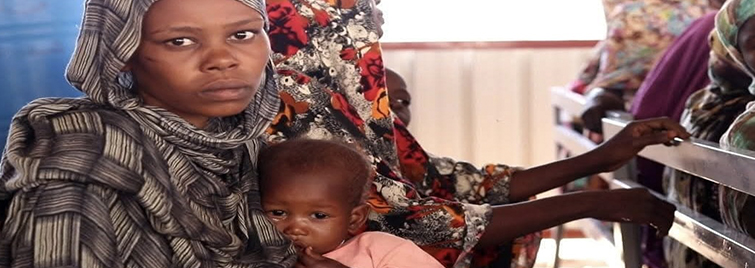
The fall of Fasher: ‘Darfur’s old wound that has never healed’
The fall of Fasher to the Rapid Support Forces (RSF) is far more than a fleeting military episode in Sudan’s two-year war. It marks a turning point — one that may reshape not only the future of Darfur, but of Sudan itself.
For years, Fasher stood as the military’s final stronghold in Darfur. Overnight, it has become a sealed-off city gripped by fear, hunger and despair, as RSF fighters tightened their control over its neighborhoods and displacement camps.
Inside the city, more than 800,000 civilians are trapped between shelling, starvation and abuses, according to Babiker Hamdeen, Darfur’s health minister.
Humanitarian organizations have warned for months that the siege could trigger a catastrophe — but that did not stop the collapse. Today, roads to the camps are blocked. Aid convoys are looted or distributed along tribal lines. Hospitals lie in ruins. Doctors, a medical source in the Sudan Doctors Network says, now work in sealed rooms without medicines or electricity.
Militarily, the fall of Fasher effectively means that Darfur now lies outside the central authority. The city had been the last capital in the region still outside the control of the RSF. With its capture, the RSF has the final piece of the puzzle that completes its map of power in historic Darfur.
This does not only shift the balance of the battlefield, it ushers in a new reality, one that edges Darfur closer to de facto secession. Control over Fasher gives the RSF a strategic gateway to the borders with Chad and Libya, securing steady supply lines for weapons and fuel. It also consolidates the group’s grip on gold mines and informal trade networks that have become sources of war financing.
The military, meanwhile, has been pushed back to a few scattered and isolated positions in the west, steadily losing its foothold in the region in favor of the authority the RSF has built atop the wreckage of the state.
With the fall of Fasher, Darfur’s separation has become a fact on the ground — a reality enforced by RSF control. Any return of the region to Khartoum’s authority would now require a sweeping political settlement, not just a military battle. Sudan thus enters a new phase of geographic and political fragmentation, where the war is no longer about who governs Khartoum, but rather who owns the regions.
***
The social makeup of the military-allied joint force in Darfur mirrors the region’s long history of tribal division — and at the same time, it lays bare the boundaries of loyalty within Sudan’s ongoing war. Formed early in the war as a local alliance to defend cities against the advance of the RSF, the military-allied joint force brings together a patchwork of regular military troops, made up of former fighters from armed movements that signed the 2020 Juba Peace Agreement and community-based groups loyal to the Zaghawa, Fur, Masalit and some clans of the Bergid and Tungur — African tribes historically at odds with the Arab tribes.
This composition has made the joint force less a homogeneous military entity and more a socio-political expression, where tribal survival, national allegiance and personal loyalties overlap.
According to a senior officer within the joint force, the Zaghawa form the backbone of these forces — whether through seasoned cadres from the Justice and Equality Movement or former military officers. This background has led the RSF to view the joint force as an extension of its historic rivals among Darfur’s armed movements. The Zaghawa, among the region’s most educated and organized communities, carry the memory of the 2016 confrontations with the Janjaweed — the militia that later evolved into the RSF.
As fighting around Fasher intensified, this tribal identity became a powerful driver of mobilization on both sides.
Abdallah Ahmed Bahr, a member of the Zaghawa Shura Council, says his tribe has seen the defense of the city as a fight for their presence in the region. Meanwhile, the RSF, he adds, perceive the battle as a chance to settle a historic score with a group they have viewed as political and social adversaries since 2003.
Yet, as a second field commander in the joint force points out, the picture is more complex than a simple “Zaghawa vs. Arabs” dichotomy. The joint force also includes fighters from smaller Arab tribes harmed by RSF transgressions, as well as Fur and Masalit fighters who lost their cities in western Darfur and joined the fight in the north.
Still, a former advisor to the RSF (2020–2022) acknowledges that the Zaghawa element remains dominant — a fact the RSF exploits in its propaganda justifying its attacks on Fasher, portraying the city as a “Zaghawa city” rather than a capital for all Darfurians.
Bahr says this rhetoric has stoked fears among civilians that the city’s fall would unleash collective reprisals against the Zaghawa and rural communities sympathetic to the tribe — much like what happened in Geneina in 2023, where the Masalit were targeted after the military’s withdrawal.
The relationship between the joint force and the RSF is layered with contradictions. Several RSF field commanders themselves come from non-Arab Darfuri tribes. Some fought alongside the rebel movements before switching sides to the Janjaweed — and later the RSF — enticed by money or status. This blend of ethnic and personal interests has blurred battle lines, allowing the RSF to lure in individuals from the same tribes it is fighting, exploiting internal divisions within the Zaghawa, Fur and Masalit themselves.
Ultimately, the conflict between the joint force and the RSF cannot be understood apart from the deep-seated tribal fragmentation that has reproduced war in Darfur for two decades. The joint force represents the “local face” of the military in the region — relying on an alliance of tribes that were historically victims of the Janjaweed project — while the RSF embodies the coalition of Arab tribes backed by cross-border economic and military networks.
With the fall of Fasher, this divide has taken on an existential dimension: a struggle over land, identity and memory more than a mere confrontation between an army and a militia. In essence, it is the continuation of the old war in a new guise, fought by the same tribes, under new banners.
***
The war in Darfur began in early 2003, but it had been brewing for decades in the depths of Sudanese politics and developmental neglect. When tensions between the center and the periphery finally exploded, they took the form of an armed rebellion against the government in Khartoum.
That year, two movements — the Sudan Liberation Movement led by Abdel Wahid Nur and the Justice and Equality Movement led by Khalil Ibrahim — declared their rebellion against the central government, accusing it of marginalizing Darfur and condemning it to poverty and political exclusion. Omar al-Bashir’s regime responded with excessive force, deploying military aircraft and unleashing Arab tribal militias that came to be known as the Janjaweed — the nucleus and precursor to the RSF.
Between 2003 and 2008, Darfur became the stage for one of Africa’s worst campaigns of ethnic cleansing in the last two decades. Villages were burned to the ground and civilians from the Fur, Zaghawa and Masalit ethnic groups were subjected to mass killings, rape and displacement. The United Nations estimated the death toll at more than 300,000, with over 2.5 million displaced. The International Criminal Court subsequently issued an arrest warrant for Bashir in 2009 on charges of war crimes and genocide.
Although several peace agreements were signed — most notably the Darfur Peace Agreement in 2006 and the Doha Agreement in 2011 — none put an actual end to the conflict. Darfur remained divided between areas controlled by armed groups and others by the government, and between them rival tribes and rogue militias.
Over time, the central government restructured the Janjaweed under a new name — the Rapid Support Forces — placing them officially under the supervision of the National Intelligence and Security Service. Led by Mohamed Hamdan “Hemedti” Dagalo, the RSF soon evolved into an autonomous force with massive military and economic influence.
Over the following decade, the armed rebellion gradually waned — worn down by the exhaustion of the armed movements and a tactic by the Bashir regime in which it struck deals with community leaders to neutralize the armed groups’ influence over their tribes. Yet, Darfur never truly knew peace. Tribal violence, land disputes and clashes over gold mines persisted, amid state weakness and the collapse of institutions.
When Bashir’s regime fell in 2019, the Darfur file resurfaced — this time in the context of the conflict between the military and the RSF following the 2021 coup, culminating in the full-scale war that broke out in April 2023.
In this new war, Darfur once again became a central battleground. The RSF redeployed its forces to the region — its historic stronghold — and took control of Nyala, Geneina, Zalingi and Daein. Only Fasher remained outside its grasp — until today.
With the city’s fall, Darfur is now fully under RSF control — a moment that echoes the rebellion’s beginnings more than twenty years ago, though with reversed roles: the force once used as the regime’s arm of repression is now its adversary, and the region once witnessing genocide has become the base of a power threatening to tear Sudan apart.
Historically, Darfur’s war has always been tied to the center’s failure to build a political and social contract that balances diversity with justice. Every cycle of war began with a grievance and ended in collective punishment, and every peace deal led into a reproduction of the same war.
Today, with the tragedy repeating itself in Fasher, it seems clear that war never truly left Darfur — it merely awaited the moment to remind Sudan, and the world, that the country’s deepest crisis has never been about geography, but about the enduring absence of a state that treats all its people as equals.
***
Hamed Ali, an economist at the Doha Institute for Graduate Studies, says that the relationship between Darfur’s Arab and African communities is the key to understanding not only the fall of Fasher, but the nature of Sudan’s entire ongoing war.
For decades, the region had been a fragile model of coexistence between “African” farming tribes such as the Fur and Masalit, and “Arab” pastoralist groups. But since the early 2000s, that balance gradually transformed into an existential struggle fueled by inequality in power, resources, political representation — and, eventually, into an open-ended war of identity that transcends geography.
As political theorist Mahmood Mamdani notes in his book Saviors and Survivors: Darfur, Politics and the War on Terror, since the Darfur war broke out in 2003, Khartoum’s central government has been redrawing these historic fault lines by arming Arab tribes against a rebellion largely led by the Zaghawa and Fur-dominated armed movements. The conflict thus shifted from one between center and periphery to one within the periphery itself. The “Arab militias,” later known as the Janjaweed, evolved into the RSF under Hemedti’s command, while the “African” groups remained tied to the anti-government movements. This violent division became part of Darfur’s collective consciousness, where tribal affiliation came to define political and military positions.
Lawyer and legal expert Abdel Baset al-Haj says that the fall of Fasher represents the culmination of this long course. The city is a symbol for Darfur’s non-Arab communities, home to a mix of Zaghawa, Fur and Bergid alongside some Arab groups — yet in the Darfuri imagination, it has long been associated with the Zaghawa, who form the backbone of the joint force defending it. Thus, when the RSF advanced toward the city, the matter was not viewed as a military battle between an army and a militia, but as a form of “tribal conquest” — an Arab-led campaign to reclaim a city seen as the last Zaghawa stronghold. This symbolic dimension turned the battle for Fasher into more than a strategic fight — it became a test of social dominance in Darfur.
A former military commander notes that, on the ground, the RSF capitalized on its vast tribal networks across the region — particularly with the Rizeigat, Maalia and several nomadic Arab clans — which provided fighters, supplies and logistical corridors. The joint force, by contrast, relied on limited military support and contributions from Zaghawa and Fur units. With each town that fell, the social balance tilted further toward the dominant force with its cohesive Arab structure, while African forces were left fragmented between disarmed peace movements and displaced communities too weakened to resist.
Yet, the commander adds, relations between Arab and African communities were not always purely hostile. At various times, localized alliances emerged between the two sides — sometimes against state interference, or to protect villages from looting, as happened in parts of South Darfur between 2015 and 2017.
The current war, however, has destroyed these grey zones. The commander says the RSF successfully imposed a mobilization narrative centered on “restoring control” and “securing the land” — a discourse that resonated with a historical sense of injustice among some Arab tribes, who saw themselves marginalized by both the central state and rebel movements.
The commander concludes that the fall of Fasher has reimposed the region’s divide: Arabs in the position of victors, African groups in that of victims. But it also sets the stage for a new cycle of vengeance and communal fighting. The massacres and abuses accompanying the city’s fall are likely to fuel revenge among defeated communities — a dynamic that could soon erupt into counter-violence that takes the form of local rebellion or tribal killings in remote villages far from the media’s gaze.
The fall of Fasher, he says, is not merely the fall of a city, but a symbolic declaration of the collapse of what little remained of Darfur’s fragile equilibrium between Arab and African components — a balance that once, however tenuously, allowed coexistence.
According to three members of Mashad, a Darfur-based rights organization, the events in Fasher cannot be understood as an isolated military or political episode, but rather as part of a long continuum of a struggle over who controls the land, memory and power in Darfur. When the word passes into the weapon, as it has now, tribal belonging replaces national belonging, and cities turn into bloodstained maps redrawing the region into victor and vanquished. In that sense, the fall of Fasher is not simply a consequence of Sudan’s current war — it is Darfur’s old wound that has never healed, only reopened under new names and different flags.
The Mashad activists add that Fasher’s fall sends alarming signals of Darfur’s slide into yet another round of communal violence. The fact that the Zagahawa-dominated joint force has been fighting alongside the military makes the tribe the most immediate target for widespread revenge attacks. There are growing fears that RSF control could become a cover for campaigns of mass killings or forced displacement against the Zaghawa in northern Darfur’s towns and villages, echoing the patterns of mass atrocities that scarred the region over the past two decades.
Meanwhile, Arab tribes tied to the RSF are poised to fill the vacuum, relying on the powers, weapons and economic gains the war provides. In this sense, what happened in Fasher marks the disintegration of a fragile social fabric that once barely managed to contain the old farmer-pastoralist tensions. Today, that fragile balance is being replaced by a logic of tribal victory and defeat — and with it, a redrawing of Darfur’s demographic and political map.
***
A former official at the RSF advisory office says that the fall of Fasher opens the door to far-reaching political transformations — ones that go beyond the military sphere to a redefinition of Sudan’s political map, and perhaps even to the emergence of a de facto separatist reality in Darfur, even if it is not officially declared. With the RSF now in control of Fasher, Darfur, for the first time since its annexation to modern Sudan in 1916, has completely slipped from the hands of the central government in Khartoum.
A source in the Sumud Alliance, led by former Prime Minister Abdalla Hamdok, says that on the political level, the RSF now possesses the main components of a complete political and administrative entity: a de facto authority that holds the ground, a disciplined military structure, self-funding financial networks and a wide tribal cover extending across borders into Chad, the Central African Republic and Niger. This reality, the source says, enables the RSF to move toward governing the region — whether by announcing a civilian Cabinet or by forming a “temporary regional administration” to manage humanitarian and public affairs under the banner of “filling the administrative vacuum” left by the state’s absence.
According to a Sudanese diplomatic source, the RSF has for months been working to build a local governance infrastructure across Darfur — appointing local governors, reviving traditional local administrations and establishing the “Darfur Coordination Council.” This could now serve as a platform for announcing a political entity under Hemedti’s leadership. Still, the RSF will likely avoid declaring outright secession at this stage, preferring instead to speak of “self-administration” or “local governance” to avoid international isolation — especially since regional countries like Chad and Libya remain wary of a Darfur breakaway and its potential impact on their own internal balance.
For the military, the situation now represents a new equation. With the fall of its last major stronghold in the west, it has effectively lost military control over the entire region — an area spanning five states.
A former member of Sudan’s mission to the United Nations says that for the international community, the response will remain cautious. Even if the RSF becomes the effective ruler of Darfur, international recognition of its authority will hinge on its ability to allow humanitarian access, curb violations and make clear political commitments. Still, the source adds, some Western and regional countries will find themselves compelled to deal with the RSF as a “de facto partner” — to ensure aid delivery and prevent total security collapse.
According to the source, if the RSF proceeds with forming a civilian government across the whole region — a real possibility if the frontlines remain stable in the coming weeks — Hemedti will likely present it as a step to “manage the region temporarily until a comprehensive political solution is reached.” In practice, however, it would mark the beginning of Darfur’s effective separation from the central state. Over time, this could solidify through new local, administrative and security institutions, turning Darfur into a semi-independent entity tied to Khartoum in name only, the source says.
In the end, Fasher today stands as a magnifying glass of the state of Sudan’s war itself: a city seized in the name of “liberation,” but in reality taken from its own people; a region ruled by force of arms, tribal fanaticism and a central state collapsing into imaginary borders. With every step the RSF advances, the notion of a unified Sudan recedes — and talk of ending the war begins to sound like a luxury in a country being reshaped atop the ruins of its devastated cities.
تقارير ذات صلة
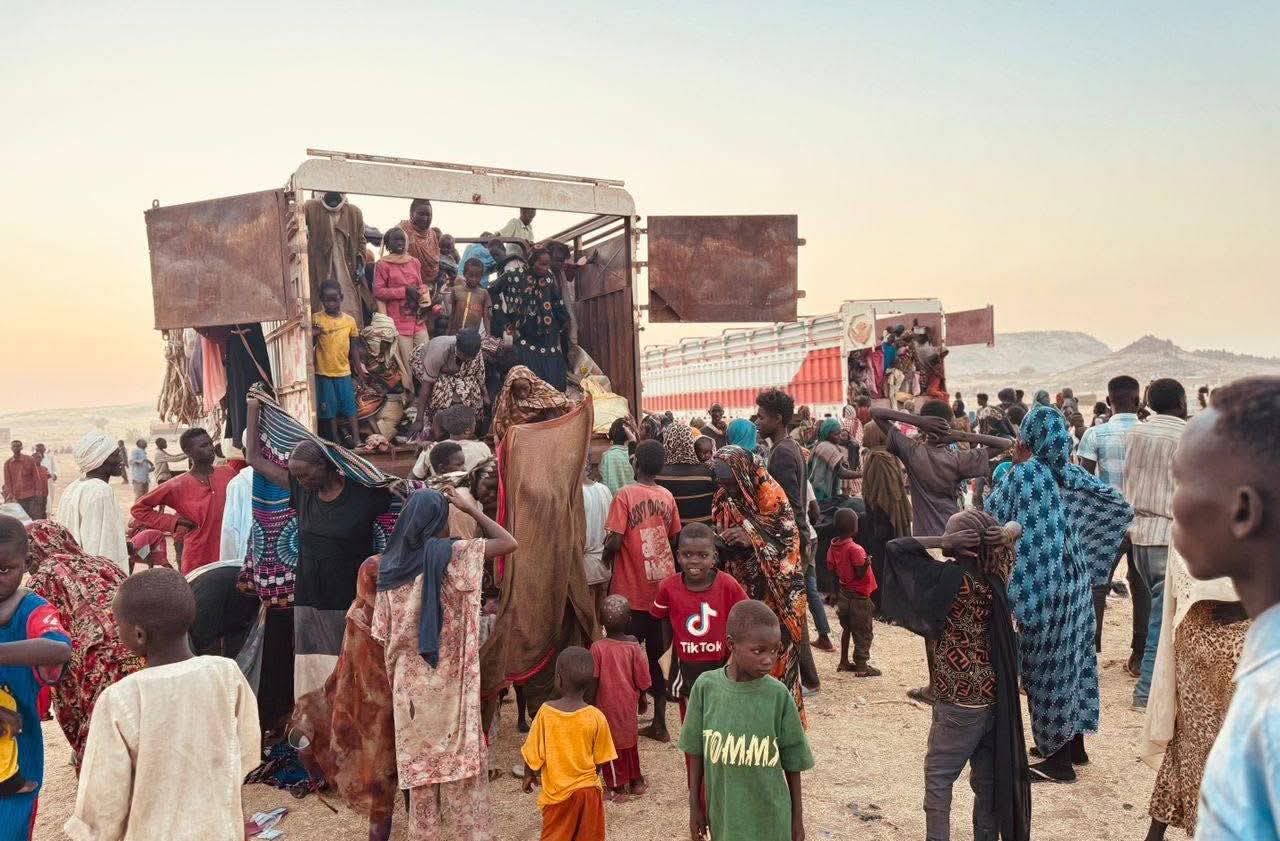
‘Unable to erase the sight of the dead from our minds’: Scenes from Fasher’s fall
Survivors of the RSF's massacres in Fasher recount the harrowing scenes of the city's capture.
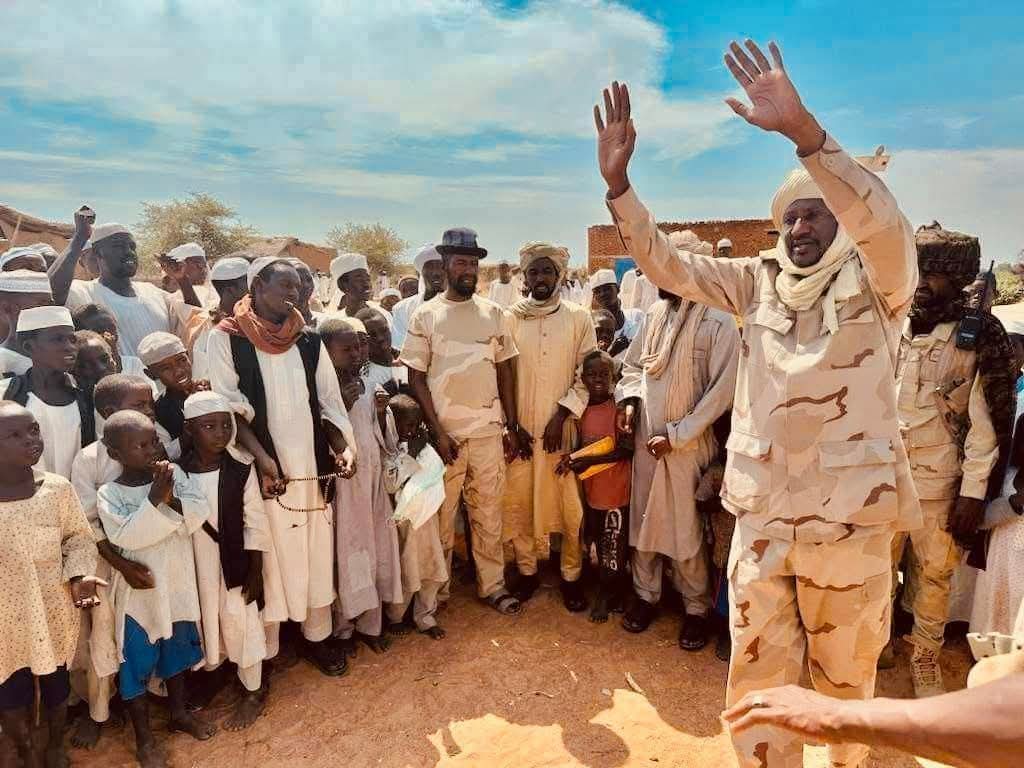
Out of scorched earth: The future of the RSF lies in Abdel Rahim Dagalo’s hands
Far from Khartoum, where the two Nile rivers converge and Sudan’s economic and political elite have wielded power for decades, Abdel Rahim Dagalo — deputy commander of the Rapid Support…
Concealed sieges: Sexual violence in Sudan’s war
Obtaining clear information about the sexual violations committed against women in Sudan’s current war was not easy. Many stories remain trapped beneath the rubble of Khartoum’s destroyed buildings, mingled with…
Your support is the only way to ensure independent, progressive journalism survives.
You have a right to access accurate information, be stimulated by innovative and nuanced reporting, and be moved by compelling storytelling. Subscribe now to become part of the growing community of members who help us maintain our editorial independence.
Join us