
On June 8, thousands of Egyptians gathered in the streets of downtown Cairo to ring in a new era on the day of President Abdel Fattah al-Sisi's inauguration. The mood was joyous and celebratory as people hailed the new administration, optimistic about what it would bring.
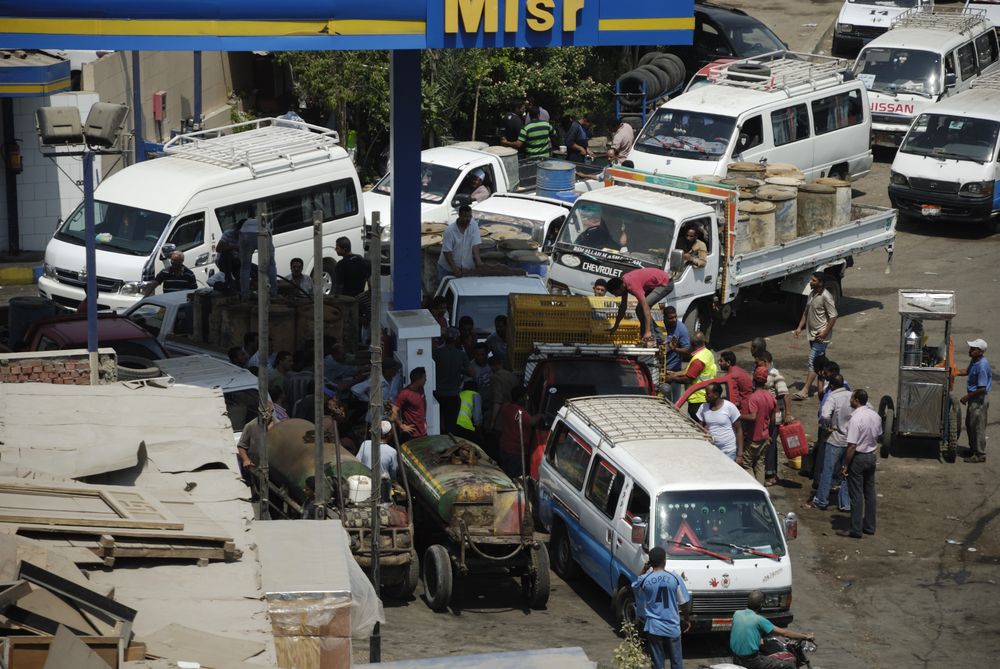
Less than a month later, the government — dubbed the government of the poor by state-owned newspapers — announced that it would lift fuel subsidies, prompting nationwide price hikes. The same downtown streets are now fueled with tension and a sense of defeat, with the faint sound of the nationalistic pro-Sisi song “Boshret Kheir” (Good Omen) quietly whizzing by on a motorcycle.
Tarek al-Demerdash is filling up his jet-blue 127 Fiat with gas. After a brief back-and-forth with the gas station employee, Demerdash slouches his shoulders in defeat as he hands over the money and gets into his car.
“I’m driving a 127 that’s beaten up and dirty, and I just filled it up with LE26 worth of gas,” says Demerdash. “Aren’t my kids better off with these LE26?”
As much as the new prices affect him and his family, Demerdash says that the topic has become quite banal, and he is sick of talking about it since he knows nothing will change.
“Leave it up to God,” he says as he drives off into standstill traffic.
In January 1977, then-President Anwar al-Sadat announced that he would end subsidies on rice, flour and cooking oil. The next day, thousands organized violent riots across the country, resulting in a death toll of around 80 people and the injury of more than 500 others. As a result, the government immediately canceled its economic reforms, just 48 hours after announcing them.
What came to be known as the Bread Riots prevented subsequent governments from even approaching the subject of subsidies out of fear of another violent outbreak.
Almost 40 years later, the government, lead by a newly-elected military leader, implemented a broad restructuring of petroleum subsidies and the reaction was minimal. Save for a couple of minor protests against the new fuel prices, mainly by taxi drivers, the controversial decision went uncontested.
“The fact that [Sisi] got away with it until today is quite significant,” says political sociologist Said Sadek.
Sadek believes that there are a number of factors that lead to this reaction, or lack thereof. According to Sadek, Sisi paved the way for the price increase by donating half of his presidential salary to the state, and furthermore, both Sisi and Prime Minister Ibrahim Mehleb do not have a known history of corruption. The support of the media and intellectuals supporting the administration also helps spread positive reports in regards to the lifting of subsidies.
Additionally, Sadek says that the timing of the price increase is significant — it's Ramadan, in the middle of a hot summer, universities are on break and the Muslim Brotherhood no longer has a large influence, meaning protests that do occur are not well organized, nor will they have a nationwide effect.
“There will be no third revolution in Egypt,” claims Sadek. He says the people are worn out and that the poor are not capable of holding strikes for a long period of time, because they simply cannot afford to at this point.
If these new prices have done anything, it is perhaps alter the people’s perception of the government, which they had initially trusted to improve their wellbeing.
“I didn’t think the government would do that,” says Amany Seif. “Even if they do it, at least not now. Give us a couple of months until people start working again.”
Seif adds that both her husband and her son are unemployed, which puts an extra strain on their household. “All of our basic needs, we now have to cut down on,” she says.
It would have been better for Seif and her family had the Cabinet merely postponed the decision after the month of Ramadan, as they can no longer appreciate the simple joys of the season.
“Eid is coming up, you can’t buy the new clothes for Eid. You have to give that up, what else are you going to do?” she says.
Seif voted for Sisi in the presidential election, and says that she still does not regret her decision. For the most part, the president has hid behind his Cabinet as the new economic reforms unfolded, until he gave an emotionally charged speech on July 7, marking the 10th of Ramadan anniversary of the 1973 war.
In the speech, Sisi addressed Egyptians in colloquial Arabic and called on the people to swallow the “bitter medicine” of the price increase for the sake of Egypt’s future.
The speech did its part in swaying public opinion, as illustrated by privately owned newspaper Al-Masry Al-Youm (AMAY) columnist Sueliman Gouda’s opinion pieces. On Monday, July 7, Gouda wrote a column in which he asked why President Sisi had disappeared from the public for the past five days after the new fuel prices were announced.
“The government has fulfilled its duty and more … but a speech from the president would have been something else entirely, as it would have helped in affecting the perception of the majority of people,” wrote Gouda.
However, two days later Gouda celebrated Sisi’s speech, writing in his July 9 column: “It was improvised, spontaneous and unplanned, which is why it reached the depths of every Egyptian who listened to it, since the president has a certain way of improvised speech to people.”
But some still have higher expectations of the popularly elected president.
Eihab Tharwat, a microbus driver who was affected by the price hikes both directly and indirectly, says that even though the government had been talking about lifting energy subsidies for the past few months, he expected things would be different once Sisi was elected.
“We had been hearing it for a while, but we thought it’d be impossible, and we said that when the new president takes over then he will make everything back the way it used to be [before the 2011 uprising],” says Tharwat.
When the subsidies lifted, the price of diesel increased by 64 percent — instead of selling for LE1.10 per litre, it is now at LE1.80. Therefore, instead of paying LE22 for 25 litres of diesel, Tharwat now pays LE45. And yet he has been forced to increase his fare by only LE0.25, due to strict government measures to keep market price hikes at bay by threatening to punish those who go above the restricted price increase.
With a wife and two children, Tharwat says that he is as affected as his passengers by the subsidy cuts. It's a struggle for his wife when she buys their groceries, for example: “The least expensive thing is the potatoes, the meal of the poor. One kilo is for LE7,” says Tharwat.
The microbus driver complains that even though the government claimed to find solutions for poverty in Egypt, it's proving otherwise.
“They won’t help. They said that they would find people new jobs, but nobody has worked yet,” says Tharwat.
Unfortunately for Tharwat and the 26 percent other Egyptians living in poverty, political sociologist Sadek says that the poor rarely matter in politics.
According to Sadek, Sisi has popularity where it matters — with the ruling coalition of June 30 supporters of the upper class, the middle class, urban class and businessmen.
“Popularity with the weak and the poor is not necessary,” says Sadek. “Politics is a balance of power.”
In his July 8 speech, Sisi told Egyptians, “It would have been easy not to raise the prices now to maintain my popularity, but I would have been betraying your trust in saving the country.”
For the most part, the people are enduring, whether for the hope of a better future or because they have lost their will to fight.
Even for taxi drivers, who were at the forefront of the battle against the new prices with a number of scattered protests, an approved increase in the starting fare from LE2 to LE3 and LE1.40 per kilometre has appeased most of their anger.
Medhat, a taxi driver, says that he now only faces problems when passengers are forced to pay according to the new system.
“They don’t want to pay, and they always start fights with me,” he says. “It will take time but it will pass, people will get used to it.”
Sadek agrees: “People are standing in gas stations, cursing at the government, but at the end of the day they’re going to pay the increase.”

تقارير ذات صلة
Egypt to seek LE1.5 trillion in borrowing as debt servicing consumes 50% of 2022/23 expenditures
An MP blamed the government for not developing an austerity plan.
Farmers suffer as fertilizers sellers turn to open market amid global price surge
The issue affects a variety of key crops, threatening Egypt's food security
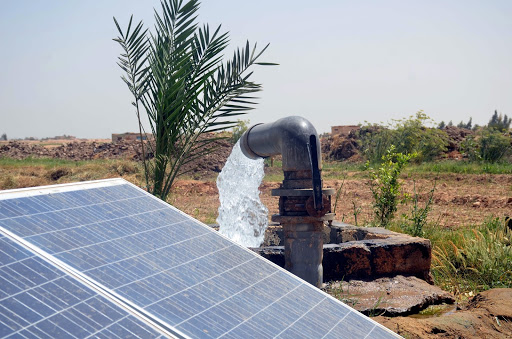
After subsidy cuts price them out of diesel, farmers in mountains of Qena turn to solar energy for groundwater
Under the scorching heat of Upper Egypt, between lands that vibrate in hues of green and lands awash in in a barren drabness, a modest house stands in the mountains…
Your support is the only way to ensure independent, progressive journalism survives.
You have a right to access accurate information, be stimulated by innovative and nuanced reporting, and be moved by compelling storytelling. Subscribe now to become part of the growing community of members who help us maintain our editorial independence.
Join us