
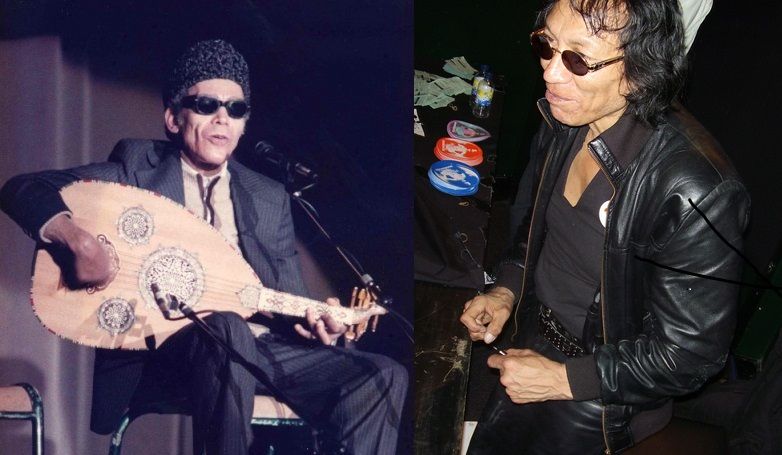
Rodriguez and Sheikh Imam: Exiled intellectuals to lead us into the millennium
In Representations of the Intellectual (1994), Edward Said laid out his idea of the “exiled intellectual.” Unlike other intellectuals, the exiled intellectual does not aspire to acclaim, fame or awards, most of which are corruptly administered. They aspire to a life of momentum, a poetic, moralist position, rejecting the ugliness and corruption that turn people’s lives on earth into hell. The intellectual’s reward then becomes their own life, in all its richness.
"So while it is true to say that exile is the condition that characterizes the intellectual as someone who stands as a marginal figure outside the comforts of privilege, power, being-at-homeness (so to speak), it is also very important to stress that that condition carries with it certain rewards and, yes, even privileges. So while you are neither winning prizes nor being welcomed into all those self-congratulating honor societies that routinely exclude embarrassing troublemakers who do not toe the party line, you are at the same time deriving some positive things from exile and marginality." — Edward Said
For me, two musicians — Sheikh Imam and Rodriguez — are exiled intellectuals, and I think the ways in which they approached life and work are likely to dominate our current millennium. Sheikh Imam pioneered expressive song and political and social satire in Egypt, and in the US Rodriguez sings songs that glorify rebellion and life on the streets, and criticize certain aspects of modern life. One represents Egyptian culture with its attachment to the land, and outdated cultural and moralistic restraints. The other represents US culture, centralized and free of past taboos, approaching the present with a spirit of experimentation.
Both grew up suffering oppression and poverty. Sheikh Imam was born in 1918 in the Giza village of Abu al-Nomros, then travelled to Cairo and, after a lonely start, met Ahmed Fouad Negm and formed a duo that would perform in the neighborhood of Ghouriya. Rodriguez was born to Mexican immigrant parents in Michigan, in 1942. He recorded two albums, Cold Fact (1970) and Coming from Reality (1972), working with the biggest music producers and recording at Motown Records, however he didn’t achieve much success in the US. He gave up and took a job as a construction worker, a tragedy suffered by many of his generation. Rodriguez is an example of what American sociologist C. Wright Mills calls “the independent intellectual” who, facing despair and powerlessness, eventually chooses to integrate into larger institutions.
But Rodriguez’s albums gained popularity elsewhere. Swedish director Malik Bin Galoul’s documentary Searching for Sugar Man (2012) shows how Rodriguez became the best-selling musician in 1970s South Africa. Due to his disappearance from music, South African collective imagination birthed rumors about his identity, the most popular of which was that he was a Native American who sang onstage once before self-immolating in protest.
Sheikh Imam’s work also reverberated outside Egypt, specifically in Syria and Tunisia. In Cairo, his small audience would sing along in the rooms of the city’s old districts, while most people outside those rooms had never heard of him, but in Syria and Tunisia he enjoyed large theaters and popular appeal.
https://youtu.be/5-HvAw0L8rM
Rodriguez and Sheikh Imam both gained fame through protest movements, and perhaps this was the reward Said spoke of. During the anti-apartheid protests in the 1960s, the South African government banned Rodriguez’s songs because their lyrics encouraged rebellion against the social order and referenced drugs. Sheikh Imam’s songs were broadcast throughout the protests of Egypt’s 2011 revolution, as if written for them. It was what Imam called “effective communication” with the people, which had previously been monopolized by the authorities and their institutions. He stood, like Rodriguez, between a feeling of isolation and a desire to support and be a part of “the people.”
Both Rodriguez and Sheikh Imam drew on heritage and details of the places in which they had lived, as well as folk culture. The cow, a crucial animal for Egyptian farmers, is used to symbolize the government selling out the nation in Imam’s songs, like Haha’s Cow. Oh Strangeness Be Gone Be Gone includes symbols such as henna, fields and farmers. Housh Adam Alley is dedicated to the Ghouriya district with its painful tradition of struggle. Allah Lives politicizes the spirit of the Sufi collective ritual of hadra, using Imam’s characteristic sarcasm to express a common performativity in Egyptian humor.
Sheikh Imam reflects the culture of the majority of Egyptians who see wealth before them yet are incapable of enjoying even its most basic forms, as in another ironic song written for him by poet Naguib Shehab Eddin: “Coax your horse down to the stream, you’ll find your fortunes multiplied, alabaster chests and bare breasts, I reached out my hand to take a look, and then my hand she shook, oh my poor hand!”
When Sheikh Imam used the popular songs of Egypt’s rural culture, he was careful to inject them with political and social meanings. “Why does the sea smile as I stroll to fill my pot?” quickly transforms into a call to the nation: “Between you and I are walls and walls, and I’m not a giant nor a bird.” Perhaps Imam resorted to symbolism and specificity due to the conservatism of Egyptian culture.
https://youtu.be/ZWjUuWzF43I
The US, in contrast, is a young state. In Rodriguez’s songs, his choice of locations reflects US citizens’ personal life experiences. For example, in Cause, which he sang two weeks after the failure of his first album, his specific US references include Playboy magazine, and the Detroit bar The Sewer where he frequently performed. He criticized the habit of drinking every Sunday until you “drown the sun.”
But Rodriguez captured a global sense of moral, social and political revolution through the mundane details of people’s lives, so his work reverberated further. He sang of rebellious behavior like taking drugs, rejecting consumerism and craving the streets, of people who “go home but can’t stay” and “need some love and understanding,” as he sings in Street Boy. His descriptions can equally apply to many groups who agitate against the US system and world order, white youth who reject the institutions of work and marriage in provincial British towns, the young people of the Occupy Movement, Democracy Spring and Black Lives Matter in the US, or the youth who hang out in downtown Cairo. His songs were popular among Occupy Wall Street activists and bridged gaps between young South Africans during their fight against apartheid.
Rodriguez was a pioneer in discovering the aesthetic potential of certain drugs, especially LSD, as reflected in his rhythms and lyrics. Sugar Man is about a drug dealer who carries “silver magic ships, jumper’s coke, sweet Mary Jane.”
https://youtu.be/qyE9vFGKogs
In his genteel voice, Rodriguez turns a wait for the dealer into a wait for a protector: “Sugar man, won’t you hurry, cos I’m tired of these scenes. From a blue coin, won’t you bring back, all these colors to my dreams,” and: “You’re the answer, that makes my questions disappear.” He is referring to how LSD transforms reality into brighter, sharper colors. The US government claimed that soldiers’ opposition to the Vietnam war and the protests against it were caused by such anti-social effects. In I Wonder, the rhythm also feels hallucinogenic, and its few minutes feel like a lifetime — Rodriguez's beat plays eternally on our hearts as his sweet voice criticizes the consumerism of US society, which turns life experiences into meaningless consumables.
Sheikh Imam never mentioned hashish, and used the vocabulary of intoxication rarely — sometimes in a reprimanding context. In Build Your Castles and The Adabati Adeeb he denounces the bars that would pop up next to factories. He uses imagery from popular culture to describe drunkenness as if it’s a feeling of fullness after hunger, as in Foul and Meat: “Vegetarian meat, as if you’re at the grill, eat a potful and live life drunk.”
In the end, Sheikh Imam seems to be a prisoner of Egyptian chauvinist tendencies in his more direct songs — he sings to the nation and holds it sacred. Globally, that tendency began to decline starting the 1970s, when Imam was still singing, “Egypt mother, Baheya, with your veil and galabeya.” He also produed purely political songs, some of which referenced a current event, such as Welcome Nixon Baba. At times, this directness plays a revolutionary media role in refuting official political narratives, or as Mills described it, “unmasking.”
Rodriguez, at a concert given when he was older and rediscovered, said, “I will live until I die.” This describes the position any human should take in confronting the ugliness, corruption and fundamentalism that systems try to implant in people to enslave them. With his bitter yet joyful voice, I think Rodriguez paints the path forward for Said’s intellectual.
تقارير ذات صلة
Creating a history mixtape: A conversation with Andrew Simon
Cassettes decentralized state-controlled Egyptian media long before the invention of the internet

Detox | The music in the background
I ended my journey among the ruins of the fallen Cassette Kingdom
Detox | ‘Everything’s gonna be alright’
Well, we all know what’s up, and it’s not pretty.
Your support is the only way to ensure independent, progressive journalism survives.
You have a right to access accurate information, be stimulated by innovative and nuanced reporting, and be moved by compelling storytelling. Subscribe now to become part of the growing community of members who help us maintain our editorial independence.
Join us