
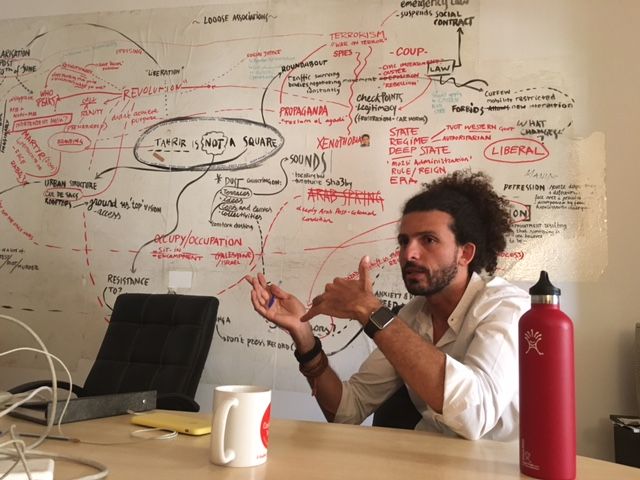
Adventurer and mountaineer to future astronaut, Omar Samra may be taking his adventures further afield after winning a ticket to space in the Axe Apollo Space Academy competition in 2013.

Samra gained fame over the last 10 years as the first Egyptian and one of no more than 40 people to climb the seven highest summits in every continent and ski to both poles.
It was his viral interview with the famous photography Facebook page Humans of New York in March 2015 that brought Samra’s personal life into the public eye. He spoke of personal loss and how it has shaped the way he approaches his mission to motivate people to live fuller lives through his talks and his travel company Wild Guanabana.
In a talk he gave at TEDxBend Oregon in May 2016, Samra elaborated on the death of his wife Marwa Fayed, who passed away in 2013 shortly after giving birth to their daughter, and on how this trauma changed his approach to life and work.
Omar Samra talks to Mada Masr about incorporating his personal loss into his life mission and moving away from a mindset of conquering nature.
Mada Masr: In the talk you gave at Oregon you shared your personal story. A lot of people already knew about it from the Humans of New York post. Could you tell us how that came about?
Omar Samra: I was a speaker at a conference in Dubai in 2015 and one of the other speakers was Brandon Stanton, founder of Humans of New York. I ended up sitting next to him at a dinner for the speakers and I was asking him about his work — I was really curious about how you can interview someone in half an hour, a complete stranger, and go into such depth.
He said, 'instead of explaining to you how I do it, let me ask you a few questions and show you how I work.' I said ok, and he asked me two questions. He has this energy where you open up, and I surprised myself in answering very openly. Then he was like, 'wait a minute, I actually want to tell your story,' and he asked when I would be in New York. And so it happened when I went the following week.
He invited me for dinner at his place, and I thought, I am not going to bring up the thing, because, though I thought it would be cool to do it, it was also pretty freaky, because when I went back to the webpage I realized the level of engagement is insane.
I am a very private person in general — obviously I have a public side, but I am used to only sharing certain things — so to share a very personal story was a big deal.
So I met up with him and didn’t say anything, and at some point in the evening he was like, 'do you want to do the thing?' I said ok, and from the moment we left his place till we came back up, it was 30-40 minutes.
I thought it would be widely seen in the US, but that I could be relatively insulated from it. When I landed at the airport the next day, I opened my phone and it just exploded — I had 400 or 500 Whatsapps and then hundreds of messages on my public page.
My first instinct was, what have I done? I walked to a quiet place in the airport to sit with it for a bit, and thought, no, this was the right thing to do, to share my story.
MM: You say there was a shift from being a private person to considering your personal story as part of what you do. We’re curious how this came about.
OS: The first time I was invited to speak, people stuck around for a couple of hours after. I realized there was something that touched people – everyone has a dream or something they feel strongly about, and the talk sort of activated that, even though climbing mountains is far from the experiences of many people.
So I made a conscious decision to have aspects of my life in the public domain — if I want to inspire people to take risks and live life more fully and engage with nature, I need to be heard. Also to continue with these activities you need sponsorship, and to be of some kind of value to them you have to have a following.
It was eight or nine years like that, so I was comfortable having certain aspects of my life known because it was a means to accomplish the goals I have, but sharing the personal side was a big deal. It wasn’t really a gradual shift — when Humans of New York happened, the impact was quick and powerful, and impossible to deny.
I realized there is an advantage to opening up in that way. But I was still hiding, someone else was telling my story. Then I did the talk.
Putting it together was a healing journey in itself. To be able to put something in a concise way that is real, you have to deal with a lot of stuff to get there. Every couple of minutes in the talk is weeks of soul searching. The process was immensely beneficial for me and I feel it was impactful for other people, so I’m trying to spread it a bit more.
MM: The relationship with nature that you describe in your talk seems both painful and one of healing. Could you talk a bit more about that?
OS: I’ve always had a connection with nature — we all do, right? Nature is our natural habitat, but people in the city have become so far removed and disconnected from this that we reach a point where nature is a fearful place — I go on camp but what is going to happen, is something going to come out and eat me? It’s a sad state of affairs because that’s where we are meant to be most comfortable.
Being in nature, and with mountaineering, it’s easier to be present because you’re in an alien environment, an environment that you’re not used to. You have to be focused. You’re breathing in a rhythmic kind of way. Your steps are also rhythmic. It’s kind of like a meditation. So when you combine nature with movement, it’s a very powerful recipe for being present.
This is essentially what we do at Wild Guanabana. When people go on these trips they discover sides of themselves that have been dormant for a long time, or they didn’t know existed. And through experiencing levels of discomfort, they discover they can do things they didn’t know they could.
To be able to let go you have to be present, and to do that you have to let go of a lot of things, including the ego. This has been a journey of many, many years. Mountain climbing and nature in general is pretty good at destroying any notion that you had of yourself as cool or having certain abilities. Nature has its own way of teaching you these really difficult lessons.
When I was young and wanted to climb Everest, I wanted to prove something to myself and on some level also to others, and my approach towards goals and achievement was, if I don’t reach the summit I’ve failed. I did reach the summit, but I got to realize later on that I was far too goal-oriented.
It’s okay to have goals, but you need to be as committed and passionate about it as you are non-attached to the outcome as well. The outcome of what happens is inconsequential, as the whole point is the endeavor of living that experience. Whether you achieve the goal or not is totally out of your control. All you can do is your best and whether that best is enough is not something in your control.
MM: You speak about the talk as a kind of culmination of different things. Do you look at it as something that is a closure, or as something that would take your life in a different direction?
OS: My adventures have been a kind of vehicle that I have used to illustrate some ideas. At the start I guess I was doing motivational speaking, the classic 'you can do it' kind of stuff. I don’t talk in these terms anymore. There is no more, 'here’s the thing,' or, 'you have to fight it, you have to beat it.' I don’t believe in this idea of conquering something anymore.
So now I have a more gentle approach to things — things happen in their own time, you’re unattached and so on. In that sense I believe that my language, the way I articulate things, the way I look at problems, the way I communicate with people will also evolve and mature in a way. The adventures are always going to be the colors of this picture, but I want to be able to tell people that that’s just one way.
MM: You said you went from an attitude of conquering to an attitude of doing your best and realizing that there are also aspects of it that are out of your hands. How do you balance this approach with not saying ‘okay, I have no control over this, so there’s no point trying?’
OS: For me, even though these ideas were something I knew intellectually and maybe experienced a little bit, it was actually in the North Pole that I think I got it. Something unique to there is that, when you walk in the arctic towards the pole, you’re not walking on land, you’re walking on shifting ice that is constantly moving on the ocean. So one day you can walk for 20 km and then at the end of the day you take out your GPS and realize that you’re 5 km behind where you started.
That movement of the weather, of the drift of the ice, of whatever, it’s so obviously out of my control, there is no amount of worrying that is going to fix that, so if I just say, screw it I won’t do anything, the expedition would be over. But I don’t want the expedition to be over, I want to achieve my goals, so I need to keep moving. You get into a mindset of being more present and the mindset of, I am just going to wake up today and do my best.
I think it’s good for us to have goals, but more like life plans or directions to know what it is you are going for. You set the plans — this is my target, this is what I want to do, and then forget about it, and now in the moment I will be taking these small steps.
MM: So, space — tell us what’s true, what’s myth and what’s actually going to happen.
OS: They’re building the spacecraft now. It was supposed to be 2016/17 that we go. Now it looks like it will be delayed by at least another two or three years, but I’m okay with that because I would rather it be safe.
The regular conversation that I have is like, 'where are you going?' — to space, 'where in space?' The word space means that there’s nothing. People seem to get really disappointed, 'You’re not going anywhere specific? Oh, okay.'
At 100 km there is an imaginary line called the Carmen line, so if you cross it you become an astronaut and there are about 450 people in history who have become astronauts, so it’s a very small group of people that’s going to increase exponentially in the next 10 years with the advent of commercial space travel.
I was asking myself how this can be about more than just me going there, taking a few photos and coming back and telling the story. One of things I decided to do is a national space competition that I am hoping to launch in October or November. I will be touring governorates, visiting between 100 and 200 schools. The idea is that kids can apply to present ideas of experiments that would be conducted in space. So they don’t have to do an experiment, just the idea — it could be something really simple, like, how does a spider make its web in space with no gravity?
We have a judging panel of astronauts and ex-NASA people who will select the best idea, and then we’ll be working with a university to develop it into an actual experiment that I will then take with me on my trip to space.
Then the mission is not just about me going to space, but a way to break this glass ceiling, with space as something out of reach. The space industry is not a luxury anymore — you have to have a space program, it’s not just about space exploration. There’s such a huge science and communication component.

تقارير ذات صلة
A possible love for homeland: A conversation with Oxana Timofeeva
"There is a moment of negativity in this movement: you think of homeland when you are not there"
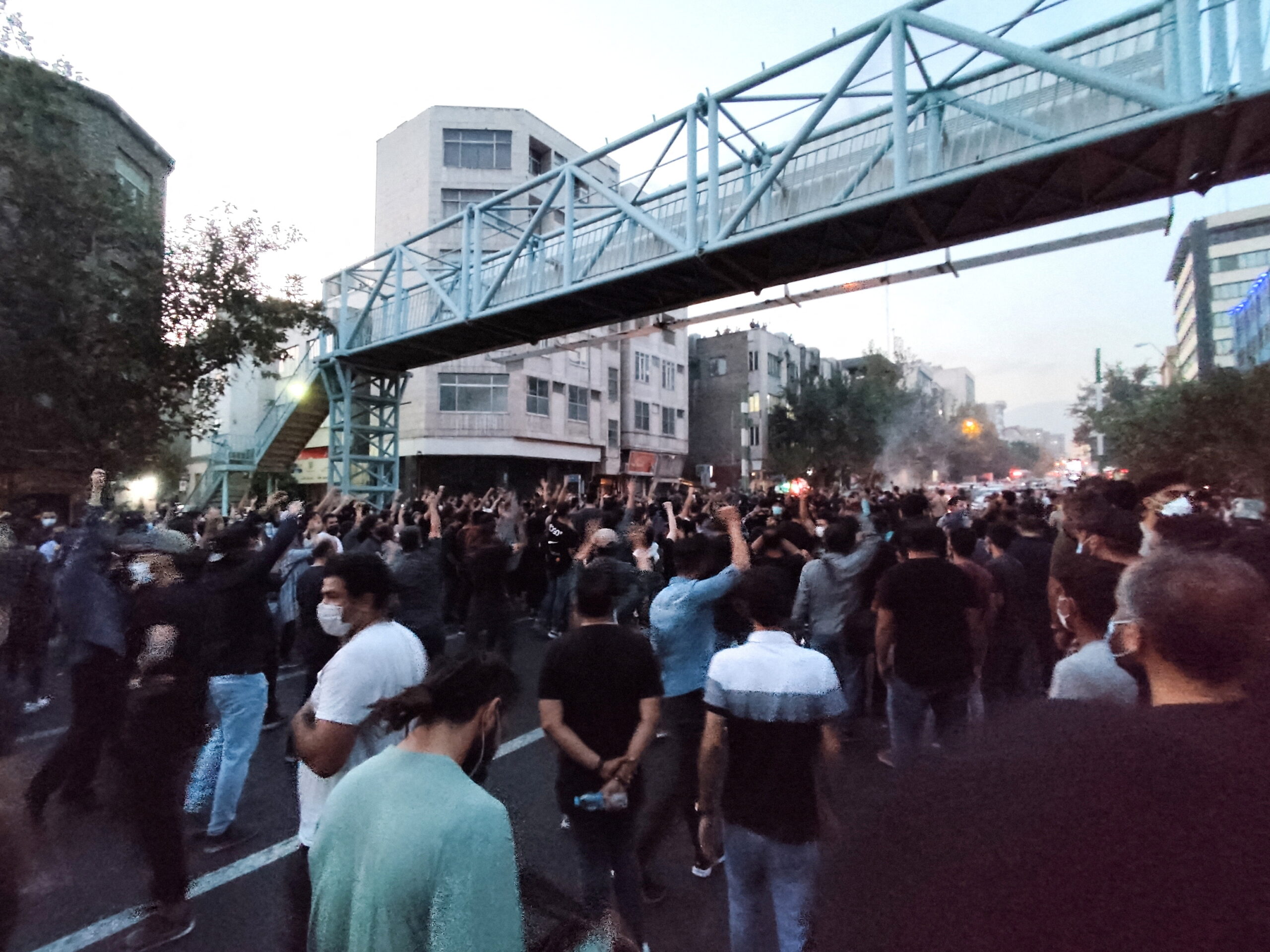
This movement wants to reclaim life: A conversation with Fatemeh Sadeghi on Iran’s protests
"The recent movement is strong because it is rooted in ordinary life"
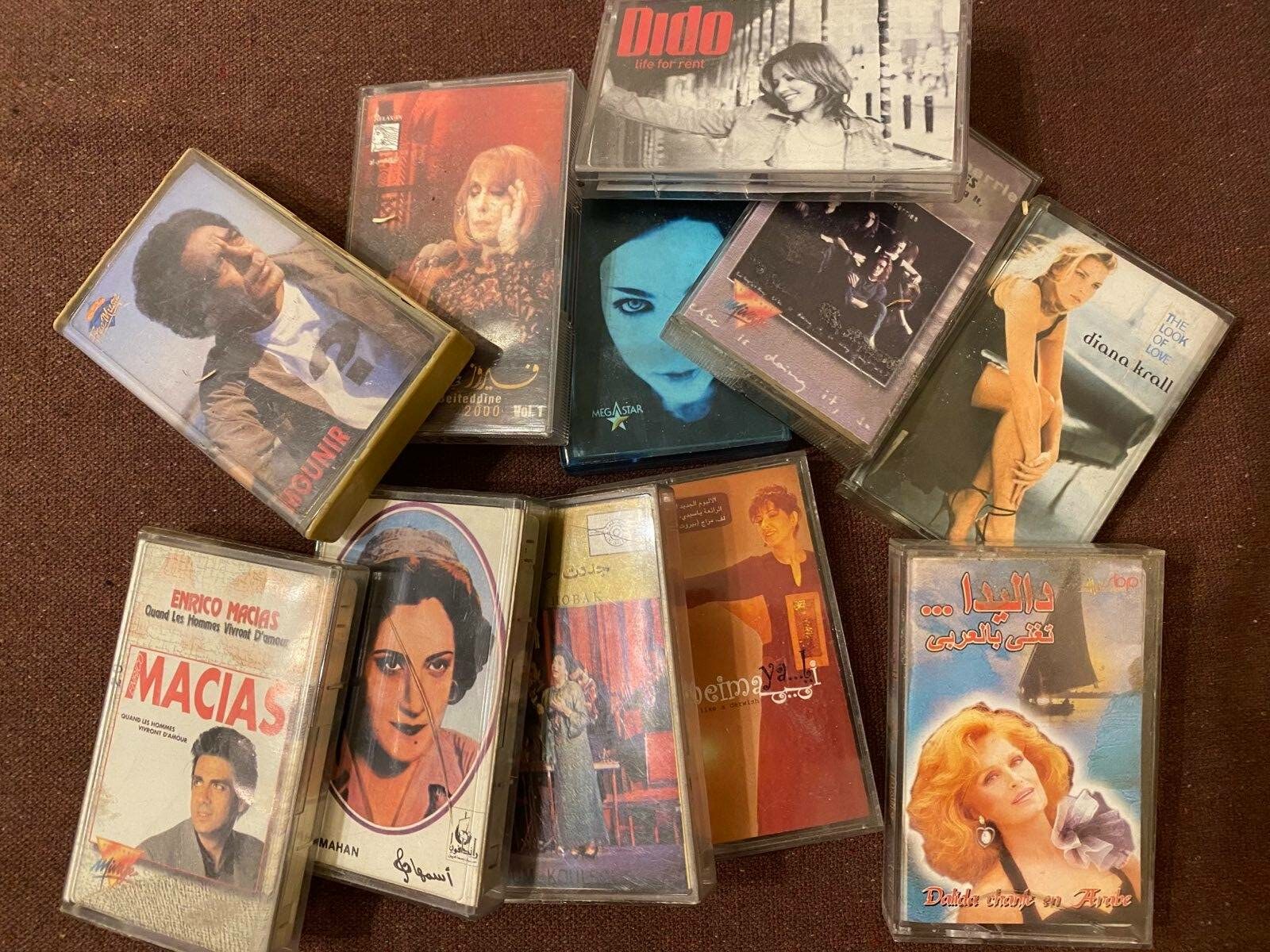
Creating a history mixtape: A conversation with Andrew Simon
Cassettes decentralized state-controlled Egyptian media long before the invention of the internet
Your support is the only way to ensure independent, progressive journalism survives.
You have a right to access accurate information, be stimulated by innovative and nuanced reporting, and be moved by compelling storytelling. Subscribe now to become part of the growing community of members who help us maintain our editorial independence.
Join us