
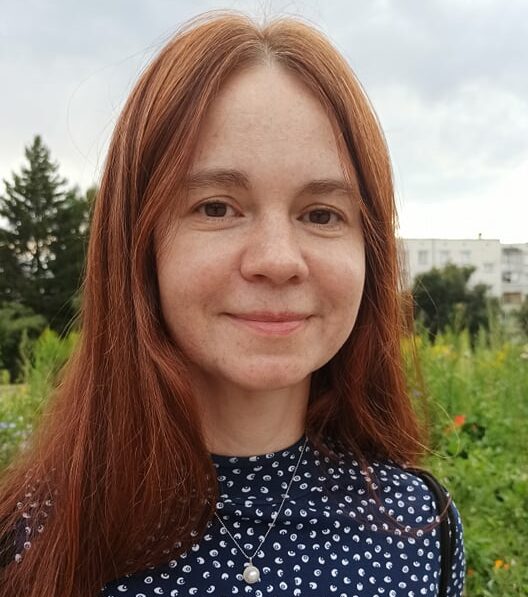
A possible love for homeland: A conversation with Oxana Timofeeva
Oxana Timofeeva teaches contemporary philosophical anthropology at Stasis Center for Philosophy at the European University in St. Petersburg, Russia. Besides teaching, she edits and writes, with her titles including History of Animals (2018), How to love a homeland (2020) and Solar Politics (2022). How to Love a Homeland, of which we publish an excerpt here, was commissioned and published by Kayfa ta, alongside a translation to Arabic. In it, she brings her thinking beyond anthropocentrism to practices of homemaking, loving and belonging during an intricate political moment that combines nationalism with imperialism. We read it and speak with her about it against the backdrop of the Russian invasion of Ukraine.
This conversation has been edited lightly for clarity.
Mada Masr: I wanted to start with this idea of peeling off the rhetoric of homeland as an ideological narrative. What’s left when you peel off this rhetoric?
Oxana Timofeeva: What is the rhetoric, the ideological narrative in question? It can be nationalism, or imperialism, like in the case of Russia. Ideological narrative associates a certain territory with concrete individuals or groups in power. It marks territories as belonging to these individuals or groups.
Fatherland is the spatial construction that is inherited from the times when everything was taken by force. Motherland is a rhetoric of nativity, blood, biological determinism and ethnicity. In contrast, the word “homeland’ sounds as an alternative to these parental metaphors that have been poisoned by dominant ideologies in different countries around the globe.
Homeland is a place, a location where you feel at home. Your emotional attachment to this place may come from the memory of the body itself. Before any language, it connects a living body to her environments, to this particular landscape, flowers, rivers, or mountains. This sensory experience constitutes the material substance of homeland, where one would like to return.
Since the beginning of Putin’s war against Ukraine, so many people lost their homes. In Russia, there is not only police terror within the country, but also forced mobilization: now everybody can be recruited to the army and sent to Ukraine, where they will most probably die. Therefore, many Russians have to emigrate. I still did not take this decision, and I keep traveling back and forth. Each time I return to St. Petersburg, I find all my things in place. But this is a privilege. Think about a person who returns but cannot find her home anymore. Ukrainian cities are bombed by the Russian army, houses are destroyed, and people become refugees.
Since February 2022, there have been two massive waves of immigration from Russia. The first happened in the beginning of March when there were rumors that Putin would close the state borders and declare martial law. People were just immediately booking one-way flights, mostly to Georgia, Armenia, Azerbaijan, Kazakhstan, Uzbekistan or Kyrgyzstan, former Soviet republics (countries Russians could enter without a visa). I was traveling by train via Helsinki, and the train was also full of Russians, apparently leaving forever. They had their luggage, carriages with cats and dogs and musical instruments. I saw how people hid their eyes. They felt shame. They run from their place thinking that they will probably never return. They are pushed out by the imperialist state, the Russian Federation. But this is not really a homeland. Russian Federation is an empty abstraction, a name for a huge territorial unit occupied by a group of greedy and malevolent people. Homeland is about concrete locality, not about empires and states.
MM: There is a passage in the book where the process of searching for origins is likened to philosophy, philosophy being a search for origins, a form of homesickness, an urge to be home everywhere, as you say. You’re talking here of the homeland as a place, a substance to which there is an affective relation, but what happens if the element of time is added to it?
OT: The image of philosophy as homesickness comes from Novalis, and is quoted by Heidegger. I would like to remind that the very idea of the origin in philosophy is ambiguous, as it points not only at the beginning of everything, but also to the end. There is a dialectic here. Freud would call it a death drive, Thanatos. Thus, in Phaedo, my favorite of Plato's dialogues, Socrates suggests that, before coming into the mortal body, the immortal soul resides in the kingdom of death. This is the origin of all ideas that we have, such as the idea of the good, the just, etc. We cannot really take such things directly from our experiences. Our soul, according to Plato, remembers what it learned before we were born.
In some archaic rituals, there exists a taboo on return. When this taboo is violated, something terrible happens. We can compare it to our societies and find similar patterns. In 2020, famous Russian politician Alexei Navalny was poisoned by Russia’s FSB security agency, but he miraculously survived and received some good treatment in Germany. When he recovered, he decided to go back to Russia, where he was immediately arrested. He is still tortured in jail. Why did he come back?
MM: To stay with dialectics, there is a reference to migration in the book as the high school of dialectics. And in a further dialectical movement, you get into negation through this idea that migration is a relation of negation to the homeland. How does this negation unfold and how can it create an intellectual place from which to generate when in exile?
OT: It is Bertolt Brecht who writes on the negativity of the experience of migration. Brecht himself migrated from fascist Germany. In 2018, when I was writing this book, the war with Ukraine was already there, but it was not a full-scale war. The perspective of a fascist regime in Putin’s Russia was not yet clear, and my reference to Brecht was a kind of anticipation. I was reading his Refugee Conversations. One of them said that it would be nice to choose a homeland.
“Where are you from?” Most often, we hear this question when we are already somewhere else, somehow displaced. There is a moment of negativity in this movement: you think of homeland when you are not there. Locality actualizes itself in the distance.
In the Russian migration, there is a lot of cultural reflection right now. The intelligentsia endlessly discusses Russian culture, literature or poetry in exile, and some of these discussions still bare traces of imperialism. People can travel from Moscow to Yerevan or Tbilisi, but the problem is that they can still be faithful to Moscow as a kind of imperialist fantasy. I think that this identity, “Russian,” now has to struggle with this in the first place: one needs to kill the empire within oneself.
The great dialectical experience that immigration can and must produce is de-identification, becoming someone else, living among different peoples, learning other languages and ways of life and communicating with other landscapes and environments.
MM: Shifting to what makes this becoming and negation possible, you have used Aristotle and Hegel’s theories of soul to talk about the different souls within us. What are the resulting dialectics that come out of these coexisting souls within us, the souls that nourish, that sense, that rationalize, that take root, that lift up and move?
OT: I use the concept of the soul in a performative way. It is not a “serious” academic research indeed, but a pure hooliganism. I take the idea of the three kinds of souls from Aristotle, speculate on it and give it a queer activist reading. The soul is a very old concept, as old as humanity itself, but I think it is still interesting, and I want to give it a new use.
According to ancient philosophers like Aristotle, the plant does not move, whereas, the animal does not only move, but has senses. The human soul is tripartite, as it contains both plant and animal principles, and in addition, intellect. Plato says that the structure of the ideal political community must correspond to the structure of the soul. There are, therefore, three basic classes: producers, warriors, and wise men, who rule the state. Producers correspond to the plant part of the soul (positive and productive), warriors to the animal (negative and destructive), and rulers to the human, or rational (which balances these two forces, two energies). I like these classical divisions, where there are three kinds of everything. What if we apply them not to ideal governance, but to ways of practical resistance and revolution? How to resist like an animal or a plant?
Plants do not move. Indeed, this is not quite true, plants do move, but their modes of movement are different than those of animals. A plant can grow upwards and downwards, proliferate and dance, but at the same time it stays where it is. The plant way of existence is staying here. “Resist Like a Plant!” is the title of an essay written by Michael Marder. He also wrote a great book on plant thinking, as well as many other texts on plants as a form of life. Marder gives an example of environmental activists who tied themselves to the trees in order to protect the forest or the park from capitalist developers. When they tie themselves to the trees, they become like trees.
The animal way of resistance is movement — like a people’s movement, a revolutionary movement. A protest rally moves like an animal pack. In Russia now, there is a split between those who left and those who remain in the country. Those who stay think of possibilities of direct action and partisan work, but they are constantly at risk, whereas those who left are safe and can organize, volunteer and articulate public opinions. It is time for us to think about how to coordinate these two forms of resistance to Putin’s regime.
MM: Are you using the plant and the animal as metaphors, as abstractions or are you also tinkering with these creatures as organic matter that coexists and cultivates who we are and with whom we can make kin? And if the (nation) state uses these as metaphors, how are you using them in your knowledge-making practice?
OT: I’m of course with material practice. For me, animals and plants, other species, are older systems with much more developed forms of sociality, communication and reasoning. It is always a matter of communication among these different species, so actually, this love for homeland is not even internationalist, but it is an interspecies model. It is something that makes you think or conceive of a land or a place where you are from as a community of all different things, living and nonliving. Why do people love these flowers or these trees so much? Why do people risk their lives when capitalists want to cut the trees? This love and solidarity for the other who is not necessarily human is something that predates languages, ideologies and other human things.
Take the example of partisan war, to which I refer in the book. Partisan war is always the war of the locals against the invaders. But who are the locals? There are humans, animals, plants, and everything; the entire landscape is at war. For the occupiers, this territory is abstract, it is just a map on which military strategists never see living beings. The invader only has a map of a territory, and it's an abstract map. But there are wolves hiding in the forest, and there is a little swamp there, and there are other creatures that all become partisans. Territory is alive. I live in St. Petersburg. I love my city, and I know it, its streets, alleys and courtyards. I feel it, and the policeman does not. During protest demonstrations, which are prohibited in Russia, the city hides the protesters. In 2021, a huge protest movement was severely repressed. I remember one day, it was in winter, the police blocked all roads in the city center, and people just went down to the frozen river; the policemen with their arms were too heavy to step on the ice.
MM: In conclusion, and since you wrote this book as part of the how-to publishing series: how does one love a homeland without being a fascist and without being a nationalist?
OT: There is no universal answer to this question. For the given moment, I would say that to love a homeland means to take the risk of telling the truth.

تقارير ذات صلة
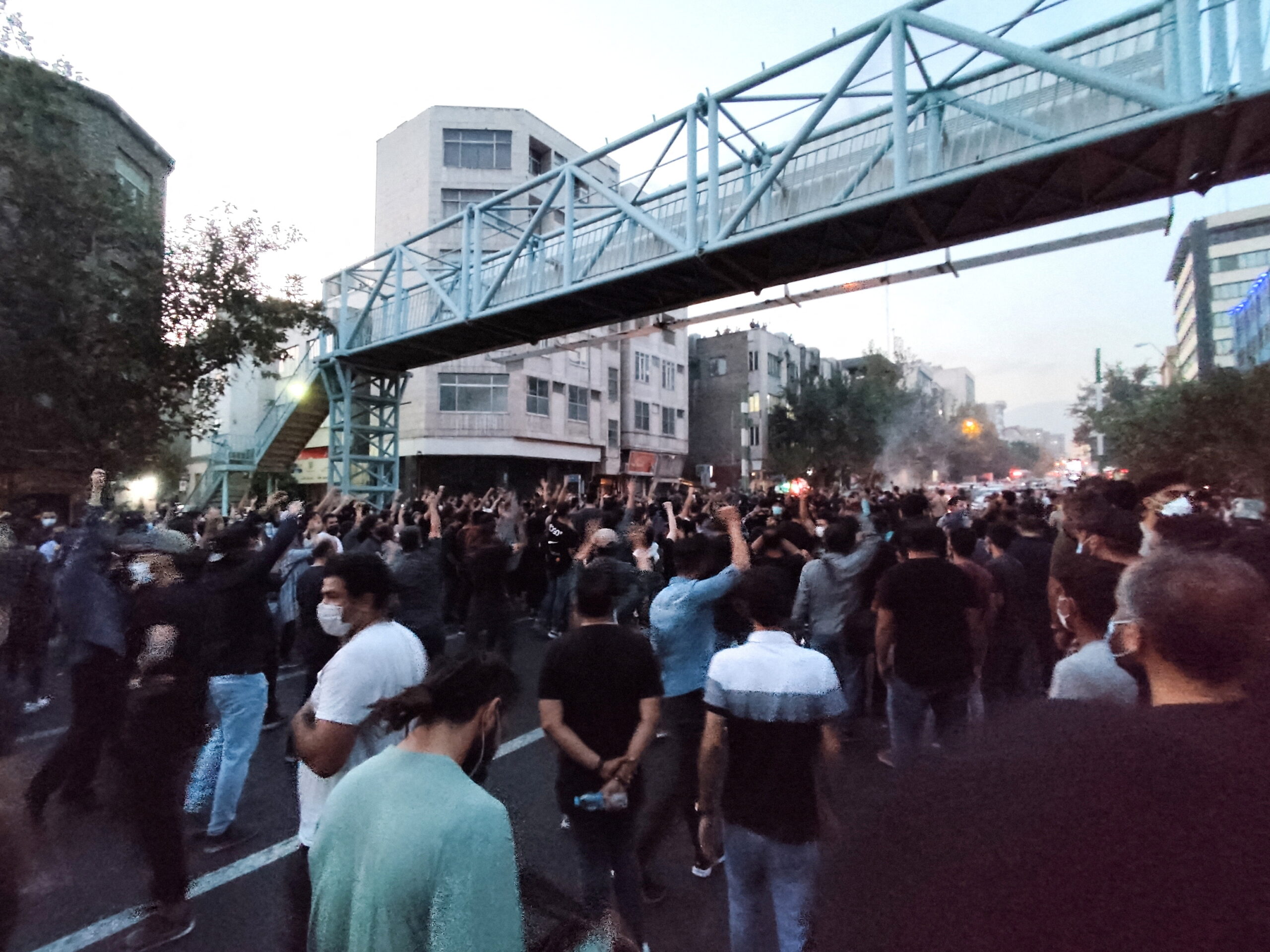
This movement wants to reclaim life: A conversation with Fatemeh Sadeghi on Iran’s protests
"The recent movement is strong because it is rooted in ordinary life"

Creating a history mixtape: A conversation with Andrew Simon
Cassettes decentralized state-controlled Egyptian media long before the invention of the internet
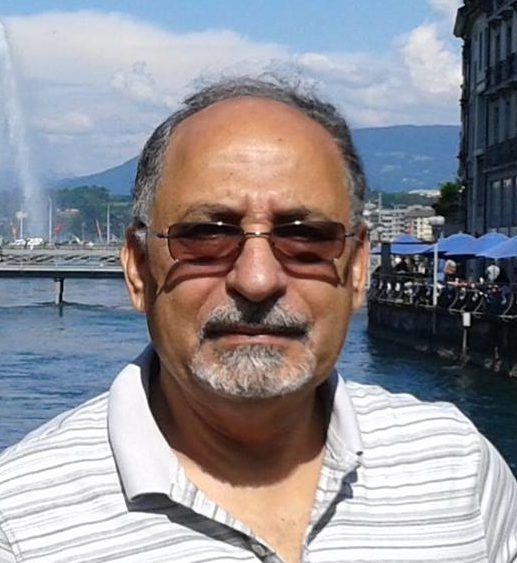
Q&A with Civil Democratic Movement co-founder Mostafa Kamel al-Sayed on the latest in the national political dialogue
"The academy issued its statement without consulting the civil movement"
Your support is the only way to ensure independent, progressive journalism survives.
You have a right to access accurate information, be stimulated by innovative and nuanced reporting, and be moved by compelling storytelling. Subscribe now to become part of the growing community of members who help us maintain our editorial independence.
Join us